September 22, 2026
Why Update Brand Messaging: Essential Guide for Growth


Discover the benefits of cohesive branding for small business owners. Boost revenue, build trust, and enhance brand recognition today!

TL;DR:
- Cohesive branding presents a unified identity across all customer interactions and channels. It builds trust, increases recognition, and can boost revenue significantly for small businesses. Consistent enforcement and operational discipline are essential to maintaining brand cohesion and driving growth.
Cohesive branding is the practice of presenting a unified identity across every channel, touchpoint, and customer interaction your business has. For small business owners and entrepreneurs, the benefits of cohesive branding are direct and measurable. Two-thirds of companies report that brand consistency contributes at least a 10% revenue lift. That number alone reframes branding from a creative exercise into a business growth decision. Brands like Shopify and research from Lucidpress confirm that unified presentation builds trust faster, reduces buyer hesitation, and compounds recognition over time. If your marketing feels scattered right now, this is where the problem starts and where the fix begins.
Cohesive branding improves brand recognition by reducing the mental effort customers need to identify and remember you. Every time your audience sees the same colors, hears the same voice, and receives the same message, their brain files you away more efficiently. That filing process is what builds familiarity, and familiarity is what builds trust.

The marketing principle known as the Rule of 7 states that a customer needs to encounter your brand at least seven times before they are ready to buy. Cohesive branding makes each of those seven exposures count more. When your Instagram post, your email, and your website all feel like they came from the same source, each impression reinforces the last. Cohesive branding compounds familiarity across touchpoints rather than starting from scratch each time.
Trust follows recognition. When customers perceive a brand as coherent and reliable, they feel more confident making a purchase decision. A consistent brand experience reduces buyer uncertainty and builds loyalty through perceptions of fit and coherence. That confidence is not accidental. It is the direct result of aligned visuals and messaging working together.
The data on engagement backs this up. Consistent brand voice across blog posts, emails, social media, and product pages increases purchase intent and engagement by significant margins. One finding points to 23x higher engagement in email campaigns that maintain a consistent tone. That is not a marginal improvement. It is a structural advantage built through repetition.
“Brand coherence is not about being boring or repetitive. It is about making your audience feel like they already know you before they ever speak to you.”
Here is what consistent branding looks like in practice across key touchpoints:
The revenue impact of brand consistency is well documented. Consistent brand presentation can increase revenue by about 23% on average, with the most consistent brands seeing lifts up to 33%. For a small business generating $200,000 per year, a 23% lift represents $46,000 in additional revenue without acquiring a single new customer. That is the financial case for treating branding as a business system, not just a design project.
| Business Outcome | Impact of Cohesive Branding |
|---|---|
| Revenue growth | Up to 33% increase for the most consistent brands |
| Revenue lift reported | At least 10% lift for two-thirds of companies |
| Email engagement | Up to 23x higher with consistent brand voice |
| Ad performance | Improved click-through rates from aligned creative |
| Customer loyalty | Reduced buyer uncertainty and stronger purchase confidence |

Ad performance improves significantly when creative elements align. Cohesive branding reduces friction during ad recognition, improving engagement and click-through rates. When a customer sees your ad and immediately recognizes it as yours, they spend less mental energy on processing and more attention on your message. That shift in attention directly improves campaign results.
There is also an operational advantage that most small business owners overlook. Cohesive branding reduces rework in ad campaigns by enabling teams to use shared foundations and faster variations. When your brand rules are documented and clear, creating a new social post or ad takes minutes instead of hours. You are not reinventing the wheel every time you publish.
Pro Tip: Document your brand colors, fonts, and three to five core messaging phrases in a single one-page reference sheet. Share it with every freelancer, designer, or team member who touches your marketing. This one habit eliminates the most common source of brand inconsistency for small businesses.
Customer loyalty is another measurable outcome. Brands that show up consistently give customers a reason to return. When your audience knows exactly what to expect from you, the decision to buy again becomes easier. That predictability is a competitive advantage, especially for small businesses competing against larger, more recognized names.
Brand consistency and cohesive branding are related but not the same thing. Understanding the difference helps entrepreneurs avoid a common trap: following brand guidelines on the surface while still producing marketing that feels disconnected.
| Dimension | Brand Consistency | Cohesive Branding |
|---|---|---|
| Focus | Uniform visuals and messaging | Aligned brand architecture and operational workflow |
| Scope | Design and copy standards | Strategy, product, customer service, and marketing |
| Execution | Guidelines document | Enforced governance and repeated unified messaging |
| Outcome | Recognizable appearance | Deeper trust, stronger loyalty, and measurable revenue |
| Risk if ignored | Visual inconsistency | Fragmented customer experience and lost revenue |
Brand consistency means your logo is always the right color and your fonts never change. That is the floor, not the ceiling. Cohesive branding goes further. It means your brand story, your offer positioning, your customer service tone, and your content strategy all point in the same direction. Brand coherence is a competitive advantage in distracted markets because it makes your brand easier to process and remember.
The most important distinction is governance. Most companies have brand guidelines. Only 25–30% consistently enforce them, which means the majority of businesses are leaving the revenue benefits of cohesion on the table. A guidelines document sitting in a Google Drive folder does nothing. Enforcement, repetition, and accountability are what turn guidelines into results.
Operationalizing brand as a system across strategy, product, and customer service makes brand coherence achievable at scale. Think of your brand less like a style guide and more like an operating system. Every decision your business makes, from how you respond to a customer complaint to how you price a new offer, either reinforces or undermines your brand. Cohesion means those decisions consistently reinforce it.
For entrepreneurs, this distinction matters because it changes where you invest your energy. Updating your logo is not the same as building a cohesive brand. The real work is in aligning your message, your offer, and your customer experience so they all tell the same story.
Building a cohesive brand does not require a large team or a big budget. It requires clarity, documentation, and discipline. These four steps give small business owners a practical path to unified branding.
Define your brand foundation in writing. Document your brand voice, core values, and primary message in a format your whole team can reference. Include three to five phrases that capture how you want customers to feel. This is not a tagline exercise. It is a decision about what your brand stands for and how it communicates that consistently.
Create a visual identity system. Choose two to three brand colors, one or two fonts, and a logo with clear usage rules. Build templates in Canva, Adobe Express, or a similar tool so every post, slide deck, and email header starts from the same foundation. Templates eliminate the guesswork that leads to visual inconsistency.
Audit your existing touchpoints. Review your website, social profiles, email signature, and any printed materials. Look for places where the voice, visuals, or message diverge from your documented standards. Most small businesses find three to five major inconsistencies in this audit that are easy to fix quickly.
Enforce brand standards across every channel. If you work with freelancers, contractors, or a social media manager, give them your brand reference sheet before they produce anything. Review their work against your standards before publishing. Governance does not require a brand police department. It requires a clear checklist and the habit of using it.
Pro Tip: Run a quarterly brand audit by pulling your last 30 days of social posts, your homepage, and your most recent email side by side. If a stranger could not tell they came from the same brand, you have a cohesion problem worth fixing before your next campaign.
The impact of a cohesive brand identity on digital ad performance is direct. When your ads, landing pages, and follow-up emails all match in tone and visual style, bounce rates drop and conversions rise. That alignment signals to the customer that they are in the right place, which is the single most important message any landing page can send.
Small businesses that treat integrated marketing as a growth system rather than a series of disconnected campaigns see faster and more predictable results. The goal is not to post more. The goal is to make every post, email, and ad feel like it came from the same confident, clear brand.
Working with founders, coaches, and consultants over the years has taught me one thing above everything else: brand cohesion accelerates growth faster than most entrepreneurs expect, and the lack of it slows growth more than most realize.
The businesses I see struggle most are not the ones with bad products or weak offers. They are the ones with brilliant expertise wrapped in a brand that looks and sounds different every week. Their Instagram does not match their website. Their email sounds like a different person wrote it. Their offer page uses language their audience has never heard them use before. Each of those disconnects creates a small moment of doubt in the customer’s mind. Enough small doubts add up to a lost sale.
What surprises founders most is how much of brand cohesion is an operational discipline, not a creative one. The creative work, choosing your colors, writing your brand voice, building your templates, takes a few focused days. The discipline of enforcing it every single week is what separates brands that compound their recognition from brands that stay invisible.
I also want to push back on the idea that repetition kills creativity. Entrepreneurs often resist cohesive branding because they fear it will make their content feel boring or formulaic. The opposite is true. When your brand foundation is clear and documented, you have more creative freedom, not less. You know the rules well enough to work within them confidently. Every great creative campaign is built on a stable brand foundation underneath it.
The competitive advantage of cohesion is most visible in crowded markets. When your audience is scrolling past dozens of similar offers, the brand they recognize and trust wins. That recognition is not built in a single viral post. It is built through hundreds of consistent, aligned impressions over time. The businesses that understand this and commit to it early are the ones that grow with less friction and more loyalty.
— Kaitlyn Cole
Building a cohesive brand from scratch, or fixing one that has drifted, is faster with the right support behind you.
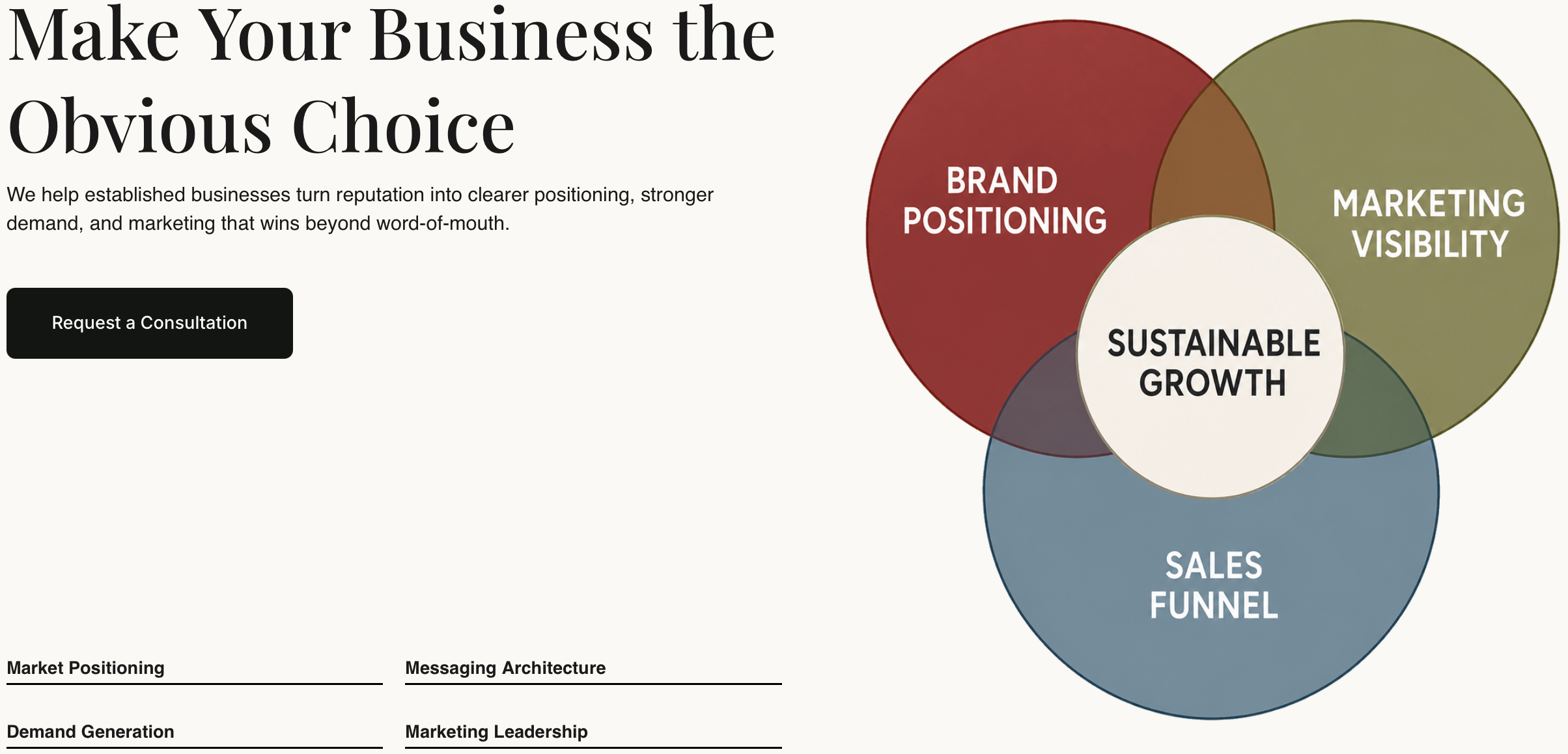
Reasonate Studio works directly with founders, coaches, and consultants to build the brand clarity, messaging systems, and marketing execution that make cohesion possible. From sales page optimization that aligns your web presence with your brand story, to SEO keyword research that builds visibility around your core message, every service is built to support a brand that shows up consistently and converts reliably. The Aligned Impact Model™ gives every client a clear foundation before any content or campaign goes live. If your brand feels scattered right now, that is exactly the problem Reasonate Studio is built to solve.
Cohesive branding is the practice of presenting a unified identity, including consistent visuals, voice, and messaging, across every channel and customer interaction. For small businesses, it is the foundation that makes marketing more effective and recognition faster to build.
Consistent brand presentation can increase revenue by up to 33% for the most consistent brands, according to research from Lucidpress. It reduces buyer uncertainty, builds trust, and improves ad performance by making your brand easier to recognize and remember.
Brand consistency focuses on uniform visuals and copy standards. Cohesive branding goes further by aligning strategy, messaging, customer experience, and operations so every part of the business tells the same story.
Only 25–30% of companies consistently enforce their brand guidelines, even though most have them documented. The gap between having guidelines and enforcing them is where most of the revenue benefit is lost.
The foundational work, including brand voice, visual identity, and messaging standards, can be completed in a matter of days with focused effort. The compounding benefits of recognition and trust build over weeks and months of consistent execution.