September 22, 2026
Why Update Brand Messaging: Essential Guide for Growth


Discover why choose customer-centric branding for your small business growth. Boost loyalty, retention, and revenue with a customer-first approach!
TL;DR:
- Customer-centric branding aligns every brand touchpoint with customer needs, fostering loyalty and driving growth. It emphasizes ongoing relationship building over visual identity, resulting in higher retention, advocacy, and revenue stability. Implementing it involves data collection, team alignment, multichannel support, and constant operational refinement for lasting success.
Customer-centric branding is the practice of aligning every aspect of your brand with your customers’ needs, values, and expectations to build lasting loyalty and drive measurable growth. Unlike traditional branding that focuses on logos and taglines, this approach treats every customer interaction as a trust-building opportunity. Research from Shopify, Zendesk, and BCG confirms that businesses placing customers at the center of their brand strategy outperform competitors on retention, revenue, and resilience. For small business owners and entrepreneurs, understanding why choose customer-centric branding is not a theoretical exercise. It is a direct path to stronger connections and more predictable income.
Traditional branding centers on what a business wants to say about itself. It prioritizes visual identity, campaign messaging, and product features as the primary tools for differentiation. The assumption is that a polished logo and a consistent color palette will do the heavy lifting. For many small businesses, this is exactly where the strategy stalls.
Customer-centric branding, known in marketing literature as customer experience (CX) branding, shifts the focus entirely. Cohesive brand touchpoints turn individual transactions into repeatable trust builders that compound over time. The difference is not cosmetic. It is structural. Every interaction, from your website copy to your post-purchase email, either reinforces or undermines your brand promise.
The table below captures the most important distinctions between the two approaches:
| Dimension | Traditional branding | Customer-centric branding |
|---|---|---|
| Primary focus | Visual identity and messaging | Customer experience at every touchpoint |
| Success metric | Brand awareness and reach | Loyalty, retention, and advocacy |
| Decision driver | Internal creative preferences | Customer feedback and behavior data |
| Team involvement | Marketing department only | Marketing, sales, support, and operations |
| Time horizon | Campaign cycles | Ongoing relationship building |
| Core output | Consistent visuals | Consistent experiences |
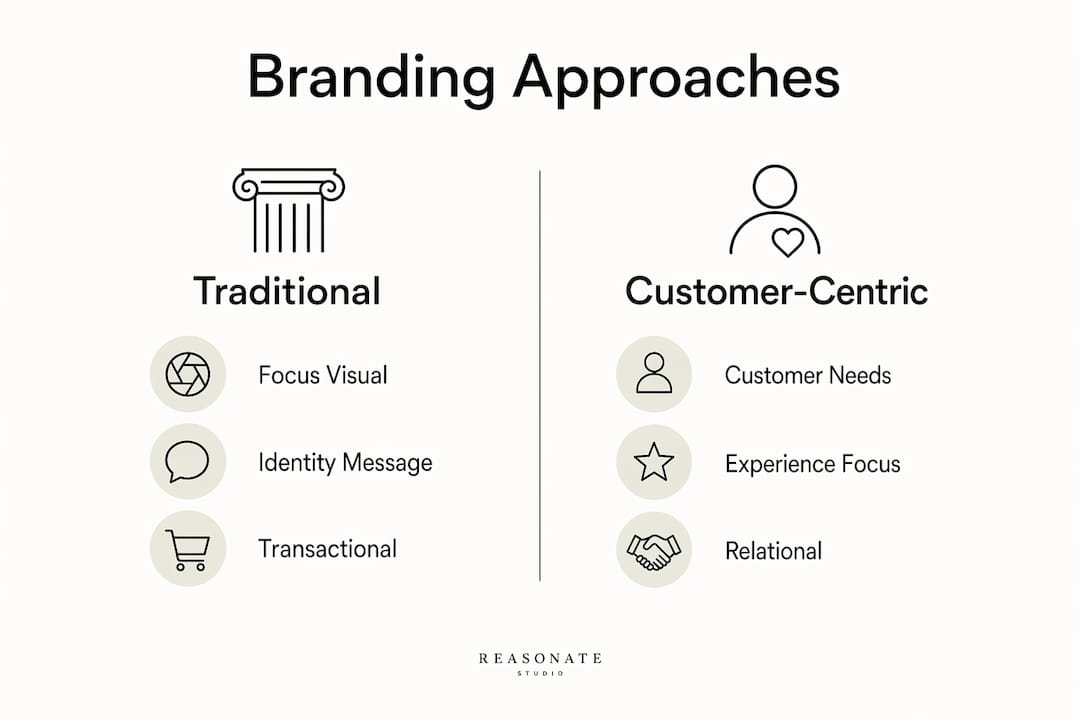
The shift from transactional to relational brand experiences is where small businesses gain the most ground. Large corporations have the budget to recover from inconsistent experiences. Small businesses do not. A single misaligned touchpoint, such as a confusing checkout process or a tone-deaf support response, can undo months of relationship building. Consistent brand experiences reduce ambiguity and build memorable connections, which is exactly the competitive edge a small business needs.
The advantages of a customer-oriented branding approach are not abstract. They show up in your revenue, your retention numbers, and your word-of-mouth pipeline.

Start with the cost of getting it wrong. 57% of customers would switch to a competitor after just one bad experience. That statistic means more than half your customer base is one poor interaction away from leaving, regardless of how strong your product is. For a small business with a limited customer base, that risk is existential.
Now consider the upside. Brands building meaningful relationships grow two to five times faster and demonstrate greater resilience during economic downturns. That growth multiplier is not reserved for enterprise brands. It applies directly to coaches, consultants, and founders who invest in genuine customer connection over time.
The core benefits of a customer-first branding strategy include:
That last point deserves emphasis. BCG’s research connects brand trust directly to measurable shareholder value and consumer choice. For a small business, this means that investing in customer-centric branding is not a soft, feel-good exercise. It is a financial strategy with a documented return.
Pro Tip: Consistency multiplies every benefit listed above. A single great customer experience creates a positive memory. Consistent great experiences create a brand identity that customers describe to others without being asked.
Implementing a customer-first approach requires more than updating your website copy. It demands alignment across four core pillars: data, a selfless brand orientation, sales enablement, and retention systems. Each pillar supports the others, and weakness in one undermines the rest.
Here is a practical sequence for getting started:
Collect and study real customer data. Survey existing customers about what they value most, what frustrated them before finding you, and what language they use to describe their problem. This data becomes the foundation of your brand voice, your messaging, and your offer positioning. Tools like Typeform, Google Forms, or even direct email conversations work well for this.
Audit every brand touchpoint. Map the full customer journey from first awareness through post-purchase. Review your website, social media profiles, email sequences, onboarding materials, and support interactions. Ask one question at each stage: does this reinforce our brand promise, or does it create friction? Aligning website, onboarding, and follow-up to reinforce your brand promise directly prevents churn after negative experiences.
Align your team around the customer promise. Customer-centric branding fails when marketing says one thing and support delivers another. Every person who touches the customer relationship needs to understand the brand values and how they apply to their specific role. This is where aligning marketing and sales becomes a direct revenue driver, not just an organizational nicety.
Meet customers on their preferred channels. Multichannel support is a strong driver of customer loyalty. If your customers prefer Instagram DMs over email, that preference matters. Forcing customers to use your preferred channel signals that your convenience matters more than theirs.
Build a feedback loop into your operations. Schedule quarterly reviews of customer feedback, support tickets, and retention data. Use this information to refine your messaging, improve your onboarding, and identify gaps between your brand promise and your actual delivery.
Treat your brand as an operating system, not a campaign. Integrating employees and partners into the brand delivery process sustains advocacy and growth far beyond what any single campaign can achieve. KPMG’s research on Total Experience approaches confirms that organizations unifying customer, employee, and partner interactions consistently outperform those running disconnected efforts.
Pro Tip: The most common implementation mistake is treating the brand audit as a one-time project. Schedule a 90-minute brand touchpoint review every quarter. You will catch misalignments before they become churn.
Learning how to develop brand identity that reflects your customer-centric values at every stage is the practical starting point for making this framework real inside your business.
Adopting a customer-oriented approach is not without friction. Understanding the obstacles in advance gives you a significant advantage over businesses that discover them mid-execution.
The most damaging misconception is that customer-centric branding is a visual or messaging update. Changing your logo, refreshing your website, or rewriting your bio does not make your brand customer-centric. Mistaking branding for a visual refresh leads to fragmented experiences and customer churn, because the underlying operations and culture remain unchanged. The new look creates an expectation that the old experience fails to meet.
Other common challenges include:
The businesses that succeed with this approach treat it as infrastructure. They build brand trust strategies into their daily operations rather than reserving them for launch campaigns or quarterly promotions.
After working with over 100 founders, coaches, and consultants at Reasonate Studio, I can tell you the pattern is remarkably consistent. The businesses that grow fastest are not the ones with the most polished visuals or the cleverest taglines. They are the ones where the founder genuinely understands their customer’s world and has built every brand touchpoint to reflect that understanding.
What surprises most of my clients is how much revenue is already sitting in their existing customer relationships. They come to me focused on acquiring new customers, and within the first strategy session, we identify two or three touchpoints where current customers are quietly disengaging. Fixing those gaps produces faster results than any new campaign.
The mindset shift I push hardest is this: stop thinking of your brand as something you broadcast and start thinking of it as something your customers experience. Your brand is not your Instagram grid. It is the feeling someone has after every single interaction with your business, from the first Google search to the third invoice. When those feelings are consistently positive and aligned with your promise, repeat business becomes the default, not the exception.
I also want to push back on the idea that customer-centric branding is only for businesses with large teams or big budgets. The Aligned Impact Model™ we use at Reasonate Studio was built specifically for founders who are doing this work without a full marketing department. The framework works because it prioritizes clarity and alignment over volume and complexity. You do not need more content. You need content that actually reflects what your best customers already love about you.
The hardest part is committing to consistency when you are busy running a business. But that consistency is exactly what separates brands that customers return to from brands they forget.
— Kaitlyn
If you recognize your business in this article, the next step is not another content calendar or a new logo. It is a clear-eyed look at whether your brand is actually delivering on the promise you are making to customers.
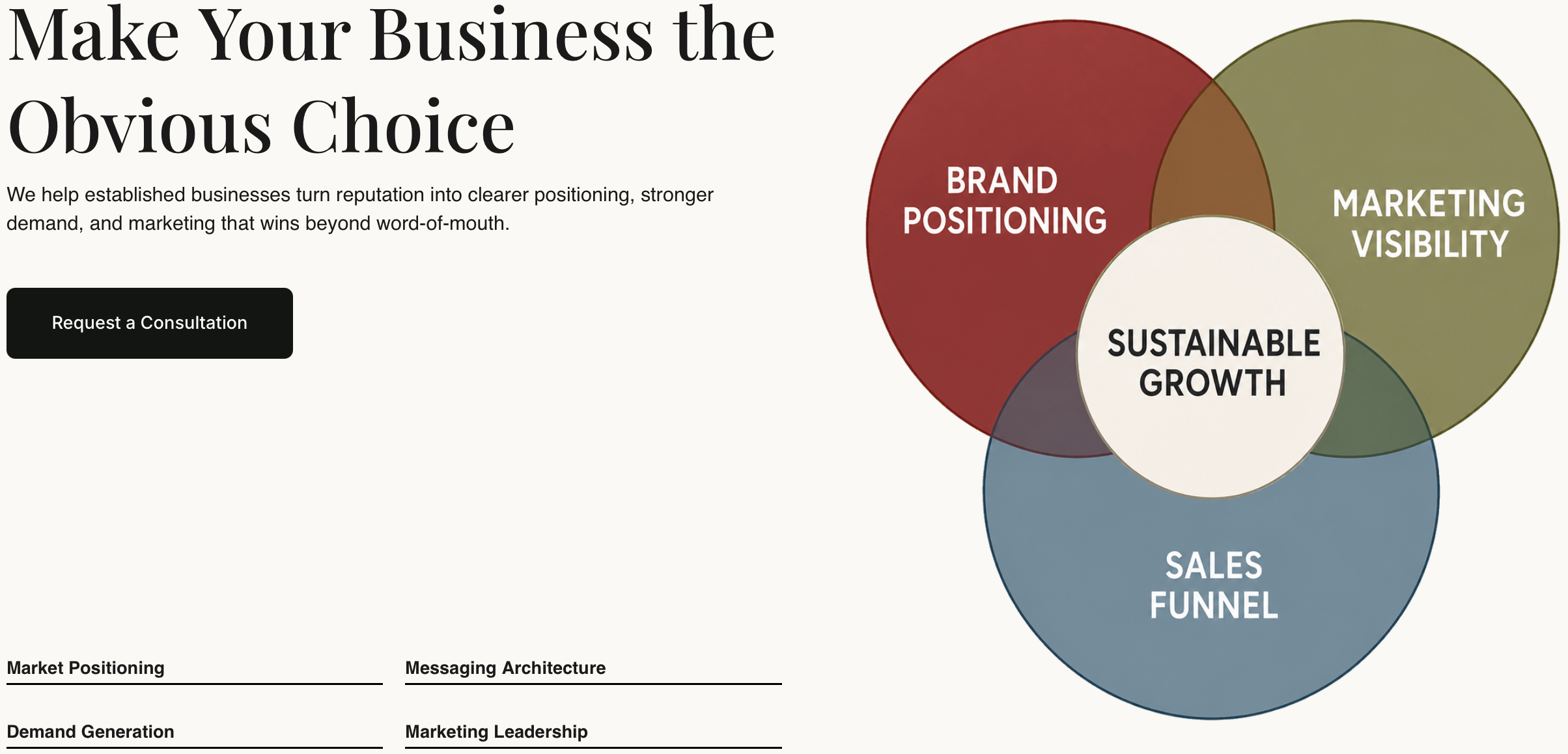
At Reasonate Studio, we help founders, coaches, and consultants build brands that connect and convert through the Aligned Impact Model™. Our sales page optimization service directly addresses one of the most common gaps we see: a brand that sounds great in conversation but loses customers the moment they land on the website. We also offer SEO keyword research to make sure the right customers can find you before the relationship even begins. If you want to know exactly where your brand is losing connection, start with our free Brand Audit Report and get a clear picture of what to fix first.
Customer-centric branding is the practice of aligning every brand touchpoint, from your website to your customer support, with your customers’ needs and expectations. Shopify describes it as turning transactions into repeatable trust builders that drive loyalty and revenue growth.
Brands that build meaningful customer relationships grow two to five times faster than competitors, according to Advertising Week research. Higher retention, stronger word-of-mouth, and premium pricing power all contribute directly to revenue growth.
Customer centricity is not a one-time project. The Academy of Marketing Science confirms it continuously reshapes decision-making and success metrics across an organization. Most businesses see meaningful improvements in retention and engagement within 60 to 90 days of consistent implementation.
The most common mistake is treating it as a visual or messaging update rather than an operational shift. Zendesk research shows that misaligning brand touchpoints, such as onboarding, support, and follow-up, leads directly to fragmented experiences and customer churn.
Trust is the top purchase driver for 68% of consumers, according to BCG. For small businesses with limited marketing budgets, building trust through consistent customer experiences is the most cost-effective way to reduce churn and grow revenue without constantly chasing new leads.