September 22, 2026
Why Update Brand Messaging: Essential Guide for Growth


Discover purpose-driven branding benefits for small business owners. Learn how to boost customer loyalty and transform your marketing strategy today!

TL;DR:
- Most consumers consider a brand’s purpose a key factor in their purchasing decisions, not just price or features. Purpose-driven branding fosters customer loyalty, internal alignment, and differentiation, especially in crowded markets. It requires authenticity, consistent communication, and long-term commitment to truly resonate and build meaningful connections.
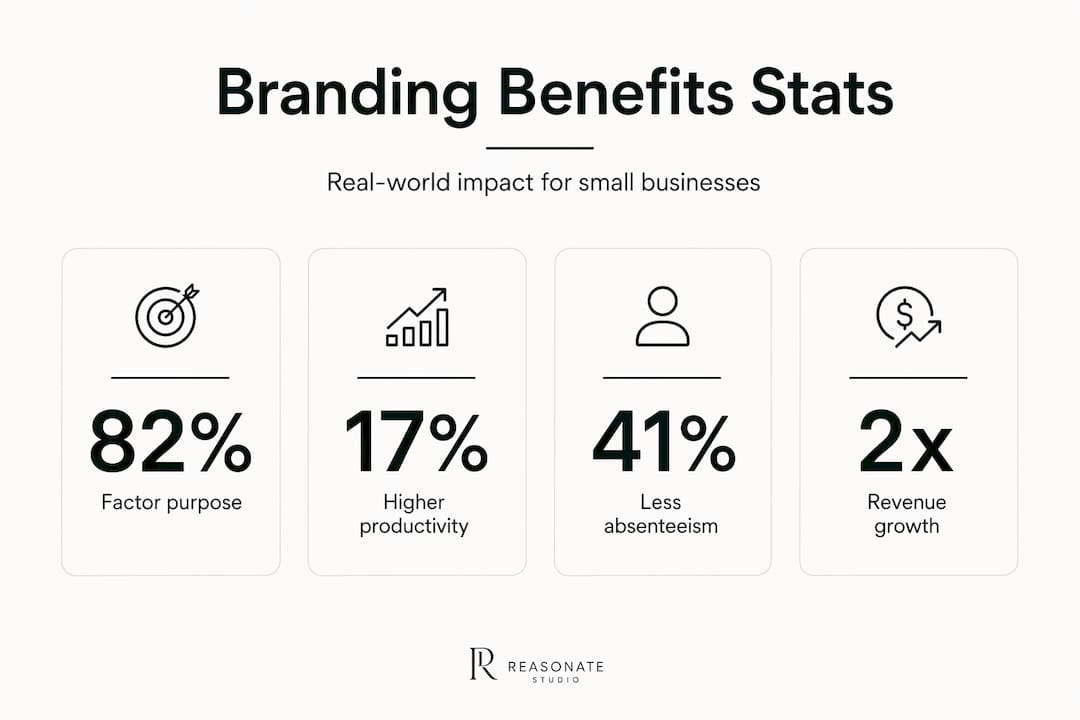
Most small business owners assume customers make buying decisions based on price or product features. The data tells a different story. 82% of consumers consider a brand’s purpose a decisive factor in whether they buy. That single statistic should reframe how you think about your entire marketing approach. The purpose-driven branding benefits extend far beyond feel-good messaging. They shape customer loyalty, team culture, and even how your business shows up in search. This article walks you through what purpose-driven branding actually means, why it works, where entrepreneurs get it wrong, and how to put it into practice starting now.
Before you can apply it, you need to understand what purpose-driven branding actually is, and what it is not.
Purpose-driven branding is the practice of building your brand around your company’s reason for existing beyond making money. It answers the question: why does this business exist, and who does it genuinely serve? That “why” becomes the foundation for every message, product decision, customer interaction, and piece of content you create.
This is fundamentally different from traditional feature or price-based branding. Traditional branding says, “Here’s what we sell, and here’s what it costs.” Purpose-driven branding says, “Here’s what we believe, and here’s the problem we exist to solve for people like you.” One speaks to the rational mind. The other speaks to something deeper.
For small business owners, this distinction matters enormously. You are not going to win a features race against a well-funded competitor with a bigger budget. You almost certainly cannot compete on price with a mass-market option. But you can win on meaning. A customer who feels genuinely connected to what your brand stands for is not scanning competitors’ pricing pages. They are already sold.
Here’s what purpose-driven branding actually consists of:
The key word is authentic. Purpose borrowed from a trend or bolted onto existing marketing rarely lands. It tends to read as hollow, and customers are increasingly skilled at spotting the difference.
This is where the data gets compelling. Customers are not just passively noticing brand purpose. They are acting on it. Consumers are four to six times more likely to purchase from brands with a strong, clearly aligned purpose. That is not a marginal lift. That is a complete shift in conversion odds.
Why does purpose drive purchase behavior so dramatically? Because it replaces a transactional relationship with an emotional one. When a customer buys from you because they believe in what you stand for, they are not just buying a product. They are expressing something about their own values. That identity-level connection is extraordinarily sticky.
One of the most powerful advantages of purpose-driven branding is what it does for storytelling. Stories are retained 22 times more effectively than raw facts. A brand with a clear purpose has a ready-made narrative. You are not just explaining features. You are telling a story about change, about the people you serve, about a problem worth solving. That story is memorable in ways that product specs simply are not.
Stat to know: 82% of consumers factor purpose into buying decisions. Yet most brands compete on price and features, leaving a massive emotional connection gap wide open for purpose-led businesses to fill.
Purpose also drives meaningful differentiation in crowded markets. When competitors are focused on similar products at similar price points, your “why” becomes the deciding factor. Consider a local coffee shop competing against national chains. The chain wins on convenience and recognition. But the independent shop rooted in direct-trade sourcing and community investment wins on meaning, and that meaning builds a loyal customer base that actively chooses them.
Benefits that purpose brings to customer relationships include:
Pro Tip: Avoid choosing a purpose that sounds good but has no genuine connection to your business, your customers, or your own values. A health coach whose purpose is “environmental sustainability” may confuse more customers than it connects with. Your purpose must be relevant to what you actually do and who you actually serve.
The impact of brand purpose on revenue is equally concrete. Companies with strong social responsibility commitments generate 20% more revenue than competitors without them and carry 6% higher market value. For a small business, that is not an abstract figure. That is the difference between a business that grows and one that stagnates.
Most conversations about purpose-driven branding focus outward: customers, marketing, and sales. The internal benefits are just as real, and for small businesses with lean teams, they may be even more immediately impactful.
Purpose-aligned companies see 17% higher productivity and 41% less absenteeism compared to companies without a clearly communicated purpose. Think about what that means operationally. Fewer sick days. More output per person. Less time managing disengaged employees. A small team operating with that kind of alignment punches well above its weight.

The reason is straightforward. People do better work when they understand why the work matters. A team member who knows the company’s purpose and genuinely connects with it is not just completing tasks. They are contributing to something they care about. That intrinsic motivation is far more durable than a pay raise or a performance bonus.
Purpose also plays a significant role in attracting the right talent in the first place. Skilled professionals increasingly filter employers by values alignment, not just compensation. A small business with a clear, well-communicated purpose becomes a more attractive employer than a larger competitor whose purpose is vague or non-existent. You may not be able to match a corporate salary, but you can offer meaning, which matters more to a growing segment of workers than most employers realize.
Pro Tip: Use your brand purpose as a decision-making filter inside the business, not just in your marketing. When evaluating a new partnership, campaign, or product idea, ask: does this align with our purpose? Purpose-led decision-making is faster, more consistent, and more credible to your team than decisions that seem arbitrary or purely profit-driven.
There is also a consistency benefit worth naming. When your team understands and believes in the brand’s purpose, their customer interactions naturally reinforce it. You do not need a script for every situation. Purpose provides the framework, and your team fills in the details. That operational clarity reduces friction, speeds decisions, and keeps your brand voice consistent across every touchpoint.
Knowing the benefits of mission-driven marketing is not enough. You also need to understand the real pitfalls, because the most common ones are not obvious until you are already stuck in them.
The biggest risk is purpose-washing: declaring a purpose publicly that does not match how you actually operate. A brand that claims to be committed to transparency while burying fees in fine print, or claims to champion small businesses while outsourcing all customer service overseas, destroys trust faster than having no stated purpose at all. Customers notice the gap, and the credibility damage is severe.
A second challenge is surprisingly underappreciated. Consumer awareness of brand purpose is remarkably low even among well-established brands, with awareness often falling below 10%. This means you can have a genuinely strong purpose and still fail to benefit from it if you do not communicate it consistently. Purpose awareness does not build overnight. It is accumulated through repetition across every message, every campaign, and every customer experience over time.
The comparison below shows the difference between effective and ineffective approaches:
| Practice | Authentic purpose-driven branding | Ineffective purpose-driven branding |
|---|---|---|
| Purpose definition | Rooted in genuine business values and customer needs | Chosen based on trends or what sounds impressive |
| Communication | Consistent across all channels and touchpoints | Featured in launch campaigns, then rarely mentioned |
| Internal alignment | Team understands and reflects purpose daily | Purpose lives on the website, not in operations |
| Measurement | Tracks social, community, and loyalty metrics | Measured only by short-term sales lift |
| Customer relevance | Purpose connects directly to audience values | Generic messaging with no specific audience tie-in |
A third challenge is the time commitment. 90% of ads do not have enough time to “wear in” and create meaningful memory structures. Brand purpose follows the same logic. It requires consistent, long-term communication before it becomes a recognizable part of your brand identity. Small business owners who expect quick wins from a purpose statement will be disappointed. Those who commit to the long game will see the compounding returns.
Finally, purpose must be context-driven and relevant to your specific audience. A purpose that resonates with one customer segment may mean nothing to another. Before you commit to a brand purpose publicly, test it against your actual customers. Does it reflect something they genuinely care about? Does it connect logically to what you sell? Continuity is the ingredient that transforms a stated message into a real brand identity.
Understanding why purpose matters is step one. Building it into your actual business is where the real work happens. Here is a framework that works for founders, coaches, and consultants at any stage.
Find your authentic “why.” Start by asking what problem you are genuinely motivated to solve, not just what you sell. Interview your best customers and ask them why they chose you. Look for patterns in their answers. The overlap between what drives you and what your customers value is where your real brand purpose lives.
Write a purpose statement that is specific. “We help people live better” is not a purpose. “We help first-generation entrepreneurs build brands that create generational wealth” is. Specificity signals authenticity. Vague language signals that the purpose was written to sound good rather than to mean something.
Embed purpose across every touchpoint. Your purpose should be visible in your website copy, your social content, your email sequences, your product descriptions, your customer service tone, and your onboarding experience. If purpose only lives in your “About” page, it is not working hard enough.
Align your team around it. Share the purpose statement in onboarding. Reference it in team meetings. Use it as a filter when evaluating new initiatives, as described above. When your team internalizes the purpose, it shows up naturally in their work.
Tell stories, not facts. Your purpose becomes real to customers through narrative. Case studies, customer testimonials, founder stories, and behind-the-scenes content all bring purpose to life in ways that a mission statement never can. Use brand storytelling techniques to make your purpose feel human and real.
Measure beyond revenue. Track customer retention rates, net promoter scores, community engagement, and any social or environmental metrics tied to your purpose. These numbers tell you whether your purpose is actually landing with the people you are trying to reach.
Building a purpose-led brand also means thinking about intentional marketing strategy as the delivery vehicle. Purpose without consistent marketing behind it stays invisible. A clear message needs a clear distribution plan to create the repeated exposure that builds recognition over time.
One more thing worth noting: in an AI-driven search environment, brands without clear purpose risk becoming invisible entirely. AI synthesizes a brand’s narrative footprint across the web. A brand with a consistent, clear purpose creates a richer footprint that AI-led discovery can actually surface. A scattered or purposeless brand gets lost in the noise.
I have worked with founders, coaches, and consultants long enough to say this plainly: the brands that struggle most are almost never struggling because of a bad product. They are struggling because no one on the outside truly understands what the brand stands for. The purpose is muddled, the messaging is scattered, and the founder assumes the work speaks for itself. It does not.
What I have learned after years of this work is that small businesses systematically underestimate how long it takes for a brand purpose to register with the people you are trying to reach. You will say it a hundred times before most of your audience hears it twice. That is not a failure. That is how brand memory actually builds. The businesses I have seen succeed are the ones willing to say the same true thing, consistently, across a long enough timeline for it to stick.
I have also watched purpose transform the inside of a business in ways that surprised even the founders. When you give a team a real reason to care about the work, something shifts. Decisions get easier. Conflict decreases. Onboarding gets faster. The purpose becomes a shared language, and that shared language is operationally valuable in ways that no org chart or policy document can replicate.
The uncomfortable truth I want you to sit with is this: a purpose statement written to sound good will cost you more than having no stated purpose at all. Customers who feel deceived by a purpose that does not match their experience do not stay quiet. They leave, and they tell people why.
The brands I believe in most are the ones whose purpose you can feel before you ever read it. It is in how they respond to a complaint, how they package their product, how their founder shows up on a call. That depth of alignment does not happen by accident. It is chosen, repeated, and embedded into every decision over time. My advice to you: start small, be honest, and stay consistent far longer than feels necessary. That is how purpose actually works.
— Kaitlyn
If you have read this far and recognize your business in these descriptions, whether that is scattered messaging, unclear purpose, or marketing that does not reflect what you actually stand for, you are not behind. You are at the beginning of something worth building correctly.
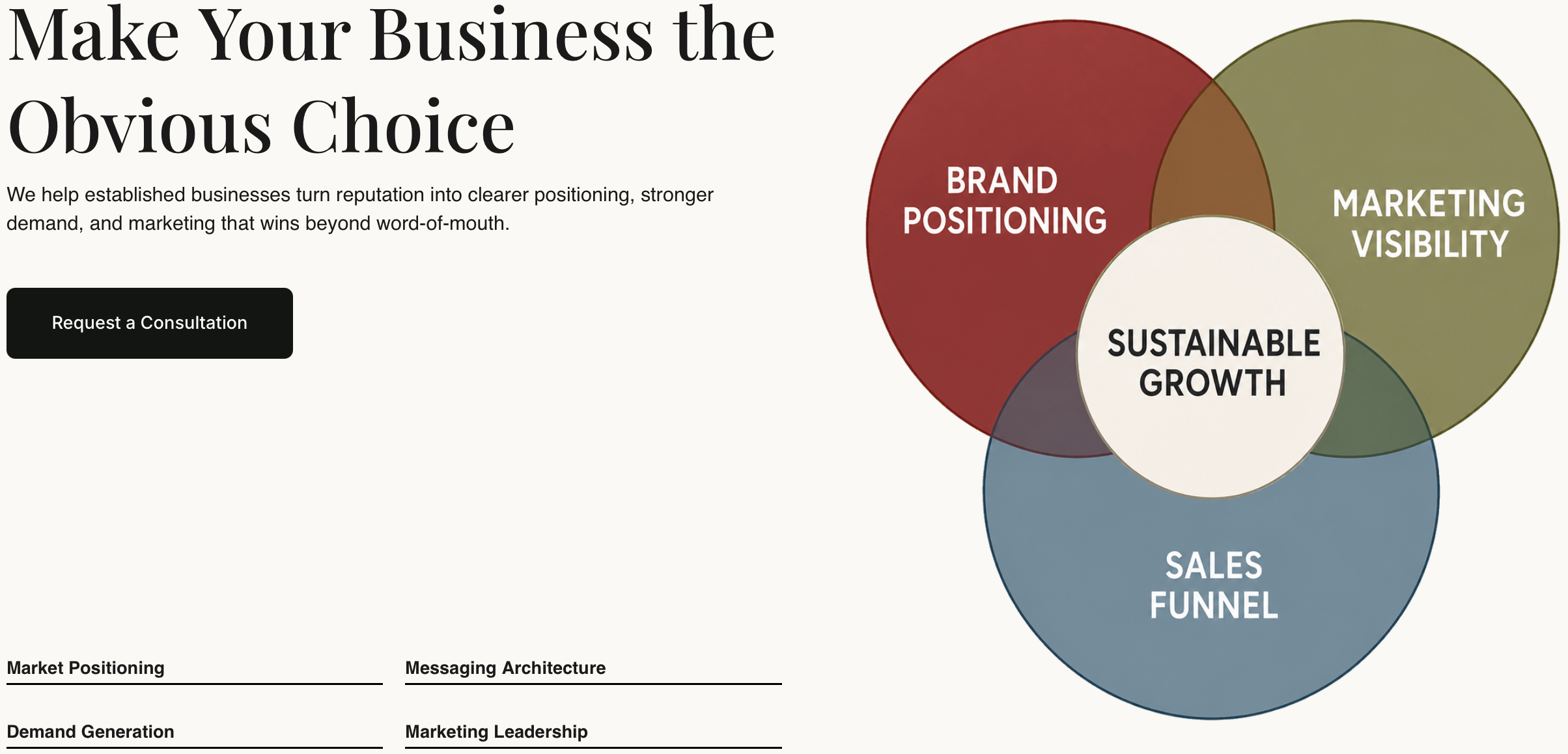
At Reasonate Studio, we work with founders, coaches, and consultants who are ready to stop guessing and start building a brand that actually connects. Our sales page optimization service is specifically designed to help purpose-driven small businesses translate what they stand for into copy that converts. Because a clear purpose that your sales page cannot articulate is a missed opportunity on your highest-stakes real estate. Beyond sales pages, our work covers brand voice development, messaging strategy, content creation, and the full marketing system your brand needs to grow with intention. If you want a partner who treats your brand as seriously as you do, that is exactly what we are here for.
Purpose-driven branding increases customer loyalty, drives higher purchase rates, and builds emotional connection that price-based competitors cannot replicate. Internally, it also improves team productivity and reduces employee absenteeism.
82% of consumers factor a brand’s purpose into their purchasing decisions, and purpose-aligned brands see customers who are four to six times more likely to buy compared to brands without a clear purpose.
Purpose-driven branding is a long-term strategy. Consumer awareness of brand purpose is often below 10% even for well-established brands, which means consistent communication over months and years is required before meaningful brand recognition builds.
Purpose-washing is when a brand publicly claims a purpose that its actual practices do not support. It damages customer trust faster than having no stated purpose, because it signals inauthenticity and customers notice the disconnect.
Yes. Purpose is one area where small businesses have a genuine structural advantage. Founders can communicate their “why” directly and authentically in ways large organizations struggle to replicate, creating deeper customer connection and stronger loyalty at any budget level.