September 22, 2026
Why Update Brand Messaging: Essential Guide for Growth


Discover the best way to market your website in 2026. Learn essential strategies for small business owners to boost online visibility and growth.
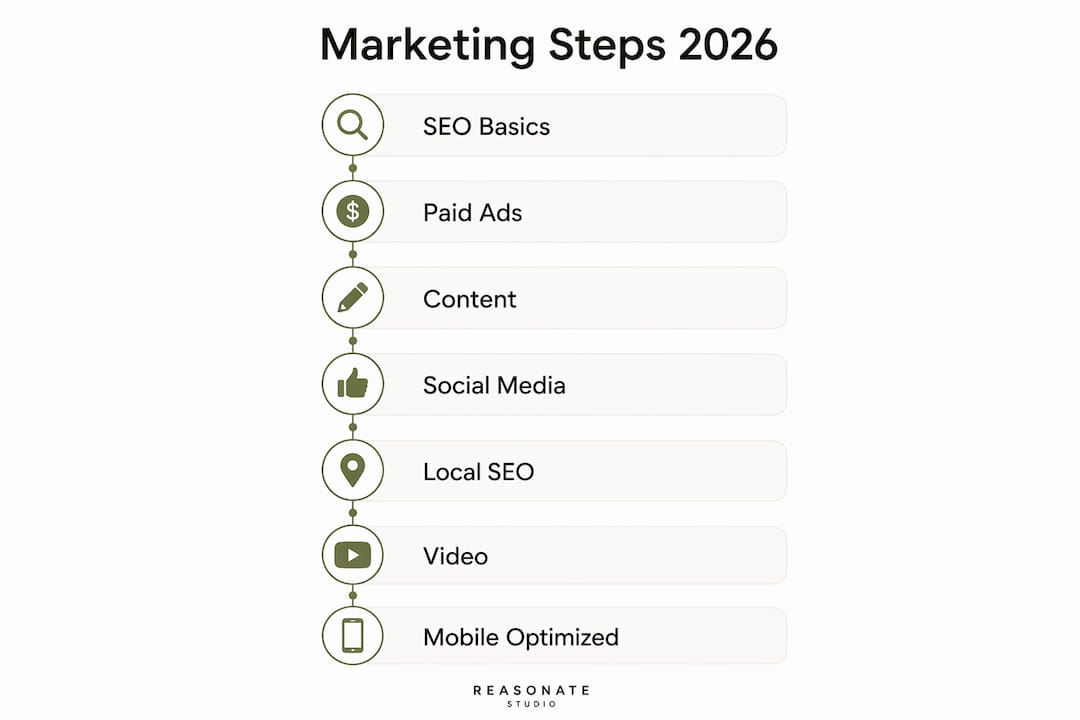
The most effective way to market a website in 2026 combines SEO, paid advertising, content marketing, social media, and email into one focused system. For small business owners, coaches, and consultants, the mistake isn’t doing too little. It’s doing too much at once without a clear plan. The strategies below are the ones that actually move the needle, ranked by impact and practical fit for businesses without a full marketing department.
The core strategies covered in this guide:
Modern SEO has almost nothing to do with keyword stuffing. The shift that’s been building for years is now complete: search engines rank pages based on how well they fulfill a specific visitor task, not how many times a phrase appears. If you’re a coach or consultant, that means your service pages need to answer the exact questions your ideal clients are typing into Google, not just repeat your job title.
The structure that works best right now is a pillar-and-cluster model. You build one comprehensive page around a broad topic (say, “business coaching for women entrepreneurs”) and support it with shorter, more specific articles that link back to it. This signals topical authority to search engines and keeps visitors moving through your site.
Technical SEO still matters, but the bar is lower than most people think. Page speed, mobile responsiveness, and clean internal linking cover 80% of what Google needs to crawl and rank your site. The on-page SEO factors that trip up small business sites most often are slow load times on mobile and pages with no clear purpose.
Actionable SEO tactics for 2026:
Paid advertising is the fastest route to visibility. Google Ads and paid social can generate traffic within 24 hours of a campaign going live, which makes them the right tool when you need results before organic SEO has had time to build. Paid channels made up nearly 42% of all website traffic in 2025, growing 18% year over year. That’s not a temporary spike. Paid traffic has become a legitimate long-term channel that compounds alongside organic efforts.
Google Ads works best when you target high-intent keywords, the phrases people type when they’re ready to buy or book. For a consultant, that might be “executive coach Austin TX” rather than “what is executive coaching.” The more specific the keyword, the lower the competition and the higher the conversion rate.
Paid social operates differently. Platforms like Meta and LinkedIn let you target by job title, industry, income, and behavior, which means you can put your offer in front of exactly the right person even if they’ve never searched for you. The key is using paid social to amplify content that’s already performing organically, not to replace it.
Best practices for paid campaigns:
Pro Tip: Before launching any paid campaign, make sure your landing page has one clear call to action. A well-written ad sending traffic to a cluttered homepage wastes every dollar you spend.
Content marketing is the long game, and it pays off in ways paid ads can’t. Companies publishing 16 or more blog posts per month get 3.5x more traffic than those publishing infrequently. Consistency and quality together drive that result. Posting once a month and calling it a content strategy doesn’t move the needle.

The content that performs best solves a specific problem without pitching a product. How-to guides, comparison posts, and data-driven articles attract links naturally because other sites want to reference useful resources. Effective marketing provides genuinely valuable, user-centered content that builds trust before it asks for anything. That’s not just good ethics. It’s what Google rewards.
Guest blogging adds a layer that solo publishing can’t: someone else’s audience. Writing a guest post for a publication your ideal clients already read puts your name and website in front of people who’ve never heard of you, and the backlink it generates strengthens your own site’s authority. One well-placed guest post on a respected industry site can drive referral traffic for years.
Content types and guest blogging tactics that work:
For a deeper look at building this out systematically, the content marketing strategy framework from Reasonate Studio covers the full process.
Social media and email serve different jobs, and the best website promotion strategies use both. Social platforms build awareness and attract new audiences. Email nurtures the people who already know you and converts them into paying clients.
Choosing the right platform matters more than being everywhere. A B2B consultant gets more traction on LinkedIn than TikTok. A health coach with a visual brand might find Instagram more productive than X. Pick one or two platforms where your ideal clients actually spend time, and go deep there before spreading thin.
The content that performs on social media is almost never salesy. Short tips, behind-the-scenes process posts, and honest takes on industry topics build the kind of trust that eventually sends people to your website. When you do promote a service, it lands better because you’ve already given value.
Email marketing has a higher return on investment than almost any other channel for service businesses. A welcome sequence that delivers real value in the first three emails sets the tone for the entire relationship. From there, a consistent weekly or biweekly newsletter keeps you top of mind without requiring a new audience every time you have something to offer.
Tactics for social and email that actually work:
Google Business Profile is one of the highest-leverage tools available to US small businesses, and most owners set it up once and forget it. A complete, actively managed profile improves your local search rankings and drives direct traffic to your website from people searching in your area right now.
Verification is the first step. An unverified profile won’t rank well, and Google occasionally removes them. Once verified, fill out every field: business category, service areas, hours, website URL, and a detailed description that includes the services you actually offer. Incomplete profiles consistently rank below complete ones.
Customer reviews are the most powerful signal in local search. Ask every satisfied client to leave a Google review, and respond to every review you receive, positive or negative. Responses show Google and potential clients that you’re active and engaged.
Google Business Profile optimization checklist:
For businesses that want to go further, local SEO services can connect your Google Business Profile performance to your broader website ranking strategy.
The most common failure pattern in small business marketing isn’t a bad strategy. It’s too many strategies running at once. Experts consistently recommend focusing 90 days on one traffic source and one conversion path before expanding. That focus lets you build a measurable system instead of a pile of disconnected tactics.
Reasonate Studio’s Aligned Impact Model™ is built around exactly this principle. The framework moves founders through three phases: brand foundation, audience clarity, and message development. Before any content gets created or any ad gets launched, the underlying brand story has to be clear. Without that foundation, even well-executed tactics produce inconsistent results.
Reasonate Studio has delivered a 454% sales increase for a health coach, a 283% order increase in 30 days for a consumer brand, and a 636% jump in Instagram profile visits for a travel agency. Those results come from the same place: clear messaging, a focused channel strategy, and pages designed to convert.
Pro Tip: Before adding a new marketing channel, run a quick marketing audit on what you’re already doing. Most small businesses have one channel that’s working better than they realize, and two that are quietly wasting time.
Influencer marketing isn’t just for consumer brands with large budgets. For coaches and consultants, micro-influencers (creators with 5,000–50,000 engaged followers in a specific niche) often deliver better results than accounts with millions of followers and diluted audiences.
The logic is simple. A fitness coach with 12,000 followers who trusts your nutrition program and tells their audience about it reaches exactly the right people. That recommendation carries more weight than a generic sponsored post from a celebrity with no connection to your industry.
The best way to approach influencer partnerships at the small business level is through genuine relationship-building first. Comment on their content, share their work, and reach out with a specific collaboration idea rather than a generic pitch. Offer something of real value: a free session, a co-created piece of content, or a revenue-share arrangement. Transactional pitches get ignored. Genuine partnerships get posted.
Track the results with a unique landing page URL or discount code so you can measure actual traffic and conversions, not just impressions.
Local SEO is distinct from general SEO in one key way: the goal isn’t just to rank nationally. It’s to appear when someone in your city or region searches for what you offer. For a consultant in Denver or a coach in Nashville, local search visibility can be more valuable than a national ranking on a competitive keyword.
The foundation is consistent NAP data: your business name, address, and phone number must appear identically across your website, Google Business Profile, Yelp, and any other directory where you’re listed. Even small inconsistencies (abbreviating “Street” on one listing and spelling it out on another) can suppress your local rankings.
Location-specific content also helps. A blog post titled “Business coaching for entrepreneurs in Austin” targets a local search intent that a generic post about business coaching never will. Creating pages or posts for each city or region you serve gives Google clear geographic signals.
Citations from local directories and chamber of commerce listings build authority in your area. The keyword research behind local SEO is different from broad SEO work, and getting it right means targeting phrases with local modifiers that your actual prospects are using.
Video is the format most likely to hold attention long enough to build trust. For coaches and consultants especially, where the buying decision is personal, seeing and hearing you matters in a way that a blog post can’t replicate. Short-form video on platforms like Instagram Reels and YouTube Shorts introduces you to new audiences. Long-form video on YouTube builds the deeper familiarity that converts viewers into clients.
The most effective video content for service businesses answers one specific question per video. “How do I price my coaching packages?” performs better than “Everything about coaching pricing” because it matches a precise search intent. YouTube functions as a search engine, so treating your video titles and descriptions the way you’d treat a blog post title pays off in organic discovery.
Repurposing video extends its value significantly. A 10-minute YouTube video can become three Instagram Reels, a blog post with an embedded video, and a newsletter topic. That’s four pieces of content from one recording session.
You don’t need professional equipment to start. A smartphone with decent lighting and clear audio is enough. What matters more than production quality is consistency and specificity.
More than half of all web traffic comes from mobile devices, and that share keeps growing. A website that loads slowly or displays poorly on a phone loses visitors before they’ve read a single sentence. Google also uses mobile-first indexing, which means your mobile site’s performance directly affects your search rankings.
Page speed is the most immediate issue to fix. Large uncompressed images, excessive plugins, and slow hosting all contribute to load times that push visitors away. Tools like Google PageSpeed Insights identify the specific issues dragging your score down and prioritize them by impact.
Beyond speed, mobile UX comes down to a few practical details. Buttons need to be large enough to tap without zooming. Forms should require as few fields as possible. Your phone number should be clickable so mobile visitors can call directly. These aren’t design flourishes. They’re the difference between a visitor who converts and one who bounces.
Email marketing also lives on mobile. More than half of all emails are opened on a phone, so short subject lines, single-column layouts, and large tap targets in your email design aren’t optional. Test every email on mobile before sending.
Most small business owners, coaches, and consultants don’t need more marketing tactics. They need a clearer strategy and someone to execute it consistently. That’s exactly what Reasonate Studio was built to do.
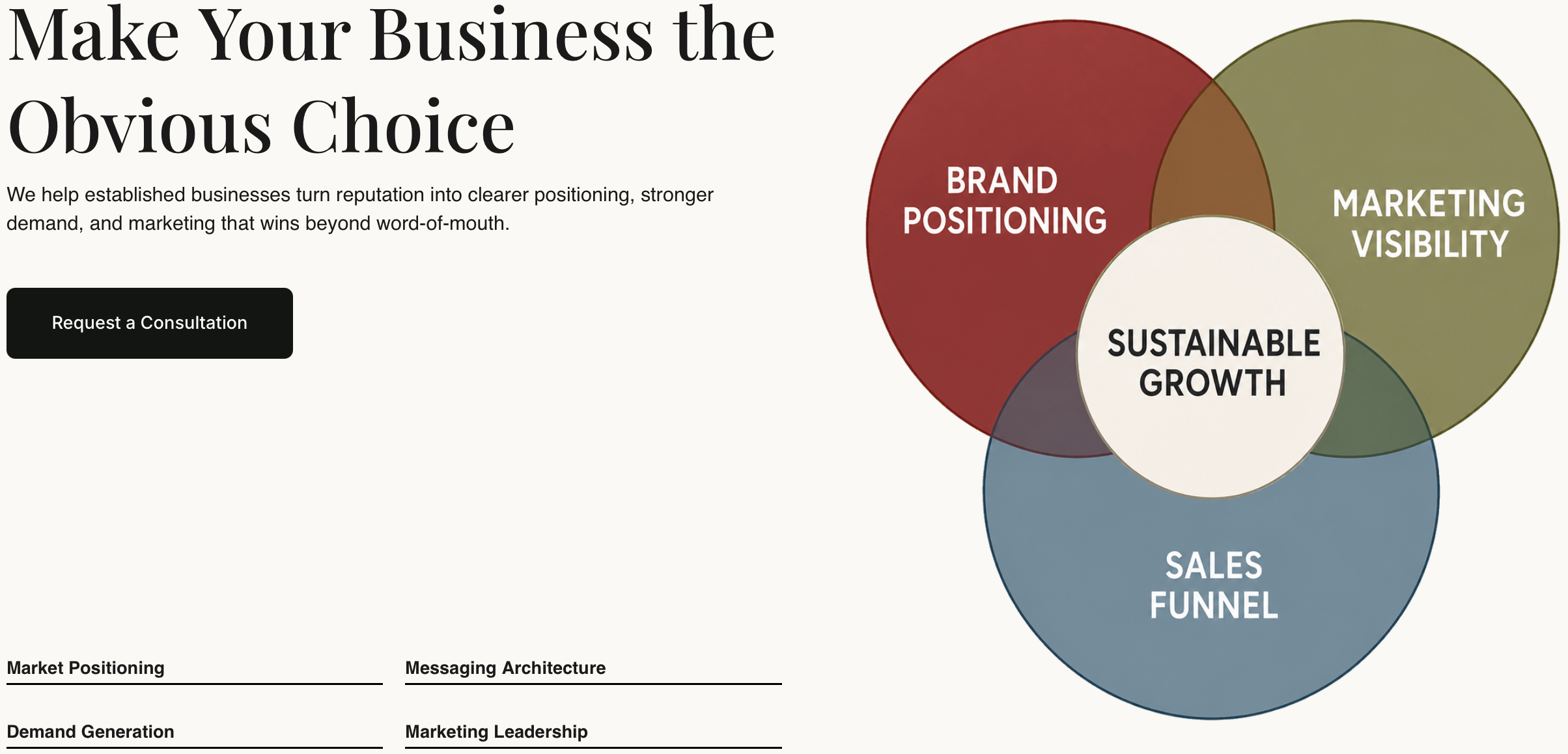
Founded in Austin, TX by Kaitlyn Cole, Reasonate Studio works directly with founders, coaches, and consultants to build marketing systems that generate reliable revenue, not just traffic. Every client works with Kaitlyn personally, not a junior account manager. The studio’s social media management service includes a full strategy, 16 or more posts per month, and monthly analytics reports starting at $900/month. For businesses focused on organic growth, Reasonate Studio’s SEO work covers keyword research, on-page optimization, and local SEO built around your specific market.
The entry point is a free Brand Audit Report (valued at $297) that includes a strategy workshop, social media audit, and quick-win recommendations. If the work doesn’t deliver, the Love It or Leave It guarantee offers a free additional service or a full refund. No long-term contracts. No being handed off to someone who doesn’t know your brand.