September 22, 2026
Why Update Brand Messaging: Essential Guide for Growth


Discover how to run marketing audits effectively to uncover strengths and opportunities for your small business and boost growth.

TL;DR:
- Running regular marketing audits helps small businesses identify strengths, weaknesses, and growth opportunities aligned with their objectives.
- Focusing on specific business problems and prioritizing high-impact, low-effort actions ensures effective, manageable improvements.
A marketing audit is a systematic evaluation of your marketing efforts measured against your business objectives, designed to uncover strengths, weaknesses, and opportunities you can act on. For small business owners and entrepreneurs, knowing how to run marketing audits is one of the most direct ways to stop guessing and start making decisions backed by real data. Tools like Google Analytics 4, CRM platforms, and competitor analysis software give you the raw material. The audit process gives you the framework to turn that raw material into a clear picture of what is working, what is wasting your budget, and where your biggest growth opportunities are hiding. Most businesses benefit from running full audits one to two times per year, with shorter check-ins in between.
The first decision you make before conducting a marketing audit determines whether the whole process is worth your time. That decision is defining your objectives. Without SMART objectives (Specific, Measurable, Achievable, Relevant, and Time-bound), an audit becomes a data dump with no clear direction.
Start by asking what business problem you are trying to solve. Are you losing customers after the first purchase? Is your paid ad spend climbing while conversions stay flat? Are you generating traffic but no leads? Each of these problems points to a different audit scope, and trying to audit everything at once is a common mistake that leads to paralysis.
There are two primary audit types to choose from. A full-stack audit covers every marketing channel and function, from brand messaging and SEO to paid ads, email, and the customer journey. A focused audit zeroes in on one channel or problem area. Full-stack audits take several weeks of cross-functional work, while focused audits can be completed in days. For most small business owners with limited time and team capacity, a focused audit is the smarter starting point.
The marketing areas most worth auditing for small businesses include:
Pro Tip: Prioritize KPIs tied directly to revenue and customer acquisition. Vanity metrics like follower counts tell you very little about business health.
Aligning your audit scope with your current business goals keeps the process focused. If your goal for the next quarter is to reduce customer acquisition cost (CAC), your audit should center on paid channels, landing pages, and conversion tracking. That alignment is what separates a productive audit from a time-consuming exercise.
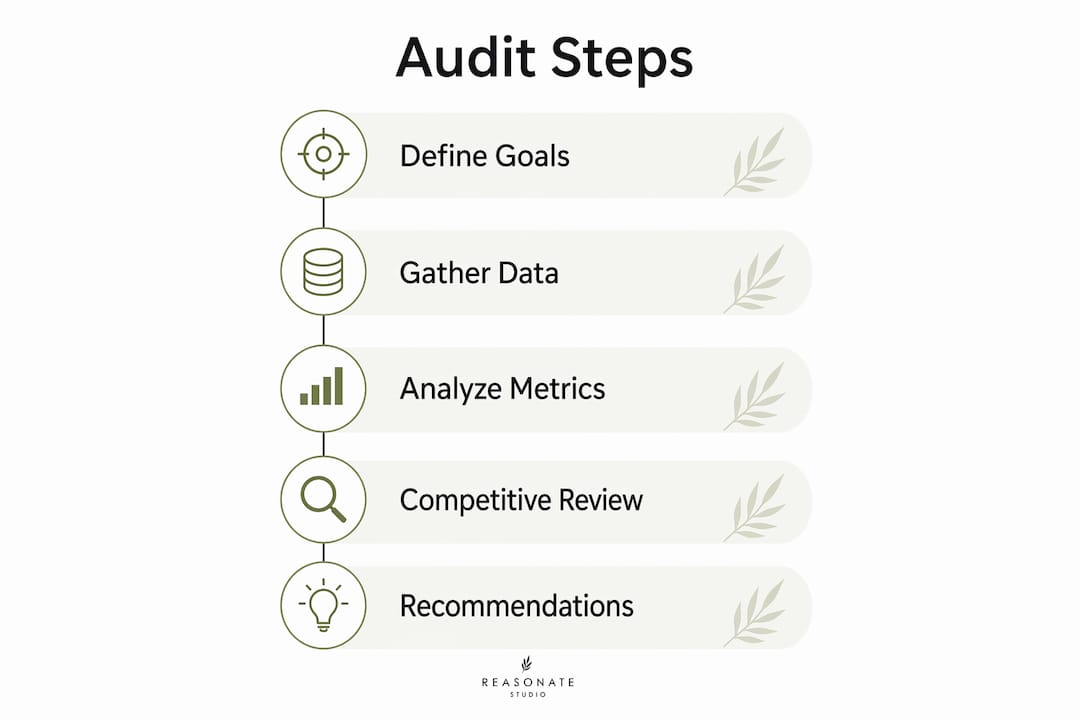
Data collection is where most small business audits break down. The problem is rarely a lack of data. The problem is data scattered across five platforms with inconsistent naming conventions and no clear way to compare apples to apples.

Your primary data sources for a marketing audit include website analytics (Google Analytics 4), your CRM (HubSpot, Salesforce, or similar), ad platforms (Google Ads, Meta Ads Manager), email software (Mailchimp, Klaviyo, ConvertKit), and social media analytics. Each platform uses slightly different terminology and attribution windows, which means you need to normalize your data before drawing any conclusions.
Here is a practical process for centralizing your audit data:
Pro Tip: Tools like Google Looker Studio (free) or Supermetrics can pull data from multiple platforms into a single dashboard, saving hours of manual export work and reducing the risk of copy-paste errors.
Centralizing data from CRM, analytics, and ad platforms before analysis is what separates reliable audit insights from misleading ones. One more check worth adding: confirm your website page load speed. Page load speed under 3 seconds is the industry benchmark for user experience and conversion performance. A slow site can skew your bounce rate data and make your content look less effective than it actually is.
With clean, centralized data in hand, the real analysis begins. The goal here is not just to check whether your metrics look healthy. Marketing audits should focus on uncovering opportunity gaps between your current efforts and your business objectives. That distinction matters. A metric can look fine in isolation and still represent a missed opportunity when compared to what your competitors are achieving or what your business needs to grow.
Start with your core business-relevant KPIs: CAC, return on ad spend (ROAS), conversion rates by channel, email revenue per subscriber, and customer lifetime value (LTV). Mapping KPIs directly to revenue-driving metrics like CAC and LTV keeps the audit focused on business outcomes rather than marketing activity. Then move beyond single-channel analysis. Look for correlations between channels, such as whether social media engagement lifts website conversion rates in the days that follow. Cross-channel analysis reveals insights that siloed data simply cannot show.
For competitive analysis, go further than reviewing competitor websites. Competitive audits should extend to email marketing, social media, and ad creatives to map the full customer journey your competitors are creating. Sign up for their email lists. Screenshot their ad creatives using Meta’s Ad Library. Read their reviews on Google and G2 to understand what customers value most about them.
The table below shows how to structure a basic performance comparison during your audit:
| Metric | Your current result | Industry benchmark | Gap or opportunity |
|---|---|---|---|
| Website conversion rate | 1.2% | 2.5% | Significant gap, prioritize CRO |
| Email open rate | 18% | 25% | Subject line and list hygiene review needed |
| CAC (paid) | $85 | $60 | Ad targeting or landing page issue |
| ROAS | 2.1x | 3.5x | Creative or offer optimization needed |
| Page load speed | 4.2 seconds | Under 3 seconds | Technical fix required |
Pro Tip: Use the brand gap analysis framework to identify where your messaging, positioning, or audience targeting is creating friction in the customer journey.
The output of this analysis phase should be a clear list of gaps, not just observations. Every gap should connect back to a specific business objective you defined at the start of the audit.
An audit that ends with a report and no clear next steps is a failure. Audit success requires a prioritized roadmap with owners and deadlines, not just a list of findings. This is the step where most small business audits fall apart, and it is also the step that determines whether the audit actually improves your marketing.
The most practical framework for prioritizing recommendations is the effort-impact matrix. Plot each recommendation on a simple two-by-two grid: high impact versus low effort in one quadrant, high impact versus high effort in another, and so on. Your quick wins live in the high-impact, low-effort quadrant. Start there. Prioritizing quick wins and high-impact tasks helps small teams demonstrate immediate value from the audit while building momentum for larger changes.
Your action plan should include:
Separate your recommendations into two tracks. Short-term quick wins should be executable within 30 days and should address the most obvious gaps, such as fixing broken UTM tags, improving a high-traffic landing page, or pausing underperforming ad sets. Longer-term strategies, such as rebuilding your content architecture or overhauling your email nurture sequence, belong in a separate roadmap with a 60 to 90 day timeline. A free marketing plan template can help you structure that longer roadmap in a format your whole team can follow.
Document everything. The audit report, the data sources, the methodology, and the action plan all belong in a shared document that becomes the baseline for your next audit cycle. Consistent, documented audit methodology builds cumulative value over time and makes each subsequent audit faster and more accurate.
Audit cadence is where good intentions most often collapse. The most common failure mode is running one thorough audit, generating a solid action plan, and then not returning to the process for 18 months because it felt like too much work. Audit cadence failures occur due to lack of ownership and overly broad scopes. The solution is a tiered model that matches audit depth to available time and resources.
The recommended structure for small business owners is:
Trigger-based audits are particularly valuable for small businesses. Rather than waiting for a scheduled review, a trigger-based audit fires when something changes: a sudden drop in organic traffic, a spike in CAC, a competitor launching a new campaign, or a product launch that underperforms. These reactive audits let you respond to performance anomalies quickly instead of discovering them months later.
Signs that you need an immediate audit include:
Pro Tip: Assign a single owner for each audit tier. For a small team, this might be you. The key is that someone is accountable for scheduling, running, and following up on each audit cycle.
Most businesses benefit from one to two full audits per year, supplemented by quarterly and monthly reviews. For resource-constrained small teams, the quarterly mini-audit is the highest-leverage habit you can build. It keeps your marketing decisions grounded in current data without requiring weeks of analysis every time.
After working with over 100 small businesses at Reasonatestudio, I have seen the same pattern repeat itself. Founders either avoid audits entirely because they feel overwhelming, or they run one massive audit, get paralyzed by the findings, and do nothing. Neither approach moves the needle.
The most effective audits I have run with clients start with one question: what is the one business problem keeping you up at night right now? That question cuts through the noise and points directly to the audit scope that will actually matter. You do not need to audit everything. You need to audit the right thing at the right time.
I have also learned that data overload is a real threat. When you pull reports from six platforms and generate 40 pages of findings, the instinct is to present all of it. Resist that. The most valuable audit deliverable is a one-page action plan with three to five prioritized recommendations, each with a named owner and a deadline. Everything else is supporting documentation.
The founders who get the most from their audits treat them as a regular business habit, not a crisis response. They schedule their quarterly mini-audits the same way they schedule their financial reviews. They keep their audit documentation updated. And they use each cycle to build on the last one, so the process gets faster and more precise over time. That compounding effect is where the real ROI of auditing lives. It is not in any single audit. It is in the clarity that builds when you look at your marketing honestly and consistently.
— Kaitlyn
Running a thorough marketing audit is only half the work. The other half is executing on what you find, and that is where many small business owners get stuck. Reasonatestudio helps founders, coaches, and consultants translate audit insights into a clear, working marketing system.
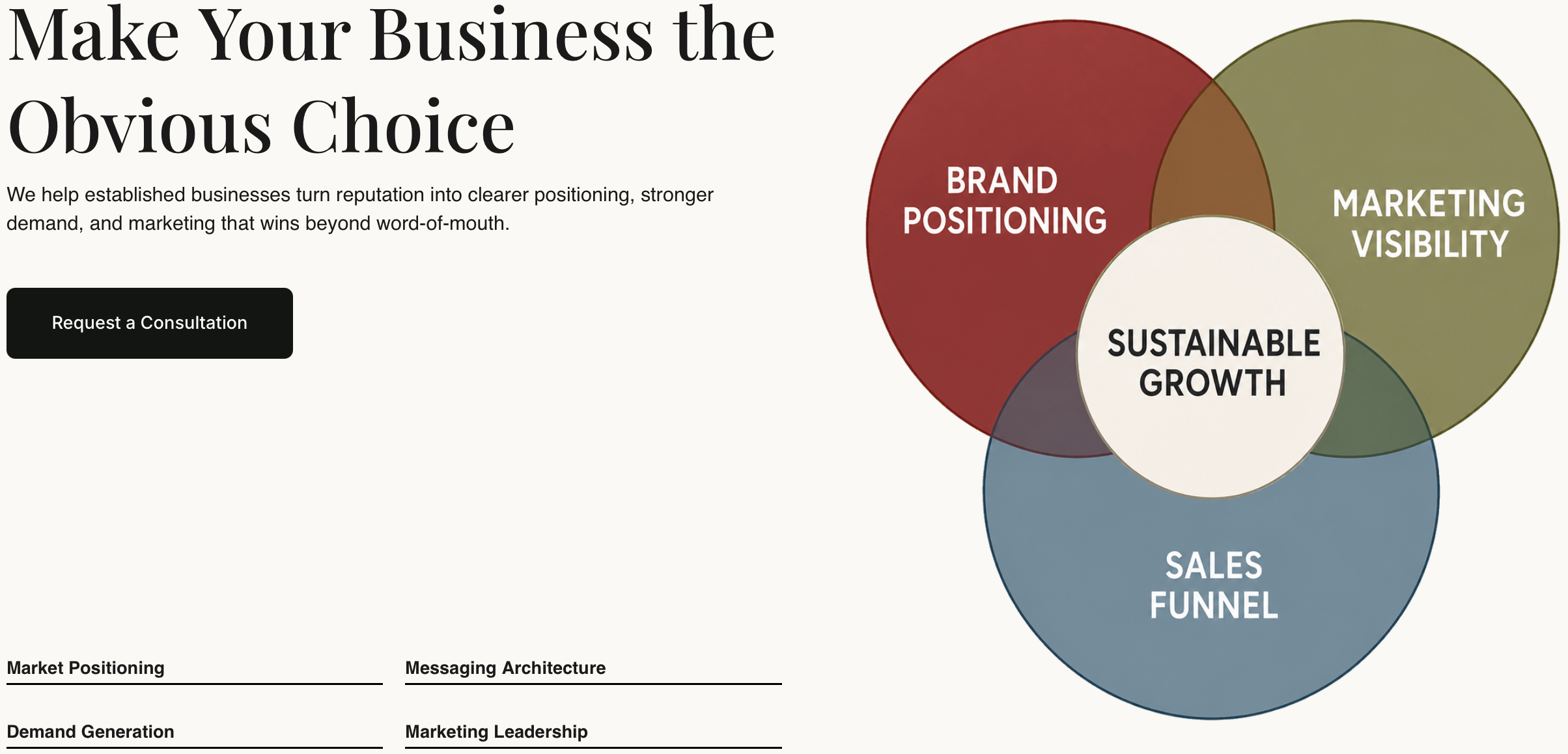
Whether you need social media management that reflects your brand’s real positioning, audience segmentation that sharpens your targeting, or sales page optimization that converts the traffic your audit reveals, Reasonatestudio builds the execution layer your audit calls for. Our Brand Audit Report, currently available at no cost, is the fastest way to get a clear picture of where your marketing stands and what to fix first.
A marketing audit is a structured review of your marketing activities, channels, and performance data measured against your business objectives. It identifies what is working, what is not, and where your biggest growth opportunities are.
Most businesses benefit from one to two full audits per year, supplemented by quarterly mini-audits and monthly campaign reviews. Trigger-based audits should fire immediately when performance drops significantly.
Google Analytics 4 for website data, your CRM for pipeline and customer data, and your ad platform dashboards (Google Ads, Meta Ads Manager) cover the core. Google Looker Studio is a free option for centralizing data across sources.
A focused audit on one channel or problem area can be completed in a few days. A full-stack audit covering all channels typically requires several weeks of cross-functional work.
A solid marketing audit checklist covers brand messaging, SEO performance, paid ad efficiency, email metrics, content performance, customer journey mapping, competitive analysis, and data integrity checks including UTM tagging and conversion tracking verification.