September 22, 2026
Why Update Brand Messaging: Essential Guide for Growth


Discover the ultimate engagement strategies list for small business owners in 2026. Boost customer interactions and retention effectively!
TL;DR:
- Effective engagement strategies for small businesses focus on operational responsiveness, personalized communication, and consistent omnichannel experiences. Tracking revenue-linked metrics and setting clear response SLAs enhance retention, with quick social media replies and behavioral segmentation being particularly impactful. Building a structured, accountable system around lifecycle stages and channels leads to long-term customer loyalty and growth.
An effective engagement strategies list is a structured set of tactics that small businesses, coaches, and consultants use to build meaningful customer interactions and increase retention across every stage of the relationship. The industry term for this practice is customer engagement strategy, defined by platforms like Braze as aligning data, messaging, timing, and channels around individual customer needs rather than sending batch campaigns. The difference matters because engagement is not just marketing. It also includes operational responsiveness, communication SLAs, and the systems that keep customers coming back. For founders, coaches, and consultants managing lean teams, having a clear, prioritized list of customer engagement tactics is the difference between scattered effort and compounding results.
The tactics below are drawn from frameworks used by SAP Emarsys, Nextiva, Braze, and Twilio, and are organized to reflect practical application for small business owners and independent consultants. Each one includes what to measure so you can connect effort to outcomes.

79% of customers expect a response on social media within 24 hours, and failing to meet that expectation increases churn rates by 15%. That single benchmark is more operationally important than most content calendars. Assign one person or a clear rotation to own social replies, set a 24-hour maximum response window, and track it weekly. The metric to watch is first response time, not follower count.
Pro Tip: Set a phone notification for direct messages and comments on your top social platform. Responding within two hours instead of 24 creates a noticeably stronger impression, especially for coaches and consultants where trust is the product.
Behavioral segmentation means grouping your audience by what they actually do, not just who they are. A subscriber who clicks every email about pricing is in a different buying stage than one who only opens content about tips. Tools like Klaviyo, ActiveCampaign, and ConvertKit allow you to tag contacts based on link clicks, page visits, and purchase history. The metric to track is click-to-open rate by segment, which reveals whether your messaging matches the audience’s current intent.
Omnichannel engagement means your customer gets a consistent experience whether they find you on Instagram, reply to your email, or land on your website. SAP Emarsys identifies omnichannel engagement as one of the 14 core tactics spanning acquisition to advocacy. For a small business, this does not require a dozen channels. It requires that your top two or three channels share the same brand voice, the same offer messaging, and the same response standards. Start with social media and email, then add SMS or live chat once those are consistent. Learn how to approach this with a social media marketing framework that ties your channels together.
Event-triggered messaging fires automatically based on a customer action or milestone. A welcome email sent within five minutes of signup, a check-in message 30 days after purchase, or a re-engagement email after 60 days of silence are all examples. Real-time decisioning based on behavioral signals is what separates modern engagement from static drip sequences. For coaches and consultants, this could be as simple as a Calendly confirmation that includes a resource link, or a post-session follow-up email with next steps. The metric to track is conversion rate per trigger event.
Feedback collection is a standard tactic. Closing the loop is not. Closing the loop means telling your customers what you changed because of their input. A simple email that says “You told us X, so we did Y” builds more loyalty than any loyalty program. Zendesk’s research confirms that customer relationships grow through two-way communication, not broadcasting. Use a short NPS survey after key milestones, then share one visible change you made based on responses. Track NPS score over time and note which changes correlate with score improvements.
Referral programs work because they turn satisfied customers into a distribution channel. The best ones are simple: one clear incentive, one clear ask, one easy sharing mechanism. For a consultant, this might be a referral discount on the next session. For a small product business, it could be a store credit for every successful referral. Engagement strategies compound over time when advocacy is built into the system rather than left to chance. Track referral conversion rate and the percentage of new customers who arrive through word of mouth.
True personalization uses behavioral data to change what content, offer, or message a customer sees. Sending a returning customer the same welcome offer as a new visitor is a missed opportunity. Platforms like Mailchimp, HubSpot, and Drip allow conditional content blocks that show different sections based on purchase history or engagement level. Reasonatestudio has a detailed breakdown of how personalization enhances engagement for brands at every stage. The metric to track is revenue per email or revenue per session by personalization segment.
Proactive communication means reaching out before a customer has a reason to complain. This includes shipping updates, appointment reminders, product usage tips, and seasonal check-ins. Nextiva identifies proactive communication as one of the core components of an engagement strategy that drives loyalty and revenue growth. For a health coach, this might be a mid-program check-in message. For a SaaS consultant, it could be a quarterly strategy email. The goal is to make customers feel seen before they feel forgotten. Track retention rate and repeat purchase rate in the 90 days following proactive outreach.
CSAT scores drop significantly as first response time increases. Sub-one-hour responses average a CSAT of 86, while responses over 48 hours drop to 68. That 18-point gap represents real churn risk. Live chat tools like Tidio, Intercom, or even a well-configured Instagram DM auto-reply can capture high-intent visitors before they leave. SMS, managed through platforms like SimpleTexting or Postscript, works especially well for appointment-based businesses. The metric to track is CSAT score by channel and first response time per channel.
Spend-based loyalty programs reward your biggest buyers. Behavior-based programs reward your most engaged customers, which is a broader and often more valuable group. A loyalty structure that gives points for leaving a review, attending a webinar, or sharing a post creates engagement touchpoints beyond the transaction. For small businesses, this does not require expensive software. A simple tiered email sequence that unlocks exclusive content or early access at different engagement levels works well. Track repeat purchase rate and average order value among loyalty program participants versus non-participants.
Likes and follower counts are easy to track and easy to misread. Retention-focused engagement connects tactics to revenue-linked metrics like customer lifetime value, repeat purchase rate, and churn rate. For coaches, the equivalent metrics are session renewal rate and referral volume. Assign a revenue value to each engagement tactic you run so you can see which ones actually move the business forward. A monthly review of three to five revenue-linked metrics beats a weekly obsession with impressions.
Structuring your customer engagement tactics around lifecycle stages prevents the common mistake of sending the same message to everyone. The five core stages are onboarding, active use, at-risk, churn recovery, and advocacy. Each stage calls for a different tactic and a different metric.
Engagement works best as a compounding system that treats acquisition to advocacy as a continuous discipline. Mapping your tactics to these five stages gives you a clear picture of where your system has gaps.
Channel selection determines whether your best engagement ideas actually reach your audience. The table below compares the most common channels by average CSAT and typical first response time, based on 2026 benchmarks.
| Channel | Avg. CSAT | Typical First Response Time | Best Use Case |
|---|---|---|---|
| Live chat | 85+ | Under 1 hour | High-intent visitors, sales questions |
| 80 | 4 to 24 hours | Nurture sequences, lifecycle messaging | |
| Social media | 75 | Under 24 hours | Community building, brand visibility |
| SMS | 83 | Under 1 hour | Appointment reminders, flash offers |
| Phone | 78 | Immediate | Complex issues, high-value clients |
| Webinar / live event | 88 | N/A | Deep education, trust building |
The data shows that speed predicts satisfaction across every channel. For small businesses with limited bandwidth, the practical move is to pick one or two channels, set clear SLAs for each, and own those channels well before expanding. A social media strategy built for impact includes response time targets as a core component, not an afterthought.
Pro Tip: Before adding a new channel, ask whether you can commit to a 24-hour response SLA on it. If the answer is no, the channel will hurt your engagement more than it helps.
The most effective creative tactics are those that create a two-way moment rather than a one-way broadcast. Here are the ones that consistently outperform generic content:
Two-way communication and responsiveness are what sustain meaningful relationships over time. These tactics work because they require the customer to respond, not just receive.
The most common mistake I see founders, coaches, and consultants make is treating engagement as a content problem. They think if they post more, email more, or show up on more platforms, the relationship will improve. It rarely does. What actually moves the needle is operationalizing timing rules and ownership so that every channel has a clear SLA and a clear person responsible for it.
I have watched businesses with half the content output of their competitors retain clients at dramatically higher rates, simply because they responded faster and followed up more deliberately. Responsiveness is not a soft skill. It is a retention system.
The other thing I would push back on is the obsession with automation. Automation is a tool for consistency, not a replacement for human judgment. The businesses that use it well automate the routine touchpoints, like welcome sequences and appointment reminders, and reserve human attention for the moments that actually require it, like a client who goes quiet or a customer who leaves a frustrated comment. That balance is what creates the kind of experience people talk about.
Start with one channel, set a 24-hour response SLA, and measure churn before and after. That single operational change, done consistently, will outperform any content strategy that lacks it.
— Kaitlyn
Building a customer engagement system from scratch takes time that most founders and consultants do not have. Reasonatestudio works directly with small business owners, coaches, and consultants to build the marketing infrastructure that makes consistent engagement possible without adding to your workload.
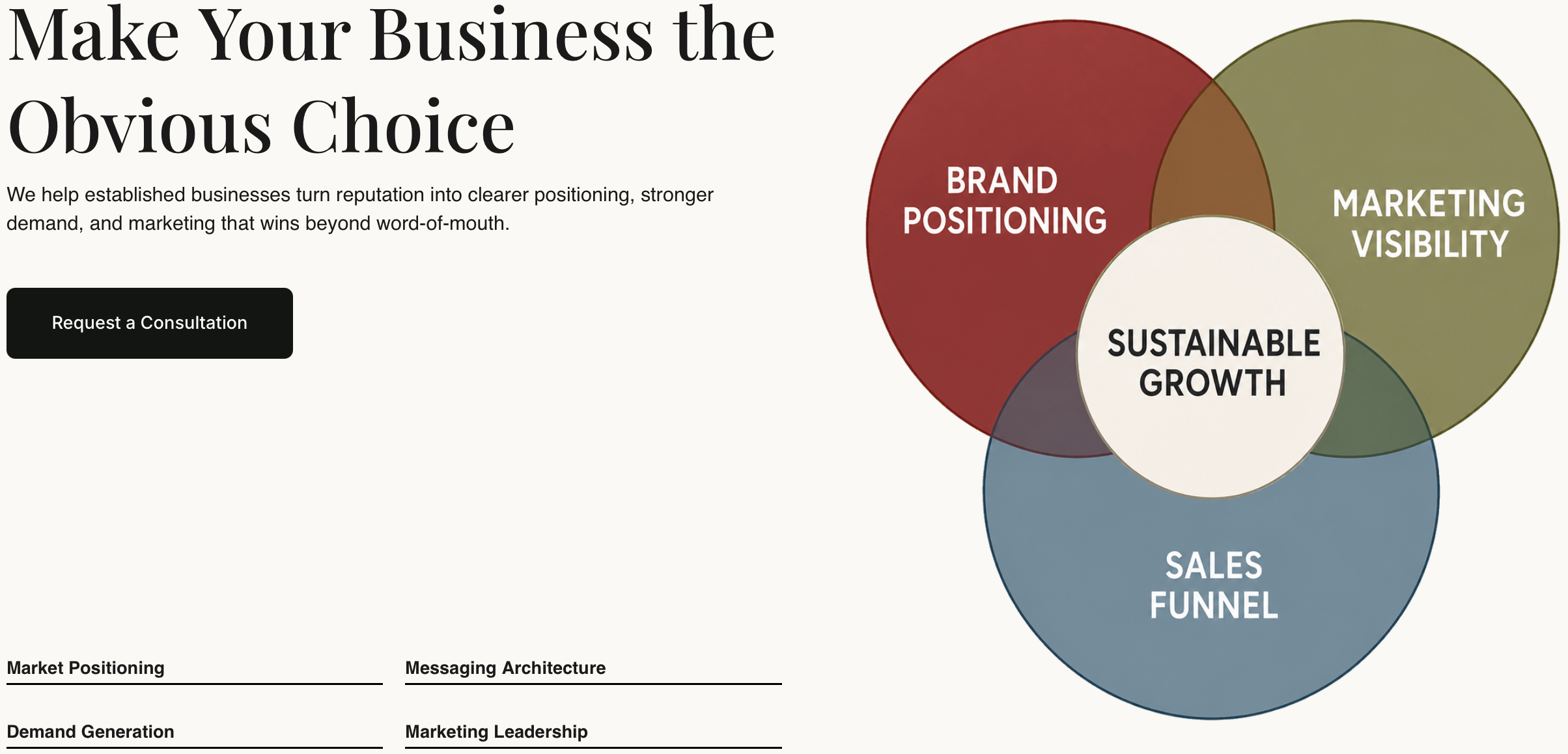
From social media management that handles response speed and content personalization, to sales page optimization that converts your engaged visitors into paying clients, every service is built around the Aligned Impact Model™. Reasonatestudio also offers SEO keyword research to make sure the right audience finds you before the engagement work even begins. If you want a marketing partner who treats your brand with the same care you do, explore what working together looks like.
A customer engagement strategy is a structured plan for deciding what to communicate, when, where, and why across the customer lifecycle. Platforms like Braze define it as aligning data, messaging, timing, and channels around individual customer needs rather than batch campaigns.
Start with two to three tactics tied to your most active channel and lifecycle stage. SAP Emarsys recommends building engagement as a compounding system, adding tactics deliberately as each one is measured and optimized.
Revenue-linked metrics like customer lifetime value, repeat purchase rate, and churn rate are the most reliable indicators of engagement quality. Vanity metrics like follower count do not predict retention or revenue.
79% of customers expect a response within 24 hours on social media. Responding within that window reduces churn risk by 15%, making response speed one of the highest-leverage operational improvements available.
Multichannel means being present on multiple platforms. Omnichannel means those platforms share consistent messaging, brand voice, and response standards so the customer experience feels unified regardless of where they interact with you.