September 22, 2026
Why Update Brand Messaging: Essential Guide for Growth


Discover effective marketing suggestions for small businesses. Focus on key channels to maximize returns and build a sustainable strategy.
TL;DR:
- Focusing on two or three high-impact marketing channels yields better results for small businesses than spreading efforts across many platforms. Building owned organic channels like Google Business Profile, local SEO, and email marketing first enhances sustainability and improves ROI before investing in paid ads. Consistent, authentic content, strategic partnerships, and regular measurement empower small businesses to grow steadily and predictably.
The most effective marketing suggestions for small businesses share one trait: they prioritize depth over breadth. Scattered effort across every platform produces noise. Focused effort on two or three high-impact channels produces revenue. Small business owners who build organic channels first, then layer in paid advertising, consistently see better returns than those who start with ad spend before their message is clear. This article gives you a practical framework covering channel selection, content creation, partnerships, and measurement so you can build a marketing system that compounds over time rather than burning you out.
Channel focus is the single most important decision in small business marketing. Trying to maintain a presence on every platform splits your attention and produces mediocre results everywhere. The goal is to pick the channels where your audience already spends time, then show up there consistently.
The five channels that deliver the strongest returns for most small businesses are:
Pro Tip: Before adding a new channel, ask yourself: “Can I show up here consistently for 90 days?” If the honest answer is no, skip it until you have the capacity.
The top digital marketing strategies for small businesses in 2026 all share this principle. Focus beats volume every time.

Content is how you build trust before a prospect ever contacts you. The goal is not to post constantly. The goal is to post content that your audience finds genuinely useful, then do it on a schedule you can sustain.
The 80/20 content mix is the most practical framework for small businesses. Eighty percent of your content should educate, entertain, or solve a problem for your audience. Twenty percent can promote your offer directly. This ratio builds goodwill and keeps people engaged rather than tuning you out.
Formats that consistently perform well include:
Social media algorithms in 2026 reward authenticity over ad spend. Community-focused content outperforms generic sales messages. That means replying to comments, asking questions in your captions, and engaging with your followers’ content. Algorithms interpret genuine interaction as a signal to show your content to more people.
Quality beats quantity at every stage. One well-crafted post that sparks five real conversations does more for your brand than seven rushed posts that get ignored. Organic content builds long-term value because it keeps working after you publish it. A helpful how-to post from six months ago can still bring in new followers today.
Pro Tip: Batch your content creation. Set aside two hours once a week to write captions, record short videos, and schedule posts. This prevents the daily scramble that leads to inconsistent output.
The engagement strategies that work best for small business owners in 2026 are built on this same principle: show up with genuine value, and the algorithm rewards you for it.
Partnerships are one of the most underused small business marketing ideas available. A well-structured partnership puts your business in front of a warm, pre-qualified audience at near-zero acquisition cost. The key is choosing the right partners.
Successful partnerships pair non-competing businesses that serve the exact same customer. A gym partnering with a nutritionist is the classic example. Both businesses serve health-conscious clients, but they do not compete for the same sale. Each business becomes a trusted referral source for the other.
Other examples that work well:
Structured referral programs take this further. Give your partners something concrete to offer: a discount for their clients, a free consultation, or a small gift. Make the referral process simple. The easier it is for a partner to refer you, the more often they will do it.
Partnerships work best when both sides are genuinely invested in each other’s success. The businesses that build the strongest referral ecosystems treat their partners like clients: they check in regularly, share leads proactively, and look for ways to add value before asking for anything in return. A transactional mindset kills these relationships quickly. A reciprocal mindset makes them last for years.
Referral programs with your existing customers follow the same logic. A satisfied customer who refers a friend is worth far more than any ad impression. Ask for referrals directly, make it easy to share, and acknowledge every referral with genuine appreciation.
Measurement is where most small business marketing plans fall apart. Owners track followers and likes instead of leads and revenue. Vanity metrics feel good but do not pay the bills.
The core KPIs that actually matter for small business growth are:
Setting specific annual KPIs like a 30% lead-to-meeting conversion rate and a 25% meeting-to-project close rate drives measurable growth for small B2B service businesses. These numbers give you a clear target to work toward rather than hoping the marketing is “working.”
The 90-day testing cycle is the most practical framework for small businesses. A 90-day testing period focused on three core activities, including Google Business Profile optimization, consistent social posting, and email list building, gives you enough data to decide whether to scale or cut a channel. Ninety days is long enough to see real trends and short enough to pivot before wasting months on something that is not working.
| KPI | What it measures | Review frequency |
|---|---|---|
| Lead volume | Marketing reach and attraction | Weekly |
| Lead-to-meeting rate | Message clarity and offer appeal | Monthly |
| Meeting-to-sale rate | Sales process effectiveness | Monthly |
| Email open rate | List quality and subject line strength | Per campaign |
| Revenue per channel | True ROI of each marketing effort | Quarterly |
Building weekly marketing rhythms that include content updates, review requests, and customer interactions sustains visibility without requiring a major campaign every time you need new leads. Treat marketing like a weekly business operation, not a one-off project.
Pro Tip: Block 30 minutes every Monday to review last week’s numbers. You do not need a complex dashboard. A simple spreadsheet tracking leads, conversions, and revenue by channel is enough to spot what is working.
Tracking marketing ROI strategies consistently is what separates businesses that grow predictably from those that feel like they are always starting over.
A referral program is not just asking happy customers to spread the word. It is a system with a clear ask, a simple process, and a meaningful incentive. Without structure, referrals happen randomly. With structure, they happen regularly.
Start by identifying your top 10 to 20 existing customers. These are the people who got great results, who genuinely like working with you, and who already talk about you informally. Reach out personally, not with a mass email. Tell them specifically what kind of client you are looking for and ask if they know anyone who fits.
The incentive does not need to be expensive. A discount on their next purchase, a gift card, or a charitable donation in their name all work well. The most important factor is that the incentive feels genuine and proportional to the value of the referral.
Make the process frictionless. Give your customers a simple message they can copy and paste, a link to your booking page, or a short description of what you do. The less they have to think about how to refer you, the more often they will do it.
Track every referral. Know who sent it, what happened with the lead, and whether it converted. Follow up with your referral sources to close the loop. When a referral converts, acknowledge it immediately and personally. That acknowledgment is what turns a one-time referral into a habit.
Local SEO is the practice of making your business visible in search results when someone nearby searches for what you offer. For most small businesses, local search is the highest-intent traffic available. Someone searching “accountant near me” is ready to hire. Someone scrolling a social feed is not.
The foundation of local SEO is your Google Business Profile. Complete every field: business name, address, phone number, hours, website, and category. Add photos of your location, team, and work. Respond to every review, positive and negative. Active review management directly increases the number of direction requests your profile receives.
Beyond your profile, local SEO includes your website. Your homepage and service pages should mention your city and neighborhood naturally. Create a dedicated page for each service you offer. Write blog posts that answer questions your local customers actually ask. These pages accumulate authority over time and keep bringing in traffic long after you publish them.
Citations are the third pillar of local SEO. A citation is any online mention of your business name, address, and phone number. Directories like Yelp, the Better Business Bureau, and industry-specific directories all count. Consistent information across every directory tells search engines your business is legitimate and trustworthy.
Local SEO compounds. The work you do in month one keeps paying off in month twelve. That is what makes it one of the most cost-effective organic marketing strategies available to small business owners.
A content calendar is the difference between consistent marketing and sporadic bursts of activity. You do not need a complex tool. A simple spreadsheet or a free planning app works fine.
Start with your posting frequency. For most small businesses, three posts per week on each chosen platform is sustainable and enough to satisfy the algorithm. Map those slots across the week: one educational post, one engagement post, and one promotional or social proof post.
Plan one month at a time. At the start of each month, write down your key business events: launches, promotions, seasonal moments, and any local events you are involved in. Build your content around those anchors. Fill the remaining slots with evergreen content that educates your audience about your area of expertise.
Batch creation makes the calendar work in practice. Write all your captions for the week in one sitting. Record all your short videos in one session. Schedule everything in advance using a free scheduling tool. This approach removes the daily decision fatigue that causes most small business owners to go silent for weeks at a time.
Review your calendar monthly. Look at which posts generated the most engagement, the most saves, and the most direct messages. Do more of what worked. Cut what consistently underperformed. A content calendar is not a rigid contract; it is a living plan that gets smarter as you gather data.
After working with more than 100 small businesses through Reasonate Studio, the pattern I see most often is this: owners know they need to market their business, but they try to do everything at once and end up doing nothing well.
The advice to “be everywhere” sounds logical. More visibility should mean more customers. In practice, it means thin content, inconsistent posting, and a brand that feels scattered. The businesses that grow fastest are the ones that pick two channels, commit to them for 90 days, and get genuinely good at them before adding anything else.
Patience is the hardest part. Organic marketing does not produce results in week two. It produces results in month four, five, and six, and then it compounds. I have watched founders abandon a strategy right before it would have started working because they expected faster results. The 90-day testing cycle exists for this reason. Give a channel enough time to show you real data before you decide it is not working.
The other thing I tell every client is this: own your audience before you rent it. Social media platforms change their algorithms, reduce organic reach, and occasionally disappear. Your email list is yours. Your Google reviews are yours. Build those owned assets first, and use social media to feed them.
Marketing rhythms matter more than marketing campaigns. A weekly habit of posting, engaging, requesting reviews, and checking your numbers will outperform a quarterly campaign every time. Consistency is the actual competitive advantage for small businesses. Most of your competitors are inconsistent. Showing up reliably is enough to stand out.
— Kaitlyn Cole
If you are a founder, coach, or consultant who is tired of scattered marketing and wants a clear, focused system that actually generates revenue, Reasonate Studio was built for exactly that.
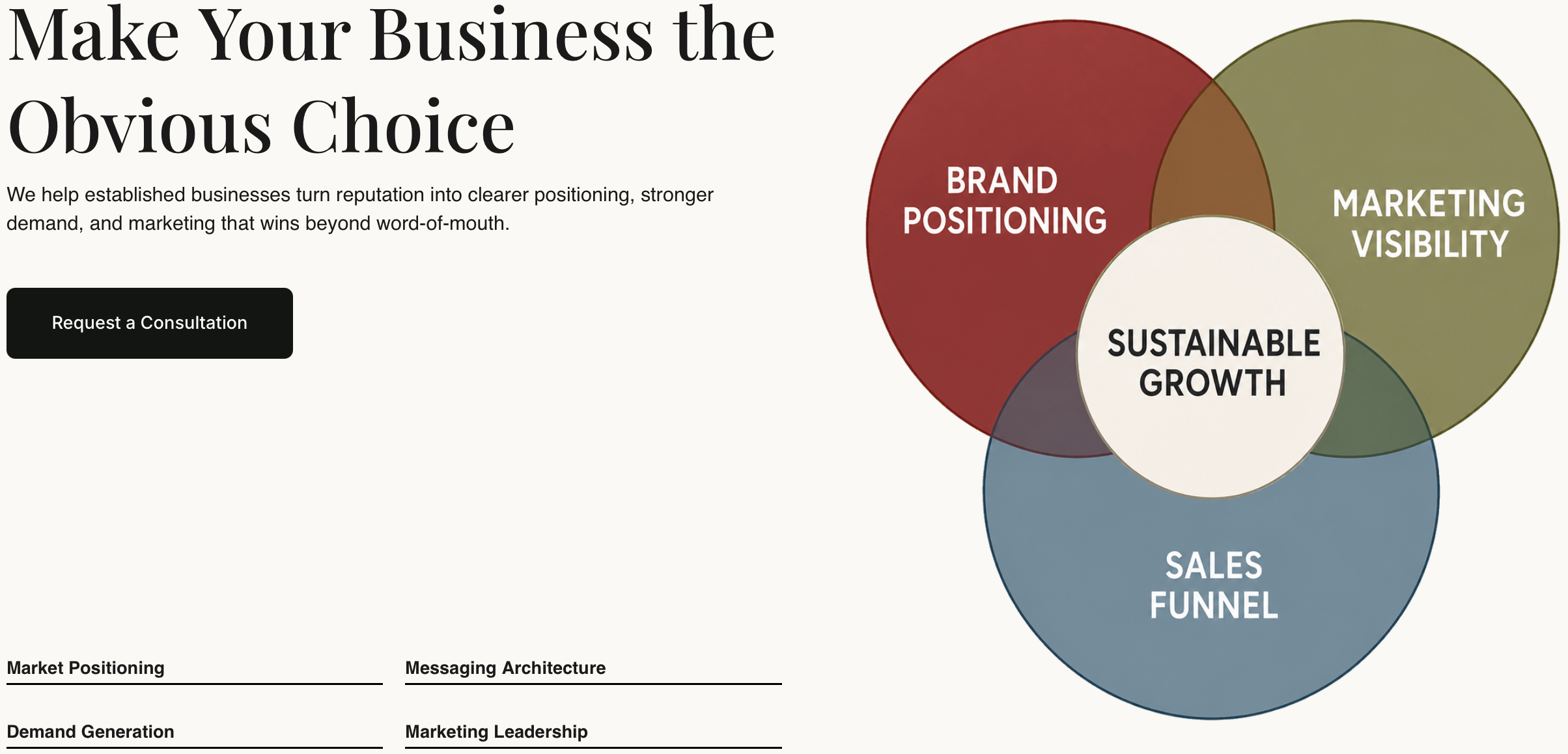
Reasonate Studio’s Marketing Jump Start gives you a strategy-first foundation: brand clarity, channel selection, messaging, and a 60-day execution plan built around your specific business and audience. For owners who want ongoing support, the social media management service handles content creation, posting, and reporting so you can focus on running your business. Every engagement is led directly by Kaitlyn Cole, with meaningful results typically visible within 60 days.
Google Business Profile, email marketing, and two well-chosen social media platforms are the highest-ROI channels for most small businesses. Build these organic channels before investing in paid advertising to improve conversion rates and overall marketing returns.
Budget varies by industry and stage, but the most important principle is to build owned organic channels first before allocating significant spend to paid ads. Paid advertising amplifies a message that already works; it cannot fix unclear positioning or a weak offer.
Track lead volume, lead-to-meeting conversion rate, meeting-to-sale conversion rate, and revenue by channel. Setting specific KPIs like a 30% lead-to-meeting rate gives you a concrete target and makes it easy to spot which channels are producing results.
Organic marketing typically produces measurable results within 90 days when executed consistently. A 90-day testing cycle focused on Google Business Profile, consistent social posting, and email list building provides enough data to make informed decisions about scaling or cutting a channel.
Google Business Profile optimization is the single most cost-effective first step for local small businesses. It is free to set up, directly increases direction requests and calls, and builds a foundation for all other local SEO efforts.