September 22, 2026
Why Update Brand Messaging: Essential Guide for Growth


Stop wasting time and money! Learn how to avoid common content marketing mistakes that hold back your small business from success.

Most small business owners doing content marketing are making at least three of these mistakes right now. They’re publishing without a clear audience in mind, skipping promotion entirely, and measuring nothing. The result: content that costs time and money but never builds momentum.
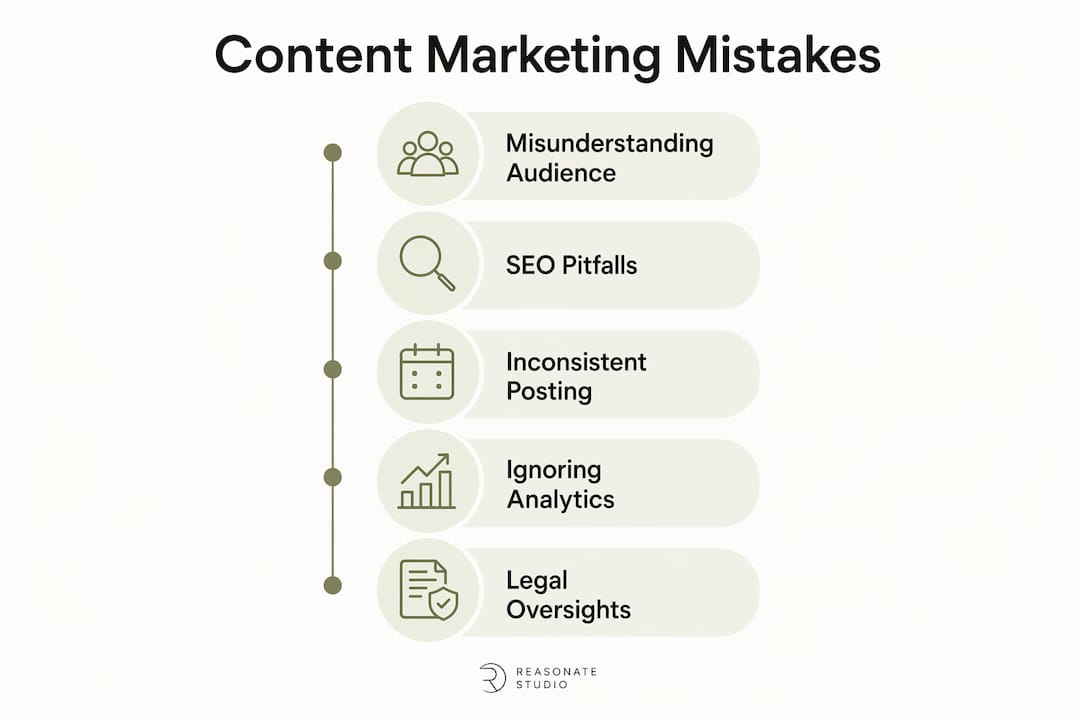
Here are the most common content marketing mistakes that kill results before they start:
Each of these errors has a direct fix. The sections below break them down with practical steps you can act on immediately.

Content without audience clarity is the most expensive mistake in this list. You can write beautifully, post consistently, and still generate nothing if the content isn’t built around a specific person with a specific problem.
The fix starts with building a real buyer persona, not a demographic sketch. Go beyond “women aged 25–45” and get specific: What does she Google at 11 PM? What objection stops her from buying? What language does she use to describe her own problem? Interviews with five to ten existing customers will surface patterns that no survey tool can replicate.
Goals matter just as much. Content without clear goals leads to wasted resources and missed opportunities for measurable business outcomes. “Get more traffic” is not a goal. “Generate 30 qualified email subscribers per month from organic blog traffic by September” is. That specificity tells you what to create, where to publish it, and how to measure whether it worked.
A few practical steps to get this right:
When marketing and sales teams collaborate on content, the result is material that actually addresses what customers need to hear before they say yes. That alignment shortens the gap between “interested” and “purchased.”

Neglecting SEO is one of the most common content marketing errors for small business owners, but over-optimizing is just as damaging. Stuffing a post with keywords until it reads like a robot wrote it will hurt your rankings and drive readers away.
The baseline SEO work that most owners skip: keyword research before writing, not after. Tools like Google Search Console, Ahrefs, or Semrush show you what your audience is already searching. Write for those queries, then optimize naturally. A post targeting “content marketing strategy for coaches” will outperform a generic “content marketing tips” post every time, because it matches specific intent.
Quality over quantity is not a cliché here. Over-prioritizing volume results in thin content that compounds nothing. One well-researched, genuinely useful post that answers a real question will outperform ten shallow ones over a 12-month window. Search engines and readers both reward depth.
What to watch for:
Regularly auditing and updating existing content is just as important as creating new posts. A blog post from 2022 that ranks on page two can often be refreshed to page one with updated data, a stronger introduction, and better internal links. That’s a faster win than writing something from scratch.
Pro Tip: Before publishing any new post, run a quick audit of your existing content on the same topic. Updating a ranking post with fresh data and a clearer structure often delivers faster SEO gains than writing a new one.
Inconsistency is a trust problem. When you post three times one week and disappear for three weeks, your audience stops expecting anything from you. Algorithms notice the same pattern and reduce your reach accordingly.
An editorial calendar solves this. It doesn’t need to be complex. A simple spreadsheet with publish dates, topics, formats, and distribution channels is enough to create the rhythm that builds audience habits. The goal is predictability, for your readers and for yourself.
Creating content without promoting it is the other half of this mistake. Even excellent content stays invisible without deliberate promotion and distribution. Publishing a blog post and waiting for Google to send traffic is a slow game. Sharing it across email, social media, and relevant communities accelerates that timeline significantly.
Distribution mistakes that limit reach:
Channel-specific strategy matters here. A post optimized for content distribution on LinkedIn looks different from one built for Instagram or Pinterest. The core idea can stay the same; the format, length, and tone should shift to match the platform.
Content marketing is a long-term strategy. Expecting results in the first 30 days leads to abandoning efforts that were actually starting to work. The brands that win with content are the ones that stay consistent for 6–12 months and use data to get sharper over time, not the ones that pivot every few weeks.
Analytics tell you what’s actually happening versus what you assume is happening. Which posts drive email sign-ups? Which ones get traffic but no clicks to your product pages? Which topics generate the most shares? Without that data, you’re guessing. With it, you’re refining.
Storytelling is the piece most small business owners underestimate. Facts tell people what you do. Stories make them feel why it matters. A health coach who writes “I help women lose weight” is competing on features. One who writes “My client Sarah had tried every diet for eight years before we figured out the real problem wasn’t food” is competing on connection. That difference shows up in conversion rates.
Common analytics and storytelling mistakes:
Leveraging email marketing for long-term growth ties directly into this. Email sequences that nurture leads with stories, case studies, and useful content build the kind of trust that social media rarely achieves on its own. A content marketing strategy that integrates email from the start compounds faster than one that treats it as an afterthought.
The biggest shift in content marketing right now is the move to what practitioners call a two-surface strategy. You’re no longer just optimizing for Google’s traditional organic search. AI-driven platforms like ChatGPT, Perplexity, and Google’s AI Overviews now evaluate content differently, assessing brand expertise and topical depth rather than relying solely on backlinks. A small business that publishes shallow, generic content gets filtered out on both surfaces.
What earns visibility on AI platforms is the same thing that earns it with human readers: genuine expertise, original perspective, and clear answers to real questions. Structuring posts with direct-answer paragraphs under question-style headings helps AI engines parse and cite your content. Long introductions that delay the key point reduce your chances of being cited.
Strong brand voice guides and professional editing of AI-generated content separate effective strategies from generic ones. If you’re using AI tools to draft content, the editing pass is where your expertise, your examples, and your voice have to come through. Unedited AI output reads like everyone else’s unedited AI output, and both readers and search engines are getting better at recognizing it.
Practical steps from this expert perspective:
Pro Tip: Run a quarterly content audit that checks both Google Search Console performance and whether your key posts appear in AI overview results for your target queries. The gaps between those two lists are your highest-priority content opportunities.
Copyright violations in content marketing are more common than most small business owners realize, and the consequences range from takedown notices to actual legal liability. Using an image you found on Google, lifting a paragraph from a competitor’s blog, or republishing a chart without attribution all carry real risk.
The safest approach to images is to use only what you own or what carries a clear license for commercial use. Platforms like Unsplash and Pexels offer free images with permissive licenses. Getty Images and Adobe Stock offer paid options with explicit commercial rights. When in doubt, create your own visuals or use a licensed tool like Canva with assets from its paid library.
Written content carries the same risks. Paraphrasing a competitor’s article too closely, using AI tools trained on copyrighted material without reviewing the output, or republishing press releases verbatim without attribution can all create problems. The standard to aim for: every piece of content you publish should be original enough that no other source could claim it.
A few legal basics worth knowing:
Getting these basics right protects the content you’ve worked to build and keeps your brand’s credibility intact.
If you’ve recognized your own mistakes in this article, the next question is whether to fix them yourself or get a partner who’s done it before. Reasonate Studio works directly with founders, coaches, and consultants who are excellent at what they do but need a clear, working content and marketing system behind them.
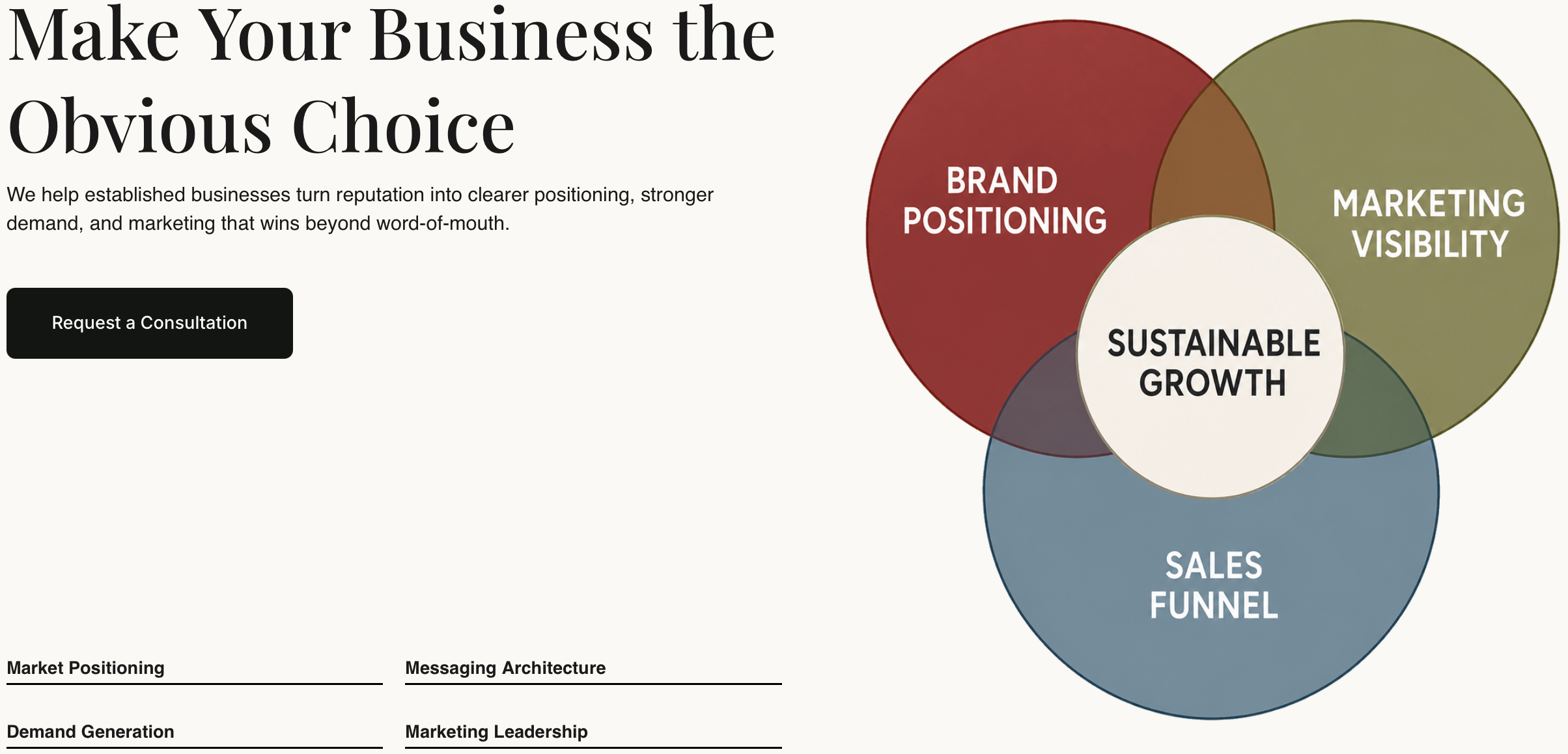
The difference between Reasonate Studio and a generic agency is that you work directly with Kaitlyn Cole, not a junior account manager. Every engagement starts with deep brand and audience clarity, then moves into execution: content creation, SEO, social media management, email, and funnel optimization, all built around the Aligned Impact Model™. Clients are typically up and running within two weeks, with meaningful results within 60 days. The studio has delivered a 454% sales increase for a health coach and a 283% order increase for a small consumer brand.
If SEO is where your content is falling short, Reasonate Studio’s keyword research service builds the foundation your content strategy needs. If your sales page isn’t converting the traffic you’re already getting, sales page optimization is where that gap gets closed. Start with a free Brand Audit Report, valued at $297, to get a clear picture of where your marketing stands and what to fix first.