September 22, 2026
Why Update Brand Messaging: Essential Guide for Growth


Discover what digital content marketing is and how it can boost your brand awareness and leads. Transform your approach today!
TL;DR:
- Content marketing involves creating valuable online content to attract and build trust with potential customers. It supports long-term brand awareness, lead generation, and customer retention while replacing costly ads. Small business owners should develop a clear content strategy focused on specific goals and audiences to achieve consistent results on a realistic budget.
Digital content marketing is defined as the strategic creation and distribution of valuable digital content, including articles, videos, social media posts, and email newsletters, to attract, engage, and convert a specific audience without relying on paid interruption advertising. For entrepreneurs and small business owners, this approach replaces expensive ad spend with trust-building content that works around the clock. The numbers back it up: 87% of marketers report content marketing has increased brand awareness, and 76% say it drives lead generation by engaging prospects throughout the buying journey. That combination of visibility and lead flow is exactly what a growing small business needs.
Digital content marketing is the practice of publishing useful, relevant content across digital channels to build audience trust and generate business results over time. The industry term most professionals use is “content marketing,” with “digital” specifying that the content lives online rather than in print or broadcast media. Both terms describe the same core discipline, and you will see them used interchangeably throughout this guide.
The key word in that definition is “strategic.” Posting randomly on Instagram or writing a blog once a month is not content marketing. True content marketing connects every piece of content to a business goal, whether that goal is growing an email list, ranking on Google, or converting readers into paying clients. Without that connection, content is just noise.

Content marketing is an inbound strategy that educates and engages people instead of interrupting them with ads. This distinction matters enormously for small business owners with limited budgets. Inbound content keeps working after you publish it. A well-written blog post can generate search traffic for years. A YouTube tutorial can answer customer questions without you ever picking up the phone.
The importance of content marketing also shows up in how it builds credibility. When you consistently publish content that solves real problems for your audience, you become the obvious expert in your space. That credibility shortens sales cycles and reduces price resistance, two outcomes that directly affect your bottom line.

Content marketing assets come in written, audio, video, and image formats, distributed across platforms like social media, websites, and email. Each format serves a different purpose and reaches people at different stages of the buying process.
The most common formats for entrepreneurs include:
Pro Tip: You do not need to use every format at once. Pick one or two that match how your audience consumes content, master those, and expand later. Spreading yourself across six platforms with thin content produces worse results than going deep on two.
AI tools now help content creators automate parts of the creation and distribution process, enabling personalization at a scale that was previously out of reach for small teams. This means a solo entrepreneur can now produce content that feels tailored to different audience segments without hiring a full content team.
Content marketing delivers four measurable business outcomes: brand awareness, trust, lead generation, and customer retention. Each one compounds over time, which is why businesses that commit to content marketing for 12 or more months consistently outperform those that treat it as a short-term campaign.
Trust is the most underrated benefit. 96% of consumers distrust traditional ads, but 64% trust brands that produce educational content. More striking, that trust level rises to 73% after just one week of consuming a brand’s content. One week. That means a new visitor who reads three of your blog posts or watches two of your videos is already more likely to buy from you than someone who saw your paid ad ten times.
“Content marketing is not about creating more content. It is about creating the right content for the right person at the right moment in their buying process. When you get that alignment right, content stops being a cost and starts being your most reliable sales tool.”
The inbound model also changes your relationship with marketing spend. Traditional advertising stops the moment you stop paying. Content marketing builds an asset base that generates traffic, leads, and sales long after the original work is done. A blog post that ranks on page one of Google for a high-intent keyword can bring in qualified leads every single day without additional cost.
Here is how the core benefits of digital content marketing compare across key business metrics:
| Business goal | How content marketing supports it | Time to see results |
|---|---|---|
| Brand awareness | SEO, social sharing, consistent publishing | 3–6 months |
| Trust and credibility | Educational content, consistent voice | 4–8 weeks |
| Lead generation | Lead magnets, email opt-ins, gated content | 2–4 months |
| Customer retention | Newsletters, tutorials, loyalty content | Ongoing |
| Sales conversion | Case studies, testimonials, sales page content | 1–3 months |
Common KPIs to track include organic traffic growth, email subscriber count, lead form completions, content engagement rate, and revenue attributed to content-driven leads. Tracking even two or three of these consistently gives you enough data to make smart decisions about where to focus your effort.
A content strategy is a documented roadmap that aligns every piece of content you create with a specific business goal. It is not a content calendar. A calendar tells you what to post and when. A strategy tells you why you are posting it, who it is for, and what result it should produce.
This distinction is critical for entrepreneurs. Without a strategy, you end up creating content that feels busy but produces nothing. With a strategy, every blog post, video, and email serves a clear purpose inside a larger system.
Building a content strategy does not require a marketing degree. Follow these steps to create one that works for a small business:
Pro Tip: Document your strategy in a single page. If you cannot summarize your content strategy in one page, it is too complicated to execute consistently. Simplicity is what makes a strategy sustainable for a small team or solo founder.
A well-built digital content strategy is the difference between content that feels like a chore and content that feels like a system. The system does the heavy lifting so you do not have to reinvent your approach every month.
Implementation is where most small business owners stall. The strategy makes sense, but the execution feels overwhelming when you are also running every other part of your business. The solution is to build a repeatable process, not a perfect one.
Start with these practical steps:
Learning how to build a content marketing strategy that fits your actual capacity is more valuable than copying what a large brand does. A realistic, consistent approach always outperforms an ambitious plan that collapses after three weeks.
The biggest mistake small business owners make is treating content marketing as a sprint. It is a long game. The entrepreneurs who win with content are the ones who show up consistently, measure what matters, and adjust based on data rather than emotion.
After working with founders, coaches, and consultants across dozens of industries, the pattern I see most often is this: entrepreneurs know they need content, but they have no idea what it should actually do for their business. They post because they feel like they should, not because they have a clear picture of how that post connects to a sale.
The shift that changes everything is moving from “I need to post more” to “I need content that moves people from stranger to client.” Those are completely different problems with completely different solutions. The first leads to more noise. The second leads to a system.
I also see a lot of small business owners chasing broad audiences because they are afraid of narrowing down. They want their content to appeal to everyone. But content that speaks to everyone connects with no one. The founders who grow fastest are the ones willing to get specific, sometimes uncomfortably specific, about exactly who they are talking to and what that person needs to hear.
The other thing I want to be direct about: content marketing is not free. It is free in the sense that you are not paying for ad placements, but it costs time, creative energy, and strategic thinking. If you treat it as the “cheap option,” you will underinvest and underperform. Treat it as a core business asset, and it will pay you back for years.
The entrepreneurs who get the best results from content marketing are not the ones with the biggest budgets or the most followers. They are the ones who know their audience deeply, create content with a clear purpose, and show up consistently enough to build real trust.
— Kaitlyn Cole
Content marketing builds the audience. Your sales page converts them. Without a sales page that clearly communicates your value and moves visitors to act, even the best content strategy leaves money on the table.
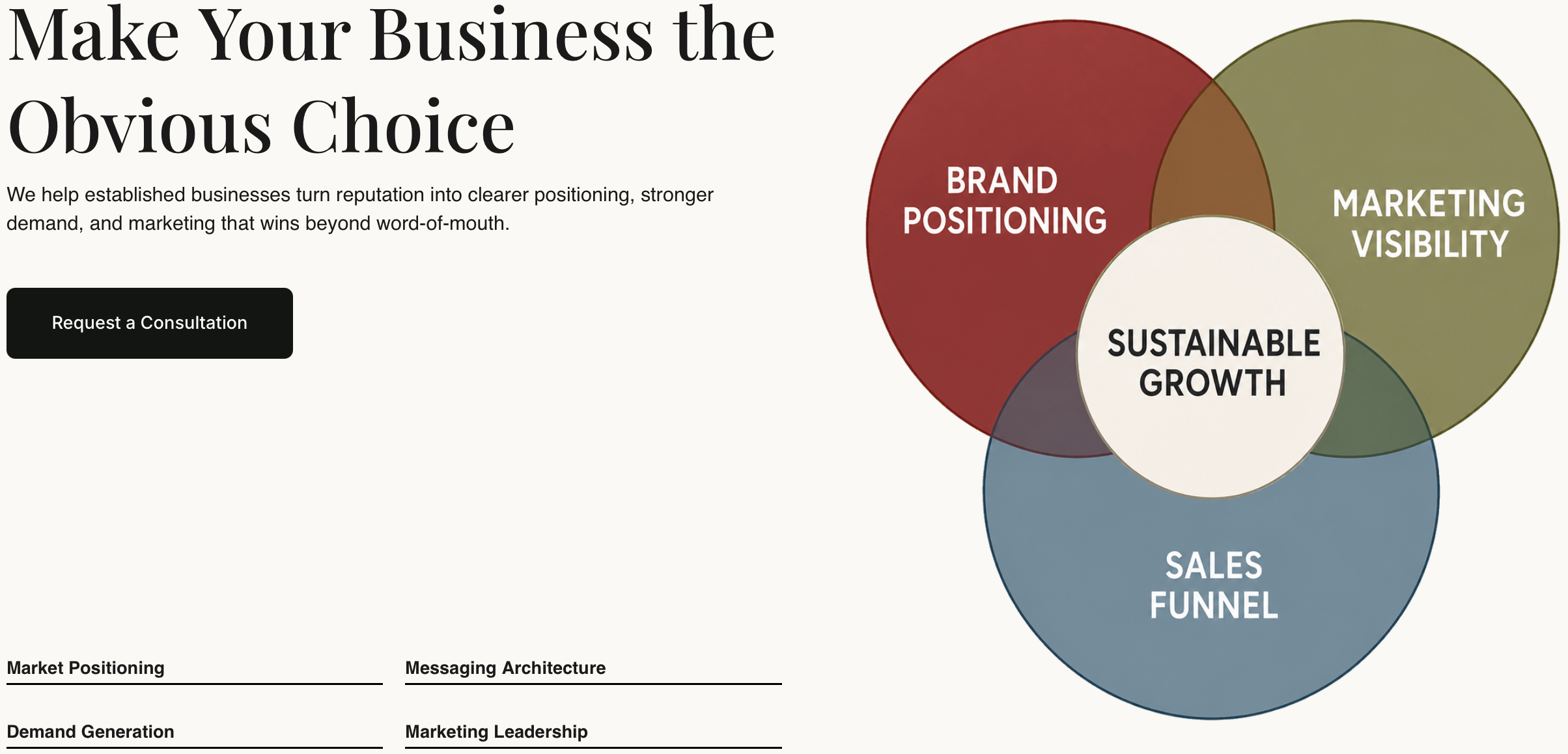
Reasonate Studio works with founders, coaches, and consultants to close that gap. The sales page optimization service is built specifically for small business owners who have an offer worth buying but a page that is not doing it justice. Reasonate Studio combines brand clarity, audience insight, and conversion-focused copy to turn your sales page into the strongest closer on your team. If your content is bringing people in but your revenue is not reflecting it, that is exactly the problem this service is designed to fix.
Digital content marketing is the practice of creating and sharing useful online content, such as blog posts, videos, and emails, to attract and build trust with potential customers. The goal is to generate leads and sales without relying on paid advertising.
Traditional advertising interrupts people with a message they did not ask for. Content marketing earns attention by providing information people are actively searching for, which is why consumers trust educational content at far higher rates than they trust ads.
Blog posts, email newsletters, and short-form video are the three highest-return formats for most small businesses. The best format depends on where your ideal clients spend their time and what type of content you can produce consistently.
Brand awareness and trust typically build within four to eight weeks of consistent publishing. Lead generation and measurable revenue impact generally take three to six months, depending on your niche, publishing frequency, and content quality.
A documented content strategy is the difference between content that builds a business and content that fills a feed. Start with a one-page strategy that defines your goal, your audience, and your primary channel before you write a single word.