September 1, 2026
Understanding B2C Business to Consumer Dynamics


Learn what content marketing strategy is, its core elements, types, real-world uses, and how to avoid common mistakes that cost small businesses clients.

Nearly 90 percent of American businesses struggle to connect with their audience through traditional advertising methods. In a digital-first world, simple brand awareness is no longer enough to stand out from the competition. Understanding how a strong content marketing strategy can drive genuine engagement helps brands move beyond noise and build real relationships. This guide explains what makes content marketing essential for American entrepreneurs aiming to gain trust, deliver value, and achieve lasting growth.
A content marketing strategy is a purposeful approach to creating and distributing valuable content that attracts, engages, and converts your ideal audience. Unlike traditional marketing tactics that interrupt potential customers, content marketing builds genuine connections by providing relevant, helpful information that solves real problems. Understanding the role of content strategy helps entrepreneurs transform how they communicate with their market.
At its core, content marketing is about developing a strategic framework that consistently delivers meaningful content across multiple channels. This means crafting materials that speak directly to your audience’s needs, challenges, and aspirations. The goal isn’t just generating noise, but creating targeted, valuable resources that position your brand as a trusted authority in your industry. Strategic content goes beyond surface-level information, diving deep into addressing specific audience pain points with authentic, actionable insights.
Successful content marketing requires understanding several critical components. These include:
Pro Tip for Strategic Content: Develop a content calendar that maps your audience’s typical challenges to your expertise, allowing you to create preemptive, solution-oriented content that builds trust and demonstrates your unique value proposition.
Effective content marketing transforms how businesses connect with potential customers, turning informative materials into powerful relationship-building tools that drive meaningful engagement and sustainable growth.
Building a robust content marketing strategy requires careful attention to several core elements that transform random content creation into a purposeful business growth engine. Successful strategies are not just about producing content, but about creating targeted resources that directly address audience needs. How to develop a marketing strategy for small business success provides critical insights into aligning your content with broader business objectives.
The fundamental components of an effective content marketing strategy include comprehensive research, precise audience targeting, and strategic goal setting. Businesses must invest time in understanding their target market’s specific challenges, preferences, and communication channels. This means developing detailed customer personas that go beyond basic demographics, diving deep into psychological motivations, pain points, and information consumption habits. By mapping out the complete customer journey, organizations can create content that speaks directly to each stage of the decision-making process.
Key strategic elements entrepreneurs should focus on include:
Pro Tip for Strategic Planning: Conduct a quarterly content audit to assess performance, identify gaps in your current strategy, and realign your approach based on actual audience engagement metrics.
A well-crafted content marketing strategy is not a static document but a dynamic framework that evolves with your business and audience, transforming content from a simple marketing tactic into a powerful relationship-building tool.

Content marketing is a dynamic field with multiple strategic approaches that help businesses connect with their target audience through diverse media channels. How to build a content marketing strategy for results reveals the complexity of selecting the right content approach for your specific business goals. The PESO Model provides a comprehensive framework for understanding these diverse content marketing channels, categorizing them into four primary types: Paid, Earned, Shared, and Owned media.
Each content marketing approach offers unique advantages and serves different strategic purposes. Owned Media represents content directly created and controlled by your organization, such as blogs, websites, and email newsletters. Earned Media includes third-party coverage like press mentions, guest articles, and organic social media shares that build credibility through external validation. Shared Media focuses on interactive platforms like social networks where content can be distributed and amplified through audience engagement. Paid Media encompasses targeted advertising, sponsored content, and promotional campaigns that extend your reach beyond organic channels.
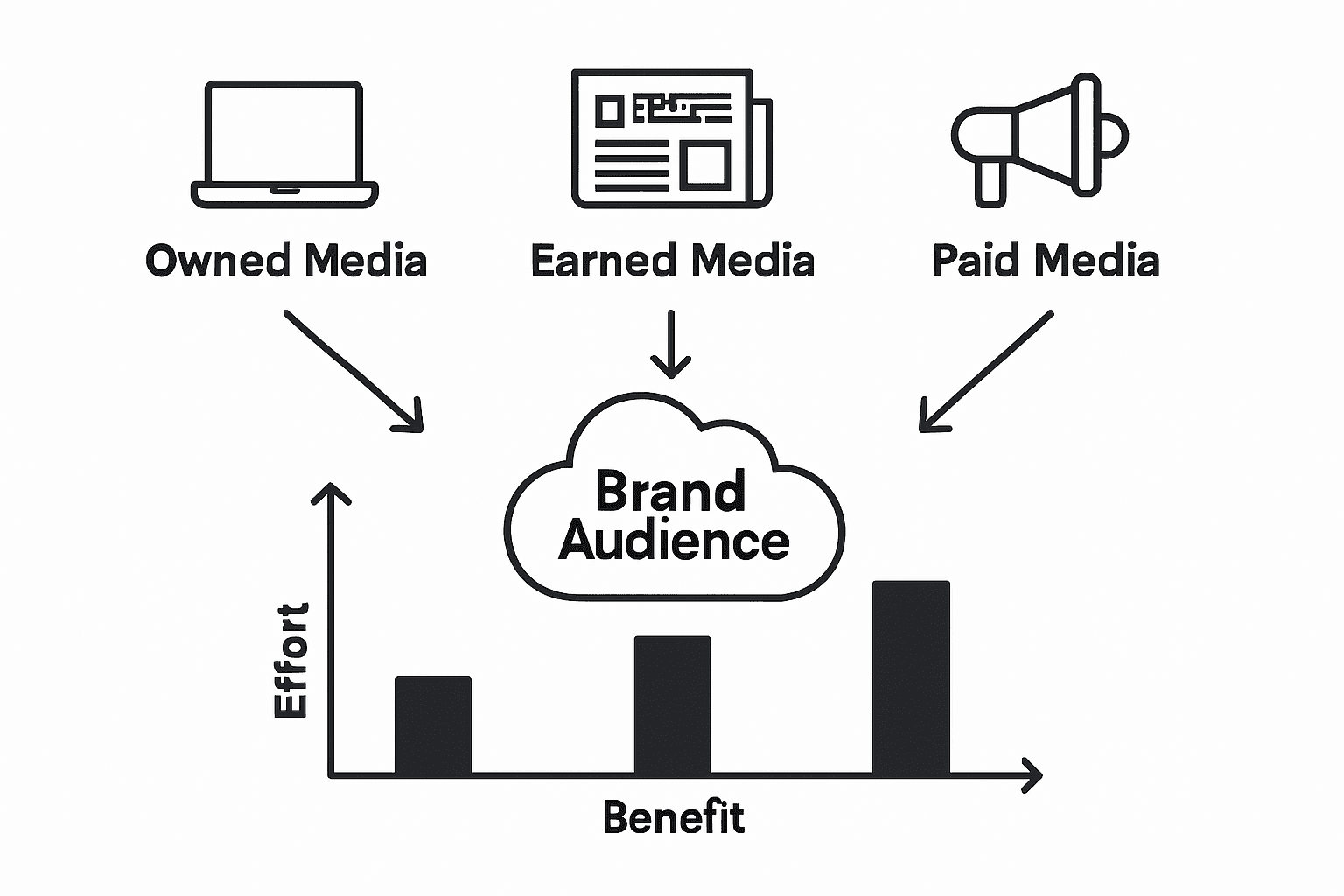
Here’s a quick comparison of the four PESO Model content marketing channels and their core attributes:
| Channel Type | Control Level | Typical Formats | Main Business Benefit |
|---|---|---|---|
| Owned Media | Full brand control | Blogs, websites, email | Build authority and nurture leads |
| Earned Media | Third-party control | Press, guest articles | Boost credibility and organic reach |
| Shared Media | Moderate brand input | Social media posts | Amplify engagement via peer sharing |
| Paid Media | High campaign input | Ads, sponsored content | Quick audience reach and targeting |
Different content formats can be leveraged across these channels to maximize audience engagement:
Pro Tip for Content Diversity: Develop a multi-channel content mix that repurposes core content across different formats, maximizing your creative output while reaching audiences through their preferred consumption methods.
Successful content marketing requires thoughtful integration of these approaches, creating a holistic strategy that speaks directly to your audience’s preferences and information needs.
Small brands face unique challenges in a competitive marketplace, but a well-crafted content marketing strategy can level the playing field and create meaningful connections with potential customers. Why brand strategy matters illuminates how strategic content can transform small businesses from invisible players to recognized market contributors. Strategic content marketing enables smaller organizations to punch well above their weight class by establishing credibility, trust, and genuine audience relationships.
The power of a targeted content strategy lies in its ability to create cost-effective, sustainable growth mechanisms. Unlike expensive traditional advertising, strategic content allows small brands to demonstrate expertise, solve audience problems, and build authority without massive financial investments. By consistently producing high-quality, relevant content across multiple channels, small brands can attract ideal customers, nurture leads, and create a compelling narrative that distinguishes them from competitors. This approach turns content from a mere marketing tactic into a powerful relationship-building and business development tool.
Key results that strategic content marketing drives for small brands include:
The following table summarizes the impact strategic content marketing can deliver for small brands:
| Impact Area | How Content Strategy Helps | Long-Term Value |
|---|---|---|
| Brand Recognition | Showcases expertise | Increased market visibility |
| Lead Generation | Attracts ideal customers | Higher conversion potential |
| Cost Savings | Reduces ad spending | More efficient resource use |
| Trust Building | Delivers helpful solutions | Loyalty and repeat business |
Pro Tip for Strategic Content: Create a content repository that repurposes core insights across multiple formats, maximizing your creative output while reaching diverse audience segments with minimal additional effort.
Small brands that embrace strategic content marketing transform from overlooked businesses into recognized industry voices, proving that thoughtful, consistent communication can be more powerful than massive advertising budgets.
Content marketing strategies can quickly unravel when entrepreneurs fall into predictable traps that undermine their overall effectiveness. How to build a content marketing strategy for results highlights the critical importance of avoiding common strategic missteps that can derail even the most well-intentioned marketing efforts. Strategic awareness is the first line of defense against these potentially costly mistakes that can waste time, resources, and creative energy.
The most significant pitfalls often stem from fundamental misunderstandings about content marketing’s true purpose and execution. Businesses frequently make the error of creating content without a clear audience focus, producing generic materials that fail to resonate with their target market. This scattershot approach leads to wasted resources and minimal engagement. Other critical mistakes include inconsistent brand messaging, neglecting search engine optimization, failing to track performance metrics, and treating content as a one-time effort rather than an ongoing strategic process. Successful content marketing requires a holistic, disciplined approach that aligns creative output with specific business objectives.
Key content marketing mistakes to avoid include:
Pro Tip for Mistake Prevention: Conduct a quarterly content audit that critically evaluates your strategy against actual performance metrics, identifying gaps and opportunities for strategic refinement.
Navigating content marketing successfully requires constant vigilance, strategic thinking, and a willingness to adapt. The most successful brands view their content strategy as a living, breathing system that evolves with their business and audience needs.
The article highlights the struggle many entrepreneurs and small businesses face when trying to build a content marketing strategy that truly connects with their audience and drives sustainable growth. If you are overwhelmed by inconsistent messaging, unclear audience targeting, or frustrated by wasted resources on random content efforts this is exactly where a strategic, aligned approach makes all the difference. Concepts such as creating a consistent brand voice, mapping audience pain points, and measuring performance are key but can feel complex without expert guidance.
At Reasonate Studio we specialize in transforming these challenges into clear, actionable strategies using our proprietary Aligned Impact Model™. Our approach guides you through uncovering your brand foundations, aligning messaging with your audience’s needs, and implementing a system designed for measurable, lasting impact. Whether you want to confidently build your brand narrative or create a tailored content calendar that turns prospects into loyal customers we provide a collaborative and empathetic partnership built for your success.

Ready to stop guessing and start growing with intentional content marketing? Explore how our strategic services can help you scale your business with purpose and clarity. Visit Reasonate Studio to learn more and take the first step toward elevating your brand’s impact today. Discover more insights about building a marketing strategy for small business success and see how understanding the role of content strategy unlocks real growth opportunities.
A content marketing strategy is a purposeful approach to creating and distributing valuable content that attracts, engages, and converts your ideal audience, building genuine connections through relevant information that addresses their needs.
A content marketing strategy helps small brands establish credibility, attract ideal customers, reduce advertising costs, and create meaningful relationships without significant financial investment, ultimately driving sustainable growth.
Core elements include defining measurable marketing objectives, conducting market and audience research, establishing a consistent brand voice, creating a comprehensive distribution plan, and implementing performance tracking systems.
Businesses can measure effectiveness through performance metrics such as engagement rates, audience trust levels, lead generation, and increased brand visibility, using tools that track analytics and audience feedback.