September 1, 2026
Understanding B2C Business to Consumer Dynamics


Unlock your marketing potential with our campaign plan template. Align objectives, audience, and budget for a successful launch!
TL;DR:
- A campaign plan template aligns objectives, audience, messaging, channels, budget, and success metrics before asset creation. It guides marketing professionals through structured stages from defining to closing, ensuring strategic alignment at each step. Customizations vary for campaign type, industry, and size, emphasizing clear ownership, measurement, and risk management.
A campaign plan template is a single, structured document that aligns your objectives, audience, messaging, channels, budget, timeline, owners, and success metrics before a single asset gets built. This template is built for marketing professionals and campaign planners who need to move from brief to launch without losing strategic alignment along the way.
Download the editable templates here:
The 10-section brief structure covers every field a planner needs:
Campaign templates focus on a single, time-bound initiative — weeks to months — while a marketing plan covers broader organizational strategy across quarters or years. Both require SMART objectives, but the campaign brief is where those objectives get operationalized.

Campaign name and objective. Write one sentence with a numeric target: “Generate 500 qualified leads for the Q3 product launch by August 31.” Vague goals like “increase brand awareness” produce vague results — a number forces the team to agree on what success actually looks like.

Audience and persona fields. Name the primary segment (job title, company size, pain point) and one secondary segment if relevant. Include a one-line behavioral insight: what does this person do right before they need your product?

Topline message and variants. The topline message is one sentence that any channel can adapt. Variants are channel-specific rewrites of that same core idea — shorter for paid social, more detailed for email, proof-point-led for PR.
Channels and funnel role. List each channel and its job: awareness, consideration, or conversion. A channel without a defined role tends to get used for everything and measured for nothing.
RACI and approval flow. Name one owner per deliverable. The approval flow field should list who reviews, who approves, and the deadline for each sign-off. For most campaigns, a 3–5 page brief covers all ten sections. For small-budget or single-channel campaigns, a one-page mini-brief works fine — use the mini-brief format when total spend is under $5,000 or the campaign runs fewer than three channels.
The workflow runs in eight stages. Each stage has a clear owner and a specific template field to complete before moving forward.
Pro Tip: Before any asset work begins, ask the team to write the topline message in one sentence. If they can’t agree on it in under ten minutes, the strategy isn’t ready. Use that friction as a gate, not a nuisance.
The base template adapts to any campaign type with a few targeted modifications. Here’s what changes for each.
A practical starting split for most campaigns allocates roughly 40% to paid media, 30% to creative production, 20% to tools and technology, and 10% to contingency. Adjust by campaign type: a PR-led campaign shifts creative higher; a PPC-heavy campaign shifts paid media to 60–70% and reduces creative accordingly.
Worked example — $50,000 campaign budget:
| Category | Allocation | Amount |
|---|---|---|
| Paid media | 40% | $20,000 |
| Creative production | 30% | $15,000 |
| Tools and technology | 20% | $10,000 |
| Contingency | 10% | $5,000 |
Never spend the contingency line proactively. It exists for mid-campaign reallocation when a channel outperforms or a creative asset underperforms.
| Milestone | Typical timing |
|---|---|
| Brief sign-off | Week 1 |
| Creative kickoff | Week 2 |
| Asset delivery | Week 4–5 |
| Channel build complete | Week 5–6 |
| Soft launch and QA | Week 6 |
| Full launch | Week 7 |
| Mid-campaign review | Week 9 |
| Final report and closeout | Week 12 |
Map each milestone to the date fields in your template and assign a named owner. A milestone without an owner is a wish, not a plan.
Pick one primary success metric before the campaign launches. Everything else is diagnostic. The right primary metric depends on the campaign objective:
| Campaign objective | Primary metric | Secondary metrics |
|---|---|---|
| Revenue | Revenue attributed | Pipeline created, conversion rate |
| Lead generation | Qualified leads | Cost per lead, form completion rate |
| Awareness | Reach with engagement threshold | Impressions, video view rate |
| App installs | Cost per install | Day-7 retention, in-app event rate |
| Email nurture | Click-to-open rate | Unsubscribe rate, downstream conversion |
Attribution. Last-click attribution works for simple single-channel campaigns. Multi-touch attribution (linear or time-decay) is more accurate for campaigns running across three or more channels. Data-driven attribution requires sufficient conversion volume — typically 300+ conversions per month — to be statistically meaningful.
Reporting cadence. Check leading indicators (CTR, open rate, cost per click) daily during the first week. Run a weekly tactical review against the primary metric. Conduct a full post-campaign analysis within two weeks of closeout.
A complete asset pack prevents last-minute scrambles. Organize files into three folders: Editable Source Files, Final Approved Assets, and Campaign Brief and Reports.
Required deliverables and file specs:
Pre-launch checklist:
Versioning convention: use the format CampaignName_AssetType_v01_YYYYMMDD. Final approved files get a _FINAL suffix. Never overwrite a previous version.
Every campaign brief should include a short risk register — three to five rows covering the most likely failure points and the response plan for each.
The most common campaign risks fall into four categories: creative delays (asset delivery misses the channel build window), budget overrun (paid media CPCs exceed forecast), channel underperformance (a primary channel fails to hit the leading indicator threshold by week two), and compliance gaps (missing approvals or, for political campaigns, missed FEC filing deadlines).
For each risk, document the trigger (what signals the problem), the owner (who decides), and the contingency (what changes). A creative delay trigger might be “assets not delivered by Day 28.” The contingency: extend the soft launch by one week and notify channel managers by Day 25. That kind of specificity means the team responds in hours, not days.
The post-campaign analysis belongs in the final section of the brief, completed within two weeks of campaign closeout. Cover four areas: performance against the primary metric, what drove the result (channel, creative, audience, or offer), what you’d change, and what gets carried forward to the next campaign.
Keep it short — one page is enough. The goal is a transferable record, not a comprehensive audit. Teams that skip this step repeat the same experiments and lose institutional knowledge every time a planner changes roles.
The 10-section template scales in both directions. For a large enterprise campaign with multiple agencies and a six-figure budget, expand the RACI section to include legal, procurement, and external agency contacts. Add a formal governance section with escalation paths and a weekly status cadence.
For a small business or solo planner running a $10,000 campaign, collapse the template to five fields: objective, audience, message, channels, and budget. The marketing strategy template pairs well here as a lightweight strategic layer.
Industry-specific adjustments worth noting: healthcare and legal campaigns need a compliance review field and a named legal approver. Financial services campaigns may require disclosure language in every asset. Retail campaigns often need a promotional calendar field that maps to inventory availability. Political campaigns, as noted, carry hard FEC filing deadlines that must appear in the timeline.
Cross-channel coordination fails most often because each channel team operates from its own brief. The fix is simple: one master brief, channel-specific appendices. The master brief holds the objective, audience, topline message, and primary metric. Each channel appendix holds the platform-specific assets, copy, and KPIs.
Assign a campaign manager who owns the master brief and is accountable for message consistency across channels. Weekly sync meetings during the campaign should cover three questions: Is the primary metric on track? Are leading indicators healthy? Does anything need reallocation?
When channels share audiences — for example, a prospect sees a paid social ad and then receives an email — sequence the touchpoints deliberately. Define which channel handles first contact, which handles nurture, and which handles conversion. That sequencing belongs in the channels field of the brief.
Most campaign templates fail not because they’re missing a field, but because the strategy they’re built on is incomplete. A template is a forcing function. If the team can’t write a one-sentence topline message, the strategy isn’t ready. If there are three “primary” success metrics, there are none. The template exposes those gaps before asset production begins — which is exactly when they’re cheapest to fix.
Senior planners know that connecting every tactic to a business goal is what separates a campaign that generates activity from one that generates results. The brief is where that connection gets made explicit. A campaign that can’t answer “what business outcome does this support?” isn’t ready to launch, regardless of how polished the creative is.
RACI discipline matters here too. When ownership is ambiguous, approvals stall, assets get revised in circles, and launches slip. A named owner for every deliverable and a named approver for every sign-off removes that ambiguity. It also makes post-campaign accountability possible — you can trace a result back to a decision and a person.
Pro Tip: Use the topline message field as a strategic gate. Before the brief moves to creative, require that the campaign manager and a senior stakeholder both sign off on that single sentence. If they disagree on it, the campaign isn’t aligned. That conversation is far less expensive at the brief stage than after three rounds of creative revisions.
The campaigns that consistently perform are the ones where the brief was treated as a strategic document, not an administrative one. Reasonate Studio’s work with established businesses consistently shows that the quality of the brief predicts the quality of the result.
Most marketing teams have the tactical capability to run campaigns. What they often lack is the senior strategic layer that connects the brief to a business outcome, keeps the RACI accountable, and turns post-campaign learnings into a repeatable system.
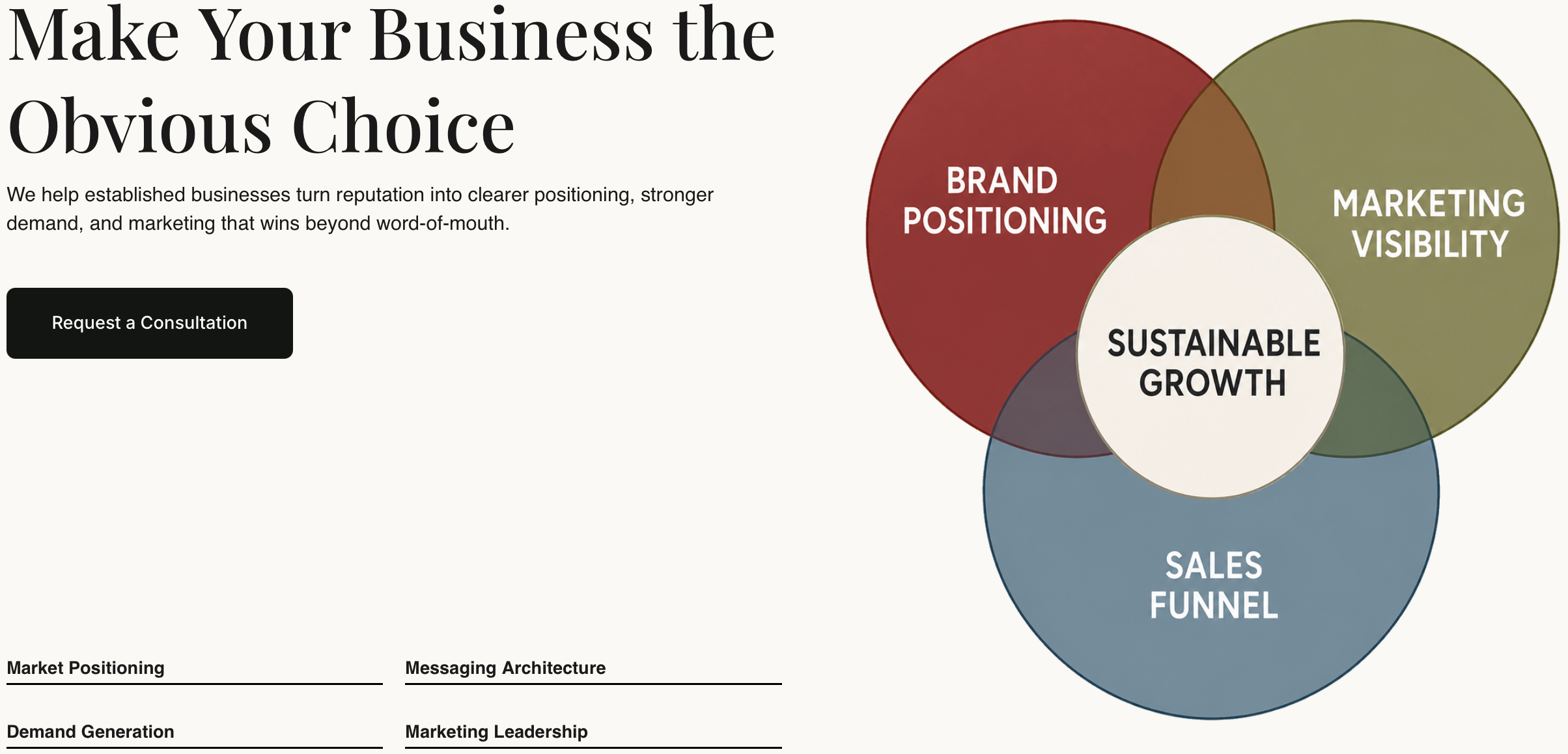
Reasonate Studio provides that layer through Fractional CMO leadership and campaign strategy support — without the overhead of a full-time hire. Kaitlyn Cole and the Reasonate Studio team work directly with marketing professionals and business leaders to develop campaign briefs, build measurement frameworks, and create the governance structure that keeps campaigns on track from kickoff to closeout. Client outcomes have included a $46.3 million partnership secured after a brand repositioning and 1,000% website traffic growth through ongoing Fractional CMO leadership.
If your campaigns are producing activity but not results, the gap is usually in the strategy, not the execution. Explore Reasonate Studio’s services or learn more about visibility and lead-generation planning to see how senior marketing leadership can close that gap for your team.
Editable templates and planning tools:
Authoritative external references:
This article is general information for marketing and campaign planning purposes. For U.S. political campaign compliance, confirm current filing requirements directly with the Federal Election Commission or a qualified election law attorney.