September 22, 2026
Why Update Brand Messaging: Essential Guide for Growth


Discover effective brand refresh ideas for small business owners in 2026. Elevate your business identity while staying true to your roots.
TL;DR:
- A brand refresh involves targeted updates to a business’s visual and verbal identity to stay relevant without losing its core essence.
- It focuses on refining existing elements like logos, colors, typography, and tone while aligning with strategic goals.
A brand refresh is defined as a set of targeted updates to a business’s visual and verbal identity designed to keep the brand relevant and connected to its evolving audience without losing its core essence. Unlike a full rebrand, a refresh keeps the core name and mission intact while updating visual and verbal elements such as logo proportions, color palettes, typography, and tone of voice. For small business owners and entrepreneurs, this distinction matters. You do not need to throw everything out to feel current. You need to know which elements to evolve and which to protect. Reasonate Studio’s Aligned Impact Model™ is built on exactly this principle: clarity first, then execution. The brand refresh ideas in this article are practical, specific, and designed to increase recognition and engagement without alienating the customers who already trust you.

A brand refresh works best when each update serves a clear purpose. The following ideas are the most effective ways to modernize your brand identity without losing the equity you have already built.
Refine your logo without replacing it. The most common mistake small business owners make is treating a logo update like a full redesign. Legacy brands benefit from minimal core logo changes, updating peripheral elements like spacing, weight, or secondary marks instead. Adjusting proportions or cleaning up line work gives your logo a modern feel while keeping it instantly recognizable to existing customers.
Modernize your color palette while protecting your signature hues. Your primary brand color carries recognition value. The goal is to evolve the supporting palette, not replace the anchor color. Adding a refined neutral, a more contemporary accent, or adjusting saturation levels can make your brand feel fresh without triggering confusion.
Update your typography for legibility and a contemporary look. Fonts age faster than most business owners realize. Switching from a dated serif to a clean, geometric sans-serif, or refining your type hierarchy across digital assets, signals professionalism and attention to detail. Typography updates are low-cost and high-impact.
Refine your tone of voice to match how your audience communicates now. Brand voice drifts over time. If your website copy was written three years ago, it probably no longer reflects how your ideal customer speaks or what they respond to. Auditing your messaging for clarity, warmth, and directness is one of the highest-return brand refresh ideas available to small businesses.
Refresh your photography and illustration style. Visual content ages quickly. Stock photography trends, color grading styles, and illustration aesthetics shift every few years. Updating your visual content library to reflect a more current aesthetic, and one that aligns with your brand values, creates immediate impact across your website and social channels.
Rework your digital asset templates. Social media graphics, email headers, and presentation decks are often the most visible touchpoints for your brand. Bringing these into alignment with your refreshed palette, typography, and photography style creates consistency that builds trust over time.
Revisit your packaging or product presentation. For product-based businesses, refreshing packaging labels and digital templates can help distinguish product variants and improve shelf presence. Even service businesses benefit from reviewing how their proposals, contracts, and onboarding materials look and feel.
Pro Tip: Start with your digital assets before touching print or packaging. Digital updates cost less, reach more people faster, and give you real feedback before you commit to physical production.
The most common reason a brand refresh fails is that it starts with aesthetics instead of strategy. Successful refreshes start with repositioning and getting clear on audience needs before any design changes are made. This is not a creative exercise. It is a business decision.
Conduct a brand perception audit. Before changing anything, understand how your current brand is perceived. Survey loyal customers, review your social media comments, and assess how your brand compares to where your business is headed. The gap between current perception and desired positioning is where your refresh strategy lives.
Define what must stay versus what can evolve. Not every element of your brand is up for revision. Defining elements of continuity such as core colors, key phrases, and the emotional feeling your brand creates protects customer recognition during the transition. Write these down as explicit guardrails before the creative work begins.
Identify the specific trigger for your refresh. Brand refreshes should be initiated based on documented triggers. Market misalignment, new audience segments, mergers, or core product shifts are all valid reasons to refresh. Refreshing without a clear trigger leads to changes that feel arbitrary to both your team and your customers.
Set measurable goals for the refresh. Vague goals produce vague results. Define what success looks like in concrete terms: increased website conversion rate, higher social media engagement, stronger email open rates, or improved customer feedback scores. These metrics give you a way to evaluate whether the refresh is working.
Clarify your audience’s current needs and communication preferences. Your audience evolves. The person who bought from you two years ago may have different expectations today. Revisiting your buyer personas and updating them with current data ensures your refreshed messaging speaks to who your customer is now, not who they were when you launched.
Avoid chasing design trends without strategic backing. A color that is popular this year may feel dated in 18 months. Every visual choice in your refresh should connect back to your brand values and audience expectations, not just what looks current on design inspiration sites.
Pro Tip: If you are unsure where to start, a brand clarity audit is the fastest way to identify which elements need updating and which are already working for you.
A poorly executed refresh can cost you more than it gains. These are the pitfalls that most often derail small business brand updates, and how to prevent each one.
Starting with visuals before clarifying strategy. Jumping straight to color and tagline changes without a positioning review produces weak results. The visual layer should express a clear strategy, not substitute for one. Fix your messaging foundation first, then let the design follow.
Over-changing a beloved logo. Customer loyalty is partly visual. When a familiar logo changes dramatically, loyal customers feel disoriented. The solution is restraint. Refine, do not replace. Adjust weight, spacing, or secondary elements while keeping the core mark intact.
Ignoring continuity elements. Continuity is what makes a refresh feel like an evolution rather than a replacement. Without explicit guardrails around your core colors, key phrases, and brand feeling, your refresh risks creating a brand that feels unfamiliar to the people who already love you.
Failing to communicate the refresh to your customers. A refresh that happens silently creates confusion. Customers notice changes and, without context, they fill in the blanks themselves. Proactive communication turns a potential moment of confusion into a moment of connection.
Not testing new concepts with loyal customers. Your most loyal customers are your best early-warning system. Share updated concepts with a small group before rolling out broadly. Their feedback will surface blind spots that internal teams miss every time.
“Establishing elements of continuity protects audience recognition and trust during brand evolution. Explicit guardrails help ensure the brand remains familiar despite updates.” — How to Refresh Your Brand Without Losing Your Audience
Governing your refresh with a simple brand style guide prevents drift after launch. Document your updated color codes, approved fonts, tone of voice guidelines, and logo usage rules. This document becomes the reference point that keeps your brand consistent across every channel and every team member.
A phased rollout reduces risk and gives you room to adjust based on real feedback. The table below outlines a practical sequence for small business owners.
| Phase | Focus Area | Key Actions |
|---|---|---|
| Phase 1 | Digital assets | Update website, social profiles, email templates, and digital ads first |
| Phase 2 | Content and messaging | Refresh copy, update brand voice across all written touchpoints |
| Phase 3 | Packaging and print | Apply updated identity to physical materials and product packaging |
| Phase 4 | Trade and partner channels | Align external partners, distributors, and collaborators with the new identity |
Starting with digital assets is the right move for most small businesses. Phased rollouts beginning with digital deliver the lowest cost and the fastest market response. You get real-world feedback before committing to expensive print or packaging production.
Engaging loyal customers early builds momentum. Share a preview of the refresh with your email list or most engaged social followers before the full launch. Frame it as an evolution, not a departure. This approach turns your most loyal supporters into advocates for the change rather than skeptics of it.
Measuring the impact of your refresh is non-negotiable. Track engagement rates, website traffic, conversion rates, and customer feedback in the 60 days following launch. These numbers tell you whether the refresh is landing the way you intended. If something is not working, a phased approach gives you the flexibility to adjust before the change is fully baked in.
Pro Tip: Assign one person on your team to own brand governance after the refresh. Without a designated owner, refreshed identities drift back to old habits within months. Consistency is what turns a refresh into lasting recognition.
For deeper guidance on aligning your brand voice and positioning before the visual work begins, the rebranding strategies guide from Reasonate Studio covers the full strategic sequence in detail.
The most surprising thing I have observed working with founders, coaches, and consultants is how often a brand refresh gets treated as a cosmetic project when it is actually a strategic one. Owners come in wanting a new logo or a color palette update, and what they actually need is clarity about who they are talking to and what they are trying to say. The visual work is the easy part. The hard part is getting honest about whether your current brand still reflects where your business is going.
Small businesses have a genuine advantage in this process that larger brands do not. You can move faster, test more freely, and communicate changes directly to your community without a corporate approval chain slowing everything down. That agility is a real asset. Use it.
The brands I have seen refresh most successfully are the ones that treated the process as a business initiative, not a design project. They started with audience clarity, defined what had to stay, and made every visual decision in service of a clear message. The ones that struggled started with a mood board and worked backward. That approach almost always produces a brand that looks different but says nothing new.
My honest advice: resist the urge to change everything at once. A refresh is not a declaration that your old brand was wrong. It is a signal that your business has grown and your brand is growing with it. That framing, communicated clearly to your audience, turns a potentially confusing moment into a compelling story. And a compelling story is always the foundation of a brand that connects.
— Kaitlyn Cole
A brand refresh is only as strong as the strategy behind it. Reasonate Studio works with founders, coaches, and consultants to build that strategy from the ground up, starting with brand clarity and moving through execution with intention.
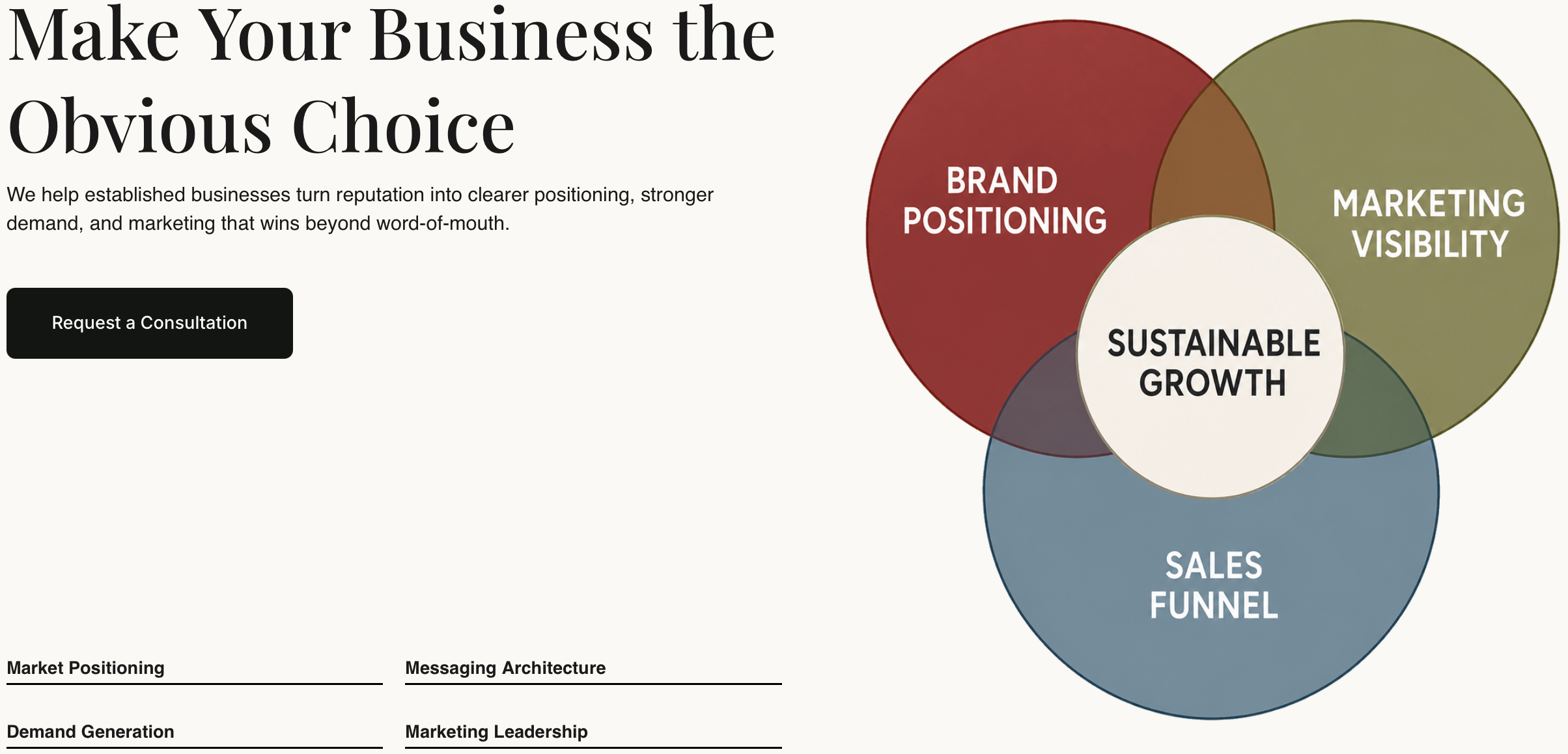
Whether you need a full social media presence that reflects your refreshed identity or a sales page that converts with your updated messaging, Reasonate Studio’s done-for-you services are built to support every stage of the process. The social media management service keeps your refreshed brand showing up consistently across platforms, with content that connects and converts. If you are ready to move from scattered to strategic, Reasonate Studio is the partner built for exactly that.
A brand refresh is a set of targeted updates to a business’s visual and verbal identity, including logo refinements, color palette adjustments, typography changes, and tone of voice updates, designed to keep the brand relevant without a full rebrand.
Brand refreshes should be triggered by documented business changes such as market misalignment, new audience segments, product shifts, or a significant gap between current brand perception and business goals.
A brand refresh keeps the core name and mission intact while updating specific visual and verbal elements. A full rebrand typically involves a fundamental change to the brand’s name, positioning, or core identity. You can learn more in this refresh vs. rebrand guide.
The timeline varies by scope, but most small business refreshes can be executed in phases over 60 to 90 days, starting with digital assets and moving to print and packaging.
Elements of continuity such as your core brand color, primary logo mark, and the emotional feeling your brand creates should be protected. These are the anchors that maintain customer recognition through the transition.