September 22, 2026
Why Update Brand Messaging: Essential Guide for Growth


Discover the brand relaunch process for small business owners. Realign your brand to boost revenue and connect with your audience effectively.

TL;DR:
- A successful brand relaunch involves a structured process that aligns messaging and visual identity with business goals over 12 to 16 weeks. It includes five phases: discovery, identity development, internal rollout, external launch, and post-launch measurement, each building on the last. Effective execution requires team alignment, audience research, consistent touchpoints, and ongoing measurement to ensure long-term success.
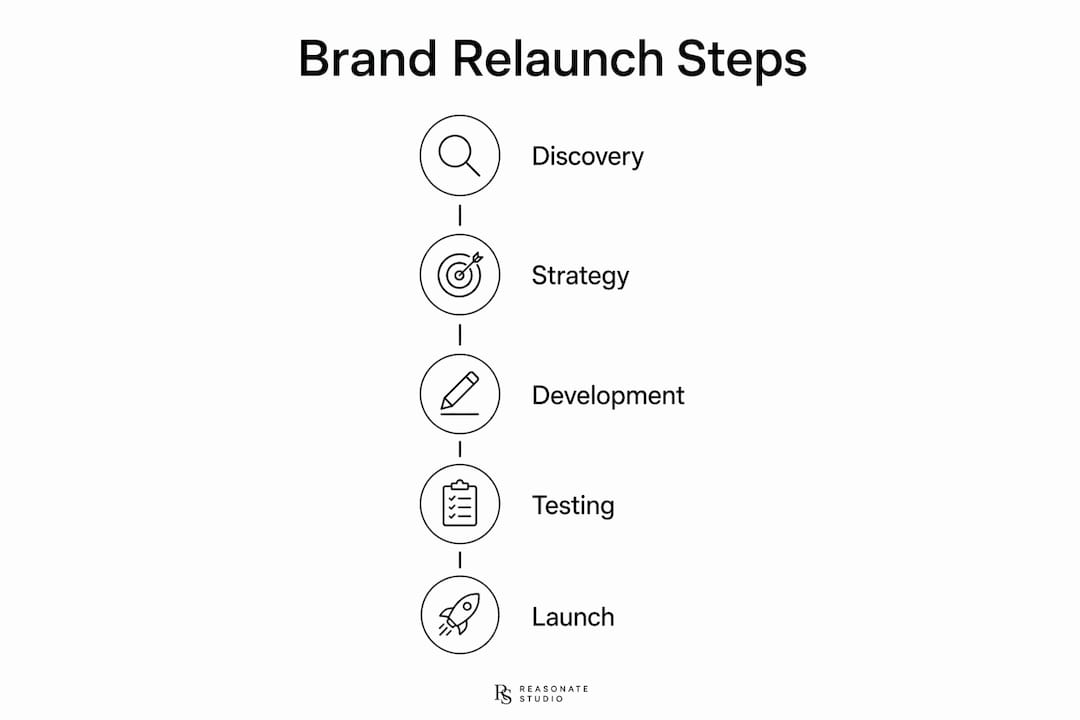
The brand relaunch process is the structured series of strategic actions that reposition your brand to better connect with your audience and your business goals. It goes far beyond swapping a logo or refreshing your color palette. A true relaunch realigns your messaging, visual identity, and market positioning with where your business is headed. For small business owners and solopreneurs, getting this right is the difference between a brand that generates consistent revenue and one that quietly confuses the people you are trying to reach. Industry best practice places a full relaunch timeline at 12–16 weeks, divided into five sequential phases. That structure exists for a reason, and skipping steps is where most small businesses lose momentum.
A complete brand relaunch follows five phases, each building on the last. Rushing any phase creates gaps that show up later as inconsistent messaging or a confused audience.
Discovery and strategy. This is where you define why the relaunch is happening and what success looks like. You audit your current brand, research your audience, and clarify your market positioning. Without this foundation, every decision that follows is a guess.
Identity development. This phase covers your logo, color palette, typography, brand voice, and messaging framework. These elements must work together as a system, not as isolated updates. A brand refresh strategy that updates these elements step by step, rather than all at once, reduces the risk of losing brand equity you have already built.
Internal rollout. Before any public announcement, your team needs to understand the new brand. This means briefings, updated materials, and workshops so everyone can communicate the brand confidently. Internal alignment before launch is one of the most skipped steps in small business rebrands, and it is also one of the most costly mistakes to make.
External launch. This is the public-facing phase: updated website, social media, press outreach, email campaigns, and any paid promotion. Treat this as a communications campaign, not a single announcement. Sustained messaging over several weeks lands far better than one big reveal.
Post-launch measurement. Reviews at 30 days, 90 days, and 12 months each serve a different purpose. The 30-day check confirms operational implementation. The 90-day review assesses communication impact. The 12-month audit measures commercial results.
| Phase | Timeline | Primary focus |
|---|---|---|
| Discovery and strategy | Weeks 1–3 | Positioning, audience research, goals |
| Identity development | Weeks 4–8 | Visual assets, messaging, brand voice |
| Internal rollout | Weeks 9–10 | Team alignment, updated materials |
| External launch | Weeks 11–13 | Public communications, digital presence |
| Post-launch measurement | 30, 90, 365 days | Performance review and optimization |
Pro Tip: Set your success metrics before you begin identity development, not after the launch. Knowing what you are measuring keeps creative decisions grounded in commercial rationale.
The brand relaunch process requires more than creative assets. It requires the right conditions and resources in place before work begins.
Leadership alignment and stakeholder buy-in are the first prerequisites. Clear leadership alignment at the start maintains scope, timelines, and quality throughout the project. For solopreneurs, this means making firm decisions early and not revisiting them every week. For small business owners with a team, it means getting key people on board before the work starts, not during it.
Audience and competitive research come next. You need to understand who you are trying to reach, what they care about, and how your competitors are currently positioned. Tools like customer surveys, social listening platforms, and one-on-one interviews with existing clients all generate useful data. The goal is to close the gap between how you see your brand and how your audience actually experiences it.
A brand style guide is non-negotiable. This document captures your logo usage rules, color codes, typography, tone of voice, and messaging guidelines. Without it, your brand will drift the moment you hand work off to a designer, a copywriter, or a social media manager.
Project management tools keep the relaunch on schedule. A shared timeline with clear ownership for each task prevents the most common failure mode: a relaunch that drags on for six months because no one is accountable for deadlines.
Legal protection is the step most small businesses skip entirely. Trademark protection before public announcement prevents costly disputes during rollout. If your new brand name or logo is not protected, a competitor can claim it while you are mid-launch.
Pro Tip: Run a quick trademark search through the USPTO database before finalizing any new name or logo. It takes less than an hour and can save months of legal headaches.
You can also review rebranding strategies for founders to identify which prerequisites apply most directly to your business type before you commit to a timeline.

Execution is where most rebranding best practices break down. The plan looks clean on paper, but the real work is messier. Here is how to move through each step without losing momentum.
Your team, contractors, and close partners should experience the new brand before your audience does. Hold a brand briefing session. Share the updated style guide. Walk through the messaging framework together. This is not a formality. A team that does not understand the new brand will communicate it inconsistently, and inconsistency erodes trust faster than any competitor can.
Monadic testing and social listening are two methods that help you validate your new visual identity and messaging before full public release. Monadic testing shows one concept to one group of respondents at a time, which gives you clean feedback without the noise of comparison bias. Social listening tracks how your audience is already talking about your category, so you can align your new messaging with language they already use.
For small business owners, a simpler version of this is sharing your new brand with a trusted group of existing clients before the public launch. Ask them three questions: What does this brand communicate? Who do you think it is for? What would make you trust it more? Their answers will tell you more than any design review.
Brand consistency is not just about using the right logo. Every place your brand appears must reflect the same voice, the same values, and the same visual system. That includes your email signature, your invoice template, your social media bio, your website footer, and your packaging if you ship physical products.
Common mistakes to avoid during execution:
A successful brand relaunch treats the public announcement as the beginning of a campaign, not the end of a project. Plan a sequence of communications: a teaser post, a launch day announcement, a behind-the-scenes story about why you rebranded, and a follow-up that highlights what has changed for your clients. Spread these across two to four weeks. This approach keeps your audience engaged and gives the new brand time to land.
Pro Tip: Write your launch email sequence before you finalize your visual identity. If you cannot explain the rebrand in plain language, the visual changes will not make sense to your audience either.
For practical guidance on building the communications side of your launch, a marketing campaign plan gives you a repeatable structure to follow.
The biggest mistake is treating the relaunch as a one-time event. Brands that succeed after a relaunch treat it as an ongoing communications effort. The second biggest mistake is prioritizing aesthetics over commercial rationale. A new logo does not grow revenue. A clearer message, a stronger positioning statement, and a consistent presence do. Every creative decision should connect back to a business outcome.
Measurement is what separates a successful brand relaunch from an expensive redesign. Without defined metrics, you have no way to know whether the relaunch is working or where to adjust.
30-day operational review. Check that all brand assets are correctly implemented across every touchpoint. Confirm that your team is using the updated materials. Identify any gaps in rollout, such as old logos still appearing on third-party platforms or outdated email signatures.
90-day communication impact assessment. Review social media engagement, website traffic, media coverage, and direct audience feedback. This is where you measure whether the new brand is landing the way you intended. Effective rebrands show measurable impact at this stage, including metrics like a 34% immediate consumer recognition rate post-launch and a 20% increase in web conversions. Those numbers show what is possible when the messaging and identity work together.
12-month strategic audit. This is the review most small businesses never do. Few organizations complete a full 12-month review, yet it is the only point at which you can measure true commercial ROI. Compare your revenue, client acquisition rate, and average order value against pre-relaunch benchmarks. If the numbers have not moved, the messaging needs refinement, not the logo.
Use insights from each review to refine your campaigns, update your messaging, and close gaps between how you present your brand and how your audience receives it. Momentum built in the first 90 days is easy to lose if you stop paying attention. Ongoing measurement protects that momentum and gives you a clear picture of what to do next.
For a deeper look at how brand strategy connects to these outcomes, the guide on why brand strategy matters explains the commercial logic behind each decision.
Working with founders, coaches, and consultants through brand relaunches has taught me one thing above everything else: the brands that succeed are the ones that treat the relaunch as a communications campaign, not a creative project.
Most small business owners spend 80% of their energy on the visual identity and 20% on how they will communicate the change to their audience. That ratio should be flipped. A beautiful new brand that no one understands is just expensive decoration. The message has to come first. The visuals support the message, not the other way around.
The other thing I see constantly is founders who want to rush the internal phase because they are excited to go public. That excitement is real and valid. But your team, your contractors, and your closest partners are your first audience. If they cannot explain your new brand clearly, your clients will not understand it either. The internal launch is not a box to check. It is the foundation that holds everything else up.
The hardest conversation I have with clients is about brand equity. Changing too much too fast can erase recognition you have spent years building. A brand refresh strategy that evolves your existing identity is often more effective than a complete overhaul. The goal is not to look different. The goal is to connect more clearly with the people you are trying to serve, and to do it in a way that grows your revenue.
Plan carefully. Move deliberately. And measure everything.
— Kaitlyn Cole
If you have worked through the phases above and you know your brand needs a relaunch, the next step is making sure your execution matches your strategy.
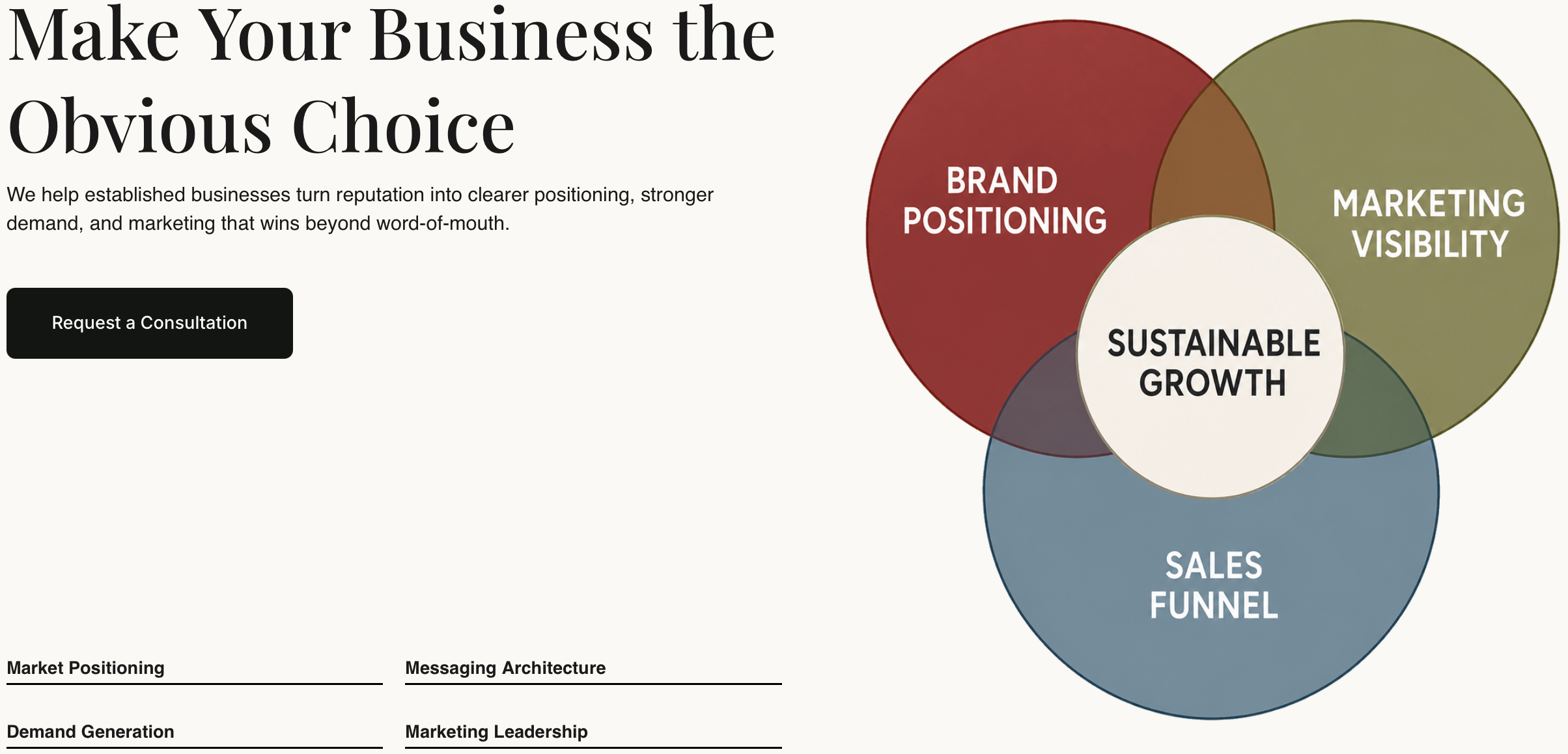
Reasonate Studio works with founders, coaches, and consultants to build the marketing systems that make a relaunch stick. From social media management that keeps your new brand visible and consistent, to sales page optimization that aligns your offers with your updated messaging, to SEO keyword research that builds search visibility around your new brand identity, every service is built to support real, measurable growth. Reasonate Studio’s Aligned Impact Model™ gives your relaunch a clear foundation, a focused message, and a system that keeps working long after launch day.
The brand relaunch process is a structured series of phases that reposition a brand to better connect with its audience and business goals. It typically spans 12–16 weeks and includes discovery, identity development, internal rollout, external launch, and post-launch measurement.
A brand refresh updates and modernizes existing brand elements without changing the core identity. A full relaunch involves repositioning the brand, redefining its messaging, and often changing how it shows up across every touchpoint.
A small business should consider a relaunch when its current brand no longer reflects its audience, its offers, or its market position. Signs include inconsistent messaging, declining engagement, or a significant shift in the business model or target client.
A structured brand relaunch takes 12–16 weeks when following industry best practice. Solopreneurs working with a focused partner can move through the phases efficiently, but skipping steps to go faster typically creates gaps that require fixing later.
Track operational implementation at 30 days, communication impact including social engagement and web traffic at 90 days, and commercial outcomes such as revenue and client acquisition at 12 months. These three review points give a complete picture of whether the relaunch is delivering results.