September 22, 2026
Why Update Brand Messaging: Essential Guide for Growth


Discover how 'we are brand' can shape your business identity. Build a unified brand voice and attract clients with confidence.
TL;DR:
- Building a unified brand identity ensures consistent messaging across all channels and interactions. It includes mission, values, positioning, voice, messaging framework, and visual guidelines, forming a living system rather than a static asset. Regular updates and practical guidelines help founders maintain brand coherence and foster audience trust.
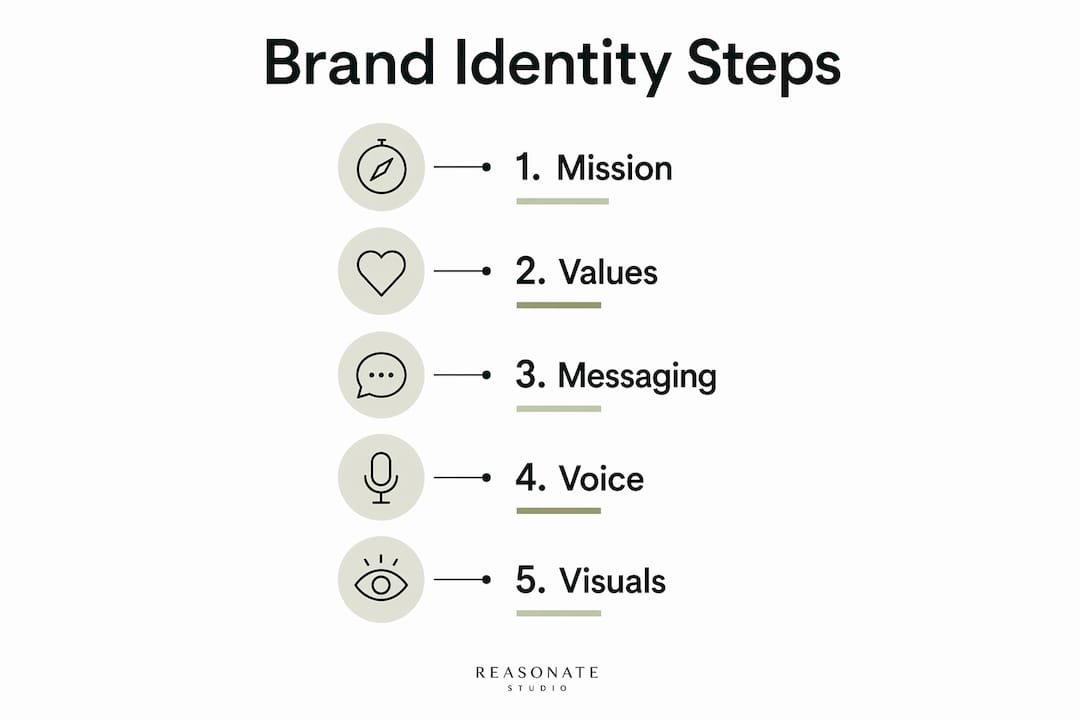
“We are brand” is the practice of building a unified brand identity and messaging framework so every marketing interaction reflects one recognizable voice, purpose, and promise. This is not a tagline exercise or a logo refresh. It is the operational foundation that shapes how your audience perceives you across every channel, every post, and every sales conversation. For founders, coaches, and consultants, getting this right is the difference between a business that attracts the right clients consistently and one that constantly explains itself. The core components include mission, values, positioning, brand voice, and a messaging framework, all codified into practical tools like style guides and brand governance models. When you treat your brand as a living system rather than a static asset, consistent brand communication becomes a growth engine, not a design project.
A brand identity is defined as the complete set of elements that communicate who you are, what you stand for, and why your audience should choose you. According to Shopify’s brand building guide, the building blocks include target audience clarity, brand voice, mission, values, and positioning statements, all documented in brand guidelines. Each element depends on the others. A sharp positioning statement means nothing if your brand voice contradicts it in every Instagram caption.

The messaging framework is the layer most founders skip. Brand messaging is defined as the language, tone, and core ideas used to communicate a unique value proposition consistently across channels. Its components include a value proposition, a positioning statement, brand voice and tone rules, and core messaging pillars. Without this framework, every piece of content becomes a guessing game.
Brand voice and tone are related but not the same thing. Voice is your brand’s consistent personality. Tone adapts by context. A health coach might always sound warm and direct, but the tone in a sales email differs from the tone in a crisis response post. Documenting both prevents your brand from sounding like three different people wrote it.
A brand style guide governs visual and verbal elements together. It covers logo usage, color palette, typography, and the verbal rules that keep written content aligned. The table below shows how the core components of a brand identity system work together:
| Component | What it defines | Output artifact |
|---|---|---|
| Mission and values | Why the brand exists and what it stands for | Mission statement, values list |
| Positioning statement | How the brand differs from alternatives | One to two sentence positioning statement |
| Brand voice | Consistent personality across all content | Voice attribute list with do/don’t examples |
| Tone guidelines | How voice adapts by context or channel | Tone matrix with example scripts |
| Messaging framework | Core ideas and value proposition language | Messaging pillars, tagline, key messages |
| Brand style guide | Visual and verbal consistency rules | PDF or live document with all brand rules |
The most overlooked component is the messaging pillar structure. Pillars are the three to five core ideas your brand returns to repeatedly. They give your content calendar direction and make your marketing feel coherent over time. A business coach whose pillars are clarity, accountability, and income strategy will always have something relevant to say, and it will always sound like them.
Pro Tip: Write your brand voice attributes as paired contrasts: “We are direct, not blunt. We are warm, not casual.” This format forces you to define the edges of your voice, which is where most brand drift happens.
A brand operating system is defined as a living infrastructure that encodes decisions, assets, and governance rules to maintain brand coherence as a company scales. This replaces the static PDF brand manual that most businesses create once and never update. The difference matters because a PDF cannot enforce itself. A brand operating system does.
Traditional brand guidelines fail for a predictable reason. They answer design questions but not daily communication questions. A team member writing a LinkedIn post does not need to know your Pantone color. They need to know how to describe your offer in two sentences, what words you never use, and how formal to sound on a Monday morning versus a product launch day.
A functional brand operating system includes several connected layers:
For founders, coaches, and consultants managing their brand alone or with a small team, the governance layer is the most practical starting point. Decide who has final say on brand decisions. Set a quarterly review date for your guidelines. These two actions alone prevent the slow drift that makes a brand feel inconsistent after 18 months of growth.
Pro Tip: Store your brand operating system in a shared, editable document rather than a locked PDF. Tools like Notion or Google Docs let you update voice examples and messaging in real time, so your guidelines stay current instead of becoming a relic.
Building a brand identity follows a specific sequence. Shopify’s 7-step process confirms that audience research and voice development come before logos and visual identity. Most founders do this backward. They spend weeks on a logo before they know what their brand actually says.
Start with audience and market research. Define who you are trying to reach with specificity. Go beyond demographics to understand what your ideal client fears, wants, and believes before they find you. This research shapes every decision that follows.
Write your mission and values. Your mission answers why the business exists beyond making money. Your values define the non-negotiable principles that guide how you operate. Both should be short enough to memorize and specific enough to actually guide decisions.
Develop your brand personality and voice before any visuals. Choose three to five voice attributes that describe how your brand communicates. Write example sentences that show the voice in action. This step is the foundation of brand identity creation and the most frequently skipped.
Write your brand story. A brand story is not a biography. It is the narrative that connects your origin, your audience’s problem, and your unique approach to solving it. A well-written brand story makes your positioning memorable and your marketing feel human.
Build your messaging framework. Write your value proposition, positioning statement, and core messaging pillars. Then write the key messages you want every audience member to walk away with after any interaction with your brand. This is what brand messaging is built on: language, tone, and core ideas that communicate your value consistently.
Create your brand kit and style guide. Design your logo, choose your color palette, and select your typography only after steps 1 through 5 are complete. Visual identity should express the personality and voice you have already defined, not define them for you.
Apply and evolve the brand systematically. Consistency is a disciplined, repeated communication practice rather than a one-time launch. Audit your brand touchpoints quarterly. Update your guidelines when your offer or audience shifts. Treat the brand as something that grows with the business.
The most common mistake at this stage is treating step 7 as optional. Founders build a brand kit, launch it, and then let it drift as the business evolves. The brand that got you to $100,000 in revenue may not be the brand that gets you to $500,000. Build the habit of reviewing and refining from day one.
Brand inconsistency is the most common and most costly mistake in growing a personal brand or consulting practice. Without practical, updated guidelines that include tone matrices and example scripts, teams and solo founders alike struggle to maintain a consistent voice and messaging across channels. The result is a brand that feels like it belongs to three different people.
The most frequent pitfalls include:
The solution to most of these pitfalls is the same: make your brand guidelines practical enough to answer daily questions. Good guidelines tell a team member exactly how to write a subject line, how to describe the offer in a DM, and what words the brand never uses. Practical brand guidelines build audience trust by keeping the brand voice unified across every touchpoint.
The conventional wisdom on branding puts visuals first. Founders spend months on logos, color palettes, and website design before they have written a single sentence about what they actually do or who they do it for. I have worked with enough founders and consultants at Reasonate Studio to say clearly: that sequence produces beautiful brands that do not convert.
Voice is the thing that makes a brand feel like a person. When someone reads your email, your Instagram caption, and your sales page and thinks “this sounds like the same person,” that is brand voice working. When those three pieces sound like they came from three different contractors, that is what brand drift looks like in practice. No logo fixes that.
The other mistake I see constantly is confusing aspirational language with positioning. A rigorous brand process strips out the fluff and forces you to say something specific. “I help coaches build six-figure businesses” is not a position. “I help first-year coaches sign their first five clients in 90 days without paid ads” is a position. The specificity is what makes it memorable and what makes the right person feel seen.
Brand governance is the unglamorous part that most founders skip entirely. Reviewing your guidelines twice a year, updating your messaging when your offer evolves, and deciding in advance who approves brand decisions are not exciting tasks. They are the tasks that keep a brand coherent at $50,000 in revenue and at $500,000 in revenue. The brands that stay consistent over time are not more talented. They are more disciplined.
My honest recommendation: write your brand voice before you design anything. Spend one focused session writing your voice attributes, your positioning statement, and your three core messaging pillars. Then hand those to a designer. You will get a visual identity that actually expresses who you are, and you will spend far less time revising it.
— Kaitlyn Cole
Building a brand identity from scratch is one thing. Making sure it shows up consistently on your sales pages, social content, and email sequences is another challenge entirely.
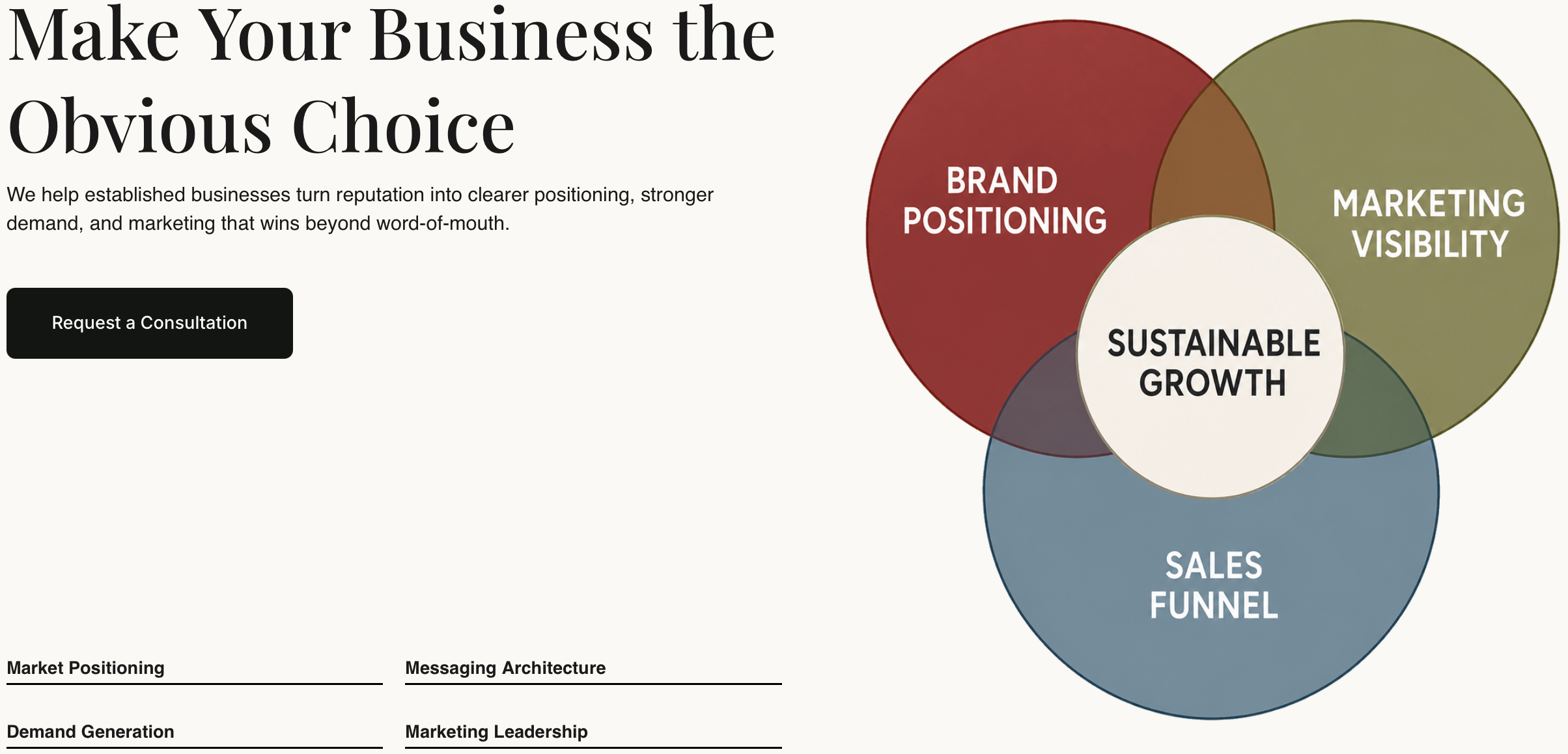
Reasonate Studio works directly with founders, coaches, and consultants to close that gap. The sales page optimization service aligns your brand messaging with your conversion goals so your offer reads as clearly as your brand sounds. Every element, from headline to call to action, reflects the voice, positioning, and messaging framework you have built. Clients who go through this process stop second-guessing their copy and start seeing their brand work as a consistent, revenue-generating system. If you are ready to turn brand clarity into real results, Reasonate Studio is the place to start.
“We are brand” means treating your brand as a unified, operational identity system rather than just a logo or tagline. It covers mission, values, positioning, voice, and messaging, all working together to create a consistent experience for your audience.
Brand messaging is the language, tone, and core ideas used to communicate your value proposition consistently across every channel. It matters because consistent messaging builds audience trust and makes your brand recognizable over time.
Start with audience research and brand voice development before creating any visual assets. Define your mission, values, positioning statement, and messaging pillars first. Visual identity should express the personality you have already defined in words.
A brand operating system is a living infrastructure that encodes your brand’s decisions, assets, and governance rules in one connected system. It replaces static PDF guidelines with an updatable framework that keeps your brand consistent as your business grows.
Brand guidelines should be reviewed at least twice a year, or any time your core offer, audience, or positioning changes significantly. Outdated guidelines are one of the leading causes of brand drift in growing businesses.