September 22, 2026
Why Update Brand Messaging: Essential Guide for Growth


Discover the top branding trends 2025 shaping successful strategies. Embrace hyper-personalization and ethical AI for brand growth!
TL;DR:
- Effective brand strategies in 2025 emphasize hyper-personalization, ethical AI use, community engagement, and trust-based messaging. Building a clear foundation before layering on advanced tactics ensures long-term growth and consumer trust. Integrating these trends cohesively drives stronger connections, credibility, and competitive differentiation.
The top branding trends 2025 demands from marketing professionals are defined by four non-negotiable pillars: hyper-personalization, ethical AI integration, community-driven engagement, and trust-first messaging. These are not experimental ideas. They are the operating standards separating brands that grow from brands that stall. McKinsey, Edelman, and KPMG have all published data in the past year confirming the same shift: consumers expect more precision, more transparency, and more genuine connection from every brand they interact with. If you are building or advising brands right now, this is the strategic map you need.
Personalization is no longer a differentiator in branding strategies for 2025. It is the minimum standard. Marketing leaders are 4x more likely to deploy one-to-one or highly personalized marketing compared to laggards, with 73% of top performers personalizing at high levels versus only 31% of underperformers. That gap is not closing. It is widening.

The shift means your clients can no longer rely on segment-level messaging and call it personalization. The new standard is channel-specific, stage-specific, and behavior-triggered content that speaks to where the individual buyer actually is in their decision process. A first-time visitor to a coaching website should see different messaging than a returning subscriber who has already downloaded a lead magnet. These are not the same person at the same moment, and treating them that way costs conversions.
Precision personalization requires three things working together:
The often-overlooked piece is consent architecture. Preference centers and consent management tools give users control over their data, which directly sustains the personalization engine without triggering privacy backlash. Brands that skip this step are building on a foundation that regulators and consumers will eventually reject.
Pro Tip: Build your preference center before you build your personalization sequences. Asking subscribers what content they want and how often they want it produces better segmentation data than any behavioral algorithm alone.
For a deeper look at applying these techniques, the personalized brand messaging guide from Reasonatestudio covers the full framework.
Ethical AI is the defining governance challenge of 2025 brand identity. Only 46% of people globally trust AI systems, even though 66% use AI regularly and 83% expect it to benefit them. That gap between use and trust is the exact space where brand reputation is won or lost.
Brands using AI to generate content, personalize experiences, or automate customer interactions face a specific credibility risk: if consumers discover AI involvement without prior disclosure, trust collapses fast. The Edelman Trust Barometer data reinforces this. When people already believe institutions are misleading them, any perceived deception in brand communications accelerates that distrust. Disclosure is not optional. It is protective.
“Trust must be part of the brand promise when integrating AI. Transparency and governance mitigate risks and enhance loyalty.” — KPMG/University of Melbourne, Trust, Attitudes and Use of Artificial Intelligence: A Global Study 2025
The practical governance steps for brand strategists include:
Brands that fully operationalize AI into commercial functions are twice as likely to be market leaders, with 44% fully operationalizing versus 22% running pilots. The competitive advantage is real. But it only holds when governance keeps pace with deployment. Brands that race ahead without disclosure frameworks are accumulating trust debt they will eventually have to repay.
Consumers increasingly demand transparency about data sources, consent, and accuracy in AI-powered brand experiences. That demand is not going away. Build the governance structure now, before a public misstep forces you to.
Community-driven branding is one of the most underused 2025 brand identity strategies among small and mid-size brands. 91% of consumers believe social media connects people, 78% want brands to actively build that connection, and 76% say they are more likely to buy from a brand they feel connected to. These numbers describe a purchase driver, not a soft metric.
The distinction between community-driven branding and traditional one-to-many marketing is structural. Traditional marketing broadcasts a message to a passive audience. Community branding creates a space where the audience talks to each other, generates content, and builds identity around the brand. The brand becomes a shared reference point rather than just a vendor.
Here is how to build that structure practically:
Short-form interactive video delivers 2.5x higher engagement and the highest ROI among content formats in 2025. That format is the natural fuel for community building. Short videos that invite responses, share client wins, or pose direct questions to followers generate the kind of back-and-forth that builds belonging.
Pro Tip: Track community engagement separately from reach metrics. Comments, shares, and saves tell you whether your audience feels connected. Impressions alone tell you nothing about relationship depth.
For tactical guidance on building this kind of engagement, Reasonatestudio’s resource on boosting audience engagement goes deeper on the execution side.
Trust-first messaging is the branding strategy that directly addresses the most dangerous consumer trend of 2025. 7 in 10 consumers believe that government, business leaders, and journalists deliberately mislead them. That level of skepticism means every unverified claim your brand makes is actively working against you.
The brands winning on trust are not just saying the right things. They are showing their work. Every quantified claim, every impact statement, and every sustainability assertion comes with a source, a date, and a methodology. That is not overcommunication. That is the new standard of credibility.
| Claim Type | Risk Without Verification | Trust-First Practice |
|---|---|---|
| Sustainability stats | Greenwashing accusations | Cite third-party audits with dates |
| AI-generated content | Perceived deception | Label clearly, verify accuracy |
| Client results | Skepticism, legal exposure | Include methodology and context |
| Industry data | Misinformation risk | Link to primary source with date |
| Product efficacy claims | Regulatory and reputational risk | Reference clinical or test data |
The practical system for implementing this is a claim governance workflow. Every quantified claim in your brand content should have three things attached before it publishes: the source, the date of the data, and a brief note on methodology. This applies to blog posts, social captions, sales pages, and email sequences equally.
The brands that build this discipline into their content process earn something competitors cannot copy quickly: a reputation for being reliably accurate. That reputation compounds over time. Readers begin to trust the brand’s claims by default because past claims have always checked out.
For a full breakdown of building that credibility foundation, the brand trust strategies guide from Reasonatestudio covers the specific tactics in detail.
Personality-led brand positioning is the emerging branding strategy separating memorable brands from forgettable ones in 2025. B2B brands excelling at positioning do so by emphasizing genuine points of view rather than just adjusting tone of voice. The difference is significant. Tone of voice is how you say something. Point of view is what you actually believe and why.
A brand with a genuine point of view takes positions. It disagrees with industry norms when the evidence supports disagreement. It names the problems its audience faces with specificity rather than speaking in vague, inclusive language that offends no one and resonates with no one. This is the branding equivalent of the difference between a consultant who gives you a framework and one who tells you exactly what they would do in your situation.
For marketing professionals advising clients, the practical application is to push past the brand voice document and into brand conviction. Ask: what does this brand actually believe that its competitors would not say out loud? That answer is the foundation of personality-led positioning. It shows up in content, in sales copy, in social captions, and in how the brand handles public disagreement or criticism.
The four core trends of 2025 do not operate independently. Hyper-personalization, ethical AI, and disciplined governance compound marketing effectiveness when implemented together rather than in isolation. A brand that personalizes well generates better conversion data. Better conversion data trains AI models more accurately. More accurate AI produces better personalization. The loop reinforces itself.
Here is how the trends integrate across brand size and resource level:
| Trend | Small Brand Priority | Mid-Size Brand Priority | Enterprise Priority |
|---|---|---|---|
| Hyper-personalization | Email segmentation by behavior | Dynamic website content | Full one-to-one AI personalization |
| Ethical AI | Disclosure labels on AI content | AI governance policy | Dedicated AI ethics review board |
| Community branding | One active niche community | Multi-platform community strategy | Branded community platform |
| Trust-first messaging | Source all stats in content | Claim governance workflow | Third-party content audits |
The compounding effect is most visible when trust-first messaging and community branding work together. A brand that sources its claims accurately and builds a community around shared values creates an audience that defends the brand publicly. That kind of earned advocacy is the most durable form of brand equity available in 2025.
Pro Tip: Start with trust-first messaging as your foundation. It costs nothing to source your claims correctly, and it makes every other trend you layer on top more credible by default.
For a broader strategic overview, the complete branding trends guide from Reasonatestudio covers how these trends connect across the full brand strategy.
The most common mistake I see marketing professionals make with these trends is treating them as a checklist. A client adds an AI disclosure label here, runs a community giveaway there, and calls it a 2025 branding strategy. That is not a strategy. That is decoration on top of an unclear brand foundation.
The brands I have seen grow most consistently through these shifts share one thing: they started with clarity about what they stand for before they adopted any new tactic. Personalization without a clear brand voice produces content that feels hollow even when it is technically targeted. Community building without a genuine point of view attracts followers who never convert. Ethical AI governance without a trust-first content culture is just paperwork.
The harder truth is that most brands are not ready for hyper-personalization because they have not done the foundational work of defining who they are and who they are actually for. I have worked with founders who wanted to jump straight to AI-powered email sequences before they could articulate their core offer clearly. The sequence cannot save a message that was never clear to begin with.
What I tell every client is this: the trends are real, the data is compelling, and the competitive pressure is genuine. But the order of operations matters. Get the brand foundation right first. Define the audience with precision. Build the message that connects. Then layer in personalization, community, and AI governance on top of something solid. That sequence produces results that hold. The reverse produces noise.
The brands I am most proud of working with did not chase every trend simultaneously. They picked the one or two shifts most relevant to their audience and executed those with discipline before moving to the next. That restraint is what separates brands that grow from brands that stay busy.
— Kaitlyn
Understanding the trends is the first step. Translating them into a brand that converts is where the real work happens.
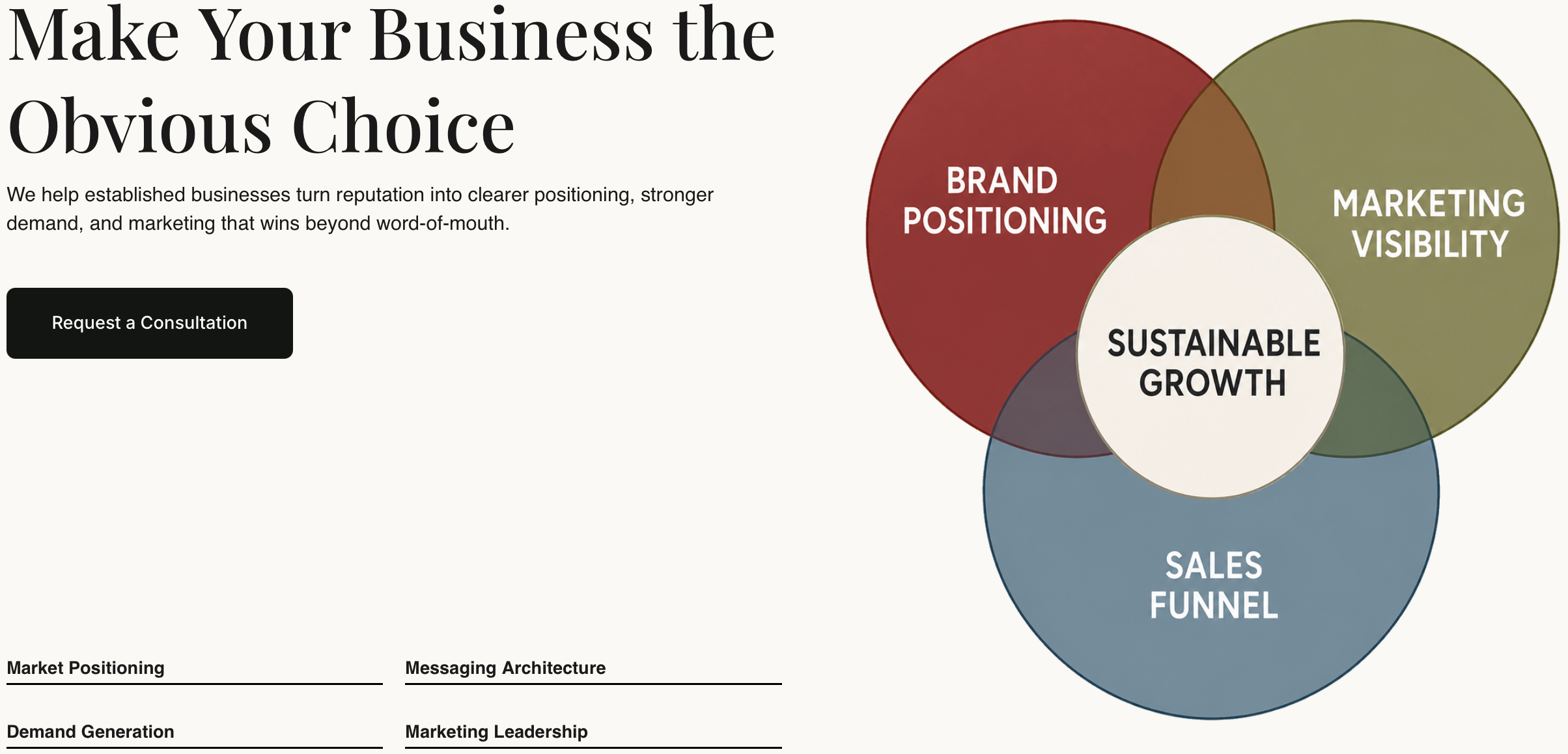
Reasonatestudio works directly with founders, coaches, and consultants to build brand strategies grounded in clarity, trust, and precision messaging. If your sales page is not reflecting the trust signals and personalization standards that 2025 demands, that gap is costing you conversions. Reasonatestudio’s sales page optimization service is built specifically to close that gap, aligning your messaging with the branding standards that today’s buyers expect before they commit.
The four defining branding trends in 2025 are hyper-personalization, ethical AI integration, community-driven engagement, and trust-first messaging. Each addresses a specific shift in consumer expectations backed by McKinsey, KPMG, and Edelman research.
Hyper-personalization targets individuals based on real-time behavior and intent signals, not just demographic segments. McKinsey data shows that 73% of marketing leaders personalize at high levels compared to only 31% of underperformers.
Only 46% of consumers globally trust AI systems, according to the KPMG and University of Melbourne global study. Brands that disclose AI use and verify AI-generated claims build credibility; those that do not risk accelerating the consumer skepticism already documented in the Edelman Trust Barometer.
76% of consumers are more likely to buy from a brand they feel connected to, compared to brands they simply see frequently. Community-driven branding creates belonging and social proof, which converts more reliably than passive exposure.
Smaller brands should start with trust-first messaging and one active community platform, since both require discipline rather than budget. Mid-size and enterprise brands can layer in AI governance frameworks and dynamic personalization once the foundational messaging is clear and consistent.