September 22, 2026
Why Update Brand Messaging: Essential Guide for Growth


Discover the role of feedback in branding and how it can enhance customer trust, improve messaging, and give your brand a competitive edge.
TL;DR:
- Customer feedback anchors brand decisions in real experience and enhances messaging clarity over time.
- Consistent collection, analysis, application, and transparent closing of feedback loops build trust and reduce customer churn.
Feedback in branding is defined as the ongoing stream of customer input that anchors brand decisions in real experience rather than internal assumptions. The role of feedback in branding goes far beyond collecting survey scores. It is the mechanism that tells you whether your messaging lands, whether your product delivers on its promise, and whether your customers feel understood. Publications like Fast Company, platforms like Typeform, and product guides from Koji all point to the same conclusion: brands that treat customer input as a strategic asset make fewer reactive decisions, build clearer messaging, and earn deeper trust. For brand managers, marketers, and business owners, that is not a soft benefit. It is a competitive edge.
Brand perception is shaped more by consistent customer experience and long-term feedback response than by any single campaign. This is a critical distinction. You can run a brilliant launch campaign and still lose ground if the post-purchase experience contradicts what you promised. Perception is cumulative, and it shifts slowly.

The gap between your intended brand identity and how customers actually experience you is called a perception gap. Most brands have one. The problem is that without a structured feedback cadence, that gap can widen for months before you notice it in revenue or retention numbers.
Typeform recommends a layered measurement approach to track perception shifts over time:
Each of these tools captures a different layer of customer experience. Together, they give you a full picture of how your brand is actually landing in the market.
The cadence matters as much as the method. Ongoing, repeat measurement connects the changes you make from feedback to actual shifts in brand perception over time. A one-time survey tells you where you are. A consistent feedback rhythm tells you whether you are moving in the right direction.
Transparency is the other half of this equation. Ignoring negative feedback publicly makes it worse. Companies that respond visibly to criticism, acknowledge the concern, and communicate what changed often emerge with stronger brand perception than before the issue arose. Silence reads as indifference. A clear, timely response reads as accountability.
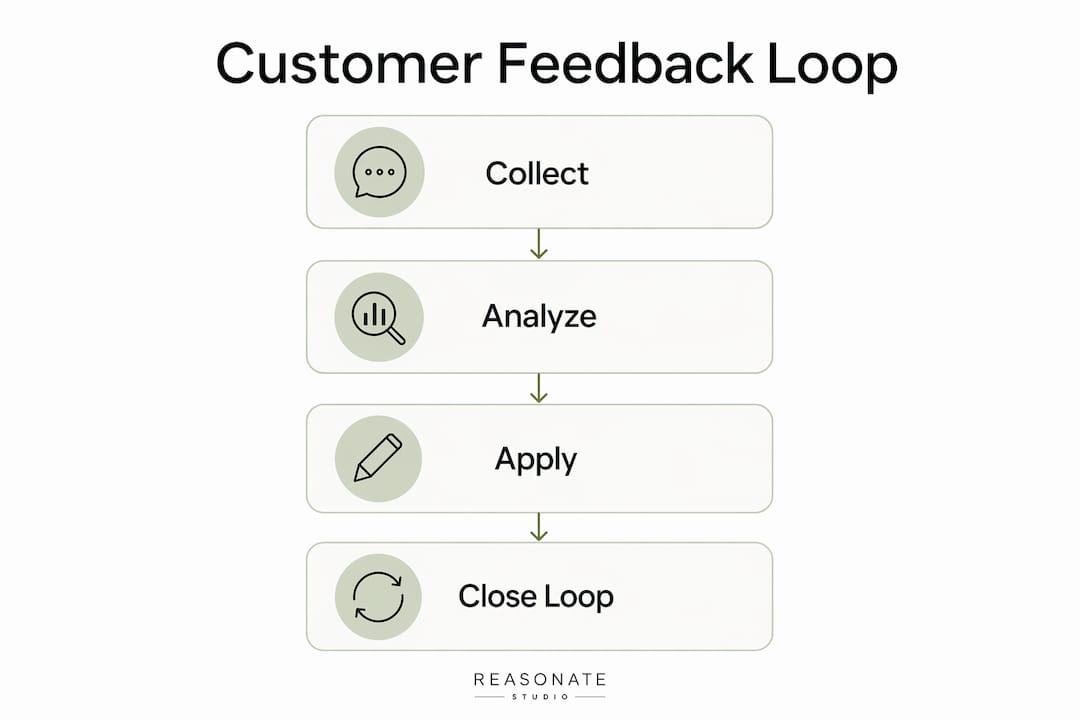
The customer feedback loop is a four-stage system: collect, analyze, apply, and close. According to Koji’s 2026 guide, this loop is the practical engine that turns raw customer input into retention-driving brand improvements. Most brands execute the first two stages reasonably well. The third and fourth stages are where most fall short.
Here is how each stage works in practice:
The retention math here is compelling. Closing the loop reduces churn by 10–15%, and increasing retention by just 5% can boost profits by 25–95%. That makes loop closure the highest-leverage activity in any feedback program.
Most organizations skip the close step entirely. When you ask customers for feedback and then go silent, they feel less valued than if you had never asked. Communicating what changed based on their input drives a second feedback cycle and builds a customer-centric brand culture that compounds over time.
Pro Tip: Set a simple internal rule: every feedback-driven change gets a public acknowledgment. This can be as brief as a social post, an email update, or a note in your newsletter. The format matters less than the consistency.
Feedback becomes most valuable when it is operationalized into systems that regularly influence product and messaging decisions. That means building feedback review into your weekly or monthly workflow, not treating it as a quarterly audit. The brands that do this well reduce waste and stop overreacting to trends that do not actually reflect their customer base.
Messaging clarity is one of the most direct benefits. When you read through social comments, direct messages, and support tickets with a strategic eye, you start to hear the exact language your customers use to describe their problems. That language belongs in your copy. It belongs on your sales page, in your email subject lines, and in your social captions. No copywriter can invent that language. Your customers hand it to you for free.
Fast Company notes that social comments act as real-time qualitative research, surfacing concerns and customer vocabulary that trend reports miss entirely. A customer who writes “I didn’t realize this was for me until I saw the example” is telling you your positioning needs a concrete use case. A customer who says “I almost didn’t buy because the pricing page was confusing” is handing you a conversion fix.
Here are practical ways to embed feedback into your brand strategy workflow:
Brands that anchor decisions in feedback reduce resource waste, build trust through consistent messaging, and evolve with their customers rather than chasing trends that do not fit. That is the practical payoff of treating feedback as a strategic input rather than a reporting metric.
Pro Tip: Use Typeform, Google Forms, or even a simple Instagram Stories poll to collect micro-feedback after a launch. Short, specific questions get higher response rates and more usable data than long surveys.
The most effective feedback programs pull from multiple sources simultaneously. No single channel gives you the full picture. Each source reveals a different dimension of the customer experience, and the overlap between them is where the most reliable insights live.
| Feedback Source | What It Reveals | Best Cadence |
|---|---|---|
| Post-purchase surveys | Satisfaction, expectation gaps, messaging accuracy | Within 48 hours of purchase |
| Social listening | Unfiltered sentiment, competitor comparisons, language patterns | Weekly |
| Support ticket analysis | Friction points, product confusion, recurring objections | Monthly |
| Churn interviews | Root causes of departure, unmet expectations | Within 7 days of cancellation |
| Review platforms | Public perception, trust signals, positioning clarity | Monthly |
Customers who feel listened to through feedback are more likely to stay loyal. Epsilon’s research confirms that expressing gratitude and following through on feedback strengthens loyalty independent of whether the product itself changes. The act of being heard is itself a brand interaction.
This is a point most brand managers underestimate. Feedback collection is not just data gathering. It is a touchpoint. When you send a post-purchase survey with a personal note, respond to a critical review with specificity, or share a product update that references customer input, you are reinforcing the brand relationship. You are demonstrating that the customer’s voice has weight inside your organization.
Best practices for feedback engagement include keeping your purpose clear, reaching out while the experience is still fresh, expressing genuine appreciation for the response, and making your follow-through visible. The importance of feedback in branding is not just about the data you collect. It is about the signal you send when you ask and when you respond.
Customer feedback functions as both insight and emotional brand interaction. Feeling heard builds loyalty independent of product changes. That framing shifts how you think about the entire feedback process. You are not just mining for data. You are actively building the relationship every time you ask, listen, and respond.
Brands that use feedback for brand strategy at a consistent cadence develop something their competitors cannot easily copy: a direct line to how their audience thinks, speaks, and decides. That line informs everything from product development to pricing language to the tone of your social content.
The brands that struggle with loyalty are often the ones that treat feedback as a passive exercise. They collect it, file it, and move on. The brands that build real loyalty treat feedback as a living input that shapes decisions at every level of the organization.
Most brand professionals know they should collect feedback. Very few have built a system that actually uses it. I have worked with founders and marketers who had months of survey data sitting in a spreadsheet, untouched, while they made messaging decisions based on gut instinct. The data was there. The habit of using it was not.
The insight I keep coming back to is this: feedback is not just a research tool. It is a brand behavior. When you respond to a critical review with specificity, when you send a follow-up email that says “we changed this because you told us it was confusing,” you are demonstrating a brand value in real time. That demonstration builds more trust than any campaign tagline.
I have also seen the opposite play out. A brand that asks for feedback and then goes silent trains its customers to stop responding. Worse, it signals that the brand is performing the act of listening without actually doing it. Customers notice. They stop engaging, and eventually they stop buying.
The practical advice I give every client is to start smaller than you think you need to. You do not need a sophisticated AI-powered feedback platform on day one. You need one consistent question, asked at one consistent moment in the customer journey, with a clear internal owner who reads the responses and flags patterns. That is a feedback loop. Build the habit before you build the infrastructure.
The brands I have seen grow most sustainably are the ones that treat messaging clarity and customer input as the same conversation. Your customers are telling you how to talk to them. Your job is to listen consistently enough to hear it.
— Kaitlyn
Collecting feedback is one thing. Knowing how to translate it into sharper messaging, higher-converting copy, and a brand that actually resonates is another challenge entirely.
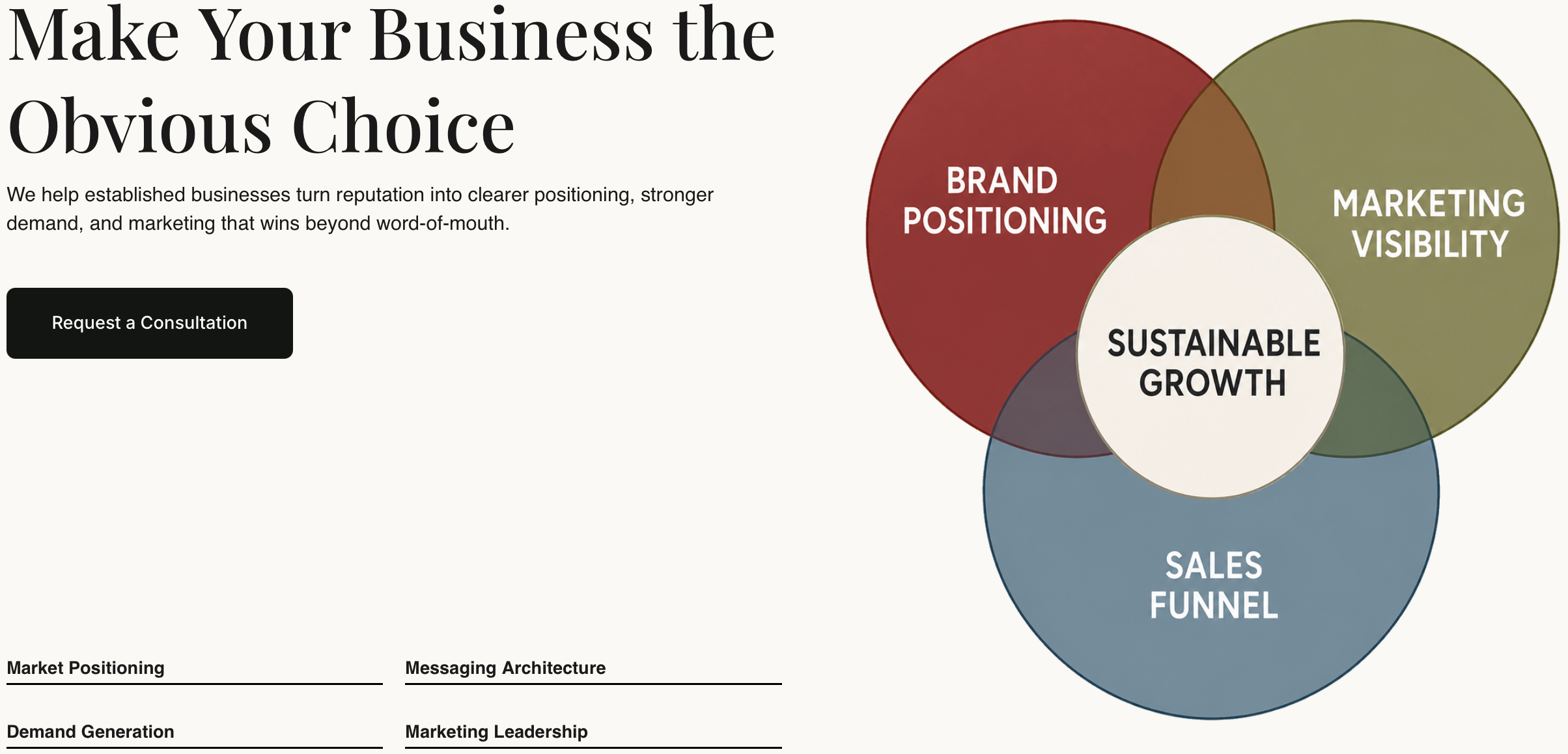
At Reasonatestudio, we help founders, coaches, and consultants turn customer insight into brand clarity that shows up where it matters most: on your sales page. Our sales page optimization service is built around the exact language your customers use, the objections they raise, and the trust signals they need to say yes. If your feedback is telling you something is off but you are not sure how to fix it, that is exactly where we come in. Book a free Brand Audit Report and find out what your brand is actually communicating.
Feedback in branding is the ongoing process of collecting and applying customer input to refine messaging, products, and brand perception. It serves as a strategic input that anchors brand decisions in real customer experience rather than internal assumptions.
Customers who feel heard through consistent feedback engagement are more likely to stay loyal, according to Epsilon’s research. The act of asking, responding, and visibly acting on input builds emotional connection independent of product changes.
The four stages are collect, analyze, apply, and close the loop. Koji’s 2026 guide identifies closing the loop, meaning communicating what changed because of customer input, as the highest-leverage step for reducing churn and building brand trust.
Typeform recommends quarterly brand surveys, monthly social listening, and post-interaction feedback collected within 48 hours of a customer touchpoint. Consistent cadence matters more than volume because it connects feedback-driven changes to measurable shifts in brand perception over time.
Publicly visible reviews shape brand perception directly. Companies that respond transparently to negative reviews often emerge with stronger brand trust than before the issue arose, while brands that ignore criticism allow negative perception to compound unchecked.