September 22, 2026
Why Update Brand Messaging: Essential Guide for Growth


Discover sustainable marketing step by step for small business owners. Build trust, reduce costs, and comply with regulations effectively.
TL;DR:
- Sustainable marketing builds brand visibility while minimizing environmental impact and maintaining transparency. Small businesses need verified data, supplier verification, governance, and workflows before claiming sustainability to avoid greenwashing. Focusing on two to three channels, evergreen content, and regular claim reviews strengthens credible, long-term brand trust.
Sustainable marketing, defined in industry practice as green marketing or purpose-driven marketing, is the structured process of building brand visibility while reducing environmental harm and maintaining full transparency with your audience. For small business owners, following a sustainable marketing step by step approach means you build trust faster, stay ahead of tightening regulations, and create marketing systems that cost less to run over time. The UK CMA Green Claims Code now requires all sustainability claims to be truthful, evidence-backed, and shared responsibly across supply chains. That legal reality makes a structured, compliant approach not just smart strategy. It is a business necessity.
Before you write a single eco-friendly caption or launch a green campaign, your business needs a foundation that can actually support the claims you make. Sustainable branding practices fall apart fast when the underlying data, governance, and supply chain knowledge are not in place. Skipping this step is the single most common reason small businesses end up accused of greenwashing.
Here is what you need to have ready before you start:
Pro Tip: Before you publish any sustainability claim, ask yourself: “Could I defend this in front of a regulator with documentation in hand?” If the answer is no, do not publish it yet.
Getting these prerequisites right takes a few weeks of internal work. The payoff is a marketing program that you can scale without fear of legal exposure or audience backlash.
With your foundation in place, you can build a focused, efficient plan. A sustainable marketing roadmap does not need to be a 40-page document. For most small businesses, a clear one-page strategy built around the following steps is enough to get moving with confidence.
Define your sustainability mission and goals. Write one sentence that describes what your business is doing differently and why it matters. This is not your tagline. It is your internal compass. Every marketing decision you make should connect back to it. For example: “We source all packaging from certified recycled suppliers and reduce shipping emissions by consolidating orders.”
Identify your audience segments and what they care about. Not every customer cares equally about sustainability. Some buy from you because of price, some because of quality, and some because of values alignment. Segment your audience and tailor your sustainability messaging to the segment most likely to respond. This prevents you from alienating price-sensitive buyers while still connecting with values-driven ones.
Choose two or three marketing channels and commit to them. Spreading your efforts across Instagram, TikTok, LinkedIn, Pinterest, email, and a blog simultaneously is how small businesses burn out and produce low-quality content everywhere. Focusing on fewer, high-value channels with high-quality, long-lasting content consistently outperforms scattered multi-channel approaches. Pick the channels where your audience actually spends time and go deep.
Develop evergreen content that reduces waste and increases long-term impact. A detailed blog post explaining your sourcing process, a supplier story video, or a staff interview about your environmental practices all serve double duty. They build trust and they generate organic search traffic for months or years after publication. This is the opposite of the disposable, trend-chasing content that most brands produce.
Plan your transparency communication calendar. Decide in advance when and how you will share sustainability updates, certifications, and progress reports. Quarterly updates work well for most small businesses. Consistency here builds credibility faster than any single viral post.
Organize your content assets for reuse. A DAM system or even a structured content library lets you repurpose a single piece of content across multiple channels without starting from scratch each time. This reduces production waste and keeps your messaging consistent.
| Planning element | What to define | Example for a small business |
|---|---|---|
| Sustainability mission | One-sentence internal compass | “We eliminate single-use plastic from all packaging by 2027” |
| Audience segment | Who responds to sustainability messaging | Values-driven buyers aged 28 to 45 |
| Channel focus | Two to three platforms only | Instagram and email newsletter |
| Content type | Evergreen formats that build trust | Supplier stories, certifications, process explainers |
| Review cadence | How often you audit claims | Quarterly evidence review |
Pro Tip: When you build your content strategy around sustainability, anchor every piece to a specific, verifiable claim. “We reduced packaging waste by 30% in 2025” is infinitely more credible than “We care about the planet.”

Planning is only half the work. Execution is where most small businesses either build real credibility or quietly undermine it. The following practices keep your campaigns both effective and honest.
Launch campaigns with substantiated claims only. Every headline, caption, and ad that references sustainability needs a piece of evidence behind it. That evidence does not need to be published in every post, but it needs to exist and be accessible. A dedicated sustainability page on your website that links to certifications, audit reports, and supplier documentation satisfies both regulatory requirements and customer curiosity.

Apply audience segmentation to your email marketing. The Digital Culture Network recommends targeting and list hygiene as core eco-friendly marketing techniques. Sending fewer, more relevant emails to engaged subscribers reduces digital waste and improves open rates simultaneously. Use preference centers to let subscribers choose what they receive and how often. Suppressing uninterested recipients creates environmental and cost savings while improving campaign ROI.
Measure impact with KPIs that go beyond clicks and impressions. A UN Global Compact and Kantar study of 1,700 business leaders identifies KPIs focused on people and planet impact, alongside governance integration and cross-functional collaboration, as the defining factors in embedding sustainability into marketing. That means tracking metrics like content reuse rate, email list health, supplier story engagement, and customer trust scores alongside standard conversion data.
Here are the core execution practices that separate high-performing sustainable campaigns from those that fizzle:
The UN Global Compact and Kantar benchmark makes clear that leaders who integrate sustainability into their marketing systems will build long-term trust and unlock competitive advantages that purely transactional brands cannot replicate.
Even well-intentioned businesses make costly errors when implementing steps to sustainable marketing. Knowing the most common pitfalls in advance saves you time, money, and reputational damage.
Making vague or unsubstantiated claims. Words like “eco-friendly,” “green,” and “sustainable” without specific evidence behind them are exactly what regulators target. The UK CMA Green Claims Code requires claims to consider the full product lifecycle, avoid vague terms, and maintain accessible evidence at the point of claim. A 2026 systematic review confirms that transparent, substantiated claims are the primary mechanism for closing the gap between consumer attitudes toward sustainability and their actual purchasing behavior.
Spreading across too many marketing channels. Every additional channel you add increases your content production burden, your digital footprint, and your risk of inconsistent messaging. Two channels done well will always outperform six channels done poorly.
Treating claim substantiation as a one-time task. Your suppliers change. Your operations evolve. A claim that was accurate in 2024 may not be accurate today. Ongoing substantiation workflows with scheduled evidence reviews and audit readiness are what keep you compliant and credible over time.
Ignoring supply chain responsibility. Many small business owners assume their sustainability obligations end at their own front door. They do not. If your supplier makes a false environmental claim and you repeat it in your marketing, you share legal liability. Verify every claim before you amplify it.
Underestimating the trust gap. Consumer skepticism toward green claims is high and growing. The same 2026 systematic review shows that attitude-behavior gaps in green purchasing are most effectively closed by anti-greenwashing measures and transparent, label-clear communication. Customers do not just want to hear that you care. They want proof.
“The brands that win on sustainability are not the ones that shout the loudest. They are the ones that show their work.” This principle applies directly to small businesses, where a single credible supplier story or third-party certification carries more weight than a dozen generic “we care about the earth” posts.
Avoiding these mistakes is not complicated. It requires discipline, documentation, and a willingness to say less until you can prove more.
The conversation around sustainable marketing often gets framed as a values question. Do you care enough about the environment to do this? In my experience working with founders, coaches, and consultants through Reasonate Studio, that framing misses the point entirely. The businesses that implement sustainable marketing most successfully do not do it because they feel obligated. They do it because it works.
What I have seen consistently is that the small businesses with the clearest sustainability messaging are also the ones with the clearest brand messaging overall. When you are forced to document what you actually do, verify what your suppliers claim, and communicate it in plain language, you end up with a brand story that is specific, credible, and genuinely differentiated. That specificity is what converts.
The mistake I see most often is treating sustainable marketing as a separate initiative rather than a lens applied to everything you already do. You do not need a new campaign. You need to look at your existing marketing through the question: “Is this honest, efficient, and worth the resources it consumes?” When you answer that question seriously, you naturally start producing less content, targeting more precisely, and building assets that last longer. That is not just better for the environment. It is better for your bottom line.
Technology matters more than most small business owners expect. Even simple systems for organizing content, tracking supplier documentation, and scheduling claim reviews make the difference between a sustainable marketing program that holds up under scrutiny and one that collapses the moment a customer asks a hard question. You do not need enterprise software. You need a system, even a simple one, that you actually use.
My honest advice: start with one channel, one verified claim, and one piece of evergreen content that proves it. Build from there. Sustainable marketing is not a sprint. It is a system you refine over time, and the businesses that treat it that way are the ones still growing five years from now.
— Kaitlyn
Building a credible, efficient sustainable marketing program takes more than good intentions. It takes strategy, consistent execution, and content that actually connects with the right people.
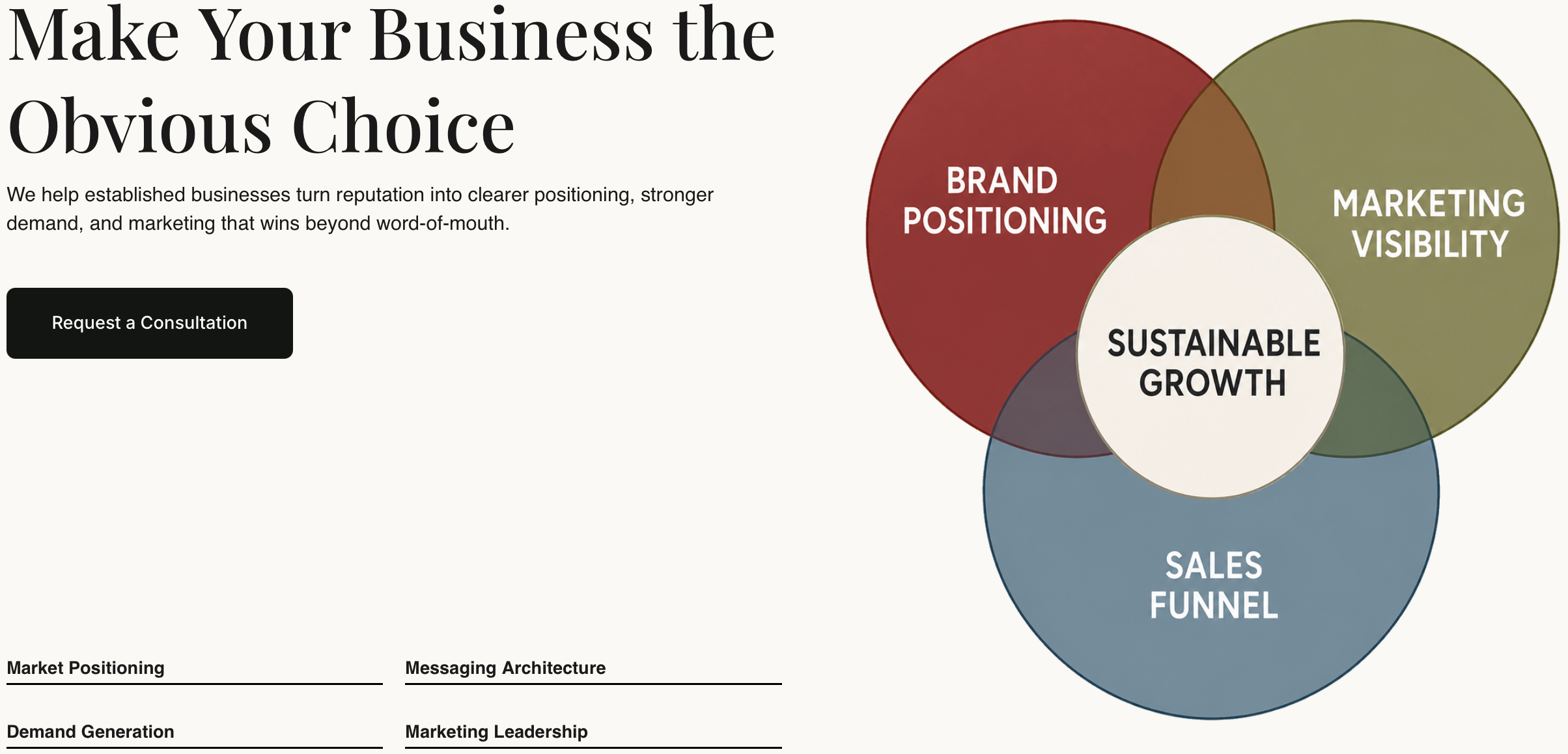
At Reasonate Studio, we work directly with founders, coaches, and consultants to build marketing systems grounded in clarity and built for long-term growth. Our social media management service handles content creation, scheduling, and performance reporting so your sustainability messaging stays consistent and credible across every post. Our SEO keyword research service identifies the exact search terms your ideal customers use when looking for businesses like yours, so your evergreen content reaches the right audience without wasted effort. If you are ready to stop guessing and start building a marketing program that reflects what your business actually stands for, we would love to help you get there.
Sustainable marketing, also called green marketing or purpose-driven marketing, is the practice of promoting your business in ways that are environmentally responsible, resource-efficient, and fully transparent. For small businesses, this means making only substantiated claims, reducing marketing waste, and building long-term brand trust.
Avoid greenwashing by backing every sustainability claim with documented evidence, verifying supplier claims before repeating them, and reviewing your claims regularly as your operations change. The UK CMA Green Claims Code requires claims to be truthful, specific, and supported by accessible evidence at the point of claim.
Focus on two to three channels where your audience is most active. Research from Wedia Group and ProfileTree shows that fewer, high-value channels with evergreen content consistently outperform scattered multi-channel approaches in both engagement and long-term impact.
Track both business metrics (conversion rate, email engagement, content reuse rate) and impact metrics (list health, supplier story reach, customer trust scores). The UN Global Compact and Kantar benchmark study identifies people-and-planet KPIs alongside governance integration as the defining factors in successful sustainable marketing programs.
Review your sustainability claims at least quarterly. Supplier relationships, operational processes, and product formulations change over time, and a claim that was accurate last year may no longer hold. Building a scheduled review process into your operations protects you from accidental non-compliance and keeps your audience’s trust intact.