September 22, 2026
Why Update Brand Messaging: Essential Guide for Growth


Discover what a holistic marketing strategy is and how it can unify your small business marketing efforts for better customer engagement.
TL;DR:
- Holistic marketing unifies all channels, teams, and customer touchpoints to reinforce one consistent brand story.
- This approach benefits small businesses by building trust, increasing retention, and improving resource efficiency.
Most small business owners think marketing is a collection of separate tasks: post on Instagram, send an email, run an ad, update the website. But when every channel tells a slightly different story, customers feel the inconsistency even if they cannot name it. That is where a holistic marketing strategy changes everything. Unlike campaign-by-campaign thinking, a holistic approach, also called integrated marketing, treats your brand as one unified system where every message, channel, and team member reinforces the same story. This article breaks down exactly what that means, why it matters for entrepreneurs, and how to actually put it into practice.
The term “holistic marketing” was formalized by marketing professors Philip Kotler and Kevin Lane Keller in their foundational textbook Marketing Management. The holistic marketing definition they established is this: a strategy that recognizes the breadth and interdependencies of marketing activities, integrating all channels, teams, and customer touchpoints into one coordinated system.

Think of it as the difference between a band where every musician plays their own song versus one where they all read from the same sheet of music. Individual channels like social media, email, or your sales conversations might each perform well in isolation. But if they carry different messages or serve different goals, customers end up confused about who you are and why they should trust you.
Integrated marketing ensures SEO, email, social, and other channels share consistent messaging to create a unified buyer journey. That consistency is the whole point.
The four components of holistic marketing strategy break down like this:
The core difference between this approach and traditional siloed marketing is this: siloed marketing optimizes each channel separately and calls it success. Integrated marketing asks whether all those optimized channels are actually pulling in the same direction. When departments act separately, they damage customer perception even when each team is technically doing a good job on its own.

Here is the uncomfortable truth about patchwork marketing: adding more tactics without a unifying foundation does not compound your results. It compounds your inconsistency. More channels without alignment multiply fragmentation rather than trust.
For small business owners, the benefits of holistic marketing are especially significant because you are working with limited time, limited budget, and a personal reputation that is inseparable from your brand.
Pro Tip: Before adding another channel to your marketing mix, ask yourself one question: does this channel have a clear, written brief that connects it back to your core brand story? If the answer is no, adding it will create more noise, not more revenue.
The importance of holistic marketing for small businesses is not just strategic. It is financial. When every dollar spent on marketing reinforces every other dollar, your overall return improves without increasing your budget.
Implementation is where most entrepreneurs either get stuck or get it wrong. They read about integration, nod along, and then keep running their channels the same way they always have. Here is a practical framework for building a genuinely connected marketing system.
Define your core brand narrative first. Everything else flows from this. Your brand narrative is not your tagline. It is the answer to three questions: Who are you serving? What problem do you solve in a way no one else does? And why should they believe you? Write this down in one to two clear paragraphs. Every channel brief, every post, every email should be able to trace back to this foundation.
Map your customer journey across all stages. A full-funnel approach connects attract, engage, convert, nurture, and retain stages using integrated channels rather than optimizing each in isolation. Lay out how a brand-new prospect discovers you, what they experience along the way, and what happens after they buy. Mark every touchpoint, social content, website pages, emails, direct messages, support interactions, and identify gaps where the experience breaks down.
Align your team around shared goals and customer data. Shared goals across marketing, sales, and support are what make emotional intelligence and trust-building actually work at scale. For a solopreneur, this might mean making sure the freelance copywriter, the social media manager, and your own sales calls all operate from the same messaging guide. For a small team, it means weekly check-ins where customer feedback from support informs what marketing creates next.
Build a messaging standards document. This is not a brand style guide with just fonts and colors. It is a living document that includes your brand voice, the phrases you use and the ones you never use, how you handle objections, the emotional tone of each stage of the customer journey, and examples of on-brand versus off-brand communication. Every piece of content created should be measured against this document.
Set cross-channel KPIs tied to conversion and retention. Think of holistic marketing as an operating system with one core narrative aligned to multiple touchpoints, where cross-channel KPIs measure meaningful outcomes, not isolated vanity metrics. Stop rewarding Instagram reach as a standalone win if it does not tie to email signups, sales conversations, or repeat purchases. Your metrics should tell a connected story.
Review the full system monthly. Pick one day per month to audit how the pieces are working together. Are your social captions reflecting the same message as your website headline? Is what your customers hear in a discovery call consistent with what they read in your emails? Small misalignments compound quickly. Catch them early.
Pro Tip: When building your messaging standards document, include three to five real customer quotes that capture how your audience describes the problem you solve. These exact words, borrowed directly from the people you serve, become the most persuasive language in your entire marketing system.
For a practical starting point on aligning your marketing and sales functions around shared goals, Reasonate Studio has laid out the framework in detail.
Understanding what makes integrated marketing different requires looking directly at what it replaces.
| Approach | Channel Strategy | Team Coordination | Customer Experience | Success Metrics |
|---|---|---|---|---|
| Traditional marketing | Channels run independently, often by separate teams or agencies | Little to no coordination between departments | Fragmented; customers experience inconsistency at different touchpoints | Each channel measured in isolation |
| Digital-only marketing | Focus on digital channels; offline touchpoints often ignored | Digital team may coordinate internally, but sales and support are excluded | Strong online presence, weak continuity into purchase and post-purchase | Traffic, clicks, and conversions per channel |
| Integrated (holistic) marketing | All channels, online and offline, operate from one brand narrative | Marketing, sales, and support share data, goals, and messaging standards | Consistent experience from first impression through long-term loyalty | Cross-channel metrics tied to retention and lifetime value |
The most common mistake entrepreneurs make is confusing digital marketing sophistication with integration. A founder might have excellent SEO, a high-performing email sequence, and an engaged Instagram following, and still be running a fragmented operation because those three channels were built separately and never connected to a shared story or shared goals.
Coordination matters more than isolated channel wins when it comes to emotional connection and trust. A customer who gets a different vibe from your website, your emails, and your DMs will hesitate. That hesitation is where sales are lost.
When holistic marketing is done well, each channel amplifies the others. A social post creates curiosity. The website delivers the depth. The email nurtures the relationship. The support interaction confirms the brand promise. Each piece works because all the pieces work together.
Abstract strategy only gets you so far. Here is what integrated marketing actually looks like when small businesses and coaches put it into practice.
The unified campaign example: A health coach launches a new group program. Instead of creating separate content for Instagram, a promotional email, and a sales page, she builds one campaign story: a four-week arc about the problem her ideal client faces, told through the same characters, language, and emotional beats across every channel. Her open rates, click-through rates, and sales all increase because customers feel like they are following one cohesive narrative rather than receiving random promotions. This mirrors the kind of result Reasonate Studio produced for a health coach, generating a 454% sales increase by aligning messaging and execution across the brand.
The cross-department alignment example: A small e-commerce brand struggles with returns and negative reviews despite strong ad performance. When they involve their support team in the marketing planning process, they discover that customer complaints cluster around unmet expectations created by the ad copy. Adjusting the ad messaging to reflect the actual product experience cuts return rates significantly. This is a textbook case of how siloed efforts create inconsistent perceptions even when individual channels are optimized.
The shared KPI example: A consulting firm tracks Instagram followers, email open rates, and sales calls as three separate reports. When they rebuild their metrics around one shared dashboard measuring lead-to-client conversion rate and client retention, two things happen. The social team starts prioritizing content that drives email signups over content that just gets likes, and the email team starts writing with sales conversation outcomes in mind. Both teams become more effective because they are now measuring outcomes tied to revenue rather than rewarding disconnected wins.
The lesson across all three examples is the same. Holistic marketing is not a creative philosophy. It is an operational one. It requires that the people creating content, having sales conversations, and serving customers all understand and work from the same foundation. You can explore how unified brand communications translate directly to revenue and deeper customer trust.
I have worked with founders at every stage, from brand-new coaches who have never run an ad to established consultants generating multiple six figures, and the single biggest misconception I see is this: people think holistic marketing means doing more things. More platforms, more content, more tactics. That is exactly backwards.
What I have learned is that integration is not about volume. It is about coherence. The founders who see the most meaningful growth are not the ones publishing daily on five platforms. They are the ones who can explain their brand story in one sentence and who have made sure that sentence is alive in every piece of content, every sales conversation, and every client interaction.
The second thing most people get wrong is skipping the internal piece. Integrated marketing cannot live in your marketing function alone. If your sales calls sound different from your website, or your onboarding emails feel like they come from a completely different brand than your social presence, that is a brand trust leak. And trust leaks are expensive.
What I have found actually works is treating your brand narrative the way a screenwriter treats a script. Every character, every scene, every line of dialogue serves the same story. When your marketing team, your copywriter, your support inbox, and your own voice on a coaching call all feel like they come from the same script, customers feel safe enough to buy, stay, and refer.
The other piece I want to be direct about is measurement. Vanity metrics feel good but they mislead. I stopped celebrating follower counts and started asking one question: did this effort move someone closer to becoming a client or staying a client? That shift in how you measure changes everything about how you create.
— Kaitlyn
One of the most overlooked places where integrated marketing either succeeds or breaks down is your sales page. It is the moment when every channel, every touchpoint, and every piece of content either pays off or falls apart. If your sales page does not carry the same voice, story, and emotional promise as the rest of your brand, the conversion gap you are experiencing is not a traffic problem. It is a messaging alignment problem.
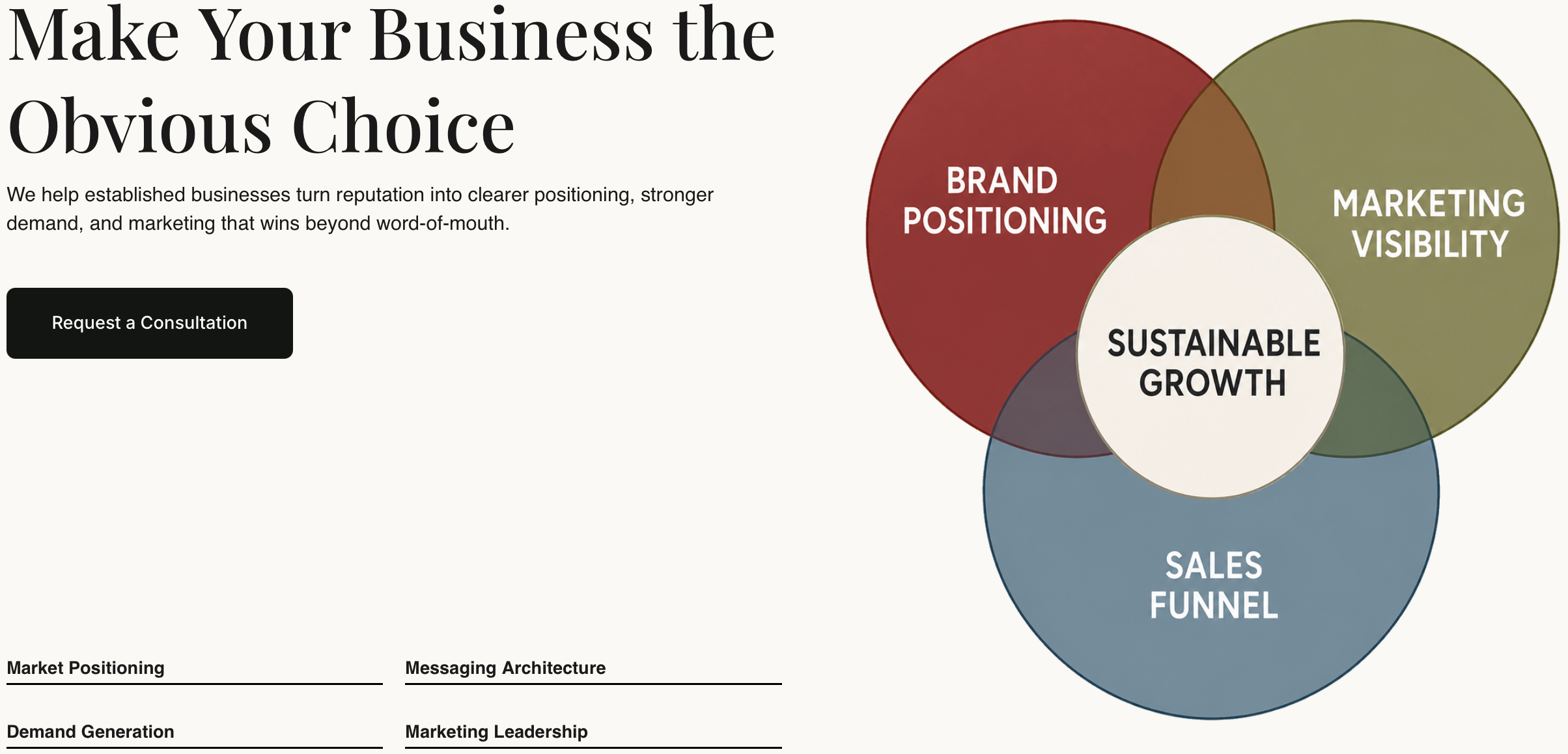
At Reasonate Studio, we help founders, coaches, and consultants close that gap through sales page optimization that connects your entire brand story to your offer in a way that converts. Our work is built on the same integrated principles you have read about here: one core narrative, consistent emotional tone, and messaging that earns trust before it asks for the sale. If you are ready to stop patching your marketing together and start building something that actually compounds, we are here for that conversation.
Holistic marketing is a strategy that integrates all channels, teams, and customer touchpoints into one unified system, so every interaction reinforces the same brand story and customer experience.
The four components are integrated marketing communications, internal marketing, relationship marketing, and social responsibility marketing. Together, they align messaging, people, and values across the entire business.
The primary benefits include more consistent customer experiences, stronger brand trust, improved customer retention, and better return on marketing investment by eliminating wasted effort across disconnected channels.
Start by writing a clear core brand narrative, then map every customer touchpoint from first discovery through post-purchase. Build a shared messaging standards document and set metrics that track conversion and retention rather than channel-specific vanity numbers.
Digital marketing focuses on performance within online channels, often without connecting those channels to each other or to sales and support functions. Holistic marketing integrates all of them, online and offline, into one coordinated system with shared goals.