September 22, 2026
Why Update Brand Messaging: Essential Guide for Growth


Discover the self branding definition and learn how to build a powerful personal brand that sets you apart and enhances your professional journey.

Self branding, more formally known as personal branding, is the intentional process of defining and communicating who you are, what you stand for, and what makes you different. It is not about crafting a polished persona that impresses people at networking events. It is about making a deliberate choice to shape how others perceive your skills, values, and personality before that perception forms on its own.
Think of your personal brand as a living professional thesis. Without specificity and a defensible position, it struggles to be memorable or referable. The goal is not just visibility. It is differentiation that builds trust and creates competitive advantage.
A strong self brand consistently demonstrates four core attributes:
Personal branding involves managing how others perceive your skills, values, and personality to improve career prospects. The key word is “managing.” You already have a brand. The only question is whether you are shaping it or leaving it to chance.

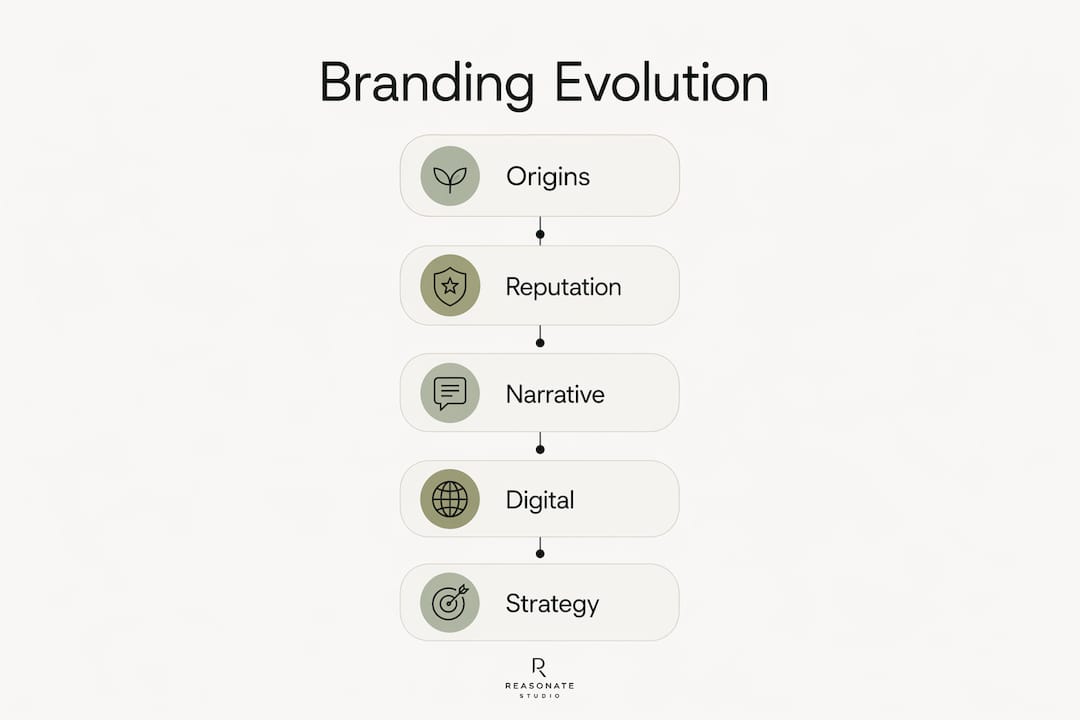
Personal branding did not begin with Instagram or LinkedIn. The concept has roots in how professionals have always differentiated themselves, but it became a formalized discipline in the late 20th century.
| Era | Key Development |
|---|---|
| — | Self-promotion existed informally through reputation and word of mouth |
| — | Tom Peters published “The Brand Called You” in Fast Company, coining the modern concept |
| — | Rise of blogs and early social platforms gave individuals publishing power |
| — | LinkedIn, YouTube, and Instagram turned personal branding into a mainstream practice |
| — | Creators, consultants, and founders treat personal branding as a core business asset |
The shift that matters most is the move from passive reputation to intentional narrative control. Before digital media, your reputation was largely shaped by others. Now, you have direct access to your audience and the tools to shape perception in real time. That access is both the opportunity and the responsibility that defines modern personal branding.
Your personal brand does not live inside your head. It lives in the minds of the people who encounter you. Public perception is the collection of associations, beliefs, and attitudes others hold about you, and it determines whether your brand opens doors or closes them.
Consistency is the mechanism that turns perception into trust. When your LinkedIn posts, your client conversations, and your public speaking all reflect the same values and voice, people start to predict what working with you will feel like. That predictability is not boring. It is credibility.

The risk of misalignment is real. When someone presents one version of themselves online and another in person, audiences notice the gap. That gap reads as inauthenticity, and inauthenticity is one of the fastest ways to lose the trust a personal brand is designed to build.
Building a personal brand is not a one-time project. It is an ongoing practice. These steps give you a repeatable framework to work from.
Run a self-assessment. Identify your core skills, values, and the problems you solve best. Be honest about what you do well and what you want to be known for. This is the foundation everything else builds on.
Define your unique value. What do you offer that others in your field do not? This is not about being the only person with your skills. It is about the specific combination of perspective, approach, and personality that makes your work distinct.
Craft your narrative. Write a clear, human story that connects your background to the value you deliver today. Avoid a resume recitation. People remember stories, not credentials.
Choose your platforms intentionally. You do not need to be everywhere. Pick the channels where your audience actually spends time and commit to showing up there consistently.
Develop a messaging framework. Decide on the core themes you want to own. Every piece of content, every bio, and every conversation should reinforce those themes.
Engage your audience. Respond to comments, ask questions, and participate in conversations. A personal brand built on one-way broadcasting rarely earns lasting trust.
Audit and refine regularly. Your brand should evolve as you do. Review your messaging, your content, and your positioning at least once a year to make sure they still reflect who you are and where you are headed.
Pro Tip: Before you write a single piece of content, write a one-sentence brand statement: “I help [specific audience] achieve [specific outcome] through [your unique approach].” If you cannot write that sentence clearly, your brand is not ready to be communicated publicly.
Social media transformed personal branding from a concept reserved for executives and celebrities into a practice available to anyone with a phone and a point of view. The platforms that matter most depend on your audience, but the principles apply across all of them.
A health coach who posts weekly video content addressing specific client questions, uses a consistent visual style, and engages directly with followers builds a recognizable presence that generates referrals without paid advertising. That is the compounding effect of social media visibility done with intention.
Personal branding is not vanity. It is a career asset with measurable returns. Professionals who build clear, consistent personal brands move faster in competitive fields because they have already done the work of making themselves legible to the people who hire, refer, and collaborate.
SME owner-managers who practice self-branding often become the face of their business, using their personality and unique skills as a primary marketing tool. That personification of a business is not accidental. It is a deliberate choice to make the brand human, and it tends to build closer, more loyal client relationships than faceless corporate messaging.
Visual identity is not decoration. It is the part of your brand that communicates before you say a word. When someone lands on your website, opens your newsletter, or sees your social profile, the visual experience shapes their first impression in seconds.
The core components of a personal visual identity include:
A financial advisor who uses the same muted, professional color palette across LinkedIn, their website, and their email signature creates a visual coherence that signals reliability. A brand coach who uses vibrant, expressive visuals signals creativity and energy. Neither is right or wrong. Both are intentional. Visual consistency supports the elements of a strong brand by making your narrative visible before your audience reads a single word.
Personal branding attracts real criticism, and those criticisms deserve honest engagement rather than dismissal.
The most durable personal brands are built on accuracy, not aspiration. They show who someone actually is, not who they think the market wants them to be.
A personal brand functions as a promise to your audience, maintained through consistent narrative, imagery, and behavior. Inconsistency erodes trust and damages the brand’s effectiveness. That framing from personal branding research is more precise than most practitioners realize.
This insight from research on personal branding development captures why passive reputation management is not a neutral choice. Every professional is being perceived. The ones who build strong brands are simply the ones who decided to participate in that process deliberately.
Authenticity in personal branding means clearly defining your values and purpose so your public image aligns with your true self. That alignment prevents brand drift, the gradual erosion that happens when someone tries to be all things to all audiences and ends up meaning nothing to anyone. Congruence between who you are and how you present yourself is not just an ethical consideration. It is the structural foundation that makes a personal brand durable.
Pro Tip: Treat your personal brand like a promise you make in public and keep in private. Every client interaction, every piece of content, and every conversation either honors that promise or chips away at it.
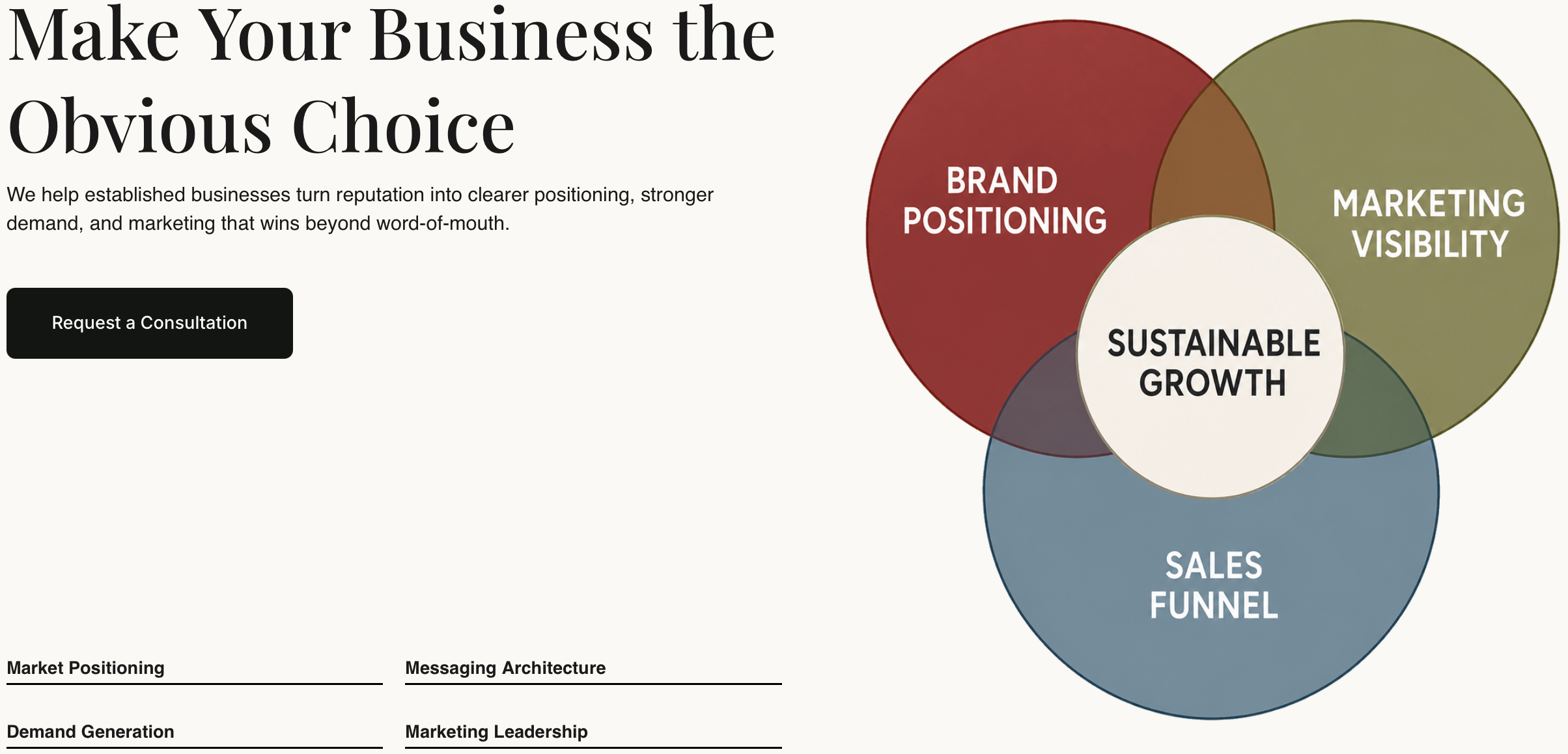
Most founders do not have a visibility problem. They have a clarity problem. They are creating content, showing up on social media, and talking about what they do, but without a clear brand foundation underneath it, none of it compounds into a reputation that generates reliable revenue.
Reasonate Studio was built specifically for founders, coaches, and consultants who are excellent at their work but need help turning that expertise into a brand that actually converts. The studio’s Aligned Impact Model™ moves clients from scattered, reactive marketing to a focused system built on brand clarity, audience insight, and consistent messaging. Every client works directly with Kaitlyn Cole, not a junior account manager, which means the strategy stays sharp and the execution stays aligned with the actual business.
The results reflect that approach. Reasonate Studio has delivered significant sales and engagement growth for clients, including health coaches, travel agencies, and small consumer brands. A high client retention rate over multiple years illustrates sustained client satisfaction and long-term success.
If you are ready to stop guessing and start building a brand with real direction, explore Reasonate Studio’s services or request a free Brand Audit Report to see exactly where your brand stands today.
Personal branding advice tends to fall into two traps. The first is the performance trap, where everything becomes about looking credible rather than being credible. The second is the tactics trap, where people obsess over posting frequency and hashtag strategy while never doing the harder work of figuring out what they actually stand for.
The professionals I see build the most durable brands are not the ones who post the most. They are the ones who are the clearest. They know exactly who they help, what problem they solve, and why their approach is different. That clarity does the heavy lifting. Content becomes easier. Referrals become more specific. Sales conversations get shorter because the brand has already done the qualifying work.
What most people underestimate is how long it takes for clarity to compound into reputation. A personal brand built on genuine values and consistent behavior does not pay off in weeks. It pays off in years. The professionals who understand that timeline are the ones who stay consistent long enough to see the return. The ones who treat personal branding as a quick-fix visibility strategy usually abandon it before it has a chance to work.
If you are a founder, coach, or consultant, your brand is not separate from your business. It is the reason people choose you over someone with similar credentials. Treat it with the same seriousness you bring to your actual work, and it will become one of your most valuable professional assets.