September 22, 2026
Why Update Brand Messaging: Essential Guide for Growth


Learn how to create a digital marketing strategy that drives growth. Align your business goals with effective online tactics to attract customers.
TL;DR:
- A digital marketing strategy aligns business goals with online channels to attract and convert customers effectively.
- It emphasizes setting measurable goals, understanding the target audience, selecting suitable channels, and regularly measuring performance for ongoing improvement.
A digital marketing strategy is a structured plan that aligns your business goals with online channels to attract and convert your ideal customers. Knowing how to create a digital marketing strategy is the difference between intentional growth and scattered effort that drains your time and budget. The most effective plans are built around four modern pillars: Process, People, Platforms, and Performance. This guide walks you through every step, from setting SMART goals and building buyer personas to selecting channels, allocating budget, and measuring results with a disciplined test-and-learn approach.
A digital marketing strategy is not a collection of tactics. It is a deliberate system that connects every post, email, and ad back to a specific business outcome. Without that connection, you end up with what experts call “random acts of marketing,” which waste budget and produce inconsistent results.

The modern framework that replaces the old 4 Ps of marketing focuses on Process, People, Platforms, and Performance. This shift reflects how digital channels actually work. You need the right process to execute consistently, the right people to carry it out, the right platforms to reach your audience, and clear performance metrics to know what is working.
Entrepreneurs who build their strategy around this framework stop reacting and start leading. Every decision has a reason behind it, and every tactic ties back to a goal. That clarity is what separates brands that grow from brands that stay stuck.
SMART goals are the foundation of any effective digital marketing plan. SMART stands for Specific, Measurable, Achievable, Relevant, and Time-bound. A goal like “get more traffic” is not a strategy. A goal like “increase website traffic by 40% within six months” is.
Specific, measurable goals like that example give you a clear target to build tactics around. They also make it easy to evaluate whether your efforts are working or whether you need to change direction.
Here is how to structure your goals effectively:
Pro Tip: Write your top three goals on a single page and review them at the start of every week. If your daily tasks do not connect to at least one of those goals, you are spending time on the wrong things.
Short 90-day cycles work because the digital environment changes fast. A goal that made sense in january may be irrelevant by april. Building in regular review points keeps your plan current and your team focused.
Buyer personas are detailed profiles of your ideal customers. They go far beyond age and location. The most useful personas include psychographics, pain points, motivations, and the specific triggers that push someone to buy.
Buyer personas that include pain points and motivations, not just demographics, produce content that converts at a higher rate. When you understand why someone buys, you can speak directly to that reason in every piece of content you create.
Here is a step-by-step process for building personas that actually drive results:
Failing to link your business goals to your audience’s actual needs is one of the most common mistakes entrepreneurs make. The result is marketing that feels generic and fails to connect.
Pro Tip: Give each persona a name and a backstory. “Sarah, a 38-year-old consultant who is tired of inconsistent revenue” is far easier to write for than “female, 35-45, professional services.”
Detailed personas also help you decide which channels to prioritize. If your ideal customer spends time on LinkedIn and reads long-form newsletters, that tells you exactly where to focus your energy and budget.
Channel selection is where most entrepreneurs spread themselves too thin. Focusing your channel mix intentionally produces higher impact than trying to be everywhere at once. The right channels are the ones where your specific audience is already active and receptive.
The main digital channels available to you include:
Once you know your channels, you need a content strategy to tie them together. A strong content strategy covers the following:
| Content element | What it defines |
|---|---|
| Campaign themes | The core messages you want to reinforce each quarter |
| Content types | Blogs, short-form video, email newsletters, infographics, case studies |
| Posting frequency | How often you publish on each channel |
| Audience stage | Whether content targets awareness, consideration, or conversion |
| Brand voice | The consistent tone and style across all channels |
Content consistency matters more than volume. Publishing three high-quality pieces per week beats publishing ten mediocre ones. Each piece of content should serve a specific audience stage and connect back to a goal.
For a deeper look at how content fits into your overall plan, the guide on digital content strategy covers the role of content across the full customer journey.
Budget decisions should follow your goals, not the other way around. Start by identifying which channels and tactics are most likely to reach your audience and drive your specific goals. Then assign budget based on priority, not habit.
Key principles for budgeting and resource planning:
Pro Tip: Before you finalize your budget, list every tactic you plan to use and estimate the time cost alongside the dollar cost. Many entrepreneurs underestimate how much time a tactic requires and end up unable to execute consistently.
Long-term annual plans often become outdated within weeks of being written. A 90-day plan with a clear review date keeps your strategy connected to what is actually happening in your market. Build your timeline in sprints, not in year-long roadmaps.
A marketing plan that does not get measured is not a strategy. It is a wish list. Measurement is what turns effort into learning and learning into growth.
Here is a practical process for building measurement into your strategy:
“A strong digital marketing strategy requires not only defining the ‘what’ and ‘who’ but embedding a disciplined test-and-learn rhythm to stay competitive.” — Wrike Digital Marketing Guide
The most common measurement mistake is tracking vanity metrics. Follower counts and impressions feel good but rarely connect to revenue. Focus on metrics that show real business impact: leads generated, revenue attributed, customer acquisition cost, and retention rate.
For a broader look at building a plan that delivers results, the guide on building a marketing strategy covers how to connect measurement back to your overall business objectives.
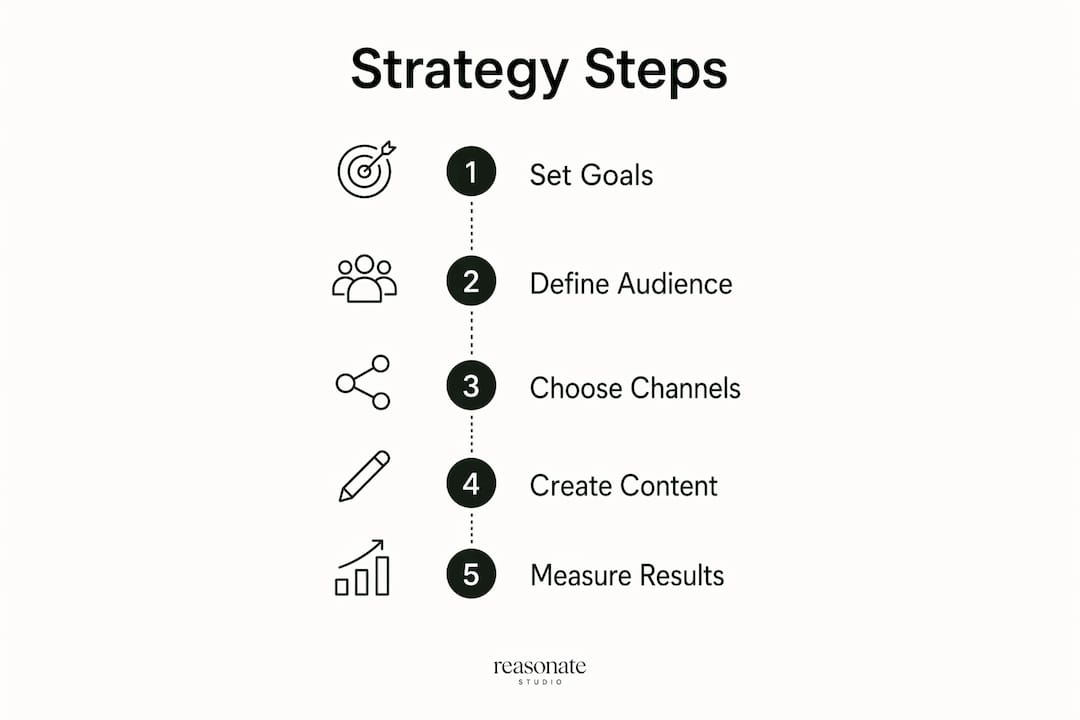
Most founders I work with come to me after they have already picked their channels, started posting, and wondered why nothing is converting. They built the house before they poured the foundation. The order matters more than most people realize.
The right sequence is goals first, audience second, channels third, and content last. When you reverse that order and start with “I need to be on Instagram,” you end up creating content for a platform that may not even reach your ideal customer. That is not a strategy. That is guesswork dressed up as a plan.
The 90-day cycle is the single most practical shift I recommend to every entrepreneur I work with. Annual plans feel thorough, but they create a false sense of security. The market changes. Your offer evolves. Your audience shifts. A 90-day window forces you to stay honest about what is actually working and gives you permission to change direction without feeling like you failed.
AI tools are genuinely useful for research, drafting, and reporting. But I have seen founders hand their entire content strategy to an AI tool and wonder why their brand sounds like everyone else. AI handles the repetitive work. You handle the thinking. That combination is where the real efficiency lives.
The entrepreneurs who build the most durable brands are the ones who treat their marketing plan as a conversation, not a document. They review it regularly, talk to their customers constantly, and stay curious about what the data is telling them. That mindset is what separates brands that grow year after year from ones that plateau.
— Kaitlyn Cole
Building a strategy is one thing. Executing it consistently is another. Reasonate Studio works with founders, coaches, and consultants who have a clear vision for their brand but need expert support to bring it to life across the right channels.
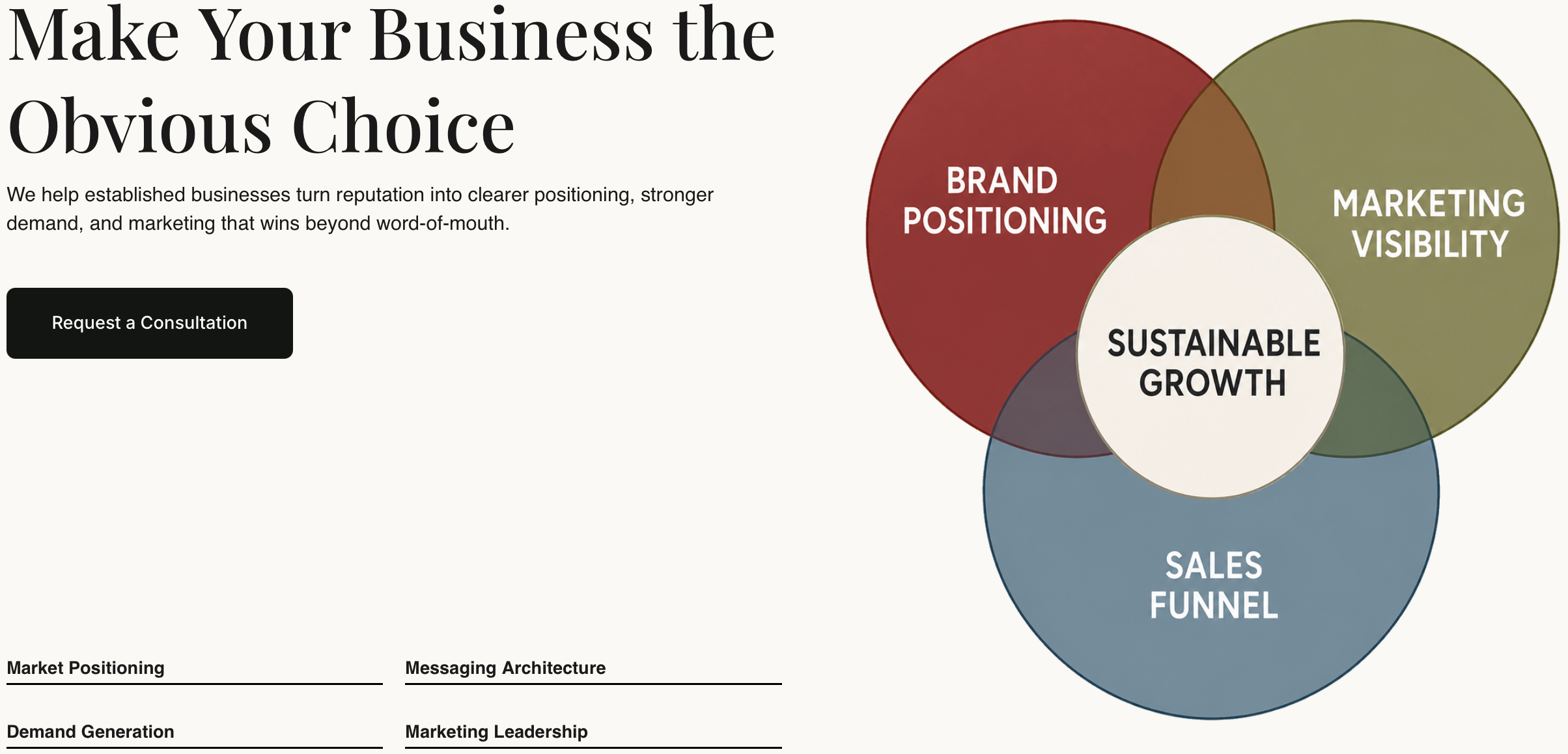
Reasonate Studio’s social media management service handles content creation, posting, and reporting so your brand shows up consistently without consuming your time. For entrepreneurs focused on search visibility, the SEO keyword research service and on-page SEO optimization ensure your content reaches the people actively searching for what you offer. Every service is built inside the Aligned Impact Model™, so your social presence, SEO, and content all work together as one cohesive system rather than a pile of disconnected tactics.
A digital marketing strategy is a structured plan that connects your business goals to specific online channels and tactics. It defines who you are targeting, what you want to achieve, and how you will measure success.
Most entrepreneurs can build a working strategy in one to two weeks. The key is starting with clear goals and a defined audience before selecting channels or creating content.
A 90-day review cycle is the most effective approach. Monthly audits keep your metrics current, while quarterly reviews allow you to adjust goals, channels, and budget based on real performance data.
Goal setting is the most important step. Every channel, tactic, and piece of content should trace back to a specific, measurable business objective. Without that connection, marketing effort rarely produces consistent results.
Choose channels based on where your specific audience is already active and how they prefer to consume information. Start with one or two channels and build consistency before expanding to additional platforms.