September 22, 2026
Why Update Brand Messaging: Essential Guide for Growth


Discover how to align marketing goals to boost your revenue and momentum. This guide provides actionable strategies for entrepreneurs.

TL;DR:
- Aligning marketing goals directly with clear business objectives turns activities into measurable growth. Entrepreneurs must set SMART goals for each customer journey stage, ensuring channels support specific outcomes like leads or revenue. Regular review and accurate data tracking sustain effective marketing strategies that drive real business results.
If you’ve ever ended a quarter wondering why your marketing felt busy but your revenue didn’t move, you already know what misaligned marketing goals cost you. Knowing how to align marketing goals is the difference between spinning your wheels and building real momentum. For entrepreneurs and small business owners, this isn’t a corporate theory problem. It’s a daily reality. You’re posting content, running ads, maybe trying email, and none of it seems to pull in the same direction. This guide walks you through exactly how to fix that, with a clear framework you can put to work right now.
Before you can set a single marketing goal, you need to know what your business is actually trying to accomplish this year. Not in vague terms like “grow” or “get more clients.” In specific terms like “close 15 new coaching clients by Q3” or “increase monthly revenue by $8,000 within six months.”
Marketing goals that aren’t anchored to business objectives are just activities. They might look productive, but they rarely produce anything. The connection between your business goals and your marketing goals needs to be explicit and direct. If your business goal is to generate $120,000 in revenue this year, your marketing goal should specify how many leads you need, at what conversion rate, and through which channels. That chain of logic is what turns marketing from a cost center into a growth engine.
Here’s how to translate business goals into marketing objectives in a practical way:
The reason so many entrepreneurs struggle here is that different internal definitions create friction before alignment even begins. What counts as a qualified lead? What does “awareness” mean, measurably? Agreeing on definitions is step one, and it’s often skipped.
Pro Tip: Write your top three business goals for the year, then ask yourself “what would marketing need to deliver for each of these to happen?” That question will generate your marketing objectives faster than any template.
Using data to validate your goals also matters. Look at your historical conversion rates, traffic sources, and cost per acquisition before setting targets. Goals built on real numbers are goals you can actually track and defend.

Good intentions don’t move revenue. Measurable goals do. The SMART framework, which stands for Specific, Measurable, Achievable, Relevant, and Time-bound, is the most reliable structure for setting marketing objectives that you can actually act on and track.
Here’s what each element looks like in practice for a small business owner:
Here’s a quick comparison of weak versus strong marketing goals:
| Weak Goal | Strong Goal |
|---|---|
| Get more leads | Generate 40 qualified leads per month through Instagram DMs and email by Q2 |
| Grow social media | Increase Instagram reach by 25% in 60 days through weekly Reels |
| Improve email marketing | Achieve a 35% email open rate on the monthly newsletter by July |
| Build brand awareness | Earn 200 new email subscribers in 90 days via a lead magnet campaign |
| Increase website traffic | Grow organic blog traffic from 600 to 1,100 sessions per month by December |
Once your SMART goals are in place, you need to attach KPIs to each one. KPIs are the specific numbers you check regularly to know whether you’re on track. For a goal around lead generation, relevant KPIs include number of discovery calls booked, lead magnet download rate, and email list growth week over week.
One of the most overlooked areas for entrepreneurs is connecting marketing goals to customer journey stages. The top of your funnel (awareness) needs different goals than the middle (consideration) or the bottom (conversion). Misalignment often happens when all your marketing energy goes toward awareness while you have no goals around nurturing or closing. Clear, specific acquisition targets are not just helpful for focus, they’re the prerequisite for knowing which marketing tactics to deploy.
Pro Tip: Review your goal list and ask: “Do I have at least one goal per stage of my customer journey?” If every goal is about awareness, your pipeline will fill up and leak out the bottom.
Once you know your goals, the next challenge is making sure your channels and efforts actually work together rather than in separate silos. This is where most small business marketing falls apart. You post on Instagram, send an occasional email, maybe run a Google ad, and each of those feels like its own world with its own logic.
The fix is to pick channels based on where your goals live, not based on where you feel most comfortable.
| Channel | Best Used For | Goal It Supports |
|---|---|---|
| SEO and blog content | Long-term organic discovery | Awareness, trust-building |
| Email marketing | Nurturing and converting warm leads | Consideration, conversion |
| Social media | Community building and visibility | Awareness, relationship-building |
| Paid ads | Fast reach and lead generation testing | Awareness, acquisition |
| Sales pages and landing pages | Conversion and offer clarity | Decision, conversion |
Once you’ve matched channels to goals, you need your messaging to stay consistent across all of them. A prospective client who sees your Instagram, clicks to your website, and receives your welcome email should feel like they’re experiencing the same brand with the same voice and the same promise. Inconsistency at this level signals to people that you don’t know who you are, and that makes them hesitant to trust you with their money.
For solo entrepreneurs or small teams, here’s what a practical coordination framework looks like:
Budgeting is part of alignment too. The 70/20/10 budget framework allocates 70% of your budget to proven channels and tactics, 20% to adjacent bets, and 10% to experiments. For a small business owner, this prevents you from either playing it too safe or gambling your entire marketing budget on an unproven tactic. You can explore more on this in this guide to optimizing your marketing budget.
Aligned organizations treat alignment as a staged progression from shared goals to technology integration to operational workflows. Even as a solo founder, you can apply this thinking by starting with clear goal clarity before investing in tools or automation.

Even when you start with a solid plan, marketing goal alignment has a way of drifting. Recognizing the warning signs early saves you months of wasted effort.
Here are the most common signs your marketing goals have gone off track:
The root cause of most of these symptoms is what Salesforce identifies as misaligned goals creating wasted effort, poor customer experience, and lost revenue. The symptoms are visible on the surface, but the fix has to happen at the goal level, not the tactic level.
When you notice any of these signs, the recalibration process doesn’t have to be dramatic. Look at your goals, look at your metrics, and ask three questions: What was I trying to achieve? What actually happened? What would I need to change to close the gap?
“Alignment requires ongoing cultural restoration, not just a one-time fix. Brutal honesty about what your business can actually deliver versus what you’re promising is the starting point.” — Wasil Zafar
One of the less talked-about challenges is when your how to align sales and marketing efforts break down because of inconsistent definitions. If you define a “lead” as anyone who fills out a contact form, but your sales process requires a discovery call to qualify them, you’re measuring the wrong thing. Getting clear on what counts at each stage prevents this disconnect. Defining shared terms internally before building systems around them is consistently overlooked.
For ongoing alignment, build a simple monthly review into your schedule. Review your goals, check your KPIs, note what’s working and what isn’t, and make one or two deliberate adjustments. Small, consistent corrections beat big quarterly overhauls every time.
Setting goals is only half the job. Verifying that those goals are producing results is where most entrepreneurs drop the ball.
Here’s a numbered process for tracking and verifying marketing goal impact:
Conversation intelligence tools that analyze sales calls and client interactions give marketing teams insight into what prospects actually care about, sharpening both targeting and messaging. For a solo founder, the simpler version of this is reviewing your discovery call notes for patterns. What questions come up repeatedly? What objections keep appearing? Those patterns should inform your content and your offer messaging.
One real-world example: a health coach tracking email open rates and click-throughs noticed that emails about a specific pain point (burnout recovery) consistently outperformed others by 40%. She adjusted her content calendar and offer messaging to lead with that angle. Within two months, her discovery call bookings doubled. The goal stayed the same. The measurement revealed what to refocus.
Pro Tip: Create a simple one-page dashboard with your top five metrics and review it every Monday. Keep it in front of you, not buried in a spreadsheet you only open when something feels wrong.
Aligning marketing data with business outcomes creates the feedback loop that makes each goal cycle more accurate than the last. You stop guessing and start building on evidence.
I’ve worked with over 100 small businesses, and I can tell you the alignment problem is almost never about tools. It’s not that founders don’t have the right software or the right social media platform. It’s that they skip the foundational conversation about what they actually want their business to do, and then expect marketing to figure that out on its own.
What I see most often is founders who are deeply committed but operating from scattered intentions. They read an article about email marketing and add email to their list. They watch a reel about SEO and decide to start a blog. They hear about a competitor on TikTok and open an account. Each decision makes individual sense. Collectively, it creates noise.
The real work of alignment is not glamorous. It’s sitting down with your business goals, being honest about where you are versus where you want to be, and then deciding which two or three marketing moves actually deserve your full attention. Most entrepreneurs are not doing too little. They’re doing too much of the wrong things simultaneously.
I also think the idea that marketing alignment is a one-time setup is one of the most damaging myths in this space. Your business evolves. Your audience shifts. Your offer changes. Your goals need to be revisited at least quarterly, not just at the start of the year when energy is high.
The founders I’ve seen grow the fastest are not the ones with the most sophisticated systems. They’re the ones who can clearly articulate their goal, explain how their marketing supports it, and make consistent small adjustments when data tells them something isn’t working. That level of clarity is a skill, and it’s absolutely learnable.
— Kaitlyn
Marketing alignment doesn’t happen by accident. It happens when your goals, your channels, and your messaging all point to the same outcome with intention behind every move. If you’ve been putting in the work without seeing the results, the gap is usually in the strategy layer, not the execution layer.
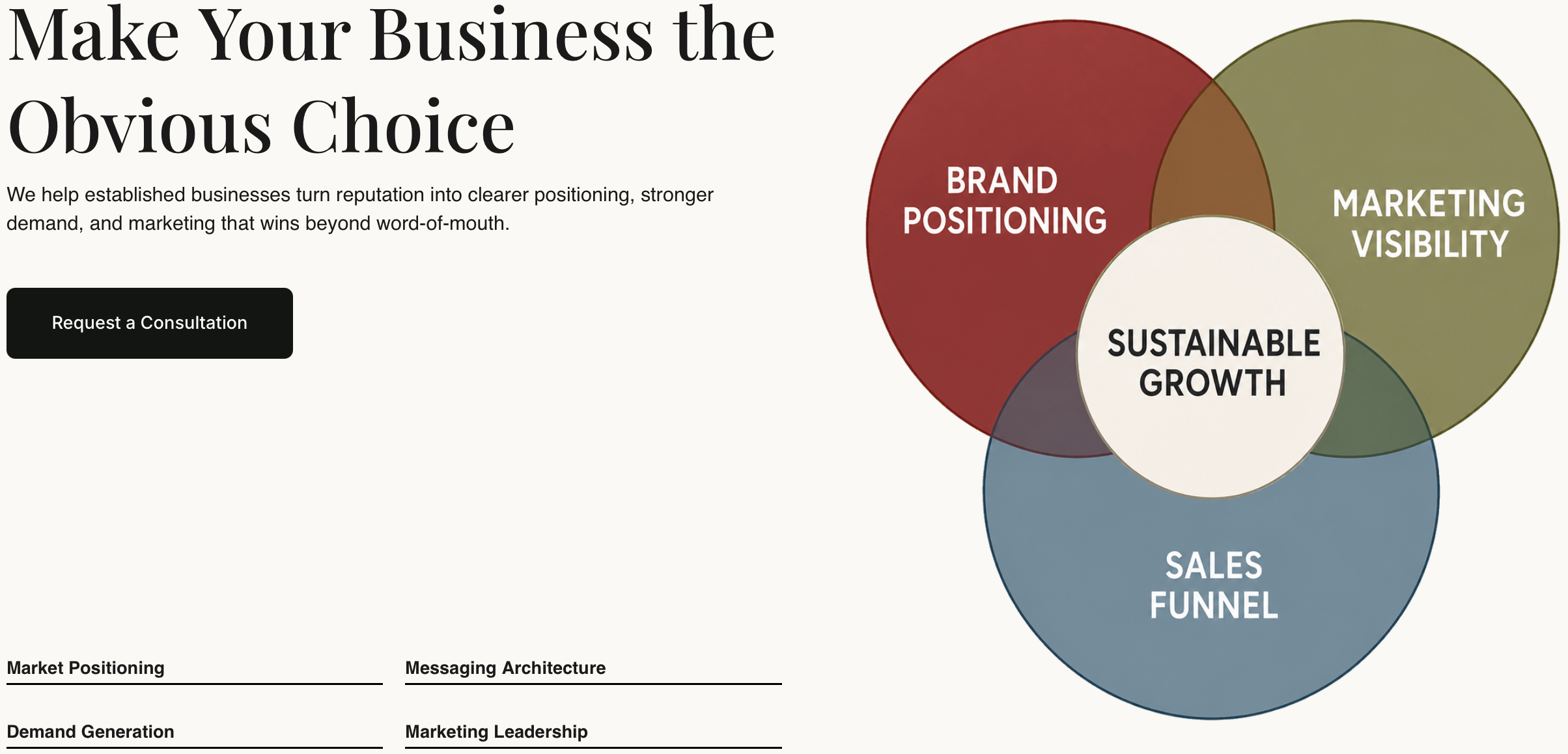
At Reasonate Studio, we help founders, coaches, and consultants build marketing systems that are clear, focused, and built to grow. Whether you need sharper SEO keyword research to make sure your content reaches the right people, or a complete sales page optimization that converts the traffic you’re already getting, we handle the strategy and execution so you can focus on your clients. Our work is built around one goal: making your marketing reflect your actual business objectives and deliver measurable results. Explore our services at Reasonate Studio and find out how we can help you build the aligned, revenue-generating brand your business deserves.
Marketing goal alignment means connecting your marketing activities directly to your broader business objectives so every channel, campaign, and piece of content is working toward the same measurable outcome. Without this connection, marketing effort and business results move independently of each other.
Start by writing your top business objectives, then ask what marketing would need to deliver for each one to happen. Translate those answers into SMART goals with specific KPIs, and assign each goal to a relevant channel or campaign.
Review your goals monthly at a minimum and do a deeper assessment quarterly. Business priorities shift, audience behavior changes, and your data will reveal when a goal needs to be adjusted or replaced.
Common signs include producing content consistently with no increase in leads, seeing strong vanity metrics with flat revenue, and being unable to explain how a specific marketing activity connects to a business result. Misaligned goals lead to wasted effort and lost deals.
The SMART framework (Specific, Measurable, Achievable, Relevant, Time-bound) is the most practical starting point. Pair it with a customer journey map so you have at least one goal per stage, from awareness through conversion, and you’ll have a solid foundation for aligned marketing strategy.
| Key Takeaway | Details |
|---|---|
| Connect goals to business objectives | Every marketing goal should trace back to a specific business outcome like revenue, client acquisition, or retention |
| Use the SMART framework | Goals without specificity and deadlines get treated as intentions, not targets |
| Match channels to goals | Choose channels based on where each goal lives in the customer journey, not personal preference |
| Measure both leading and lagging indicators | Track engagement metrics alongside revenue metrics to see how one flows into the other |
| Revisit alignment quarterly | Marketing goals need to evolve with your business, your audience, and your data |