September 22, 2026
Why Update Brand Messaging: Essential Guide for Growth


Learn how to build a stronger identity by studying successful examples of a brand. Discover key principles to enhance your marketing strategy.
TL;DR:
- A strong brand is the complete perception a customer holds, encompassing feelings, expectations, and identity. Successful brands align their intended identity with consumer perception through consistency and authentic storytelling, building trust over time. Small businesses can develop lasting brands by emphasizing clarity, community, and specific consumer moments beyond large budgets.
A brand is defined as the sum of every perception, feeling, and expectation a customer holds about a business. It is not a logo or a tagline. It is the complete identity a company projects and the image consumers form in response. For entrepreneurs and small business owners, studying a strong example of a brand is one of the fastest ways to understand what separates forgettable businesses from ones that build loyal followings. This article breaks down how iconic brands are built, what makes them work, and how you can apply those same principles to your own marketing strategy starting today.
Brand identity and brand image are two distinct concepts that work together. Brand identity vs. brand image rests on a fundamental difference: identity is what a company deliberately expresses, while image is what consumers actually perceive. The most successful brands close that gap completely. Apple is the clearest proof. Its intended identity, built on minimalism and user-centered design, matches almost perfectly with how consumers describe the experience of owning its products.
The core components of a strong brand include:
Strong brand identity examples like Apple’s minimalist elegance, Nike’s athletic empowerment, and Mailchimp’s quirky friendliness all share one trait. Each one commits fully to a single emotional idea and never drifts from it. That commitment is what builds recognition and trust over time.
Consistency is not about being repetitive. It is about being recognizable. When a customer sees your content on Instagram, reads your email, or lands on your website, they should feel the same brand, without needing to see your logo. That level of alignment takes intentional work, but it is the foundation of every brand worth studying.

Pro Tip: Before you design anything, write a one-sentence brand promise that describes who you serve, what you do, and why it matters. Every visual and verbal decision should pass through that filter.
The most instructive brand examples are not just successful. They are durable. Coca-Cola has maintained a consistent emotional message around happiness and togetherness for over a century. Its visual identity has evolved in small ways, but the core feeling has never changed. That is not an accident. It is the result of treating brand as a long-term asset rather than a short-term campaign.
Apple’s brand evolution tells a similar story. The company built its identity around the idea that technology should feel human. Every product launch, every retail store design, and every piece of advertising reinforces that single idea. The result is a brand where identity and consumer perception match so precisely that customers often describe Apple products in emotional terms before they describe technical specs.
KFC offers a less obvious but equally powerful lesson. The brand has refreshed its creative assets across dozens of cultural territories while keeping its core visual identity intact. That approach keeps the brand relevant in new markets without confusing loyal customers. Long-lasting brands treat their creative assets as evolving experiences, not static logos.
GE Aerospace offers the most forward-looking example of brand building in 2026. The company built deep customer trust before its next-generation engines were even in the air.
“GE Aerospace secured a $210 billion backlog for engines not yet flown by featuring real employees in its brand storytelling, targeting 20% better fuel efficiency. The brand was built before the product existed.”
The sequence GE Aerospace followed is worth studying closely:
This “Trust, Permission, Breakthrough” model applies directly to small businesses. You do not need a finished product to start building a brand. You need a clear story and the discipline to tell it consistently.
Brand imagery is not the same as visual branding. Brand imagery refers to the intangible perceptions that shape consumer choice, including the feelings, associations, and mental pictures a brand creates in a customer’s mind. These perceptions go far beyond what a logo looks like. They are built through repeated experiences, community signals, and the specific moments a brand chooses to own.
Royal Enfield is a textbook example of brand imagery done right. The motorcycle company does not just sell bikes. It sells a lifestyle built around heritage, freedom, and community. Events like “Motoverse” and heritage apparel collections reinforce that positioning at every touchpoint. Customers do not just buy a Royal Enfield. They join something. That sense of belonging is one of the most powerful forces in branding.
Usage scenario anchoring is another technique that shapes brand imagery. Maggi Noodles built category dominance by linking its brand to a specific consumption moment, the after-school two-minute meal. That association became so strong that the brand effectively owned the moment itself. Customers did not think “I want noodles.” They thought “I want Maggi.”
Small businesses can apply these same principles without a large budget. The strategies that work include:
Pro Tip: Pick one specific moment in your customer’s week when your product or service is most relevant. Build three months of content entirely around that moment and watch how quickly your brand becomes associated with it.
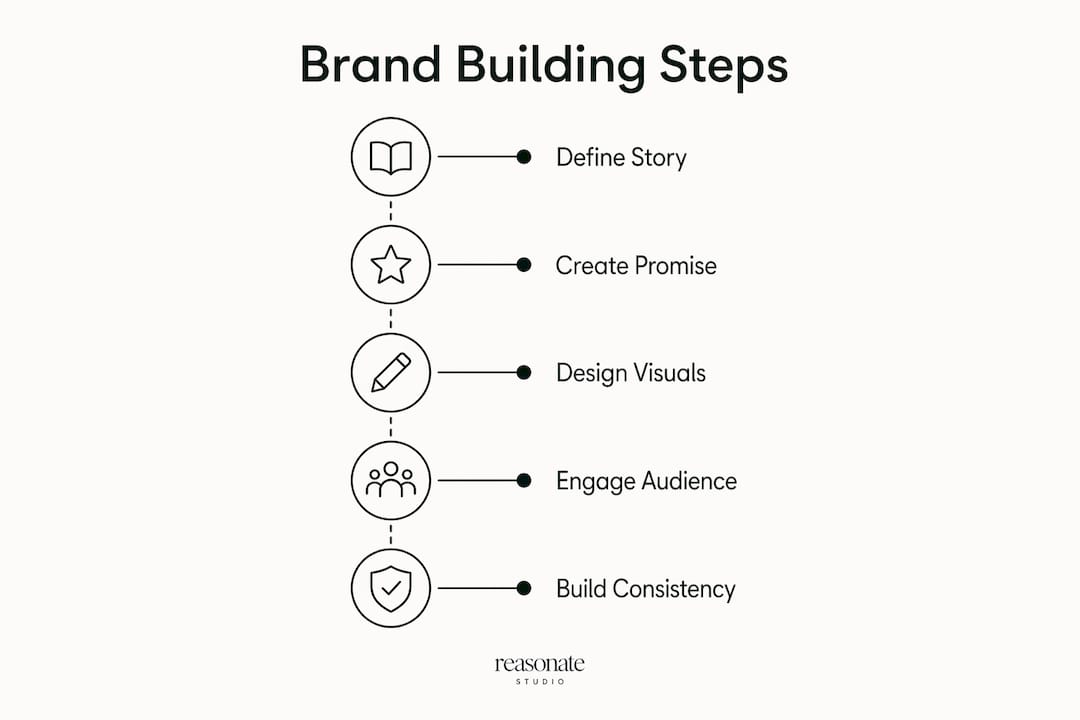
Building a brand that works is a process, not a single decision. The entrepreneurs who get it right follow a clear sequence rather than jumping straight to tactics.
Start with your story: Authentic storytelling is the foundation of every strong brand. Before you design a logo or write a bio, articulate why your business exists and who it is genuinely for. Reasonate Studio’s approach to brand storytelling shows how real founders use personal narrative to create connection before they ever make a sale.
Define your verbal and visual identity: Choose a brand voice that matches your personality and your audience’s expectations. Pair it with a consistent visual system, including colors, fonts, and imagery style, that you apply without exception.
Build trust before you sell: Follow the GE Aerospace model. Share your process, your people, and your purpose before you lead with your product. Customers buy from brands they trust, and trust is built through repeated, honest communication.
Create community around your brand: Host events, build a newsletter, or create a private group where your customers connect. Community is one of the few brand assets that competitors cannot copy.
Measure and refine your brand perception: Track how customers describe you in reviews, comments, and conversations. The gap between how you want to be perceived and how you are actually perceived is your most important branding data point.
The table below outlines the key brand-building actions, the outcome each one drives, and the timeline entrepreneurs can realistically expect.
| Brand-building action | Primary outcome | Realistic timeline |
|---|---|---|
| Define brand story and purpose | Clarity in messaging and positioning | 1–2 weeks |
| Develop visual and verbal identity | Consistent recognition across channels | 2–4 weeks |
| Launch authentic content and storytelling | Trust and audience engagement | 30–60 days |
| Build community or experiential touchpoints | Loyalty and word-of-mouth referrals | 60–90 days |
| Audit brand perception and refine messaging | Alignment between identity and image | Ongoing |
Learning how to improve brand perception is not a one-time project. It is a discipline that the best brands practice continuously. The entrepreneurs who treat it that way are the ones who build something that lasts.
After working with over 100 small businesses at Reasonate Studio, the pattern I see most often is this: founders spend months on their logo and almost no time on their story. That is the wrong order. The visual identity should express the story, not replace it.
The brand examples that genuinely inspire me are not the ones with the biggest budgets. They are the ones with the clearest sense of purpose. GE Aerospace building a $210 billion backlog on the strength of employee storytelling before a single engine flew commercially is the most striking recent proof of that. The product was not ready. The brand was. That is a lesson every small business owner can apply tomorrow.
What I find most underestimated in small business branding is the power of pre-product trust building. Founders often wait until everything is perfect before they start talking publicly. That is a missed opportunity. Your audience wants to see the process. They want to feel like they are part of the story before it ends. That transparency is what creates the kind of loyalty that no ad budget can buy.
The other thing I push back on consistently is the idea that small businesses cannot do experiential branding. Royal Enfield runs Motoverse. You can run a free workshop, a monthly Q&A, or a simple community group. The scale is different. The principle is identical. Community creates belonging, and belonging creates brand loyalty that outlasts any single campaign.
My honest advice is this: stop trying to look like a big brand and start trying to feel like a clear one. Clarity beats polish every time. When your story is specific, your voice is consistent, and your customer feels genuinely seen, you have built something that no competitor can replicate. That is what a great brand actually is.
— Kaitlyn Cole
Your brand story is only as powerful as the page where it lands. Reasonate Studio works with founders, coaches, and consultants to turn brand clarity into real revenue through sales page optimization that connects your message to the right audience at the right moment.
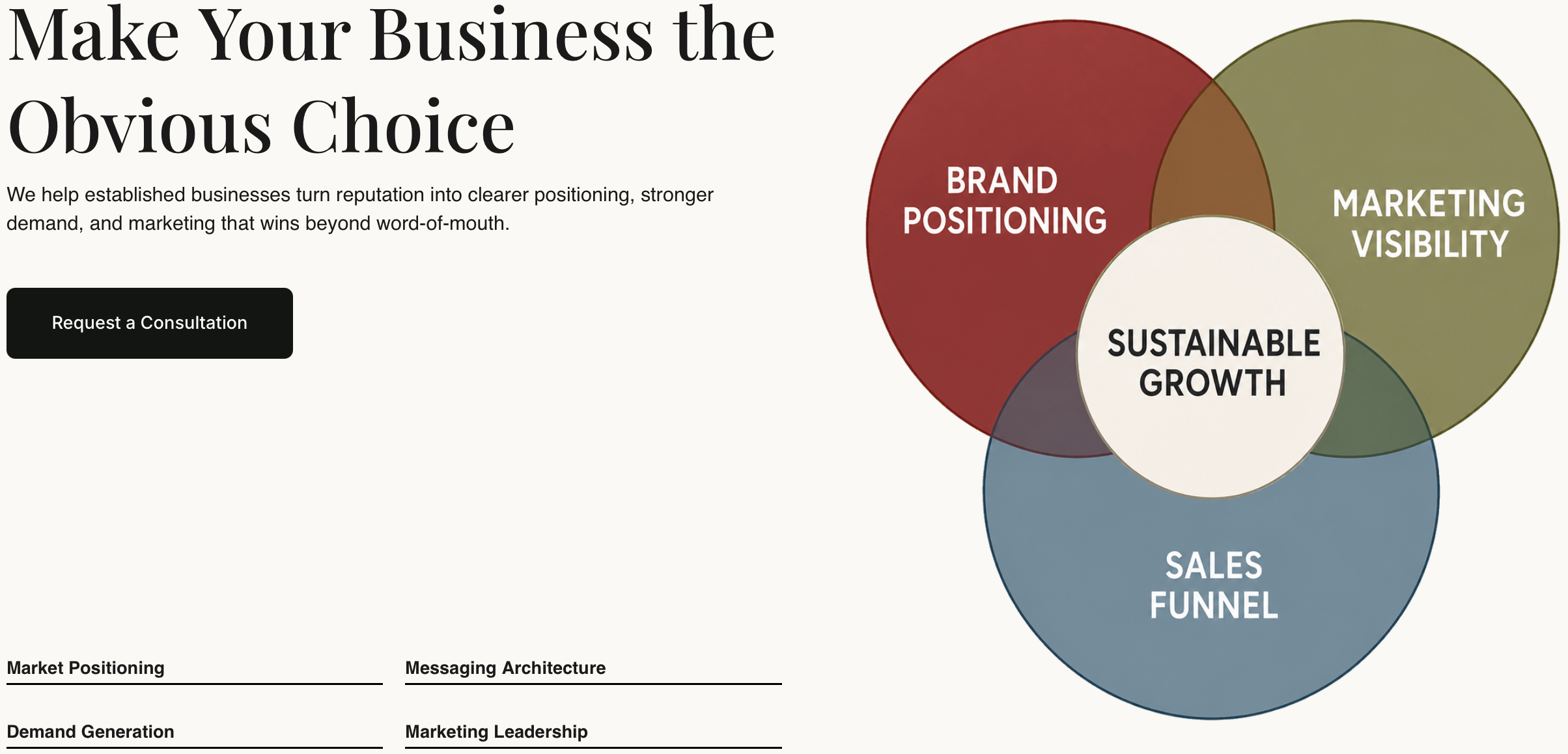
Reasonate Studio’s Aligned Impact Model™ starts with your brand foundation and builds through to the copy, structure, and strategy of the pages where customers decide to buy. If your brand feels strong but your conversions do not reflect it, the gap is usually in how your offer is presented. Reasonate Studio closes that gap with a process that is personal, specific, and built for small business growth. Explore what a focused brand and sales strategy can do for your business at Reasonate Studio.
A brand is the complete identity and perception a business creates in the minds of its customers. Apple, Coca-Cola, and Nike are well-known examples, each defined by a consistent emotional idea rather than just a product.
Brand identity is what a company deliberately expresses through its visuals, voice, and story. Brand image is what consumers actually perceive. Strong brands align the two so that the intended message matches the customer’s experience.
Start with a clear story and a consistent voice, then own one specific moment in your customer’s life. Community building and authentic content cost more time than money and deliver lasting brand recognition.
Usage scenario anchoring is a technique where a brand associates itself with a specific, repeatable consumer moment to dominate category perception. Maggi Noodles built its dominance by owning the after-school two-minute meal moment.
Trust and initial recognition typically develop within 30–60 days of consistent, authentic content. Deeper loyalty and word-of-mouth referrals generally follow after 60–90 days of sustained community engagement and brand consistency.