September 22, 2026
Why Update Brand Messaging: Essential Guide for Growth


Discover what is the awareness stage of the marketing funnel. Learn how to engage prospects effectively and build trust at this crucial phase.
TL;DR:
- The awareness stage is the top phase of marketing where prospects first recognize a problem and encounter your brand.
- Efforts at this stage focus on education and building trust through problem-focused content on various platforms.
The awareness stage of the marketing funnel is defined as the top-of-funnel phase where prospects first recognize a problem or need and encounter your brand for the first time. Known in classical models like AIDA (Awareness, Interest, Desire, Action) as the entry point of the buyer journey, this stage is characterized by high curiosity and low product knowledge, with prospects focused on understanding their problem rather than evaluating solutions. For marketing professionals and small business owners, getting this stage right is not optional. It determines whether a prospect ever enters your funnel at all. The goal here is education and trust, not conversion.
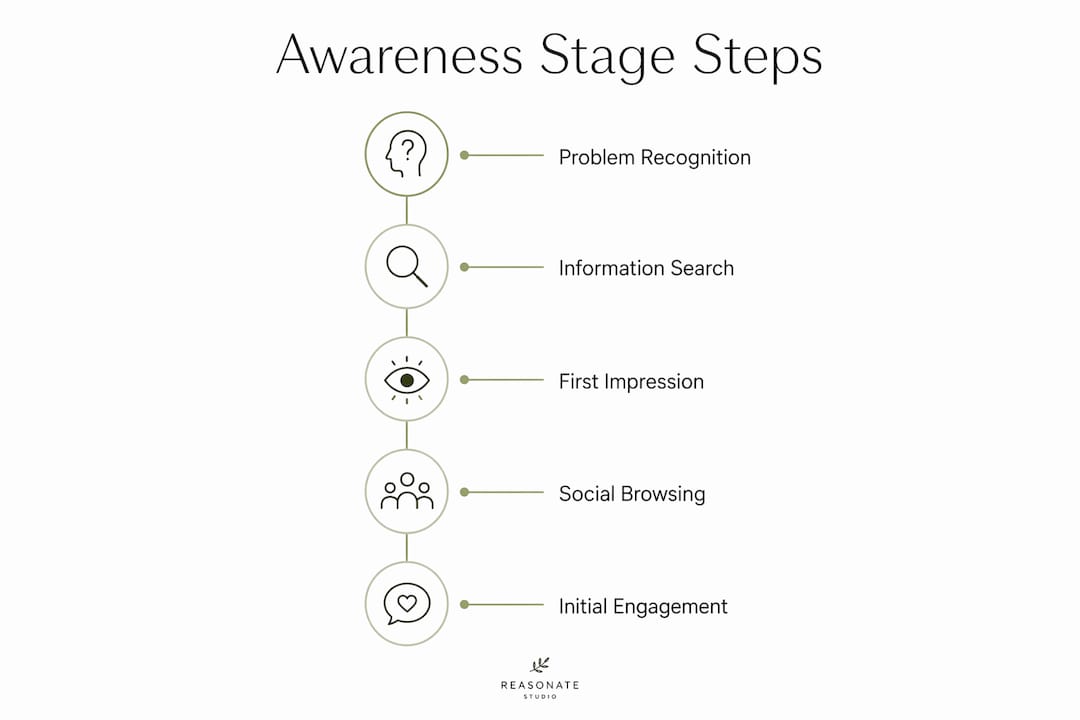
The awareness stage is the first of the core marketing funnel stages, sitting at the very top before consideration, decision, and retention. At this point, a prospect has just realized they have a problem. They do not yet know your brand, your product, or whether a solution even exists. Their search behavior reflects that uncertainty.

Think of it this way. A small business owner notices their social media posts are getting no engagement. They type “why is my Instagram not growing” into Google or TikTok. That search is an awareness-stage moment. They are not looking for a marketing agency yet. They are trying to name and understand their problem. Your job at this stage is to be the brand that answers that question clearly and earns their trust in the process.
The classical AIDA model places awareness at the foundation for good reason. Without it, no other funnel stage functions. A prospect who never discovers your brand cannot move to interest, desire, or action. The importance of awareness in marketing is therefore structural, not just promotional. It sets the ceiling for everything that follows.
What best describes the awareness stage of the marketing funnel is this: it is a brand’s first impression at scale. The prospect is not ready to buy. They are ready to learn. Brands that show up with education at this moment build the credibility that converts later.
Awareness-stage prospects share a predictable set of behaviors. Understanding those behaviors helps you create content that meets them where they are, rather than where you wish they were.
The mindset of an awareness-stage prospect:
The most common mistake brands make is treating awareness-stage visitors like warm leads. They are not. They are cold prospects who stumbled onto a problem and are looking for a trusted guide. If your first touchpoint is a sales pitch or a pricing page, you lose them before the relationship starts.
Discovery behavior also varies by industry. A B2B buyer researching enterprise software might read three white papers before they even know what category of tool they need. A consumer looking for a health coach might watch five TikTok videos before they follow a single account. The customer journey awareness phase is rarely a straight line, and it rarely ends with a purchase on the first visit.
Pro Tip: Map your top five awareness-stage search queries before creating any content. Use free tools like Google Search Console or Google Trends to find the exact language your audience uses to describe their problem. Then write content that mirrors that language back to them.
One often-overlooked behavior at this stage is social browsing. Prospects scroll through Instagram or TikTok without a specific search intent, and they stumble onto content that names a problem they recognize. That moment of recognition, “this is exactly what I’m dealing with,” is the awareness stage happening in real time. Brands that create content designed to trigger that recognition win attention before competitors even know the prospect exists.
The most effective awareness-stage marketing uses educational content like blogs, videos, and infographics to articulate pain points without overt sales messages. The goal is to solve small problems for free, which primes prospects to trust your brand when they are ready to buy.
Here is a proven framework for building an awareness-stage content engine:
Start with SEO-driven blog content. Write articles that answer the exact questions your ideal prospects type into search engines. Focus on problem-identification queries, not product-comparison queries. A post titled “Why your email list isn’t growing” serves awareness-stage readers. A post titled “Best email marketing platforms compared” serves consideration-stage readers. Know the difference.
Publish short-form video on social platforms. Video is the fastest way to build trust with a cold audience. A 60-second video that names a common problem and offers one practical insight earns more credibility than a polished brand ad. Platforms like TikTok and Instagram Reels prioritize this format in their discovery algorithms.
Create infographics and visual explainers. Visual content gets shared. A well-designed infographic that breaks down a complex problem into five clear steps can reach thousands of prospects organically. It also positions your brand as a clear, credible source before a prospect ever visits your website.
Use targeted paid social advertising. Paid ads at the awareness stage should drive traffic to educational content, not product pages. A Facebook or Instagram ad that promotes a free guide or a helpful blog post performs better at this stage than an ad promoting a service or a discount.
Host informational webinars or live sessions. Live content builds real-time trust. A 30-minute webinar that teaches one specific skill attracts prospects who are actively trying to solve a problem. It also gives you direct insight into the questions your audience is asking, which sharpens your messaging for every other channel.
Collect and use data from the start. Tracking broad search queries at the awareness stage reveals exactly what your audience is struggling with. That data refines your mid-funnel messaging and shortens the overall sales cycle. Do not wait until the consideration stage to start analyzing behavior.
Build thought leadership through consistent publishing. Particularly in B2B, positioning your brand as a trusted authority through accurate, in-depth educational content is the primary awareness strategy. Buyers in long sales cycles need to see your expertise repeatedly before they consider reaching out.
The channel mix matters as much as the content type. SEO brings in prospects who are actively searching. Social media reaches prospects who are passively browsing. Paid advertising accelerates reach for both. A strong awareness strategy uses all three in coordination, not in isolation.
Pro Tip: Repurpose every piece of awareness-stage content across at least three formats. Turn a blog post into a short video script, then into an infographic, then into a social caption. One core idea, three distribution channels, three times the reach with a fraction of the extra effort.
Understanding how content creation builds brand exposure at this stage is the difference between a brand that grows and one that stays invisible. Awareness content is not a cost. It is the first investment in every future sale.
The linear funnel model, where a prospect moves neatly from awareness to consideration to purchase, no longer reflects how buyers actually behave. The customer journey awareness phase now happens across a fragmented, non-linear set of touchpoints, and the platforms driving discovery have shifted dramatically.
66.6% of US consumers use social media as a search engine, making platforms like TikTok and Instagram as important as Google for awareness-stage discovery. That statistic means brands that invest exclusively in traditional SEO are invisible to two-thirds of their potential audience at the exact moment those prospects are forming their first impressions.
The table below shows how discovery behavior has shifted and what it means for awareness strategy:
| Discovery Channel | Traditional Role | Current Role in 2026 |
|---|---|---|
| Google Search | Primary awareness driver | Shared with social and AI search |
| TikTok / Instagram | Entertainment only | Active search and discovery engine |
| AI-powered search (ChatGPT, Perplexity) | Not applicable | Growing source of brand-agnostic answers |
| Word of mouth / referrals | Secondary channel | Amplified by social sharing and reviews |
| Paid display advertising | Broad reach tool | Retargeting and intent-based targeting |
AI-powered search tools add another layer of complexity. When a prospect asks ChatGPT “how do I get more clients as a coach,” they receive a synthesized answer that may or may not include your brand. Brands that publish clear, authoritative, educational content are more likely to be cited or referenced in those AI-generated responses. This makes content quality a direct factor in AI-era discoverability.
The implication for marketing professionals and small business owners is clear. Omni-channel presence is no longer a luxury. It is the baseline requirement for awareness-stage visibility. A brand that shows up on Google, Instagram, and in AI search results reaches prospects at every point in their fragmented discovery process.
The shift also demands a focus on qualified awareness rather than raw volume. Reaching a million people who are not your ideal customer produces no funnel value. Targeting content to the specific pain points of your ideal personas produces fewer impressions but far more qualified prospects entering the consideration stage. Quality of reach now outweighs quantity of reach in every meaningful metric.
The awareness stage fails most often not because of bad content, but because of misaligned intent. Brands push the wrong message at the wrong moment, and prospects disappear before the relationship begins.
The most frequent mistakes at the awareness stage:
Pro Tip: Audit your top five awareness-stage content pieces every quarter. Check time-on-page, scroll depth, and bounce rate. If prospects are leaving in under 30 seconds, your content is not matching their search intent. Rewrite the opening paragraph to lead with the problem, not the solution.
Building brand trust at the awareness stage requires patience. The prospect is not ready to buy. They are ready to be impressed. Brands that show up consistently with useful, problem-focused content earn the right to be considered when the prospect is finally ready to make a decision.
Most small business owners I work with make the same mistake when they first think about their marketing funnel. They want to skip straight to conversion. They want the ad that closes the sale, the post that drives the purchase, the email that gets the reply. The awareness stage feels slow and uncertain to them, so they skip it or underinvest in it.
Here is what I have learned after years of building marketing systems for founders, coaches, and consultants: the awareness stage is where the sale actually begins. By the time a prospect reaches out to you, they have already formed an opinion about your brand. That opinion was shaped by the content they found, the posts they scrolled past, the article they read at 11 PM when they were trying to figure out why their business was not growing. If you were not present in those moments, someone else was.
The good news for small business owners is that the awareness stage does not require a massive budget. It requires clarity. Knowing exactly who your ideal prospect is, what problem they are trying to solve, and what language they use to describe that problem is worth more than any paid media spend. A single well-written blog post that answers the right question can generate qualified traffic for years. A short video that names a real pain point can reach thousands of people who have never heard of your brand.
What I push back on is the idea that awareness content has to be generic to reach a broad audience. The opposite is true. The more specific your content is to a real, named problem, the more it resonates with the exact people you want in your funnel. Broad content attracts broad audiences. Specific content attracts the right audience. And the right audience converts.
The brands I have seen grow the fastest are the ones that commit to showing up consistently at the awareness stage, month after month, with content that teaches something real. They do not chase trends. They do not post for the algorithm. They publish answers to the questions their ideal clients are already asking. That consistency builds the kind of trust that makes the consideration and decision stages almost effortless.
— Kaitlyn Cole
Getting the awareness stage right requires more than good content ideas. It requires knowing which keywords your ideal prospects are actually searching, how your website performs in those searches, and whether your content is structured to convert curious visitors into engaged leads.
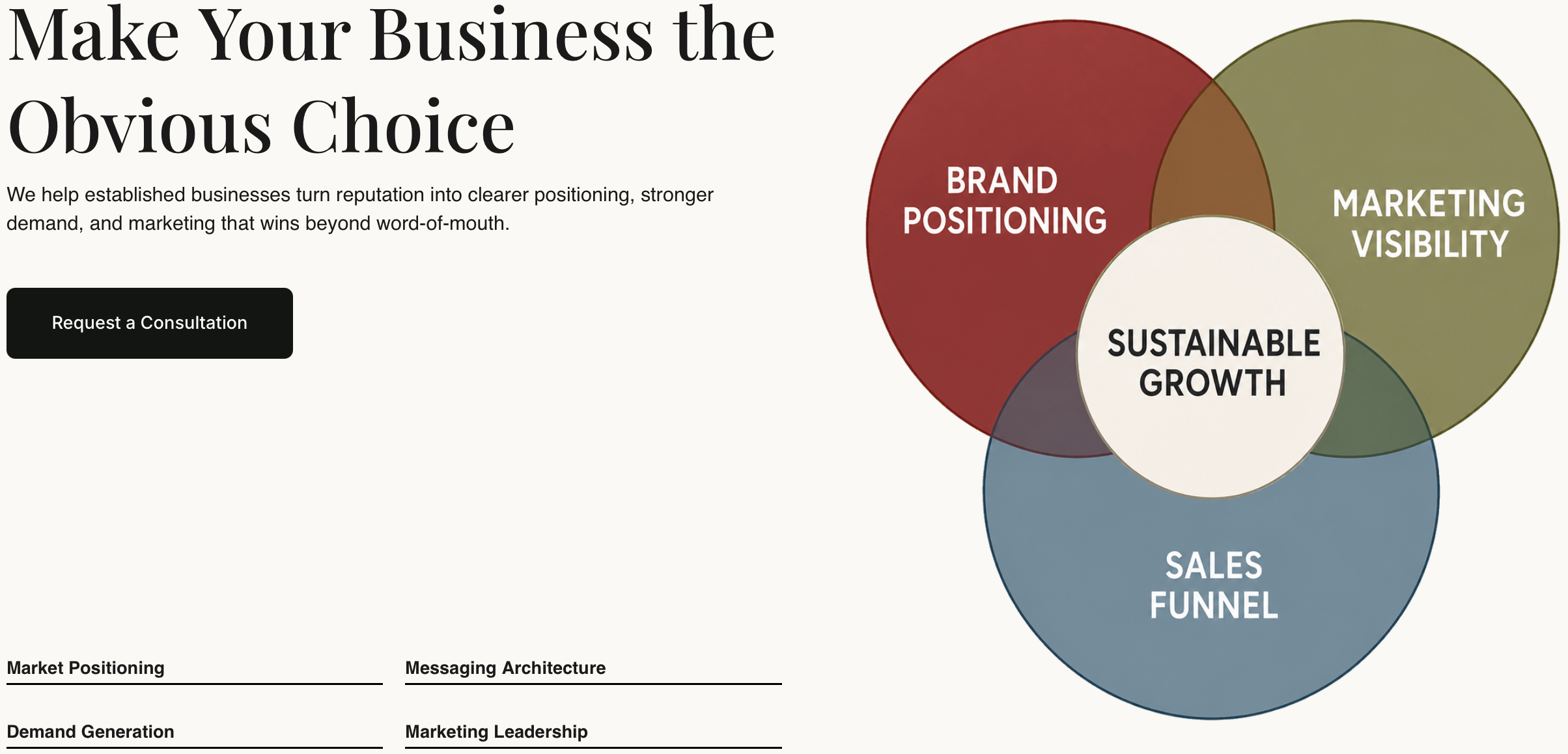
Reasonate Studio’s SEO keyword research service identifies the exact search terms your audience uses at the awareness stage, so your content reaches the right people before your competitors do. Pair that with on-page SEO optimization and your website becomes a consistent source of qualified top-of-funnel traffic. For founders and small business owners who want a clear, done-for-you path from brand visibility to revenue, Reasonate Studio’s Aligned Impact Model™ builds the full system, starting exactly where your customer’s journey does.
The awareness stage is the top-of-funnel phase where prospects first recognize a problem and encounter a brand for the first time. It is characterized by high curiosity, low product knowledge, and broad search intent focused on problem identification rather than solution evaluation.
The awareness stage is best described as an educational phase where brands build trust by answering prospects’ questions about their problems, not by pitching products or services.
Blog posts, short-form videos, infographics, and informational webinars are the most effective awareness-stage content formats. Each format prioritizes education and problem articulation over promotion or direct selling.
66.6% of US consumers now use social media as a search engine, making platforms like TikTok and Instagram primary awareness-stage discovery channels alongside traditional Google search.
Awareness-stage success is measured through reach, impressions, organic traffic, time-on-page, and scroll depth. These metrics indicate whether content is reaching and engaging the right audience before they are ready to consider a purchase.