September 22, 2026
Why Update Brand Messaging: Essential Guide for Growth


Discover what is content marketing in digital marketing and how it can help small business owners attract customers with valuable content.
TL;DR:
- Content marketing involves creating valuable content to attract and nurture a specific audience organically.
- It builds trust over time by answering questions rather than interrupting with ads, making it ideal for small businesses.
Content marketing in digital marketing is defined as the strategic creation and distribution of valuable, relevant, and consistent content to attract, engage, and nurture a specific audience toward profitable action. Unlike traditional advertising, it does not interrupt people. It earns their attention by answering questions they are already asking. For small business owners, coaches, and consultants, this distinction matters enormously. You are not competing on ad budget. You are competing on trust, clarity, and relevance. Done right, content marketing turns your expertise into a magnet that draws the right people directly to you.
Content marketing is the practice of publishing useful content across digital channels so your audience finds you, learns from you, and eventually buys from you. The Content Marketing Institute defines it as a long-term approach focused on building a relationship with your audience rather than pushing a product. That relationship is the asset. Every blog post, email, or social video you publish compounds over time, building familiarity and trust that paid ads simply cannot replicate.

The phrase “content marketing” is the widely used industry term, and it sits inside the broader discipline of digital marketing alongside SEO, paid advertising, email marketing, and social media management. What makes content marketing distinct is its intent. The goal is not to close a sale on first contact. The goal is to become a go-to resource so that when your audience is ready to buy, you are the obvious choice.
For coaches and consultants especially, this is the most natural form of marketing available. You already have expertise. Content marketing is simply the system for sharing it in a way that attracts clients consistently. Reasonate Studio’s Aligned Impact Model™ is built on exactly this principle: brand clarity first, then content that connects, then revenue that follows.
Content marketing includes any format that delivers value to your audience without requiring them to pay for it upfront. The most common formats fall into four categories.
| Content Type | Funnel Stage | Primary Goal |
|---|---|---|
| Blog posts and articles | Awareness | Drive organic search traffic |
| Social media posts | Awareness | Build visibility and engagement |
| Email newsletters | Consideration | Nurture and deepen trust |
| Ebooks, webinars, guides | Decision | Capture leads and convert |

The primary components of a content ecosystem include blog posts, social media, email newsletters, and premium gated assets such as webinars and ebooks. Each format serves a different stage of the buyer’s journey. A blog post introduces someone to your thinking. An email newsletter deepens the relationship. A free webinar or guide moves them toward a buying decision.
Channel selection depends on where your audience spends time and what stage of the journey they are in. A health coach whose clients search Google for answers should prioritize blog content optimized for search. A business consultant whose clients scroll LinkedIn should focus on long-form posts and thought leadership articles. The format and channel are tools. The strategy underneath them is what makes the difference.
Content marketing also works in direct partnership with SEO. Search engines reward consistent, relevant content with higher rankings. Higher rankings bring organic traffic. That traffic, when nurtured through email or social media, becomes a pipeline of warm leads. This is the synergy that makes content marketing one of the most cost-effective long-term growth strategies available to small businesses.
Content marketing operates as a continuous cycle of strategy, creation, distribution, and measurement. Each phase feeds the next. Skipping any one of them produces content that looks busy but delivers little.
Pro Tip: Before you create your next piece of content, write down the one specific question it answers. If you cannot name the question, your audience will not find the content useful, and search engines will not rank it.
Content that does not address specific customer problems will not move people along the buying journey. This is the most common reason small business owners feel like their content “isn’t working.” The content exists, but it was not built around a real audience problem. Fixing the strategy fixes the results. Reasonate Studio’s guide on building a content marketing strategy walks through this research process in detail.
Content marketing and traditional advertising share the same end goal: growing your business. They take fundamentally different paths to get there. Understanding the difference saves you from wasting time and money on the wrong approach.
“Content marketing builds trust by focusing on helpful, relevant content rather than interruptive, sales-driven ads, enabling a sustained audience relationship rather than immediate conversions. Compared to traditional advertising, content marketing is an inbound technique designed to attract customers organically by answering existing questions.”
The table below shows the key differences in practice.
| Attribute | Content marketing | Traditional advertising |
|---|---|---|
| Primary intent | Build trust and educate | Drive immediate action |
| Audience relationship | Long-term, earned | Transactional, paid |
| Shelf life | Evergreen, compounds over time | Ends when budget stops |
| Cost structure | Time-intensive upfront, lower ongoing | Ongoing spend required |
| Audience mindset | Seeking information | Interrupted by message |
Confusing content marketing with direct-response copywriting is common but erroneous. Copywriting targets immediate conversions. A sales page, a checkout button, an ad headline: these are copywriting tools. Content marketing builds the relationship that makes the copywriting work. You need both, but they serve different purposes at different stages.
Traditional advertising is not wrong. It is simply a different tool. A Facebook ad can drive traffic to a landing page today. A well-written blog post can drive traffic for three years. For coaches and consultants with limited budgets, the compounding nature of content marketing makes it a more sustainable foundation. Paid ads can amplify content marketing once the foundation is solid, but they cannot replace it.
The most effective content marketing strategies for small businesses share three qualities: they are grounded in audience research, they map content to the buyer’s journey, and they prioritize consistency over volume.
Before writing a single word, know exactly who you are writing for and what they are searching for. Talk to your current clients. Read the questions in online communities where your audience gathers. Use free tools like Google’s “People Also Ask” feature to find real search queries. Creating content without keyword research limits your audience discovery to people who already know you exist.
Mapping content to the marketing funnel is critical. Social posts build brand awareness. Gated content captures leads. Consistency in quality and funnel alignment matters more than how often you post. A health coach who publishes one deeply researched blog post per week will outperform one who posts five shallow articles. Quality signals expertise. Expertise builds trust.
A content calendar does not need to be complicated. A basic spreadsheet with columns for topic, format, channel, publish date, and keyword is enough to start. Plan one month at a time. Batch your creation so you are not writing under pressure every week. Repurpose aggressively: one blog post can become an email, three social captions, and a short video script.
Pro Tip: Track three metrics every month: organic traffic to your top five posts, email open rates, and the number of inbound inquiries. These three numbers tell you whether your content is reaching new people, building trust, and generating leads. Everything else is secondary.
Publishing a blog post and hoping people find it is not a distribution strategy. Share every piece of content across every channel where your audience is active. Email your list. Post excerpts on social media. Pin your best posts to the top of your profiles. Submit guest posts to publications your audience already reads. Multi-channel distribution multiplies the reach of every piece you create without requiring you to create more content. Reasonate Studio’s approach to creating content for impact covers this distribution thinking in depth.
Small businesses often fail by not aligning content to the buyer’s journey or neglecting ongoing strategy refinement based on engagement data. The fix is not more content. The fix is smarter content, distributed intentionally, and measured consistently.
The most common mistake I see coaches and consultants make is treating content marketing like a performance. They post because they feel they should, not because they have something specific to say to a specific person with a specific problem. The content looks fine on the surface. But it does not connect, because it was not built around a real audience insight.
The second mistake is expecting results too fast. Content marketing is not a campaign. It is a compounding asset. The blog post you write today may not drive meaningful traffic for three to six months. The email list you build this year becomes your most valuable sales channel next year. Founders who quit after 90 days never see the return that founders who stay consistent for 12 months experience.
What actually works, in my experience, is radical specificity. Not “tips for growing your business,” but “how a health coach can get her first five clients without spending money on ads.” The more specific the content, the more the right person feels like you wrote it just for them. That feeling is what converts readers into clients.
I also want to push back on the idea that you need to be everywhere. You do not. Pick two channels where your audience is genuinely active. Master those before adding more. One well-executed blog and one consistent email newsletter will outperform a scattered presence across six platforms every single time. Depth beats breadth. Focus beats volume. That is the lesson I keep coming back to, no matter how the platforms change.
— Kaitlyn Cole
Content marketing works best when it connects to a clear offer and a sales page built to convert. Many small business owners create strong content but lose the lead at the final step because their sales page does not match the trust their content built.
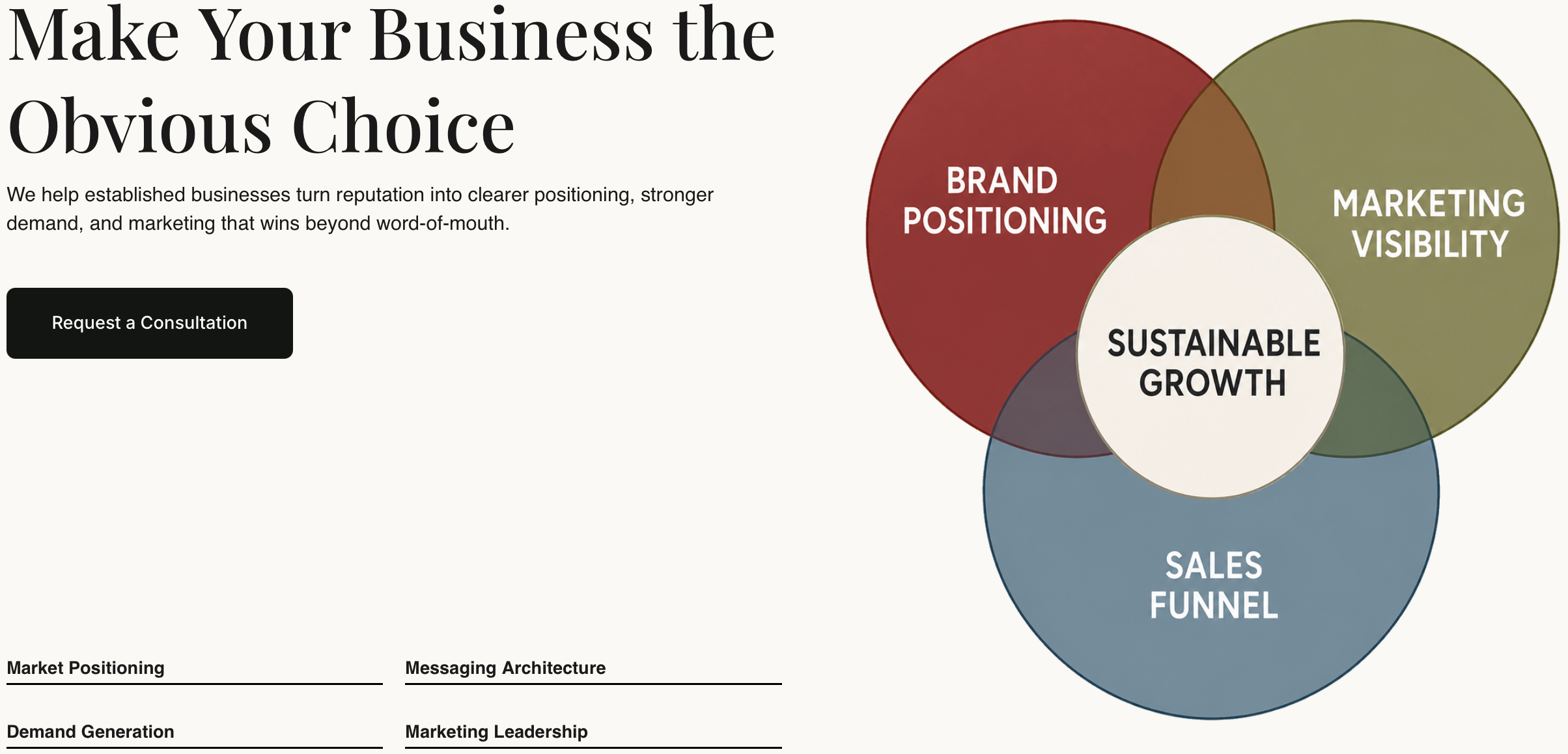
Reasonate Studio’s sales page optimization service is built specifically for founders, coaches, and consultants who want their content to actually close. The service covers offer positioning, messaging clarity, and conversion-focused copy so that the audience your content attracts has a clear, compelling next step. With an 85% client retention rate and results like a 454% sales increase for a health coach, Reasonate Studio brings the same strategy-first approach to every page it optimizes. If your content is working but your revenue is not reflecting it, the sales page is usually where the gap lives.
Content marketing means creating and sharing useful content, such as blog posts, videos, and emails, to attract and build trust with your ideal audience over time, rather than paying to interrupt them with ads.
Content marketing includes blog posts, social media posts, email newsletters, ebooks, webinars, podcasts, and video content, each chosen based on the buyer’s journey stage it targets.
Traditional advertising pays to place a message in front of an audience. Content marketing earns attention by answering existing questions organically, building a long-term relationship rather than driving an immediate transaction.
Content marketing is a long-term strategy. Most businesses see meaningful organic traffic and lead generation improvements within three to six months of consistent, well-researched publishing.
The most meaningful metrics are time on page, email open rates, and inbound inquiry volume. These measure whether your content reaches new people, builds trust, and generates leads, which are the three outcomes that matter most.