September 22, 2026
Why Update Brand Messaging: Essential Guide for Growth


Discover powerful examples of compelling messaging to boost your small business. Learn how top brands communicate effectively to drive action.

TL;DR:
- Effective brand messaging combines authenticity, a clear value, and emotional resonance to motivate audiences. Small businesses succeed by being honest, specific, and focused on outcomes, rather than using vague or overly clever language. Building trust through genuine communication and testing messages across touchpoints helps brands connect and convert.
Compelling messaging is defined as communication that combines radical authenticity, a clear value proposition, and emotional resonance to move an audience toward action. For small business owners and entrepreneurs, finding the right examples of compelling messaging is not a creative exercise. It is a revenue decision. The brands that get this right, from Patagonia to the Sierra Club, share one trait: they say something true, say it clearly, and say it without apology. This article breaks down eight real-world examples, explains what makes each one work, and gives you a direct path to applying the same thinking to your own brand.
Before studying specific campaigns, it helps to understand what separates messaging that converts from messaging that gets ignored. The industry term for this is “brand messaging,” which refers to the full system of language a brand uses to communicate its value, voice, and purpose across every channel. Compelling advertising examples are simply the most visible expression of that system.

Compelling messaging in 2026 is best defined by radical authenticity and directness rather than clever phrases. That shift matters because audiences have grown skilled at detecting when a brand is performing values rather than living them.
Patagonia ran a full-page ad in 2011 telling customers not to buy their jacket. The message was blunt: the product has an environmental cost, and you should only buy it if you truly need it. No brand had done anything like it at that scale.
Patagonia’s revenue grew from $543 million in 2012 to over $1 billion by 2017. That growth came directly from the trust the campaign built. The lesson is not that you should tell people to avoid your product. The lesson is that genuine willingness to sacrifice short-term sales for brand integrity creates the kind of trust that compounds over years.
What small business owners can take from this:
Pro Tip: If you are a service-based business, try telling your audience what you are NOT the right fit for. That kind of honesty attracts better clients and repels the wrong ones.
The Sierra Club faced a classic messaging problem. Climate change felt abstract and distant to most people. Engagement was low. So they reframed the entire conversation.
Instead of leading with environmental crisis, they reframed climate change as the financial burden of rising energy bills. The campaign connected a global issue to a personal, immediate concern: your monthly expenses. Engagement and action rates improved measurably.
This is one of the clearest branding messages examples of how reframing works. The underlying cause did not change. The audience did not change. Only the entry point into the conversation changed, and that shift made all the difference.
What small business owners can take from this:
De Beers created one of the most durable brand key message examples in history with four words. “A diamond is forever” did not describe a product feature. It attached a product to a human emotion: permanent love and commitment.
The most effective slogans are short, emotionally resonant, and easy to understand on first read. De Beers proved that a single phrase, repeated consistently across decades, can redefine how an entire category is perceived. The diamond engagement ring tradition was not a cultural norm before this campaign. The messaging created the norm.
For small business owners, the takeaway is not to aim for a slogan that lasts 70 years. It is to identify the one emotional truth your brand owns and build your language around it.
Dollar Shave Club launched with a video that was direct, funny, and completely clear about its value proposition: good razors, delivered to your door, for a dollar a month. No fluff. No aspirational lifestyle imagery. Just a founder walking through a warehouse explaining exactly what you get and why it is better.
Dollar Shave Club’s wordplay-based messaging clearly communicated value and emotion in a way that felt human and unscripted. The video went viral not because of production quality but because the message was honest and the offer was obvious. Viewers knew exactly what they were buying within the first 30 seconds.
This is a textbook example of effective messaging for an emerging brand. When you are new and unknown, clarity beats cleverness every time.
Pro Tip: Record yourself explaining your offer out loud to a friend who knows nothing about your industry. If they can repeat it back accurately in one sentence, your message is clear enough.
IKEA took a different approach to environmental messaging. Instead of lecturing customers about the planet, they used dark humor and brutal honesty. One campaign personified ocean trash as discarded toys, using edgy, uncomfortable copy to make the problem feel immediate rather than distant.
Sustainability messaging works better when it uses dark humor and brutal honesty instead of lecturing. IKEA understood that guilt-based environmental messaging creates defensiveness. Humor and tangibility create engagement. The brand made the problem feel real without making the audience feel attacked.
For small business owners in any industry, this principle applies directly. If your message makes people feel judged, they will disengage. If it makes them feel seen, they will lean in.
Not every effective messaging example comes from a Fortune 500 company. Luna Tide is a fictional skincare brand used to illustrate how a new business can differentiate through messaging clarity.
Surveying competing skincare brands shows many rely on clinical or luxury messaging. Luna Tide chose a different path: approachable language aligned to audience preferences for transparency and eco-consciousness. The brand did not try to sound like a lab or a luxury house. It sounded like a person who cared about ingredients and the environment, and said so plainly.
The lesson for small business owners is that your messaging does not need to sound like a big brand. It needs to sound like the truest version of what you actually are.
Shopify’s own marketing guidance makes a sharp distinction between how large brands and small brands should approach slogans. Large brands with established recognition can afford abstract or emotional slogans. Smaller brands cannot.
Small and emerging businesses benefit most from literal, clear messaging that explicitly communicates their offer. A new business that leads with an abstract tagline risks confusing potential customers who have no prior context for the brand. Confusion kills conversion. Clarity creates it.
This is one of the most practical pieces of advice for any founder writing their first homepage headline or social media bio. Say what you do. Say who it is for. Say what changes for them when they work with you.
Understanding examples of persuasive writing is useful. Knowing how to build your own system is what actually moves the needle. Here is a direct process for creating brand messaging that fits your audience and your values.
Talk to five to ten of your best customers or ideal clients. Ask them what problem they were trying to solve when they found you, what almost stopped them from buying, and how they would describe your offer to a friend. Their words are your messaging. You are not inventing language. You are listening for it.
These are three different things. Your slogan is a short, memorable phrase. Your positioning is the specific place you occupy in your market relative to alternatives. Your brand promise is the outcome you commit to delivering. Conflating them creates muddy messaging. Keeping them distinct gives you a clear system.
Your brand can be warm, direct, bold, playful, or serious. Pick one primary tone and stay consistent. Inconsistent tone confuses audiences and erodes trust. A messaging framework gives you a repeatable structure so every piece of content sounds like it comes from the same voice.
Your value proposition should answer one question: what changes for your customer after they work with you? Not what you do, but what they get. “I help coaches book more clients” is a value proposition. “I offer marketing services” is a description. The difference is significant.
Strong slogans should answer customer hesitations efficiently. Test your messaging on your homepage headline, your social media bio, your email subject lines, and your packaging or proposals. If a new visitor cannot understand what you do within five seconds, your message needs work.
Pro Tip: Run your homepage headline past someone who has never heard of your business. Ask them to tell you what you do and who you help. If they cannot, rewrite the headline before you run any paid traffic to it.
Two dominant messaging styles define the current landscape for small business owners. Understanding both helps you choose the right approach for your stage and market.
| Approach | Core method | Best for | Risk |
|---|---|---|---|
| Abstract emotional appeal | Connects product to a feeling or identity | Established brands with strong recognition | Confuses new audiences who lack context |
| Radical authenticity | States values and trade-offs plainly | Emerging brands building trust from scratch | Requires genuine structural alignment with stated values |
| Blunt humor | Makes problems tangible through wit | Brands in categories prone to lecturing | Can alienate audiences if tone is misjudged |
| Outcome-focused clarity | Leads with the specific result the customer gets | Service businesses and coaches | Can feel transactional without emotional warmth |
Abstract or performative messaging without structural authenticity fails to generate lasting trust. Customers distinguish between a brand performing values and genuinely living them. That distinction is the difference between a campaign that builds equity and one that creates backlash.
For most small business owners, radical authenticity is the stronger starting point. You do not have the brand recognition to make abstract emotional appeals land. You do have the ability to be genuinely honest about what you do, who you serve, and what you stand for.
Pro Tip: Before committing to a messaging style, ask yourself: “Can I back this up with how I actually run my business?” If the answer is no, the message will eventually ring false.
Most messaging failures come from a small set of predictable mistakes. Recognizing them early saves you months of wasted effort.
The fastest fix for most of these problems is to go back to your audience research. Real customer language almost always outperforms anything a founder writes from inside the business.
The most common mistake I see founders make is treating messaging as a creative problem when it is actually a clarity problem. They spend weeks on taglines and brand colors while their homepage still cannot answer the most basic question a new visitor has: “Is this for me?”
The brands I have seen grow fastest are not the ones with the cleverest copy. They are the ones that got brutally honest about who they serve and what changes for that person. One health coach I worked with went from vague wellness language to a single direct sentence about her specific outcome. Her sales increased 454% after that shift. The offer did not change. The message did.
I also want to push back on the idea that small businesses need to “find their voice” before they can communicate effectively. You already have a voice. It is the way you talk about your work when you are excited about it. The job is to capture that and put it on the page consistently. A solid marketing strategy for small businesses starts with that clarity, not with a mood board.
The brands I admire most, Patagonia included, did not become authentic through better copywriting. They became authentic by making real decisions that aligned with their stated values and then letting their messaging reflect those decisions. Authenticity is structural. Messaging just makes it visible.
— Kaitlyn Cole
Clear, consistent messaging is the foundation of every marketing system that actually works. Without it, social media posts feel scattered, sales pages underperform, and the brand never quite clicks with the right audience.
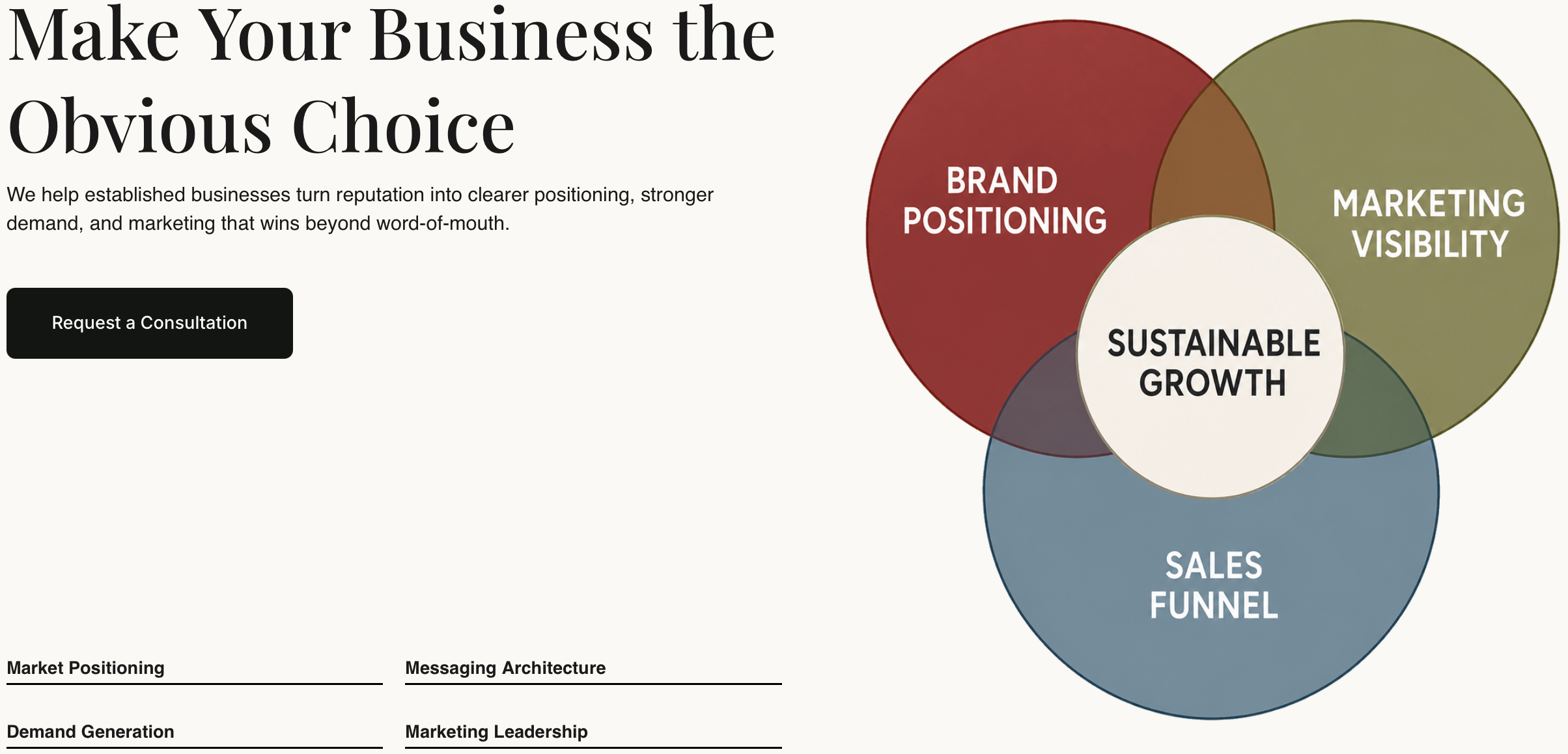
Reasonate Studio works directly with founders, coaches, and consultants to build that foundation from the ground up. The Aligned Impact Model™ starts with brand clarity and audience insight before a single piece of content gets created. From there, the studio’s social media management service puts that messaging into consistent, strategic execution across platforms. For founders whose messaging needs to convert on the page, sales page optimization ensures the words do the work they are supposed to do. If you want messaging that connects and converts, Reasonate Studio is built for exactly that.
Compelling brand messages combine a clear value proposition, emotional resonance, and authenticity. The most effective examples, like Patagonia’s “Don’t Buy This Jacket,” work because they reflect genuine brand values rather than manufactured positioning.
Small businesses should prioritize clarity over creativity. Literal, clear messaging that explicitly states the offer and outcome outperforms abstract slogans for brands without established recognition.
A slogan is a short, memorable phrase. A brand message is the full system of language that communicates your value, voice, and purpose across every channel. Your slogan is one expression of your broader brand message.
Test it at every customer touchpoint, including your homepage, social media bio, email subject lines, and proposals. If a new visitor cannot explain what you do within five seconds of reading your headline, the message needs revision.
Radical authenticity means stating your values, trade-offs, and limitations plainly rather than using aspirational language that is not backed by real business decisions. It is the approach that builds long-term trust and brand equity over time.