September 22, 2026
Why Update Brand Messaging: Essential Guide for Growth


Discover how building a sustainable marketing system can enhance your brand value, drive customer engagement, and ensure growth for founders.
TL;DR:
- Building a sustainable marketing system embeds verifiable claims, owned channels, and documented processes to generate ongoing growth. It connects sustainability directly to customer benefits, builds trust through transparency, and relies on systems that can be consistently audited and improved. Effective execution requires governance, documentation, and visible alignment between operations and messaging to ensure long-term success.
A sustainable marketing system is defined as an operational framework that embeds credible sustainability into brand value, marketing execution, and customer engagement to generate repeatable, compounding growth. This is not the same as running a green campaign or adding an eco-friendly tagline to your website. The distinction matters enormously for founders: sustainable marketing perceptions contribute up to 10% of brand value in top global brands, which means the upside is real and measurable. Building a sustainable marketing system requires governance, documented processes, owned channels, and claims that can be substantiated with operational data. Frameworks like the UN Global Compact’s benchmark study and tools like BrandZ brand equity data confirm that sustainability must be treated as an operating model, not a marketing add-on.
Sustainability drives customer value when it connects directly to what customers already care about: price, quality, convenience, and trust. The standard industry term for this approach is value-integrated sustainability marketing, and it differs sharply from cause-based or compliance-driven messaging. According to research from HBR, customers rarely pay premiums for sustainability alone. Good intentions without a link to customer value produce wasted investment and weak results. This is the first trap founders fall into when they try to build ethical marketing systems.

The more effective path is to position sustainability as a driver of innovation and efficiency that benefits the customer directly. A health coach who reduces packaging waste and passes the savings to clients is practicing value-integrated sustainability. A consultant who moves all client onboarding to digital formats and promotes that as a faster, cleaner experience is doing the same. The sustainability story becomes compelling because it solves a real customer problem, not because it signals virtue.
Green marketing research confirms that consumer behavior follows cognitive, affective, and behavioral pathways. Positive environmental attitudes often fail to translate into purchases due to skepticism, price sensitivity, and access barriers. This means your messaging must do more than inform. It must build emotional resonance and reduce perceived risk at the same time. Affective mediators like green trust and perceived value are what actually close the gap between a customer who agrees with your values and one who buys from you.
Here is what this looks like in practice for small business founders:
Pro Tip: Map your sustainability practices directly to your customer’s top three frustrations. If your ideal client hates slow turnaround times, show how your digital-first, low-overhead model makes you faster. Sustainability becomes a selling point the moment it solves a real problem.
You can explore how to leverage sustainability for growth in more depth as you build out your messaging framework.
The biggest challenge founders face is the gap between ambition and execution. A landmark UN Global Compact and Kantar benchmark study found that 69% of marketers believe their organizations are progressing well in integrating sustainability, but average actual performance sits at only 52%. That 17-point gap is not a motivation problem. It is a systems problem. Founders who feel like they are doing the right things but not seeing results are often experiencing exactly this disconnect.
The study also reveals where the gaps concentrate. Communications and advertising score 56%, and brand strategy scores 54%. But innovation scores only 50%, and cross-functional collaboration scores just 48%. This pattern tells a clear story: most organizations are better at talking about sustainability than at building it into their products, processes, and partnerships.
| Marketing function | Average performance score | Gap from ambition |
|---|---|---|
| Communications and advertising | 56% | Moderate |
| Brand strategy | 54% | Moderate |
| Innovation integration | 50% | High |
| Cross-functional collaboration | 48% | High |
Consumer skepticism compounds the execution gap. When sustainability claims are vague, unverified, or inconsistent with the actual product experience, customers disengage. This is the core risk of greenwashing, and it does not require bad intentions to occur. It happens when marketing moves faster than operations. A founder who promotes sustainable practices before those practices are fully embedded in the business is creating a credibility liability, not a competitive advantage.
Pro Tip: Before publishing any sustainability claim, ask yourself: “Can I prove this with a specific number, process, or third-party reference?” If the answer is no, rewrite the claim as a commitment or goal rather than a present-tense fact. Transparency about where you are headed builds more trust than overstating where you already are.
The path forward requires treating your brand perception as an asset that must be earned through consistent, verifiable action rather than declared through messaging alone.
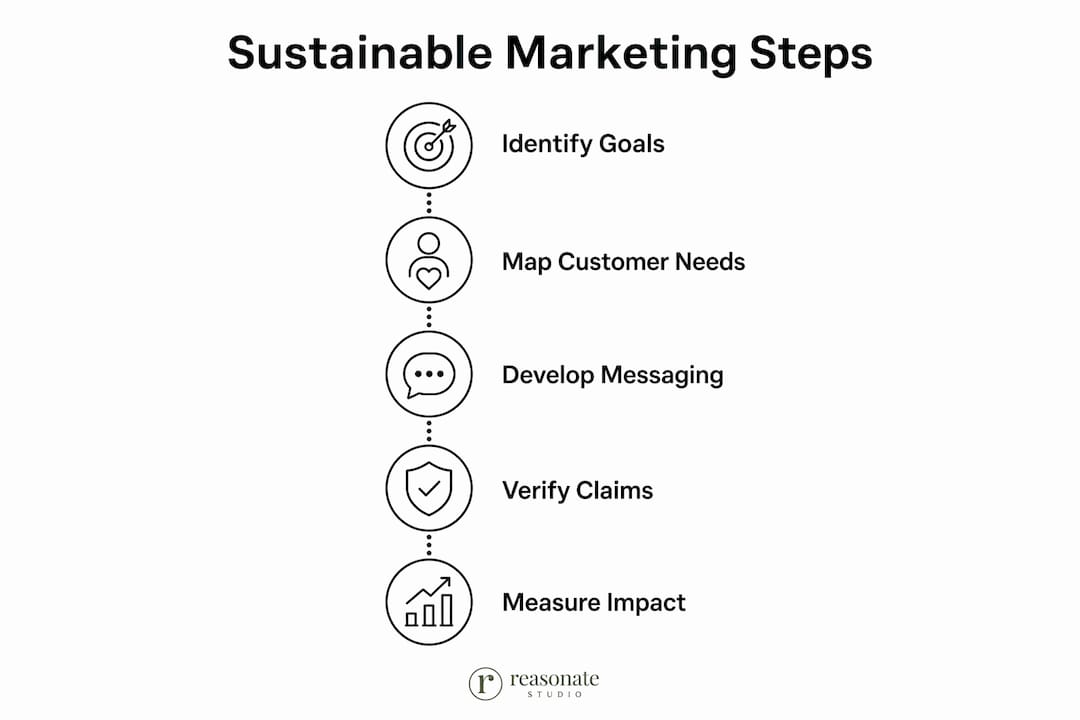
The main difference between a sustainable marketing campaign and a sustainable marketing system is the ability to repeatedly substantiate claims with operational data. A campaign runs once and ends. A system produces verified, repeatable claims that hold up to scrutiny across every channel, every quarter, and every team member. The Sustainability Atlas operational playbook describes a staged maturity path that moves from compliance-driven messaging to verified impact storytelling. Most small business founders are at stage one, which means the opportunity to differentiate by reaching stage two or three is significant.
The governance structure that makes this possible is called a Green Claims Council. This is a cross-functional approval process that involves marketing, product, legal, and supply chain before any sustainability claim goes public. For a solo founder or small team, this does not require a formal committee. It requires a documented workflow that forces you to verify claims before publishing them.
Here is a practical governance structure founders can implement immediately:
Sustainable marketing requires system change beyond campaign tactics. Marketing alone cannot scale claims. The product, the delivery process, and the customer experience must all support what the marketing says. Founders who build this alignment early create a compounding advantage: every verified claim becomes a trust asset that strengthens the brand over time.
Owned channels are the foundation of any long-term marketing system for sustainability. Early-stage founders should prioritize their website and email list before investing in paid advertising. The reason is structural: owned assets compound over time, while paid and social channels stop producing results the moment you stop spending. An email list you built over two years continues to generate revenue even during a slow month. A paid ad campaign ends the day the budget runs out.
This principle is especially important for founders building ethical marketing systems, because sustainability messaging requires depth and context that short-form paid ads rarely deliver well. A well-written email sequence or a detailed blog post can explain your values, demonstrate your process, and build the kind of trust that converts skeptical customers. A 15-second ad cannot.
| Channel type | Compounds over time | Sustainability storytelling depth | Cost to maintain | Best for |
|---|---|---|---|---|
| Website and SEO | Yes | High | Low to medium | Long-form claims, proof points |
| Email list | Yes | High | Low | Nurturing, trust-building |
| Organic social media | Partially | Medium | Medium | Awareness, community |
| Paid social ads | No | Low | High | Short-term traffic spikes |
| Paid search | No | Low | High | Intent-driven conversions |
The right channel marketing strategy for most founders starts with one primary channel based on where your audience is most active and most receptive. Testing one variable at a time, whether that is subject line, posting frequency, or content format, isolates what is actually driving results. Changing multiple variables simultaneously makes it impossible to know what worked.
Pro Tip: If you are unsure which channel to prioritize, look at where your best current clients found you. That single data point is more reliable than any industry benchmark. Build your system around the channel that already works, then expand from there.
For a deeper look at how to allocate resources across channels without overspending, the guide on optimizing your marketing budget walks through a practical prioritization framework for founders.
The most overlooked element of building a sustainable marketing system is documentation. Most founders build institutional knowledge inside their own heads or inside the heads of a freelancer they hired two years ago. When that freelancer leaves, or when the founder steps back from day-to-day execution, the system collapses. This is not a talent problem. It is a transferable intelligence problem.
Forbes Agency Council research confirms that marketing growth requires documented decisions, experiment learnings, and claim substantiation to create continuity regardless of who is running the system. Templates for decision memos, claims notes, and experiment tracking are the practical tools that make this possible. A decision memo does not need to be long. It needs to answer three questions: What did we decide? Why did we decide it? What result did we expect and what did we actually see?
Consider a concrete scenario. A founder runs an Instagram campaign promoting their sustainable sourcing practices. The campaign performs well. Six months later, they hire a social media manager who has no context for why that content worked. Without documentation, the new hire starts from scratch, repeating experiments the founder already ran and potentially making claims that are no longer accurate. With documentation, the new hire inherits a working system and can build on it rather than rebuild it.
Simple templates that every founder should maintain include a content decision log that records what was published and why, an experiment tracker that captures what was tested and what the results showed, and a claims substantiation file that links every public sustainability claim to its supporting evidence. These three documents together form the backbone of a marketing system that compounds rather than resets with every personnel change.
Systemization also protects founders from the common trap of re-learning the same lessons repeatedly. Every experiment you run has value beyond its immediate result. The learning is the asset. Capturing it in a format that others can use is what transforms a founder’s personal knowledge into an organizational capability that scales.
I have worked with founders across dozens of industries, and the pattern I see most often is this: a founder builds a beautiful brand story around their values, launches it with real conviction, and then watches it underperform. Not because the story is wrong, but because the system underneath it is missing.
The uncomfortable truth about sustainable marketing is that it demands more operational rigor than conventional marketing, not less. You cannot just say you are sustainable. You have to be able to prove it, repeat it, and build it into every customer touchpoint. The founders who get this right are not the ones with the most compelling mission statements. They are the ones who treat their marketing like an operating system, with governance, documentation, and a clear feedback loop between what they claim and what they deliver.
I also want to push back on the idea that sustainability marketing is primarily about environmental messaging. For most small business founders, the more relevant definition of sustainable marketing is marketing that sustains itself. That means owned channels that compound, claims that hold up to scrutiny, and systems that do not collapse when a team member leaves. The Aligned Impact Model™ we use at Reasonate Studio is built on exactly this principle: clarity first, then execution, then scale.
The founders who struggle most are the ones who skip the foundation and go straight to tactics. They post every day without a documented strategy. They make claims without a verification process. They switch channels every quarter because nothing seems to be working. The fix is not more effort. It is a system that makes the effort compound.
Start small. Pick one channel. Document everything. Verify every claim before it goes public. Build the governance structure before you need it. That sequence is less exciting than launching a campaign, but it is the only path to a marketing system that actually sustains growth over time.
— Kaitlyn
If this article has clarified what a real marketing system looks like, the next step is building one that works for your specific business, audience, and goals. Reasonate Studio works directly with founders, coaches, and consultants to create marketing systems grounded in brand clarity, verified messaging, and consistent execution.
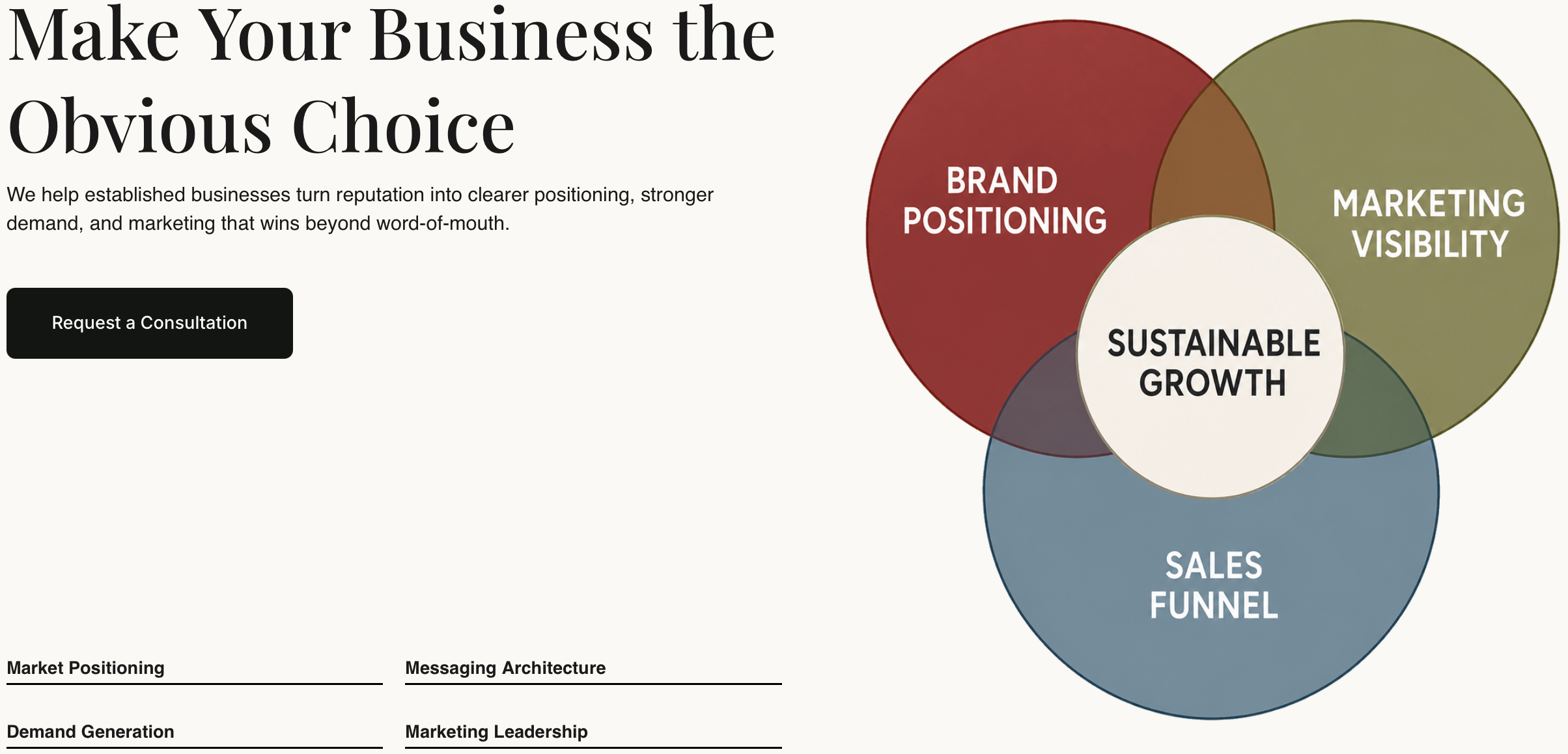
Our social media management service handles the full execution layer, from content strategy and creation to posting, reporting, and audience engagement, so your sustainability story reaches the right people consistently. For founders who need their messaging to convert, our sales page optimization service translates your values and proof points into copy that drives real action. If you are ready to move from scattered tactics to a system that compounds, Reasonate Studio is built for exactly that.
A sustainable marketing system is an operational framework that embeds verified sustainability claims, owned channel assets, and documented processes into a brand’s marketing execution to generate repeatable growth. It differs from a campaign in that it is designed to compound and sustain itself over time.
Positive environmental attitudes frequently fail to translate into purchases due to consumer skepticism, price sensitivity, and access barriers. Effective sustainable marketing must build emotional trust and reduce perceived risk, not just communicate environmental values.
A Green Claims Council is a cross-functional approval process that verifies sustainability claims before they go public, involving marketing, product, legal, and supply chain input. Small business founders can implement a simplified version using a claims library and a three-question approval checklist.
Owned channels like a website and email list are the strongest foundation for long-term marketing systems because they compound value over time while paid channels stop producing results when spending stops. Founders should build owned assets first and expand to other channels once the foundation is solid.
Documented decisions, experiment learnings, and claims substantiation create transferable intelligence that keeps a marketing system functioning through leadership changes, vendor transitions, and team growth. Without documentation, institutional knowledge disappears and founders repeat the same experiments from scratch.