September 22, 2026
Why Update Brand Messaging: Essential Guide for Growth


Discover essential brand voice consistency tips for coaches and small business owners. Build trust and drive revenue with a unified message.
TL;DR:
- Maintaining consistent brand voice across all marketing channels builds trust and increases revenue. Small business owners should develop clear, behavioral voice attributes and a practical style guide to ensure messaging stays on point. Regular audits and a designated voice owner prevent drift, while collaborative input and AI tools can support long-term consistency.
Brand voice consistency is defined as maintaining one clear, distinctive personality across every marketing channel, from your Instagram captions to your sales emails to your homepage copy. Companies with consistent brand presentation see up to 33% higher revenue. That number reflects something real: when your audience hears the same voice everywhere, they trust you faster and buy more readily. For small business owners, coaches, and consultants, brand voice consistency tips are not a luxury. They are the foundation of every marketing decision you make.
Brand voice consistency is the industry term for what most founders call “sounding like yourself” across every platform. The difference between brands that build loyal audiences and those that feel forgettable almost always comes down to this one thing. Your voice is not your logo or your color palette. It is the personality behind every sentence you publish.
The standard industry framework separates voice from tone. Voice is fixed and unchanging; tone adapts to context but never abandons the core voice. Think of it this way: your voice is who you are, and your tone is how you adjust your delivery depending on whether you are writing a sales page or a condolence email. A coach who is direct and warm stays direct and warm everywhere. The warmth might soften in a crisis post, but the directness never disappears.
For small business owners and consultants, the practical challenge is not understanding this concept. It is applying it consistently when you are writing content at 10 p.m. after a full client day, or when you hand copy off to a contractor who has never met you. The tips below solve exactly that problem.
Effective brand voice guidelines limit core attributes to 3–5 to reduce cognitive load for anyone writing in your name. More than five attributes create confusion. Writers start second-guessing every sentence instead of writing with confidence.

The most common mistake founders make is choosing vague aspirational adjectives like “bold,” “authentic,” or “passionate.” These words describe half the brands on the internet. They give writers nothing to work with. Replace them with behavioral attributes that tell a writer exactly what to do.
Here is what a behavioral attribute looks like in practice:
Each attribute needs a “do” column and a “don’t” column. Behavioral voice attributes with concrete do/don’t examples let writers test their copy line by line. That is the difference between a guide that sits in a Google Drive folder and one that actually shapes your content.
Pro Tip: Write one before-and-after example for each attribute. Show a sentence that violates the rule, then show the corrected version. Writers internalize rules faster through examples than through definitions.
The most effective brand voice guides are 5–6 pages, built around use/avoid tables and before/after examples. A 40-page brand bible sounds thorough. In practice, nobody reads it. A tight, visual guide that a new contractor can absorb in two minutes is worth ten times more.
Your guide needs four core components. First, a one-paragraph brand voice summary that captures the personality in plain language. Second, your 3–5 behavioral attributes with do/don’t tables. Third, a vocabulary list: words you always use, words you never use, and words that need context. Fourth, two or three before/after content examples pulled from your real marketing copy.
Keep the guide in a shared folder your whole team can access. Link it in your content briefs. Reference it in onboarding documents for new writers or contractors. A guide that lives only in your head is not a guide. It is a bottleneck.
For a deeper look at brand consistency principles and how they apply to small businesses, the framework transfers directly to your style guide structure.
Brand voice drift is what happens when your Instagram sounds like one person, your emails sound like another, and your website sounds like it was written by a committee in 2019. It happens gradually, and most founders do not notice until a client says, “Your content feels different lately.”
Best practice calls for quarterly audits that pull 20 random pieces of customer-facing content from the last 90 days. The process is straightforward:
High-visibility content like your homepage, flagship campaign emails, and lead magnet landing pages deserves extra attention. These are the pieces your audience sees most often. Off-voice copy in these locations does the most damage to trust and recognition.
The audit also tells you when your voice has genuinely evolved. Sometimes drift is not a mistake. It is growth. The audit gives you the data to decide which is which.
Assigning one content lead as the final authority on brand voice prevents the single most common cause of voice dilution: committee decisions. When three people each have equal say over whether a sentence sounds “on brand,” the result is always a compromise. Compromises produce generic copy.
The voice owner does not have to write everything. Their job is to make the final call on borderline copy and to keep the guidelines current. For most small businesses and solo consultants, this is the founder. For growing teams, it might be a content lead or a brand strategist.
Without a single owner, brand voice dilutes over time through consensus. Every person who touches the copy adds a small adjustment. Each adjustment feels minor. Over six months, the cumulative effect is a voice that sounds like no one in particular.
Give this person explicit authority. Put it in writing. When a contractor or team member asks “does this sound right?”, there should be one person who answers that question. That clarity protects your voice at scale.
Cross-team collaboration in creating voice guidelines increases adoption and makes the guidelines more practical. When only the marketing team writes the voice guide, it often misses the language your customer service team uses every day or the objections your sales conversations surface constantly.
Involving your customer service team, your sales function, and your product or delivery team produces richer guidelines. These teams hear your clients talk. They know which phrases land and which ones confuse people. That knowledge belongs in your voice guide.
Practical ways to build collaboration into the process:
For small teams and solo consultants, “cross-team” might mean your VA, your copywriter, and your social media manager. The principle holds. Anyone who writes in your name should have a seat at the table when the voice guidelines are built.
AI content tools like ChatGPT and Claude can produce on-voice content, but only if you give them explicit, structured prompts that reference your specific voice rules. Vague commands like “write in my brand voice” produce generic output. The AI has no idea what your brand voice is unless you tell it precisely.
A structured AI prompt for voice-consistent content includes:
AI-generated content requires exact voice pillars and review checkpoints to stay consistent across drafts. Build a two-step review into your AI workflow. First, run the AI draft against your voice attributes yourself. Second, if a contractor is using AI, require them to submit a voice-check note alongside the draft explaining how they verified alignment.
AI speeds up production. It does not replace the judgment of someone who knows your brand deeply. Use it as a drafting tool, not a final authority.
Pro Tip: Paste your full voice guide into the system prompt of your AI tool. Every session starts with the AI already briefed on your voice rules, which cuts editing time significantly.
Consistent brand messaging does not mean using identical copy on every platform. It means the same personality shows up whether someone reads your LinkedIn post, opens your welcome email, or lands on your sales page. The format changes. The voice does not.
Map your voice attributes to each channel you use. For example, if “direct” is a core attribute, a direct LinkedIn post leads with the main point in the first line. A direct email subject line skips the teaser and states the benefit. A direct sales page opens with the outcome, not the backstory. The attribute stays constant. The execution adapts to the platform’s norms.
The channels where voice drift happens most often are automated emails and social media captions. Automated sequences get written once and forgotten. Social captions get written fast under deadline pressure. Both deserve the same voice check as your homepage copy. Schedule a specific review of your automated email sequences at least twice a year. Treat them as living documents, not set-and-forget assets.
For a practical brand messaging checklist that covers channel-by-channel application, the framework maps directly to this kind of cross-channel audit.
Brand voice consistency builds recognition the same way compound interest builds wealth. Each on-voice piece of content adds a small deposit to your audience’s memory. Over months, those deposits accumulate into something powerful: your audience recognizes your content before they see your name.
This recognition translates directly to trust. Audiences trust brands that feel predictable in the best sense. They know what to expect. They know the personality behind the words. That familiarity lowers the psychological barrier to buying. It is why long-term clients often say they felt like they knew a founder before they ever booked a call.
The reverse is also true. Inconsistent voice creates cognitive friction. When your email sounds like a corporate newsletter and your Instagram sounds like a best friend, your audience cannot form a clear picture of who you are. That confusion costs you clients who were close to converting. Understanding why brand voice matters for revenue is the first step toward treating it as a business priority rather than a creative preference.
The most common mistake I see founders make is building a voice guide that is too abstract to use. They spend hours writing beautiful language about their brand’s “essence” and “energy,” and then hand it to a writer who has no idea what to do with it. The guide gets ignored. The voice drifts. The founder blames the writer.
The guide is the problem, not the writer. If your voice attributes cannot be tested against a single sentence, they are not attributes. They are aspirations. I push every client to write their guide with one question in mind: could a freelancer who has never met me use this to write a caption that sounds exactly like me? If the answer is no, the guide needs more specificity.
The second thing I have learned is that voice ownership matters more than most founders expect. When I work with a client who has a team, the first thing I ask is: who has final say on whether copy sounds right? If the answer is “we all kind of weigh in,” I know exactly where the drift is coming from. One person. One final call. That is the rule.
The third lesson is about tone flexibility. Your voice should be stable. Your tone should move. I have seen founders get so rigid about their voice that they write a grief-adjacent post in the same upbeat register as a product launch. That is not consistency. That is tone-deafness. The goal is a voice that feels like you in every context, not a voice that ignores context entirely. Embrace the range. Just keep the core.
— Kaitlyn
Building a consistent brand voice is one thing. Making sure that voice shows up on a sales page that actually converts, or in SEO content that reaches the right audience, is where most founders get stuck.
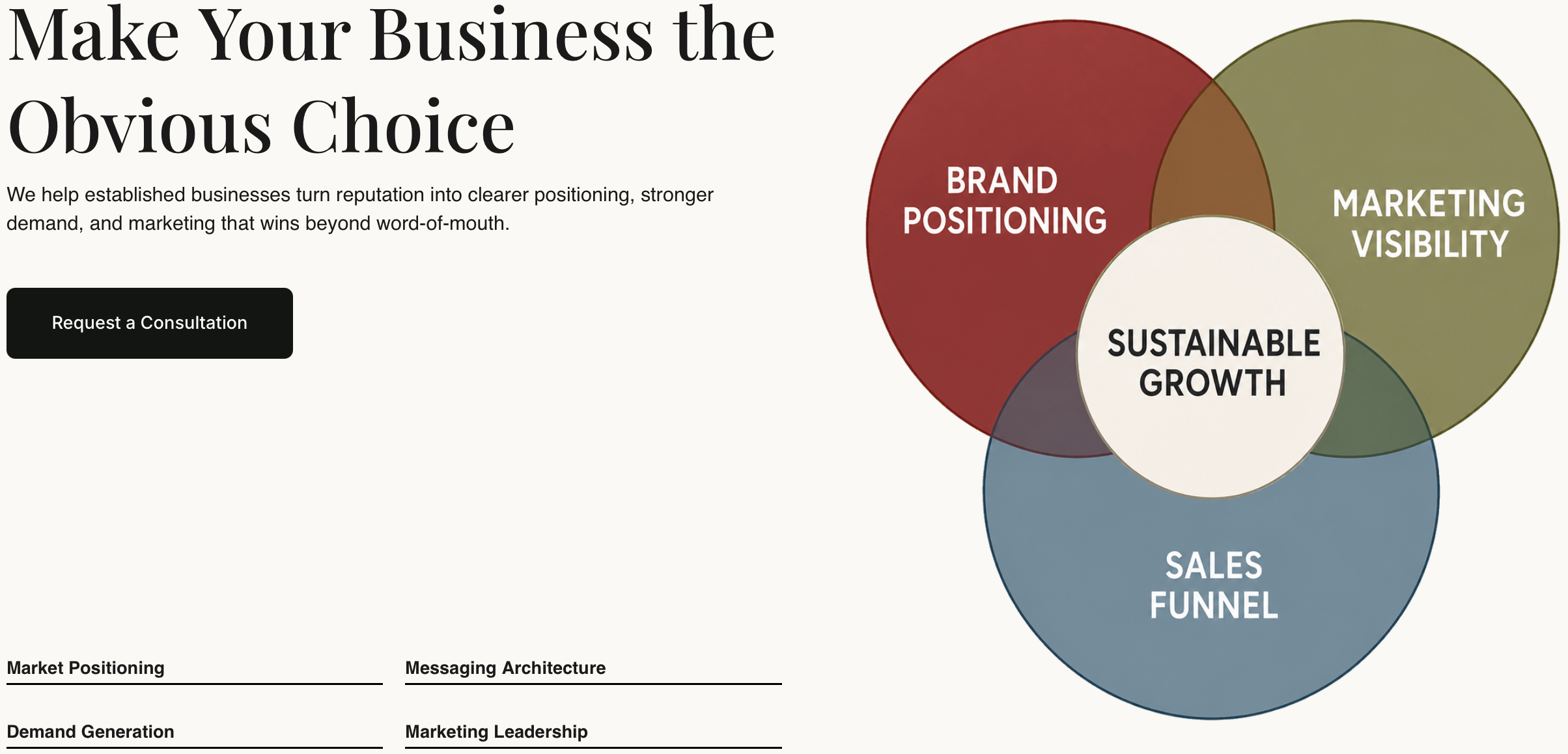
Reasonatestudio works directly with founders, coaches, and consultants to develop brand voice frameworks and apply them across the marketing channels that drive revenue. From sales page optimization that aligns your copy with your voice and your offer, to SEO keyword research that finds the exact language your ideal clients use, every service is built inside the Aligned Impact Model™. If your voice is clear but your marketing is not converting, that is the gap Reasonatestudio closes.
Brand voice consistency is the practice of maintaining one unified personality and communication style across all marketing channels. It ensures your audience recognizes and trusts your brand regardless of where they encounter it.
Effective brand voice guidelines use 3–5 core attributes to keep guidelines practical and easy to apply. More than five creates confusion for writers and dilutes the distinctiveness of the voice.
Quarterly audits reviewing 20 random pieces of recent customer-facing content are the recommended standard. This cadence catches drift early before it becomes a pattern.
Voice is fixed and unchanging; tone adapts to context while staying aligned with the core voice. Your voice is who you are as a brand; your tone is how you adjust your delivery for different situations.
Structured prompts that reference specific voice rules are required for AI tools to produce on-voice content. Include your voice attributes, sentence length guidelines, vocabulary restrictions, and a before/after example in every prompt.