September 22, 2026
Why Update Brand Messaging: Essential Guide for Growth


Discover what a creative strategist is and why marketers need one to bridge data and creativity effectively for impactful advertising.
A creative strategist is the person in a marketing or advertising team who decides what ads to make and why. Not what they look like. Not what the copy says word for word. But which angle to test, which audience segment to target, and what emotional hook is most likely to convert. Think of the role as a bridge between raw performance data and the creative teams who actually build the work.

This is a hybrid position, and that is what makes it genuinely hard to fill. A strong creative strategist reads ad account data with statistical rigor, generates testable hypotheses from that data, and then writes clear briefs for designers, copywriters, and video editors. They are not the creative director making final visual calls, and they are not the media buyer managing spend. They sit between those two functions and own the logic that connects them.
In the US, demand for this role is strongest at marketing agencies, digital advertising firms, and direct-to-consumer brands running paid social campaigns on Meta, TikTok, and Google Ads. Key deliverables include:
If you want a deeper look at how creative strategy in marketing shapes long-term brand growth, that context is worth reading alongside this role breakdown.

The daily work is less glamorous than the title suggests, and that is a good thing. Creative strategists spend a large portion of their time in ad account dashboards, pulling performance data and looking for patterns. Which hooks are losing steam? Which audience segments are responding to emotional versus rational appeals? What does the data suggest about the next angle worth testing?
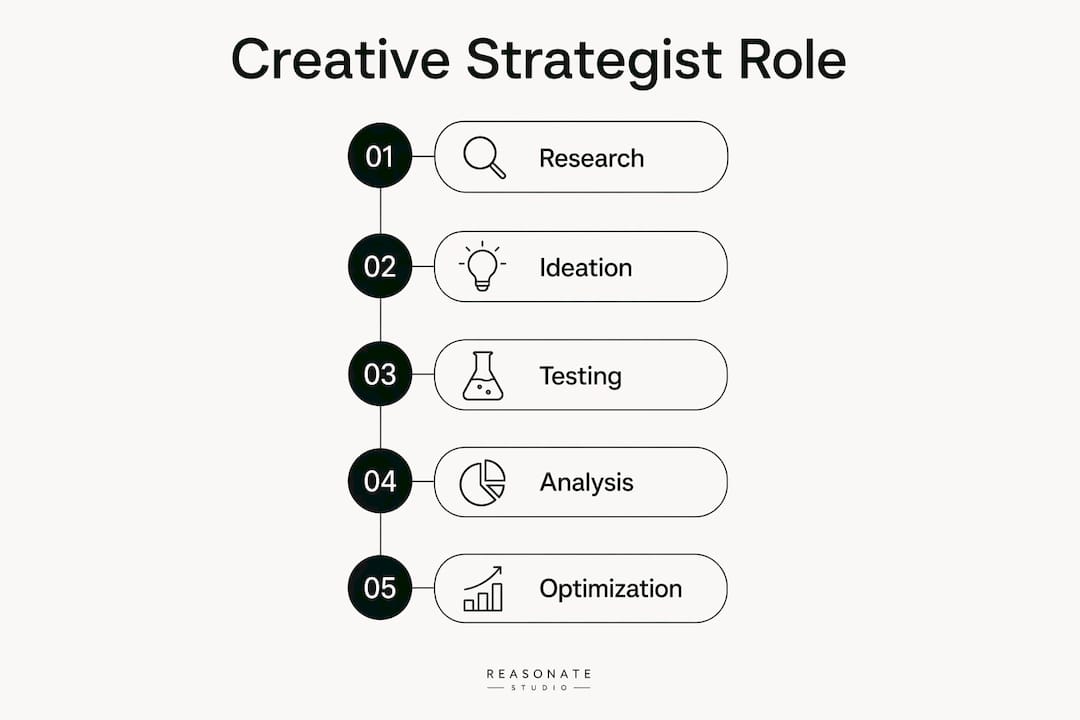
From that analysis, they generate hypotheses. Not vague hunches, but specific, falsifiable predictions: “A testimonial-format video targeting a specific demographic who have searched for this category is predicted to outperform the current lifestyle creative on cost per acquisition.” That specificity is what separates a useful brief from a generic one.
The brief then goes to the production team. A weak brief produces multiple generic versions that all perform about the same. A detailed brief, one that specifies the segment, the message, the hook, the format, and the success metric, gives designers and copywriters something concrete to execute against. After the creative runs, the strategist measures results, identifies what worked, and feeds those learnings back into the next cycle. Common tools and methods in this workflow include:
The role does not own execution on either the creative or the media side. It owns the testing system that connects them, which means the strategist is accountable for portfolio-level performance, not just individual assets.
Most people who succeed in this role come from one of three backgrounds: copywriting, marketing analytics, or creative production. What they share is a willingness to develop the skills they did not start with. A great copywriter who has not developed data literacy may limit their growth. Similarly, analysts who cannot write compelling briefs may struggle to effectively collaborate with creative teams.
The core skill set breaks down into three areas that the best strategists hold simultaneously:
Familiarity with paid social platforms is close to non-negotiable for most US roles. Degrees in marketing, communications, or data analytics are common but not always required. Certifications from Meta Blueprint or Google Skillshop can strengthen a portfolio, especially for candidates without agency experience. Soft skills matter too: comfort with uncertainty, the ability to form a strong opinion before the data is conclusive, and the discipline to run clean tests rather than changing multiple variables at once.
Most creative strategists do not start in the role. They arrive from adjacent positions and develop the full skill set over time. Common entry points include junior copywriting roles, social media coordination, media planning, and marketing analytics. What matters more than the starting point is the pattern of development.
The career path typically looks like this:
Salaries in the US vary widely by company stage and geography, with growth-stage companies and agencies focused on paid acquisition generally offering higher compensation. Roles in major cities tend to pay above the national average.
Building a portfolio matters more than most people expect. Document your tests. Record your hypotheses and their outcomes. Show the feedback loop in action, not just the final creative. Hiring managers at performance-focused agencies want to see that you understand the system, not just that you can write a good headline. Staying current with AI tools is increasingly part of the job, which brings us to where the role is heading.
AI has not replaced creative strategists. It has changed what they spend their time on, and that shift is significant. Research that used to take hours, competitive creative analysis, audience sentiment scanning, trend identification, now happens in minutes with the right tools. First-draft briefs can be generated from a prompt. The grunt work is largely automated.
What AI cannot do is make the judgment call. Choosing which emotional angle will resonate with a specific audience, at a specific moment, in a specific format, requires the kind of contextual reasoning that comes from experience and pattern recognition. That is where the strategist’s value has concentrated. The role has moved from producing many drafts to making informed strategic bets on emotional resonance.
This shift also creates a new risk. Strategists who lean too heavily on AI-generated outputs without applying their own judgment produce generic creative that blends into the feed. The briefing bottleneck, where a strategist cannot form a defensible opinion fast enough to keep the testing cycle moving, is now one of the most common failure points in performance creative teams.
Pro Tip: Use AI tools like ChatGPT or Claude to accelerate your research and first-draft brief writing, but always pressure-test the output against your own read of the data. The AI will give you options. Your job is to pick the right one and defend it.
The strategists who thrive in this environment are the ones who treat AI as a research assistant, not a decision-maker. They use it to move faster through the early stages of the process, then apply their own judgment at the point where the creative direction gets set.
Creative strategy does not exist in a vacuum. The frameworks that make it work, structured briefs, falsifiable hypotheses, direct client engagement, are the same principles that separate effective marketing from expensive noise.
Reasonate Studio applies this thinking through the Aligned Impact Model™, a proprietary framework built around three pillars: brand foundation, audience insight, and message development. Every creative decision flows from that foundation, which is why the results tend to be measurable rather than vague. The studio has delivered a 636% jump in Instagram profile visits for a travel agency, a 283% order increase in 30 days for a consumer brand, and a 454% sales increase for a health coach.
What makes that kind of outcome possible is the same thing that makes a strong creative brief work: specificity. Kaitlyn works directly with each client rather than handing them off to a junior account manager, which means the strategy stays grounded in the actual business, not a generic template. The social media management work Reasonate Studio does for founders and coaches reflects this same principle: every post, every caption, and every campaign concept connects back to a clear strategic intent.
For founders who want that level of clarity applied to their own brand, Reasonate Studio’s Brand Audit Report is a practical starting point. It includes a strategy workshop, a social media audit, a message and story review, and quick-win recommendations, currently offered at no cost for a limited time.
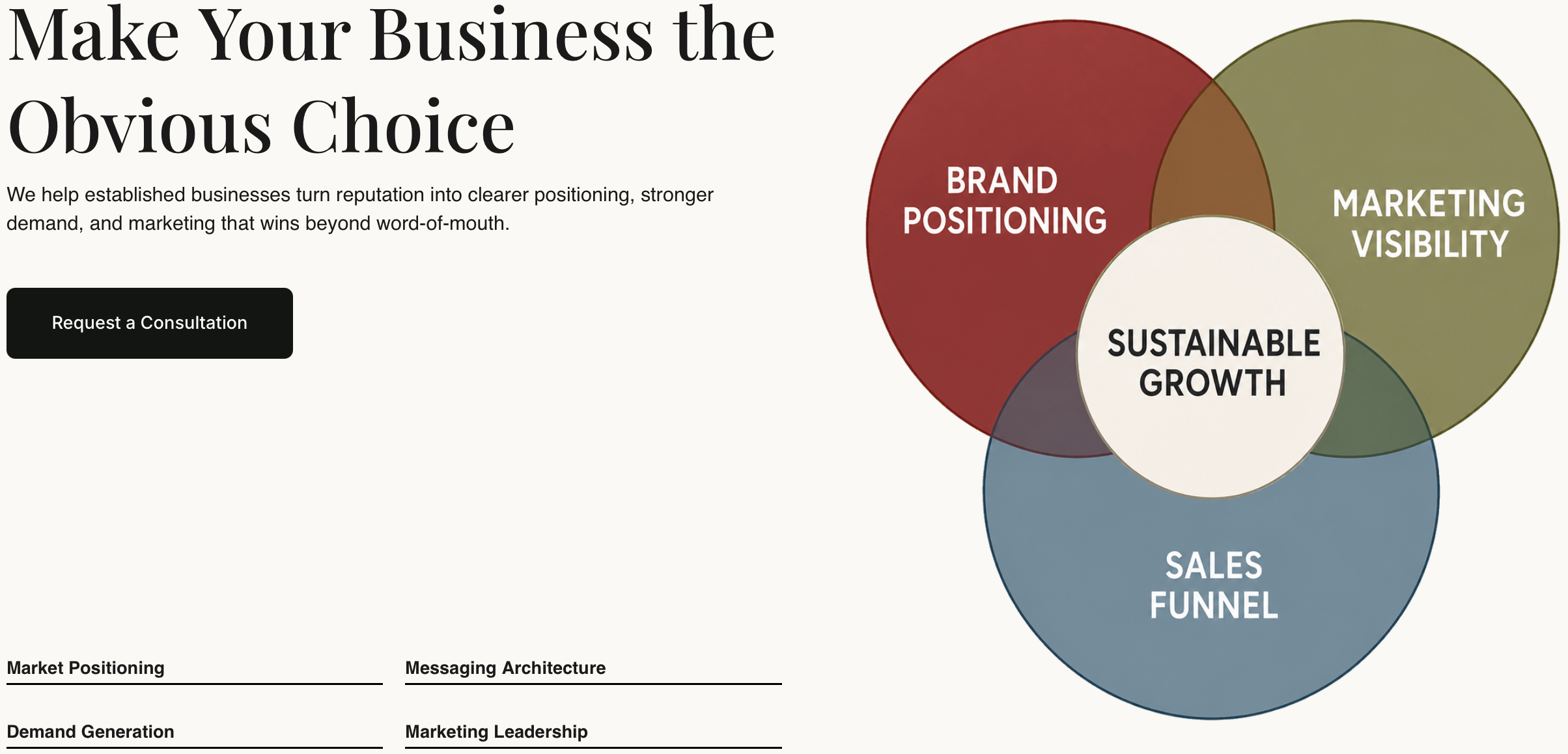
If you are ready to move from scattered marketing to a brand that shows up with intention and converts with consistency, work with Reasonate Studio and see what a strategy-first approach actually looks like in practice.