September 22, 2026
Why Update Brand Messaging: Essential Guide for Growth


Discover how to streamline marketing for your small business effectively. Boost efficiency, reduce stress, and drive growth with our expert tips!
TL;DR:
- Streamlining marketing helps small businesses achieve sustainable growth through automation and organized workflows.
- Starting with existing tools, clear goals, and process audits enables efficient, scalable marketing systems before adopting advanced AI solutions.
If you are a small business owner who has ever felt like marketing is eating your entire week without showing much in return, you are not alone. Learning how to streamline marketing is one of the highest-leverage moves you can make for sustainable growth, and most entrepreneurs wait far too long to address it. The problem is rarely effort. It is scattered processes, disconnected tools, and a workflow that demands your constant attention instead of running with any kind of rhythm. This guide walks you through exactly how to fix that, step by step, without requiring a massive budget or a full marketing team.
Before you touch a single automation tool or rethink your content calendar, you need a clear picture of where your marketing actually stands. Skipping this step is where most small business owners waste months. They buy a new tool, set it up halfway, and then wonder why nothing improved.
Start by writing down every marketing task you or your team does in a given week. Email newsletters, social posts, follow-up messages, blog drafts, ad management. All of it. What you will almost certainly discover is that a meaningful chunk of that list is repetitive and manual, meaning it is a candidate for automation or delegation.
Next, get specific about your marketing goals. Not vague goals like “get more clients” but measurable ones: increase email list by 200 subscribers in 90 days, reduce time spent on social media from 8 hours a week to 3, or improve email open rates from 22% to 30%. When your goals are that clear, you will know which processes to prioritize fixing first. A well-built marketing strategy foundation makes every efficiency decision downstream much easier to make.
Once you have your task list and your goals, audit your tools. You might be surprised how many you are paying for without fully using. Only 49% of marketing tools are actively used across companies, and martech already represents 22% of total marketing spend. That is a serious amount of budget going to waste.
Here is a quick reference table to help you match common marketing functions with the right category of tool:
| Marketing Function | Tool Category | Examples |
|---|---|---|
| Email marketing and sequences | Email automation platform | Mailchimp, ConvertKit, ActiveCampaign |
| Social media scheduling | Social scheduling tool | Buffer, Later, Metricool |
| Lead tracking and follow-up | CRM (Customer Relationship Management) | HubSpot, Zoho CRM, Dubsado |
| Content planning and collaboration | Project management | Notion, Trello, Asana |
| Analytics and reporting | Analytics dashboard | Google Analytics, Databox |
Pro Tip: Before buying anything new, spend one hour inside the tools you already own. Most email platforms and CRMs have automation features that businesses never activate. Turn those on before adding more tools to the stack.
Once you know what your current processes look like and which tools you have available, it is time to put a better system together. The framework that works best for small businesses follows a specific layering order, and the sequence matters more than most people realize. Effective automation layers begin with email sequences, move to social scheduling, then lead nurturing, then CRM automation, and finally content distribution. Each layer builds on the one before it.
Here is a numbered sequence you can follow to increase marketing efficiency without overwhelming yourself or your team:
Set up your email welcome sequence first. Every new subscriber should receive an automated series of 3 to 5 emails that introduces your brand, delivers value, and moves them toward a first purchase or consultation. This is the highest-return automation a small business can run and it takes a few hours to set up.
Schedule your social media in weekly batches. Stop posting in real time every day. Dedicate two to three hours on one day each week to creating and scheduling all your social content. This alone can reclaim 5 or more hours per week.
Connect your email platform to your CRM. This integration is where things get genuinely powerful. Email-CRM integration creates real-time engagement scoring and personalized nurture triggers that give you a clearer picture of who is close to buying and who needs more time. It also means leads stop falling through the cracks.
Build behavior-triggered nurture sequences. Instead of sending the same email to everyone on your list, use simple logic to send different messages based on what people click or ignore. Someone who clicks a pricing link gets a different follow-up than someone who reads a how-to blog post. This keeps your marketing feeling personal even as it scales.
Automate your lead intake process. If someone fills out a contact form on your website, they should receive an immediate confirmation email, get added to your CRM, and be tagged for follow-up automatically. No more manual copy-paste work.
Repurpose and distribute content systematically. Once you publish a blog post or record a video, create a written process for how that piece of content gets turned into social posts, email content, or short clips. Document it and follow it every time.
Build a simple campaign calendar. Plan your promotions, launches, and seasonal pushes at least 60 days out. When you know what is coming, you can build assets in advance rather than scrambling last minute.
One specific example worth looking at: a health coach who manually sent every onboarding email and follow-up message individually. After setting up a five-email welcome sequence and connecting her email platform to her CRM, she reclaimed roughly six hours per week. That time went into client work instead, which directly affected her revenue. The change was not complicated. It just required committing one focused afternoon to set it up.
AI and automation working together can shrink campaign launch timelines from weeks to hours while also maintaining compliance guardrails. But note: AI only amplifies what is already there. If your processes are disorganized, AI will speed up the chaos.

Pro Tip: Use trigger-based logic for your nurture sequences even if it feels technical at first. Start with just two paths: one for people who clicked a link and one for those who did not. That single fork in the road will immediately make your emails feel more relevant to each subscriber.
Getting your marketing processes in better shape is genuinely achievable, but there are a handful of mistakes that trip up even experienced entrepreneurs. Knowing what to watch for puts you well ahead of the learning curve.
Here are the five most common mistakes and what to do instead:
Optimizing before you have a strategy. Efficient execution of a bad strategy just gets you to the wrong destination faster. Before you build any automation, confirm your messaging, your offer, and your audience are clearly defined. Efficiency only pays off when the underlying direction is correct.
Buying too many tools. Tool overload is real. When your stack has six platforms that only partially talk to each other, nothing works well. Pick the smallest combination of tools that covers your core needs, and use each one fully before adding another.
Ignoring data quality in your CRM. Automation is only as good as the data it runs on. If your CRM has duplicate contacts, missing fields, or inconsistent tagging, your automated sequences will misfire. Spend thirty minutes each month cleaning your list.
Skipping workflow documentation. If the only person who knows how something works is you, you have created a single point of failure. Write down every marketing process in a simple SOP (standard operating procedure), even if it is just a one-page document. This also makes it far easier to hand tasks off to a contractor or assistant later.
Chasing AI tools before the foundation is in place. Marketing leaders often underestimate how much operational and process redesign is needed before AI delivers real returns. Teams that build solid automation workflows first see twice the AI ROI of those who skip that step. AI is not a shortcut around process. It is an amplifier of process.
Keeping your brand message consistent across automated touchpoints is also something that deserves real attention. When emails, social posts, and ads all sound like they came from different brands, trust erodes. Document your brand voice in a short reference guide and build it into your templates before you automate anything.
Making changes to your marketing workflow without measuring what happens afterward is a bit like renovating your kitchen and never cooking in it. You need feedback to know what is actually working.
The most useful metrics to track after you start working to improve marketing efficiency are not always the flashiest ones. Here is a practical tracking framework:
| Metric | What it tells you | Recommended tool |
|---|---|---|
| Email open rate and click rate | Whether your messaging resonates with your list | Your email platform’s native analytics |
| Lead response time | How quickly new leads are being followed up with | CRM activity reports |
| Campaign turnaround time | How long it takes to build and launch a campaign | Project management tool time tracking |
| Cost per lead | How efficiently your spend is generating new prospects | Google Analytics + ad platform data |
| Customer acquisition cost (CAC) | The true cost of winning one new client | Spreadsheet or CRM reporting |
| Engagement rate by channel | Which platforms are actually driving interaction | Social analytics dashboard |
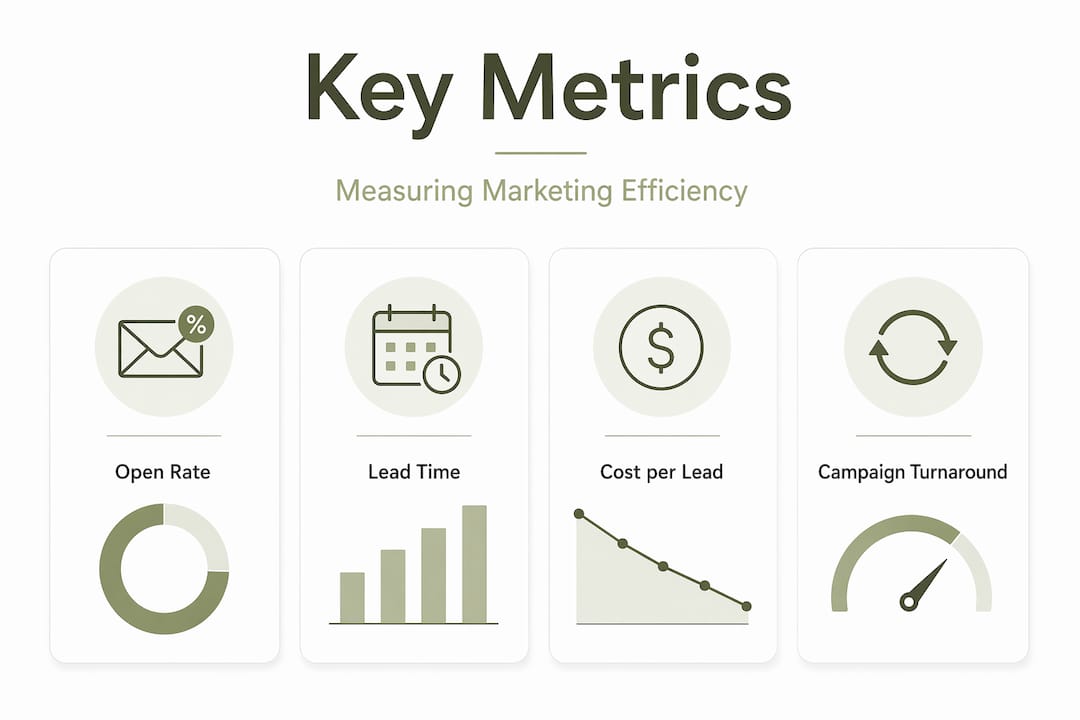
When reviewing these numbers, look for trends over 30 to 90 day periods rather than reacting to single-week fluctuations. A drop in one week might mean nothing. A consistent downward trend over six weeks is a signal worth acting on.
Clear attribution methodology with consistent definitions agreed upon at the leadership level prevents biased budget decisions and keeps your marketing investment tied to real outcomes. Even for a solo founder, this principle applies. Decide in advance what counts as a conversion, what counts as a qualified lead, and stick to those definitions so your data stays comparable over time.
For a deeper look at how to connect your efficiency improvements to actual revenue outcomes, the guide on marketing ROI strategies for small businesses is worth reading alongside this one.
Revisit your metrics every month and ask one focused question: what single change would have the biggest positive impact on this number? That discipline of small, data-informed improvements compounds significantly over a year.
I have worked with founders who come to me frustrated that their marketing “is not working” after they bought a new AI content tool, set up a chatbot, and signed up for three new platforms. And almost every time, the problem is not the tools. It is the absence of a clear foundation underneath them.
Here is what I have learned after working with over a hundred small businesses: marketing organizations that prioritize operational automation maturity are twice as likely to see positive AI ROI. That is not a minor edge. That is a fundamental difference in outcomes. And yet the instinct for most entrepreneurs is to skip straight to AI features because they sound more exciting than setting up a welcome email sequence.
The unsexy truth is that a well-built five-email welcome sequence, a clean CRM, and a scheduled social calendar will outperform an AI content tool dropped into a disorganized system every single time. Marketing leaders who build automated workflows before deploying AI consistently see returns that those skipping the foundational work simply do not.
What I encourage every founder I work with to do is build organizational muscle memory around automation first. That means running consistent weekly rhythms, documenting processes, and empowering whoever touches your marketing (even if that is just you) to identify where manual work is still hiding. Once that habit is in place, adding AI tools on top of it produces dramatically better results. The foundation does not have to be perfect. It just has to exist.
— Kaitlyn
If this guide gave you a clearer picture of where your marketing processes need attention, Reasonate Studio is ready to help you put it all into practice. Whether you need sharper visibility in search results through SEO keyword research and on-page SEO optimization, or you want to turn more website visitors into paying clients through sales page optimization, we bring both the strategy and the execution to the table.
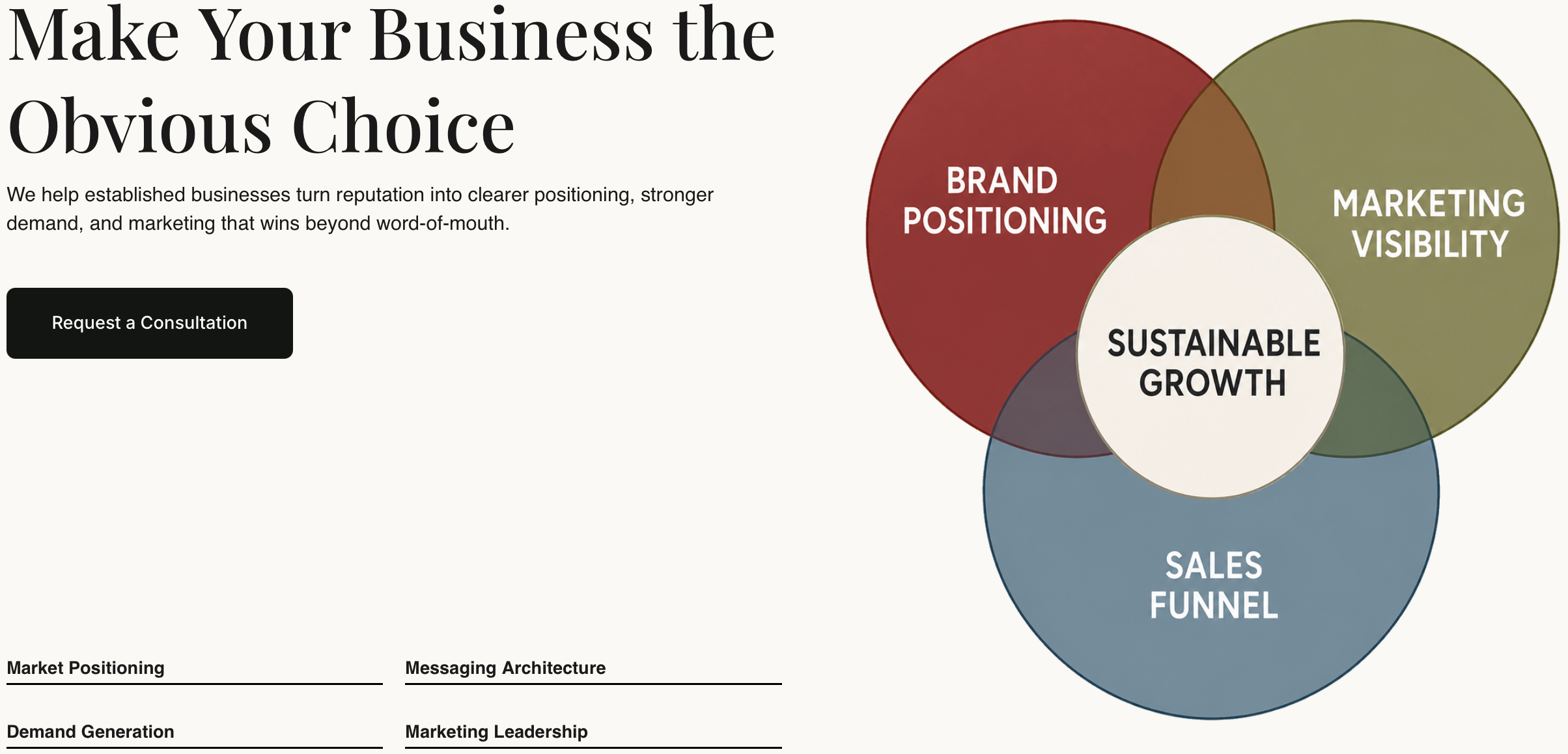
At Reasonate Studio, we work directly with founders, coaches, and consultants who are ready to stop piecing together their marketing and start building something that works consistently. Our done-for-you model handles the heavy lifting so you can stay focused on what you do best. If you are ready to move from scattered to strategic, we would love to show you what is possible.
Streamlining marketing means simplifying and organizing your marketing processes so they run more efficiently with less manual effort. For small businesses, this typically involves automating repetitive tasks, connecting tools so data flows between them, and focusing on a clear strategy rather than scattered tactics.
Start with your email welcome sequence and social media scheduling before anything else. These two automations deliver the highest time savings and require the least technical setup, making them the right entry point for most small business owners.
Track metrics like email open rates, lead response time, campaign turnaround time, and cost per lead over 30 to 90 day periods. Consistent attribution methodology agreed upon in advance gives you data you can actually trust and act on.
Most small businesses can run effectively with three to four core tools: an email automation platform, a CRM, a social scheduling tool, and an analytics dashboard. Only 49% of marketing tools get actively used, so fewer tools used well will always beat more tools used poorly.
AI can genuinely help, but only after foundational automation is in place. AI should augment existing automated workflows rather than replace manual workflows upfront. Build your processes first, then use AI to amplify what is already working.