September 22, 2026
Why Update Brand Messaging: Essential Guide for Growth


Learn how creative direction turns strategy into a consistent brand experience, helping founders build recognition, trust, and sustainable growth.
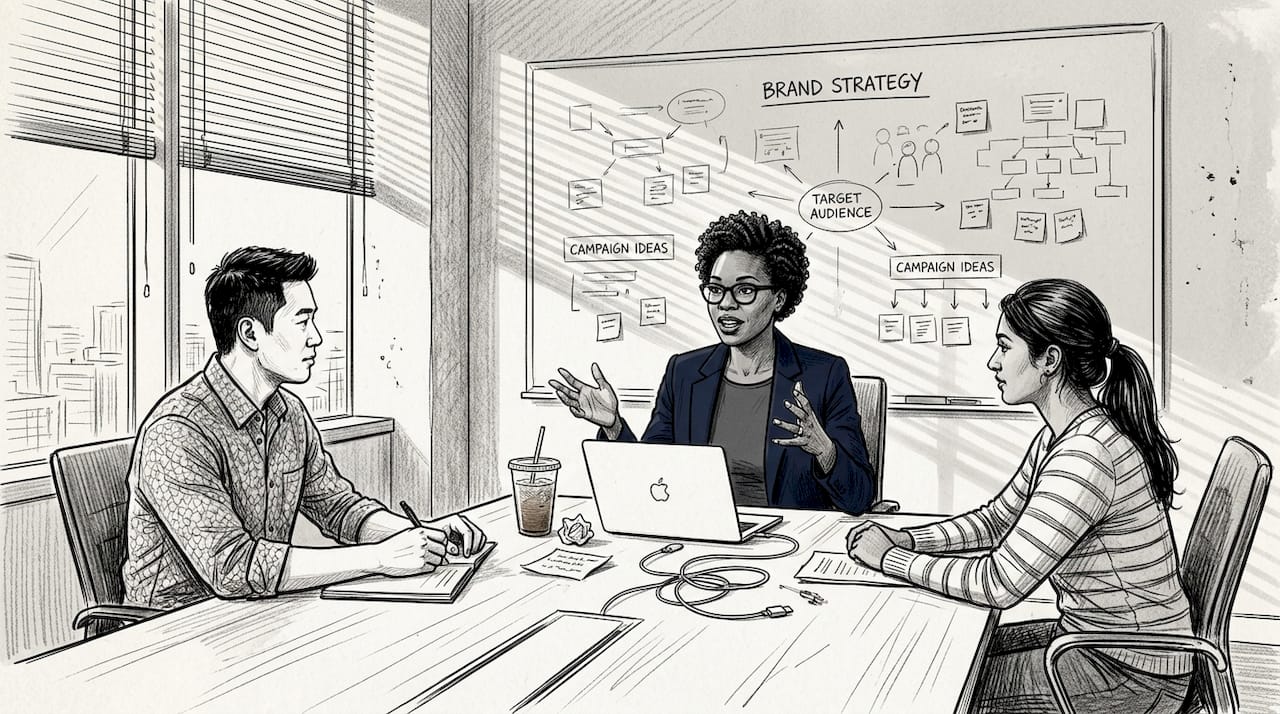
Most founders believe creative direction is about making things look polished. That is a costly mistake. Real creative direction is the strategic vision that shapes every brand touchpoint, from your Instagram captions to your sales page headlines. When you get it right, you stop creating random content and start building a brand that attracts the right clients, commands premium pricing, and grows without burning you out. This guide will show you what creative direction actually is, how it differs from art direction, and how Texas founders and coaches can use it to build sustainable growth.
| Point | Details |
|---|---|
| Vision guides growth | Creative direction establishes a strategic vision that ensures every brand move supports long-term business goals. |
| Roles are distinct | Creative direction and art direction serve different purposes—confusing them can cost you clarity and results. |
| Data and AI are essential | Modern creative direction leverages analytics and AI for smarter, more effective brand-building. |
| Storytelling drives loyalty | Clear creative direction delivers powerful brand stories that foster deeper customer connections. |
| Anyone can start strong | Texas entrepreneurs and coaches can build a robust creative direction using simple frameworks and focused effort. |
Creative direction is the strategic vision that defines how your brand shows up in the world. It is not about fonts or color palettes. It is about the narrative thread that connects every piece of content, every campaign, and every customer interaction. Creative direction sets strategic vision while art direction handles visual execution.
Here is what creative direction actually controls. It shapes your brand voice, the emotional tone of your messaging, and the stories you tell across platforms. It determines which ideas get greenlit and which get shelved. It ensures your Instagram posts, email newsletters, and website copy all feel like they come from the same intentional source. Without it, you end up with a patchwork brand that confuses your audience and dilutes your impact.
The role carries serious weight. Creative directors lead teams, align creative work with business strategy, and maintain cohesive vision across every touchpoint. They ask the hard questions. Does this campaign reflect our values? Will this message resonate with our ideal client? Does this content move us closer to our revenue goals? When you have strong creative direction, every marketing decision has a clear purpose. When you do not, you waste time, money, and momentum on tactics that do not connect.
This matters especially for founders and coaches building lasting brand strategy. You are not just creating content. You are building a system that turns visibility into trust, trust into clients, and clients into long-term growth. Creative direction is the foundation that makes that system work.
| Creative Direction | Art Direction |
|---|---|
| Sets strategic vision and narrative | Executes visual design and aesthetics |
| Leads teams and aligns with business goals | Implements creative concepts visually |
| Defines brand voice and messaging | Ensures consistent look and feel |
| Focuses on big-picture storytelling | Focuses on design details and execution |
Pro Tip: If you are struggling to explain what makes your brand different, you likely need stronger creative direction, not better design.
The confusion between creative direction and art direction costs founders clarity, time, and money. These roles work together, but they are not interchangeable. Understanding the difference helps you build a brand that is both strategically sound and visually compelling.
Creative directors oversee strategy while art directors implement visuals. A creative director sets the narrative, defines the emotional arc of a campaign, and ensures every piece of content supports the brand’s bigger story. An art director takes that vision and translates it into layouts, color schemes, typography, and imagery. One asks what we should say. The other asks how it should look.
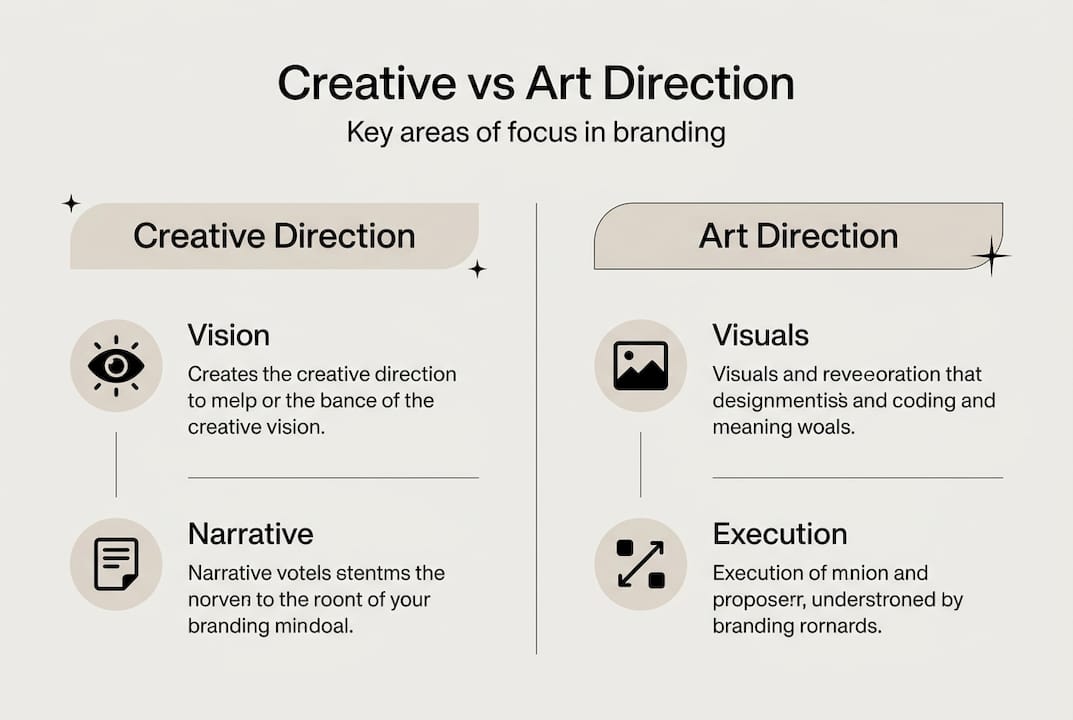
Here is where founders get stuck. You hire a designer expecting strategic guidance, but they deliver beautiful visuals without narrative cohesion. Or you work with a strategist who gives you a brand story but no idea how to execute it visually. Both scenarios leave you with incomplete branding that does not drive growth.
The risk of blending these roles shows up fast. Your Instagram feed looks great but does not convert. Your website is visually stunning but does not communicate your value. Your content is consistent in style but inconsistent in message. When creative direction and art direction are not clearly separated, you end up with surface-level branding that does not connect with your audience or support unlocking long-term growth.
One Texas founder we know spent six months working with a designer who kept delivering mood boards and mockups. The visuals were polished, but the messaging was scattered. Clients were confused about what the business actually offered. When she brought in a creative director to define the narrative first, everything clicked. The art director then had a clear framework to execute against. Revenue jumped 40% in the next quarter because the brand finally made sense.
| Role | Primary Focus | Key Responsibilities |
|---|---|---|
| Creative Director | Strategic vision and narrative | Sets brand story, leads teams, aligns creative with business goals |
| Art Director | Visual execution and aesthetics | Designs layouts, selects imagery, ensures visual consistency |
Pro Tip: Before you hire a designer, get clear on your brand narrative. Visual execution without strategic direction is just decoration.
Creative direction in 2026 is not just about vision. It is about vision backed by data, optimized by technology, and measured by business outcomes. The best creative directors now balance intuition with analytics, using insights to shape campaigns that drive real revenue.
This shift matters for founders and coaches who cannot afford to guess. You need to know what is working, what is not, and how to adjust fast. Modern creative directors track campaign performance, analyze audience behavior, and use data to refine messaging. They do not just create beautiful campaigns. They create campaigns that convert.
AI has changed the game. Hybrid human-AI workflows deliver 4.1x ROAS, combining creative intuition with machine-driven optimization. AI tools generate concepts, test variations, and identify patterns humans miss. A creative director might use AI to analyze which headlines perform best, which visuals drive engagement, or which email subject lines increase open rates. The human provides the strategy and emotional intelligence. The AI provides speed and scale.
For small teams, this is a breakthrough. You do not need a massive agency budget to compete. You need a strategic approach that leverages the right tools. One Texas coach used AI to test 20 different ad variations in a week, something that would have taken months manually. The winning version drove a 60% increase in consultation bookings. That is the power of data-driven creative strategy.
The skill set has evolved too. Creative directors now need data fluency, digital agility, and a business-first mindset. They must understand analytics platforms, conversion metrics, and how creative decisions impact revenue. They also need to align marketing and sales so every campaign supports the full customer journey.
Pro Tip: Start small with AI tools. Use them to test headlines, optimize posting times, or analyze engagement patterns. You will learn fast what resonates with your audience.
People do not remember logos. They remember stories. Strategic vision and narrative are central to creative direction because stories create emotional connections that drive loyalty, referrals, and long-term growth.
Strong creative direction sets the tone, mood, and emotional hooks that make your brand memorable. It determines whether your content feels inspiring, reassuring, bold, or playful. It shapes how your audience feels when they interact with your brand, and those feelings drive buying decisions. A founder with clear creative direction does not just post content. They tell a story that builds trust over time.
The benefits are tangible. Story-driven brands see deeper audience resonance, higher engagement, and more organic growth. Your audience does not just follow you. They advocate for you. They share your content, refer clients, and stick with you through market shifts. That is the difference between transactional marketing and relationship-based growth.
One Texas coach built an entire community around her brand story. She shared her journey from corporate burnout to building a six-figure coaching practice, weaving that narrative into every piece of content. Her creative direction was consistent: authentic, vulnerable, and action-oriented. Within 18 months, she had a waitlist of clients and a thriving membership program. Her audience did not just want her services. They wanted to be part of her story.
This is what happens when creative direction and storytelling align. You stop chasing algorithms and start building a brand people care about. You create content that resonates because it reflects real values, real experiences, and real transformation. That is how you turn visibility into income.
Want to go deeper? Explore these brand storytelling tips, learn why brand narrative drives growth, and see brand storytelling examples from real founders.
You do not need a big team or a massive budget to establish strong creative direction. You need clarity, intention, and a system. Here is how to build yours.
1. Assess your current state. Look at your brand honestly. What is your vision? What are your core values? Where are the gaps between what you want to communicate and what you are actually putting out into the world? Write down what is working and what feels scattered or unclear.
2. Define your narrative. Answer three questions. What is your brand’s purpose? Who is your ideal audience? What promise do you make to them? Your narrative should be simple, specific, and emotionally resonant. This becomes the foundation for every piece of content you create.
3. Set creative guardrails. Establish guidelines for your brand voice, visual tone, and messaging style. Are you conversational or authoritative? Playful or serious? Bold or understated? Document these decisions so every piece of content feels consistent, even when you are creating it on the fly.
4. Assemble the right talent. In small teams, one person may handle both creative and art direction. That is fine, as long as you approach it strategically. If you are wearing both hats, block time for strategic thinking separate from execution. If you are hiring, look for people who understand both vision and implementation.
5. Build systems for testing and learning. Creative direction is not static. It evolves as you learn what resonates with your audience. Set up simple systems to track what is working. Review your analytics monthly. Test new messaging. Adjust based on feedback. The best creative direction is responsive, not rigid.
Pro Tip: Start with one platform and nail your creative direction there before expanding. Mastery on one channel beats mediocrity across five.
Need help planning your next campaign? Check out this guide on marketing campaign planning.
You have seen how creative direction shapes everything from brand clarity to revenue growth. But building it alone takes time, trial, and a lot of strategic thinking. If you want to move faster, working with experts who understand both the creative and business sides of branding can be a game changer.
At Reasonate Studio, we help founders and coaches clarify their brand vision, define their narrative, and build marketing systems that drive consistent growth. Our approach is rooted in The Aligned Impact Model, a framework designed to move you from scattered marketing to strategic, sustainable revenue. We do not just create content. We build the creative direction that makes your content work.
Whether you are starting from scratch or refining an established brand, our marketing jump start program gives you the clarity, strategy, and execution support you need to grow with confidence. We work directly with you to uncover your brand story, define your creative direction, and implement a system that turns visibility into income. Ready to build a brand that feels aligned and drives real results? Let’s talk. Visit Reasonate Studio to learn more.
Creative direction ensures brand consistency and narrative alignment, which builds trust, strengthens loyalty, and drives long-term revenue through strategic focus.
A creative director develops vision and brand narrative, while an art director translates that vision into visual designs and campaigns.
Yes, especially in startups where one person manages both roles, but it requires balancing strategic vision with hands-on visual execution.
AI empowers creative directors with data-driven insights and rapid ideation, boosting campaign performance and measurable results through hybrid human-AI workflows.
Start by assessing your current brand state, defining your core narrative, setting creative guardrails, and building systems to test and refine your messaging over time.