September 22, 2026
Why Update Brand Messaging: Essential Guide for Growth


Build a content strategy with clear goals, audience insight, focused themes, practical workflows, and performance measures tied to growth.

Most early-stage entrepreneurs overlook the power of a unified content strategy framework, yet companies that adopt a defined system see up to 30 percent higher client retention. Even in highly competitive american and European markets, clarity in your approach can set your brand apart. If you want a repeatable way to link your marketing, branding, and client acquisition, this article breaks down a content strategy framework built for lasting impact.
A content strategy framework is a comprehensive roadmap that guides how businesses create, distribute, and manage content to achieve specific marketing and communication goals. Unlike generic content plans, this framework connects strategic intent with tactical execution, ensuring every piece of content serves a precise purpose in your business growth strategy.
The core components of an effective content strategy framework typically include:
Strategic content frameworks differ from traditional marketing approaches by prioritizing intentional communication. Rather than producing content randomly, these frameworks create a systematic approach that ensures each content piece connects directly to audience needs and business objectives. Understanding the role of content strategy becomes critical in developing a cohesive marketing approach.
Businesses implementing a robust content strategy framework gain significant advantages. They create more targeted content, reduce wasted resources, and build stronger connections with their audience. The framework acts as an adaptable system that can evolve with changing market dynamics and audience preferences.

Pro Tip for Content Strategy Success: Conduct a quarterly content audit to review performance, identify gaps, and realign your strategy with current business goals and audience insights.
Implementing an effective content strategy framework requires continuous refinement and a commitment to understanding your audience’s evolving needs. Start by mapping your current content against your business objectives, then systematically improve and optimize your approach.
Small businesses typically leverage several strategic content framework types to streamline their marketing efforts and maximize impact. These frameworks help entrepreneurs create targeted, purposeful content that resonates with their specific audience while maintaining alignment with business objectives.
Three primary content strategy frameworks emerge as particularly effective for small business contexts:
The Pillar Content Framework allows businesses to establish thought leadership by developing comprehensive content clusters around key industry topics. Branding Strategies: Building Impactful Small Businesses demonstrates how strategic content positioning can elevate a brand’s market perception.
Entrepreneurs implementing these frameworks gain significant advantages. They can create more targeted content, reduce resource waste, and build deeper connections with their target audience. Each framework offers unique benefits: pillar content establishes expertise, goal-driven approaches maintain strategic focus, and customer journey mapping ensures relevance across audience interactions.

Here is a comparison of popular content strategy frameworks and their main business outcomes:
| Framework Type | Core Focus | Best For | Expected Business Impact |
|---|---|---|---|
| Pillar Content | Expertise and depth | Thought leadership, SEO | Higher authority, organic reach |
| Goal-Driven | Business objectives alignment | Lead generation, conversions | Improved ROI, focused messaging |
| Customer Journey | Stage-based audience mapping | Engagement, nurturing, loyalty | Higher customer retention rates |
Understanding and selecting the right content strategy framework requires careful analysis of your specific business needs, target audience, and available resources. Successful implementation involves continuous refinement and a willingness to adapt as market conditions evolve.
Pro Tip for Framework Selection: Conduct a comprehensive content audit every six months to evaluate framework effectiveness and identify opportunities for strategic refinement.
Successful content strategies begin with a deep understanding of audience mapping - a critical process that connects business objectives with precise audience needs. This strategic approach transforms generic marketing efforts into targeted, meaningful communication that resonates with specific customer segments.
The audience mapping process involves several key components:
Small businesses can leverage detailed audience insights to create more impactful content strategies. How to Set Marketing Goals That Drive Real Business Growth highlights the importance of connecting audience understanding with strategic business outcomes.
Competitive analysis plays a crucial role in effective audience mapping. By examining competitors’ content and identifying underserved audience segments, businesses can develop unique content approaches that fill existing market gaps. This strategy allows entrepreneurs to create highly targeted content that addresses specific audience needs more precisely than generic marketing attempts.
Effective audience mapping requires continuous refinement. Businesses must regularly update their audience personas, track engagement metrics, and adapt their content strategies to reflect evolving customer preferences and market dynamics.
Pro Tip for Audience Mapping: Conduct quarterly audience research surveys to validate and refresh your understanding of customer needs and preferences.
A repeatable content creation process transforms sporadic marketing efforts into a systematic approach that consistently delivers high-quality, strategic content. For small businesses, developing a structured workflow enables predictable content production without overwhelming limited resources.
The core elements of an effective content creation process include:
Successful entrepreneurs understand that consistency matters more than perfection. How to Create a Content Marketing Strategy for Impact emphasizes the importance of developing a systematic approach to content development that can scale with business growth.
Small businesses can optimize their content creation process by aligning production with specific business cycles and industry events. This approach ensures a steady flow of relevant content that maintains audience engagement while minimizing creative burnout. The key is building flexibility into the process, allowing for quick adjustments based on audience feedback and emerging market trends.
Implementing a repeatable creation process requires establishing clear roles, creating template systems, and developing standard operating procedures that streamline content production. Businesses should invest time in creating reusable content frameworks that can be quickly adapted to different topics and audience segments.
Pro Tip for Content Workflow: Develop a comprehensive content template library that includes standard outlines, research checklists, and editorial guidelines to accelerate your content creation process.
A comprehensive performance tracking system transforms content strategy from guesswork into a data-driven approach that continuously improves marketing effectiveness. Small businesses can leverage strategic metrics to understand content performance, refine their messaging, and maximize audience engagement.
Key performance metrics entrepreneurs should monitor include:
Understanding Digital Marketing Best Practices for Growth highlights the critical role of systematic performance analysis in developing a responsive marketing strategy.
A/B testing emerges as a powerful optimization technique for small businesses. By creating multiple content variations and comparing their performance, entrepreneurs can make data-backed decisions about messaging, design, and audience targeting. This approach allows for incremental improvements that compound over time, creating increasingly effective content strategies.
Successful performance tracking requires establishing baseline metrics, setting clear objectives, and implementing regular review cycles. Businesses should develop a consistent process for analyzing performance data, identifying trends, and making strategic adjustments to their content approach.
This summary illustrates how common performance metrics support content strategy optimization:
| Metric | What It Reveals | How It Drives Improvement |
|---|---|---|
| Engagement Rates | Content appeal and relevance | Guides content topics and formats |
| Conversion Metrics | ROI and sales connection | Refines calls to action, targeting |
| Audience Growth | Audience expansion dynamics | Shapes outreach and channel focus |
| Content Reach | Total exposure potential | Identifies amplification needs |
Pro Tip for Performance Optimization: Implement a quarterly content performance review that includes a comprehensive analysis of key metrics, competitive benchmarking, and strategic recommendations for improvement.
If you find yourself struggling to connect your content with clear business goals or navigating how to build a repeatable creation process that drives engagement and growth, you are not alone. This article breaks down the critical challenges of implementing a content strategy framework that truly aligns messaging with audience needs and business objectives. Key pain points like audience mapping, tracking performance, and selecting the right framework type can feel overwhelming without the right support.
At Reasonate Studio, we understand these challenges and specialize in helping entrepreneurs and small businesses move from scattered marketing to strategic impact. Our proprietary The Aligned Impact Model™ acts as a comprehensive roadmap that uncovers your brand foundations and connects them directly to measurable marketing results. This system balances strategy, creativity, and operational discipline so you can build a sustainable marketing engine that grows with confidence and clarity.
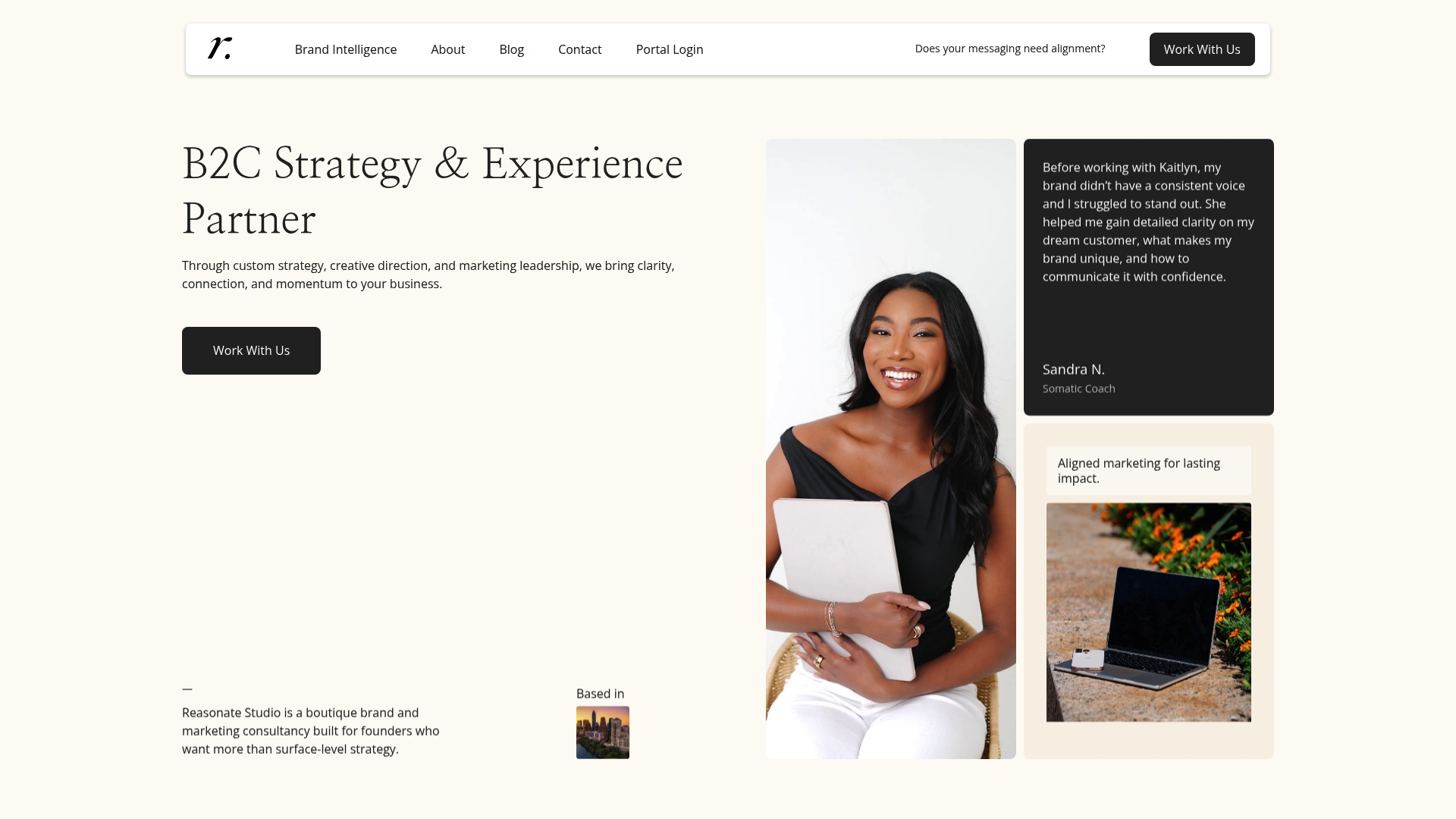
Ready to stop guessing and start scaling your business with a content strategy framework designed for real results? Discover how partnering with Reasonate Studio can transform your messaging and growth approach. Visit us now at Reasonate Studio to learn how you can get started and explore How to Create a Content Marketing Strategy for Impact for practical steps to level up your marketing.
A content strategy framework is a comprehensive roadmap guiding how businesses create, distribute, and manage content to achieve specific marketing and communication goals.
Audience understanding is crucial as it helps create tailored content that addresses specific needs, leading to more effective communication and improved engagement.
Small businesses can implement a content creation process by establishing a strategic content calendar, developing a production workflow, and tracking performance to ensure consistency and quality in their content output.
Key metrics to track include engagement rates, conversion metrics, audience growth, and content reach, which provide insights into how effectively content engages the audience and drives business goals.