September 22, 2026
Why Update Brand Messaging: Essential Guide for Growth


Content strategist – discover core role, key responsibilities, real-world applications, costs, mistakes, and essential skills for small business growth.

Most American entrepreneurs underestimate how critical content strategy is for scaling their businesses efficiently. Over 60 percent of small business owners admit they confuse content strategy with basic writing or marketing tasks, resulting in wasted resources and missed growth opportunities. Understanding what a content strategist truly does—and the misconceptions that surround this role—gives freelancers and founders worldwide a smarter way to weave meaningful engagement and strategic structure into every piece of content they produce.
A content strategist represents a strategic professional who meticulously plans, develops, and manages content ecosystems to achieve precise business and audience objectives. Unlike traditional writers or marketers, these professionals act as comprehensive architects of content operations, connecting creative output with measurable business outcomes.
The role goes far beyond simply producing written materials. Content strategists conduct deep research into audience personas, perform thorough content audits, develop sophisticated SEO strategies, and establish robust content governance frameworks. They are responsible for creating comprehensive content roadmaps that align creative efforts with strategic business goals, ensuring every piece of content serves a specific, intentional purpose.
Major misconceptions about content strategists often emerge from misunderstanding their specialized role. Many people incorrectly assume content strategists are just senior writers or advanced marketers. In reality, they function more like strategic planners who prevent random content creation and optimize communication ecosystems. Their work involves carefully analyzing audience needs, mapping content journeys, and developing systems that transform content from disconnected pieces into powerful business assets.
Pro tip: When hiring a content strategist, look beyond writing skills and evaluate their ability to connect content directly to measurable business objectives and audience engagement strategies.
Small businesses navigate complex marketing landscapes by leveraging specialized content strategy roles that blend multiple responsibilities into efficient, targeted approaches. These roles are not one size fits all but adaptive frameworks designed to maximize limited resources and drive strategic business growth. Typically, content strategists in small business environments wear multiple hats, combining skills across content planning, marketing, and analytics.
The core content strategy roles for small businesses generally encompass several key functions: inbound marketing specialists, SEO content architects, audience research coordinators, and multi-channel content managers. Each role contributes unique skills to the overall content ecosystem. Content strategy framework development becomes critical in ensuring these roles work cohesively, transforming fragmented efforts into a unified strategic approach.
Unique hybrid roles are particularly prevalent in small business environments. A single content strategist might simultaneously manage brand storytelling, generate leads, optimize search engine performance, and track content performance metrics. This integrated approach allows small businesses to maximize their marketing investments by creating adaptable, data-driven content strategies that directly align with specific business objectives and audience engagement needs.
Here’s a quick comparison of key content strategy roles for small businesses and how each impacts business growth:
| Role Type | Main Focus Area | Typical Skills Needed | Business Impact |
|---|---|---|---|
| Inbound Marketing Specialist | Attracting qualified leads | Writing, analytics, funnel building | Increases relevant website traffic |
| SEO Content Architect | Search visibility | Technical SEO, keyword analysis | Improves search rankings & reach |
| Audience Research Coordinator | Understanding customer needs | Survey design, data analysis | Creates highly targeted content |
| Multi-Channel Content Manager | Distributing content widely | Social media management, scheduling | Boosts engagement across platforms |
Pro tip: When building your content strategy team, prioritize professionals with versatile skills who can seamlessly transition between different content roles and adapt quickly to changing business requirements.
The role of a content strategist demands a unique blend of analytical prowess and creative thinking, requiring professionals to navigate complex marketing landscapes with precision and imagination. Content strategists serve as critical architects who transform raw information into strategic communication frameworks that drive business growth and audience engagement.

Core responsibilities span a comprehensive range of strategic activities. These include content strategy development that involves audience research, SEO optimization, content auditing, editorial calendar creation, performance measurement, and cross-functional team collaboration. Key skills necessary for success encompass deep analytical capabilities, creative problem-solving, advanced communication techniques, technical SEO knowledge, data interpretation, project management expertise, and sophisticated content governance understanding.
Most successful content strategists possess a multidimensional skill set that allows them to seamlessly transition between different strategic functions. This requires proficiency in market trend assessment, audience psychology understanding, content discovery optimization, and the ability to facilitate collaborative environments that produce consistent, goal-aligned content. Small businesses particularly benefit from content strategists who can adapt quickly, wearing multiple professional hats while maintaining a laser focus on driving meaningful business outcomes.
Below is a summary of essential skills every content strategist should develop and their practical benefits:
| Skill Area | Description | Practical Benefit |
|---|---|---|
| Analytical Thinking | Interpreting data & trends | Enables data-driven decisions |
| Technical SEO Knowledge | Understanding search engines | Enhances online discoverability |
| Project Management | Organizing tasks & deadlines | Ensures timely content delivery |
| Creative Problem-Solving | Innovative approach to challenges | Generates fresh, effective content |
| Communication Techniques | Clear messaging with stakeholders | Improves collaboration & clarity |
Pro tip: Develop a personal learning system that continuously updates your technical and creative skills, ensuring you remain adaptable in the rapidly evolving content strategy landscape.
Content strategy has transformed from a peripheral marketing activity into a critical business growth mechanism, enabling organizations to create systematic, measurable approaches to audience engagement. Modern content strategists develop comprehensive roadmaps that integrate audience research, strategic planning, and data-driven optimization to drive meaningful business outcomes across multiple platforms and communication channels.
Real-world applications of content strategy encompass sophisticated growth frameworks that go beyond traditional marketing tactics. Understanding social media marketing frameworks becomes crucial in developing holistic approaches that map content experiences across entire customer journeys. These frameworks typically involve building scalable content production workflows, establishing cross-team collaboration protocols, and implementing continuous performance measurement systems that adapt to evolving audience needs.

Successful content strategy implementation requires a multifaceted approach that blends technological capabilities with human-centered design. Advanced growth frameworks now incorporate artificial intelligence technologies, personalization algorithms, and comprehensive performance tracking to create more intelligent, responsive content ecosystems. Small businesses can leverage these strategies by focusing on creating adaptable content pillars that align closely with specific business objectives, enabling more precise audience targeting and more efficient resource allocation.
Pro tip: Develop a flexible content strategy framework that allows for rapid iteration and data-driven refinement, ensuring your approach remains responsive to changing market dynamics and audience preferences.
Navigating the complex landscape of content strategy requires a nuanced understanding of the potential financial and operational challenges that small businesses encounter. Organizations often underestimate the true investment needed to develop and maintain a robust content ecosystem, with hidden costs emerging through inefficient workflows, technological integration challenges, and resource-intensive manual processes.
The most significant challenges in content strategy implementation stem from maintaining consistent quality, adapting to rapidly changing digital platforms, and understanding social media marketing frameworks that drive audience engagement. Small businesses frequently struggle with resource allocation, facing difficult trade-offs between content production volume, depth of research, and overall strategic alignment. Common pitfalls include producing generic content, failing to segment audience personas accurately, and neglecting continuous performance measurement and optimization.
Digital content strategies demand sophisticated approaches that balance technological capabilities with human creativity. Burnout represents a critical challenge for content strategists, who must manage complex workloads while maintaining creative output and strategic thinking. Small businesses can mitigate these risks by implementing flexible workflows, leveraging AI-assisted technologies, and creating centralized project management systems that distribute cognitive load and prevent individual team member exhaustion.
Pro tip: Implement a quarterly content strategy audit that objectively evaluates resource expenditure, audience engagement metrics, and strategic alignment to proactively identify and address potential inefficiencies.
The challenge of developing a cohesive and effective content strategy for small businesses is real. Many entrepreneurs struggle to connect their content directly to measurable business outcomes or lack a clear system to organize their creative efforts. This article highlights key pain points such as developing adaptable content strategies, overcoming resource constraints, and integrating audience research with SEO and multi-channel management. At Reasonate Studio, we understand these obstacles deeply and offer a tailored approach through The Aligned Impact Model™ that helps you build lasting, strategic content ecosystems aligned with your business goals.
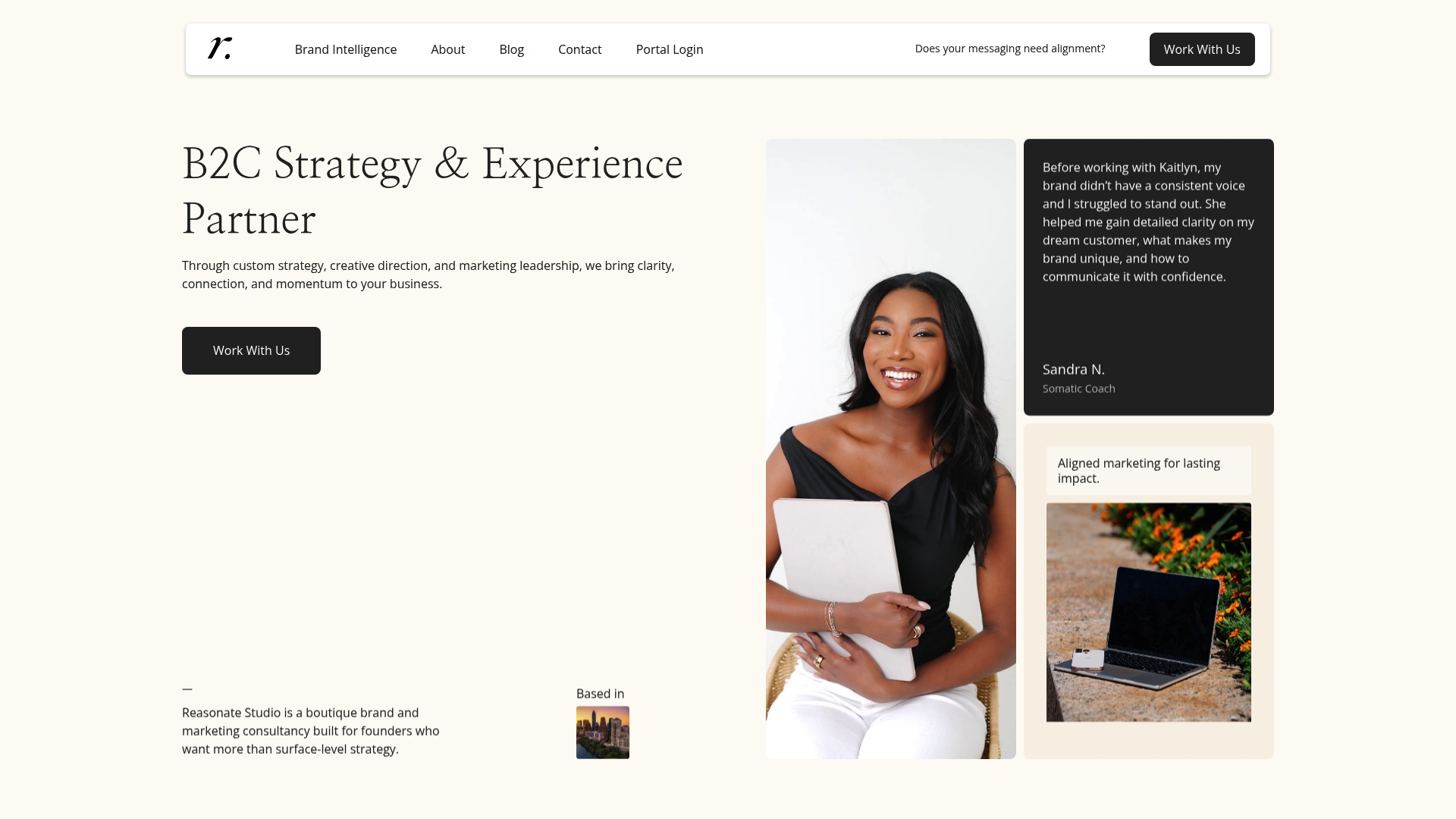
Don’t let fragmented content efforts drain your resources or stall your growth. Partner with Reasonate Studio to create clarity and intentional design that transforms your brand storytelling into powerful business results. Explore how our approach to content strategy frameworks and understanding social media marketing frameworks can unlock scalable growth. Take the next step and visit Reasonate Studio to start your journey toward strategic, sustainable growth today.
A content strategist in small businesses plans, develops, and manages content ecosystems to align with business and audience objectives, ensuring that every piece of content serves a specific purpose.
When hiring a content strategist, prioritize skills such as analytical thinking, technical SEO knowledge, project management, and creative problem-solving, as these are essential for developing effective content strategies.
Content strategists improve audience engagement by conducting thorough audience research, creating targeted content, and optimizing communication strategies to ensure that the content resonates with the target audience.
Small businesses often face challenges such as resource allocation, maintaining content quality, and adapting to changing digital platforms, which can hinder the effective execution of their content strategies.