September 22, 2026
Why Update Brand Messaging: Essential Guide for Growth


Discover what branding in design really means. Learn about types, elements, how it shapes perception, and the pitfalls small business founders must avoid.

Most early-stage entrepreneurs are surprised to learn that over 60 percent of clients equate strong branding with trust—something even the most successful American businesses prioritize from day one. If you feel your service brand is blending into the background or you are frustrated by unclear messaging, you are not alone. Understanding how design shapes not just appearance but also the experience behind your brand lays the foundation for attracting more of the right clients and growing a dependable reputation.
Branding in design represents the strategic process of creating a distinctive visual and emotional identity for a business or product. At its core, branding goes far beyond just a logo or color palette—it encompasses the entire sensory and psychological experience someone has when interacting with your business. Visual identity becomes the language through which your brand communicates its values, personality, and unique positioning in the marketplace.
Design plays a critical role in branding by translating abstract business concepts into tangible visual elements that resonate with target audiences. These elements include typography, color psychology, imagery, and graphic design that work together to create a cohesive narrative. A well-crafted brand design tells a story without words, instantly communicating professionalism, creativity, trustworthiness, or innovation. Designers act as strategic translators, transforming business goals and audience insights into compelling visual systems that create immediate recognition and emotional connection.
The fundamental components of branding in design include several key strategic elements. Businesses must develop consistent visual frameworks that communicate their core identity across all touchpoints. These typically involve:
By establishing clear design standards, businesses create a recognizable and professional presence that builds trust and differentiates them from competitors. Design becomes more than aesthetic—it transforms into a strategic communication tool that influences perception and drives audience engagement.
Pro tip: When developing your brand design, focus on creating a flexible visual system that can adapt across multiple platforms while maintaining core visual consistency.
Branding design encompasses a strategic framework of interconnected elements that transform visual communication into a powerful business asset. According to research from francis-press, these elements can be categorized into three fundamental components: structure, semantics, and content. Each plays a critical role in shaping how audiences perceive and interact with a brand’s visual identity.
The structural elements form the foundational visual architecture of a brand. These include key visual identity components such as logo design, color palette, typography, and consistent graphic treatments. Logos serve as the symbolic representation of a brand’s core identity, while carefully selected color schemes and typography communicate emotional tone and personality. Strategic designers meticulously craft these elements to create immediate visual recognition and establish a cohesive brand language that resonates across different platforms and media.
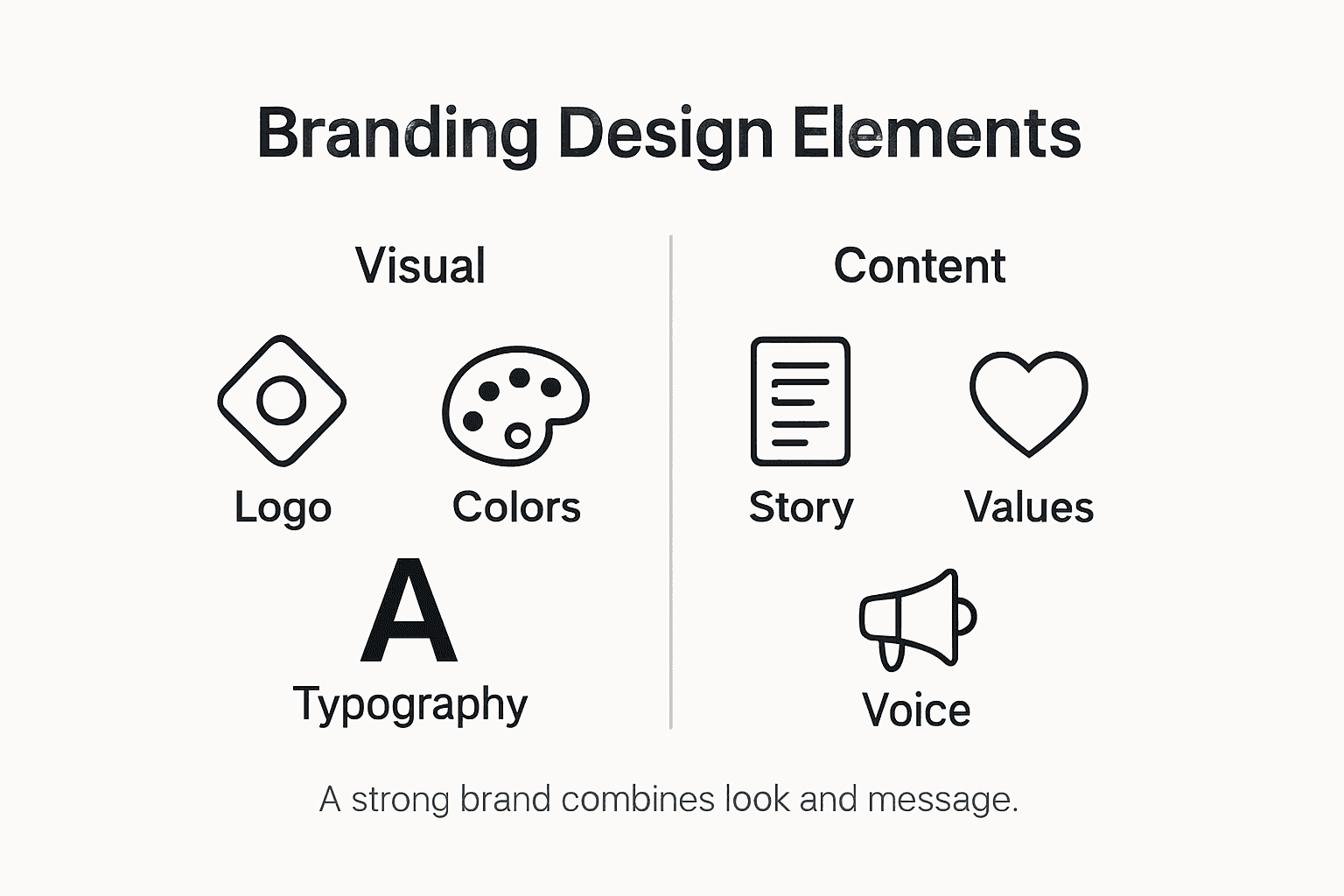
Semantic and content-driven aspects of branding design extend beyond pure visual representation. They incorporate narrative elements like brand stories, core values, messaging frameworks, and the underlying information a brand wants to communicate. This holistic approach transforms design from mere aesthetic decoration into a strategic communication tool. Effective brand design doesn’t just look good—it tells a compelling story, communicates core values, and creates meaningful connections with target audiences.
The intricate relationship between structural, semantic, and content elements determines a brand’s ability to create lasting impressions. Successful branding design requires a delicate balance of visual consistency, emotional resonance, and clear communication. Businesses must develop comprehensive brand guidelines that ensure every visual touchpoint reinforces their unique identity and strategic objectives.
Pro tip: Develop a flexible brand design system that maintains core visual consistency while allowing subtle adaptations for different contexts and platforms.
Small businesses have a diverse array of branding approaches at their disposal, each designed to leverage unique strengths and market opportunities. Branding strategies fundamentally differ based on business type, target audience, and strategic objectives. Academic research highlights four primary branding models that small enterprises can strategically implement: product branding, corporate branding, service branding, and personal branding.
Product branding focuses on creating a distinctive identity for specific goods or service offerings. Small businesses can differentiate themselves by developing unique visual and emotional associations around their core products. This approach is particularly effective for businesses with specialized or innovative offerings that require clear market positioning. Service branding, in contrast, emphasizes the intangible qualities of professional services—highlighting expertise, reliability, and customer experience as key differentiators.
Personal and corporate branding represent two additional powerful strategies for small businesses. Personal branding allows entrepreneurs to leverage their individual reputation, expertise, and unique story as a competitive advantage. Freelancers, consultants, and professional service providers often excel by building a brand around their individual capabilities. Corporate branding takes a broader approach, focusing on establishing the overall organizational identity, values, and mission that extend beyond individual products or services.
Modern small businesses increasingly recognize the importance of digital and community-based branding approaches. Digital branding strategies leverage online platforms to create consistent, engaging brand experiences across websites, social media, and digital marketing channels. Community-based branding builds deeper connections by aligning the business with specific audience values, local contexts, or social missions. These approaches allow small businesses to create meaningful differentiation in increasingly competitive markets.
Here’s how different types of branding strategies compare for small businesses:
| Branding Type | Focus Area | Typical Benefits |
|---|---|---|
| Product Branding | Individual products/services | Strong market differentiation |
| Service Branding | Customer experience | Highlights expertise and trust |
| Corporate Branding | Entire organization | Builds holistic reputation |
| Personal Branding | Individual professional | Enhances credibility and trust |
| Digital Branding | Online platforms | Expands digital presence |
| Community Branding | Local/social alignment | Fosters loyal relationships |
Pro tip: Develop a flexible branding strategy that authentically reflects your business’s core values and can evolve with your growth and market changes.
Branding serves as a powerful psychological mechanism for constructing consumer perceptions and building trust. Strategic branding approaches go far beyond visual aesthetics, functioning as a complex communication system that signals a business’s core values, reliability, and unique value proposition. Research demonstrates that consumers develop instant emotional connections and judgments based on consistent brand messaging and visual identity.

Perception formation occurs through multiple sensory and psychological touchpoints. Visual design elements like color psychology, typography, and graphic style create immediate emotional responses that subconsciously influence how consumers interpret a brand’s personality. A well-designed logo can communicate professionalism, creativity, or trustworthiness within milliseconds. These visual cues work in concert with narrative elements—brand stories, mission statements, and core values—to construct a holistic perception that resonates with target audiences.
Trust emerges through the alignment between a brand’s promised experience and its actual delivery. Consumers seek authenticity and consistency across all interactions, from marketing materials to customer service experiences. Brands that demonstrate transparency, reliability, and genuine commitment to their stated values create deeper emotional connections. This trust-building process involves maintaining consistent messaging, fulfilling brand promises, and showing genuine understanding of customer needs and expectations.
Digital platforms have transformed how brands shape perception, offering unprecedented opportunities for direct audience engagement. Social media, websites, and online content allow businesses to humanize their brand, showcase their personality, and build trust through ongoing dialogue. Interactive experiences, behind-the-scenes content, and responsive communication help break down traditional barriers between businesses and consumers, creating more intimate and meaningful connections.
Pro tip: Audit your brand’s communication channels regularly to ensure consistent messaging and authentic representation of your core values and brand personality.
Branding mistakes can significantly undermine a business’s potential for growth and customer connection. Small business branding strategies reveal that many entrepreneurs unknowingly sabotage their brand’s effectiveness through common yet avoidable errors. Understanding these pitfalls is crucial for developing a robust and resonant brand identity that attracts and retains customers.
Inconsistent messaging represents one of the most critical branding errors businesses make. Brands that lack a unified voice across different platforms confuse potential customers and diminish their perceived reliability. This inconsistency can manifest in misaligned visual design, conflicting communication tones, or disconnected marketing materials. When a brand’s website speaks differently from its social media presence, or when marketing materials contradict each other, it creates cognitive dissonance that erodes consumer trust.
Below is a summary of business impacts for maintaining strong brand consistency:
| Impact Area | Effect of Consistency | Effect of Inconsistency |
|---|---|---|
| Customer Trust | Builds long-term confidence | Erodes trust quickly |
| Recognition | Improves brand recall | Causes confusion |
| Market Differentiation | Highlights unique values | Dilutes competitive edge |
| Customer Loyalty | Encourages repeat business | Drives customers away |
Another significant mistake is failing to understand and authentically connect with the target audience. Businesses often create branding that reflects their internal perspective rather than addressing genuine customer needs and preferences. This disconnect leads to marketing efforts that feel generic, impersonal, or tone-deaf. Successful branding requires deep audience research, empathy, and the ability to craft a brand narrative that genuinely resonates with specific customer segments. Entrepreneurs must move beyond surface-level demographic data and develop a nuanced understanding of their audience’s motivations, challenges, and aspirations.
Neglecting brand evolution and adaptability is another common pitfall. Many businesses develop a brand strategy and then treat it as a static artifact, failing to recognize that brands must continuously adapt to changing market dynamics, consumer preferences, and technological landscapes. Brands that remain rigid risk becoming irrelevant, while those that maintain a core identity while allowing strategic flexibility can sustain long-term growth and customer engagement. This requires ongoing market research, willingness to experiment, and a commitment to authentic brand refinement.
Pro tip: Conduct a quarterly brand audit to ensure your messaging, visual identity, and audience targeting remain aligned and responsive to current market dynamics.
The article highlights how branding goes far beyond logos and colors to form a cohesive, strategic system that builds trust and shapes perception. If you feel overwhelmed by inconsistent messaging or unsure how to connect emotionally with your audience, Reasonate Studio offers a proven solution. Our proprietary Aligned Impact Model™ addresses core challenges like defining brand foundations, streamlining visual identity, and aligning messaging to create lasting emotional connections that drive growth.
Take control of your brand’s narrative today with a partner who understands the strategic and emotional layers of branding. Explore how our approach blends clarity, creativity, and operational discipline into a system designed for small businesses ready to scale. Visit Reasonate Studio to learn more about our flexible support options and how we can help you build a brand that truly resonates. Start creating consistent, authentic branding that sets you apart and inspires confidence in your audience now.
Branding in design involves creating a unique visual and emotional identity for a business or product, encompassing elements like logos, color palettes, and typography to reflect the brand’s values and personality.
Visual identity is crucial in branding because it serves as the communication language for a brand, influencing how audiences perceive and connect with a business through cohesive design elements.
The key components of branding design include logo design, color palette, typography, visual language, and brand guidelines, all of which work together to establish a consistent and recognizable brand identity.
Small businesses can choose the right branding strategy by understanding their target audience, identifying their unique selling propositions, and selecting a strategy that aligns with their goals, such as product branding, service branding, or personal branding.