September 1, 2026
Understanding B2C Business to Consumer Dynamics


Learn why personalize brand messaging matters, how it boosts connection, proven methods, risks to avoid, and real-world business results in this guide.

Most american consumers now expect brands to understand them on a personal level, with studies showing that over 80 percent are more likely to buy from companies offering customized experiences. This shift goes well beyond using a first name in an email. Personalized brand messaging matters because it shapes how real people connect with brands and drives deeper trust and engagement. By cutting through generic marketing, this article uncovers what true personalization means for brands looking to win customer loyalty and stand out.
Personalized brand messaging is more than just slapping a customer’s name on an email. It’s a strategic approach to crafting communications that feel uniquely tailored to individual audience segments, moving far beyond generic marketing speak. At its core, personalized brand messaging connects your brand’s narrative directly to specific customer needs, preferences, and psychological triggers.
The fundamental goal of personalization is creating a sense of individual attention. Unlike traditional mass marketing, this approach uses data analytics and consumer insights to develop messaging that speaks directly to a person’s unique context. Businesses leveraging brand messaging strategies can dramatically increase engagement by making customers feel genuinely understood.

When executed effectively, personalized messaging transforms communication from transactional to relational. This means understanding not just demographic data, but the deeper motivations, challenges, and aspirations of your target audience. Sophisticated personalization goes beyond surface-level customization—it’s about creating meaningful connections that demonstrate your brand truly comprehends what matters to each customer.
Key elements of successful personalized brand messaging include:
Understanding personalization isn’t about technological tricks. It’s about human connection. The most powerful personalized messages make customers feel like your brand is speaking directly to their specific situation, challenges, and dreams.
The landscape of modern marketing is fundamentally driven by the need to connect with customers on a profoundly personal level. Psychographic segmentation has emerged as a critical strategy, allowing brands to move beyond demographic data and dive deep into the psychological nuances that truly motivate consumer behavior. By understanding individual beliefs, values, and lifestyle preferences, businesses can craft messaging that resonates at an emotional level.
Data analytics plays a pivotal role in enabling sophisticated personalization. Understanding the role of messaging strategy reveals that successful personalization is not about technological manipulation, but about creating genuine human connections. Advanced algorithms and machine learning now allow brands to analyze vast amounts of consumer data, transforming raw information into meaningful insights that predict customer preferences, anticipate needs, and create tailored communication experiences.
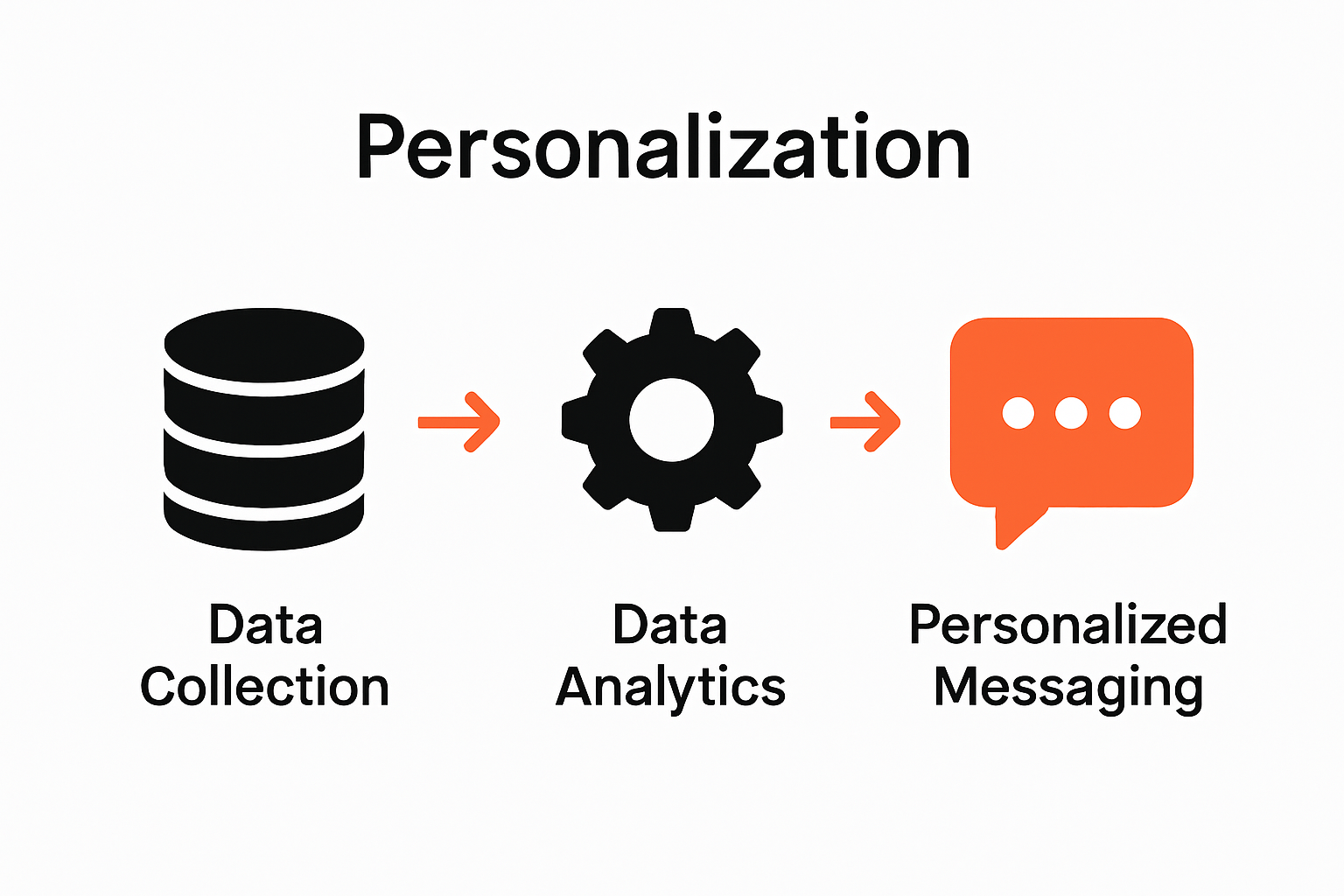
Consumer expectations have dramatically shifted, demanding more than generic marketing approaches. Today’s audiences seek brands that demonstrate a nuanced understanding of their individual journeys, challenges, and aspirations. This expectation drives companies to develop increasingly sophisticated personalization techniques that go far beyond simple name insertion or basic demographic targeting.
Key drivers propelling personalized messaging include:
Ultimately, personalized messaging is about respect. It represents a profound shift from interruption-based marketing to a more empathetic, customer-centric approach that recognizes each individual’s unique context and values.
Creating truly personalized communications begins with developing comprehensive user personas that go far beyond basic demographic information. These semi-fictional representations capture the nuanced psychological landscape of different customer segments, enabling brands to craft messaging that speaks directly to specific motivations, challenges, and aspirations. By building detailed personas, businesses can move from generic communication to laser-focused, emotionally intelligent interactions.
Advanced data integration techniques have transformed personalization from a theoretical concept to a practical marketing strategy. Brand messaging strategies now leverage sophisticated machine learning algorithms that analyze multiple data points, allowing for dynamic content adaptation. This means communications can be instantaneously adjusted based on real-time user behavior, previous interactions, and contextual cues, creating a responsive messaging ecosystem that feels uniquely tailored to each individual.
The most effective personalization strategies recognize that true connection happens through nuanced understanding, not just data manipulation. Successful brands develop multi-dimensional communication frameworks that consider psychological triggers, emotional states, and individual journey stages. This approach transforms messaging from transactional interactions into meaningful dialogues that demonstrate genuine empathy and understanding.
Key methods for crafting tailored communications include:
Crafting personalized communications is an art and a science. It requires technical sophistication, deep psychological insight, and a genuine commitment to understanding the unique human experiences behind each data point.
Targeted marketing personalization fundamentally transforms how businesses connect with their audience, creating deeper, more meaningful interactions that drive substantial growth. By delivering precisely crafted messages that resonate with individual preferences and psychological triggers, brands can dramatically increase customer engagement, transforming passive observers into active participants in their brand narrative.
Research consistently demonstrates the powerful impact of personalized approaches. Effective marketing strategies reveal that tailored communications can increase brand awareness, customer loyalty, and conversion rates by addressing specific audience needs with unprecedented precision. When customers feel genuinely understood, they’re more likely to develop trust, engage more deeply, and become long-term advocates for the brand.
The most significant growth potential emerges from creating a sense of individual connection. Modern consumers don’t just want products—they want experiences that feel uniquely designed for them. By leveraging advanced data analytics and sophisticated messaging frameworks, businesses can create communication strategies that adapt in real-time, responding to individual customer journeys with remarkable accuracy and emotional intelligence.
Key benefits of personalized audience engagement include:
Ultimately, personalization is about respect. It represents a profound shift from interruption-based marketing to a more empathetic, customer-centric approach that recognizes each individual’s unique context and values.
Personalization strategies come with significant data privacy challenges that can quickly transform a well-intentioned marketing approach into a potential public relations nightmare. While collecting customer data enables more targeted communications, businesses must navigate a complex landscape of ethical considerations and regulatory requirements. Overstepping boundaries can lead to customer distrust, potential legal complications, and substantial reputation damage.
Understanding brand messaging strategies requires recognizing the fine line between personalization and invasion of privacy. Many brands accidentally cross this line by implementing overly intrusive tracking mechanisms or using data in ways customers did not explicitly consent to. The most sophisticated personalization approaches prioritize transparency, giving customers clear control over their data and understanding of how it will be used.
Technological complexity introduces another layer of potential risks. Poorly implemented personalization algorithms can create embarrassing or inappropriate content recommendations, potentially alienating the very customers brands aim to engage. Neurobranding techniques, while powerful, must be applied with extreme sensitivity and psychological nuance to avoid appearing manipulative or disconnected from genuine human experience.
Common personalization pitfalls include:
Successful personalization demands a delicate balance—leveraging data intelligently while maintaining profound respect for individual privacy and autonomy.
Personalized brand messaging isn’t just a theoretical concept—it’s a powerful strategy that transforms business performance when implemented thoughtfully. Targeted personalization has repeatedly demonstrated its ability to create profound connections with consumers, driving measurable growth across diverse industries. These real-world examples showcase how strategic messaging can revolutionize customer engagement and brand perception.
Real-world brand positioning strategies reveal remarkable outcomes when personalization is executed with precision. Coca-Cola’s groundbreaking ‘Share a Coke’ campaign illustrates this perfectly—by replacing its traditional logo with popular names, the brand created an intimate, personal experience that dramatically increased sales and social media engagement. Consumers didn’t just see an advertisement; they saw themselves reflected in the product, transforming a simple beverage into a personalized momento.
Consumer packaged goods brands have also demonstrated the power of nuanced personalization. One notable example involved tailoring in-app advertisements to users’ specific device language settings, resulting in significantly improved sales and engagement metrics. This approach goes beyond surface-level customization, creating messaging that feels genuinely attuned to individual user experiences and cultural contexts.
Key insights from successful personalization case studies include:
Successful personalization is an art form—it requires empathy, technological sophistication, and a genuine commitment to understanding individual human experiences.
Many entrepreneurs and small business owners struggle to connect deeply with their audience because their messaging feels generic or disconnected. This article highlights the importance of personalized brand messaging—a strategy that moves beyond just inserting names and instead speaks directly to individual customer motivations and emotional needs. Key challenges include balancing data-driven insights with genuine human connection while respecting privacy and maintaining authenticity.
At Reasonate Studio, we understand these pain points and offer a unique approach through our proprietary framework, The Aligned Impact Model™. We help brands uncover their core values, positioning, and messaging to create marketing that feels both strategically sound and emotionally intelligent. Our process ensures your communication is laser-focused to your audience’s psychology, fostering trust and long-term growth.
Experience how strategic messaging combined with clarity and intentional design can transform your brand engagement. Explore how Reasonate Studio can guide you through building a sustainable, personalized brand at Reasonate Studio.
Ready to move from generic campaigns to messaging that truly resonates with your audience? Visit Reasonate Studio now to discover how our tailored approach to brand messaging can elevate your business. Get started today and see measurable results rooted in empathy, strategy, and thoughtful design.
Personalized brand messaging is a strategic approach that tailors communications to individual audience segments based on their needs, preferences, and psychological triggers, moving beyond generic marketing techniques.
Businesses can implement personalized brand messaging by conducting deep audience research, using data analytics for insights, creating detailed user personas, and utilizing advanced data integration techniques to tailor communications to individual customer journeys.
The key benefits include increased customer retention rates, higher conversion and click-through percentages, enhanced brand loyalty, more efficient marketing spending, and improved customer lifetime value.
Common pitfalls include collecting excessive personal data, failing to obtain clear user consent, creating invasive messaging, implementing rigid personalization algorithms, and neglecting ongoing data security and privacy measures.