September 22, 2026
Why Update Brand Messaging: Essential Guide for Growth


Learn when and how to evolve your brand identity while protecting customer trust, sharpening your market position, and supporting growth.

Many founders assume refreshing their brand requires a complete overhaul, risking client confusion and expensive redesigns. Brand identity evolution offers a smarter alternative. By making strategic, incremental updates, you can align your brand with current business goals while preserving the trust you have built. This guide shows you how to evolve your brand identity effectively to support sustainable growth in 2026 and beyond.
| Point | Details |
|---|---|
| Brand evolution maintains relevance | Strategic updates keep your brand aligned with market expectations without abandoning core identity. |
| Balance consistency and change | Preserve essential values and voice while refreshing visuals and messaging for current audiences. |
| Early misalignment recognition matters | Spotting disconnects between brand and business prevents lost opportunities and revenue decline. |
| Transparent communication protects trust | Clear stakeholder updates during transitions reduce confusion and strengthen client relationships. |
| Measurement ensures ongoing success | Tracking engagement, retention, and revenue validates evolution impact and guides future adjustments. |
Brand identity is far more than a logo or color scheme. It encompasses the complete set of elements that define how your business appears, sounds, and feels to your audience. These components work together to create perception and build trust over time.
Your brand identity includes visual elements like logos, typography, and color palettes. It also covers messaging, voice, tone, and core values. For founders, coaches, and consultants, brand identity serves as a strategic asset that shapes every client interaction. When these elements align, they create a cohesive experience that makes your business memorable and trustworthy.
Founders face unique branding challenges. Founders’ personal identities strongly influence brand evolution, requiring careful alignment between authentic self and business messaging. You must balance being visible as the face of your business while building something bigger than yourself. This tension creates pressure to maintain authenticity while also projecting professional credibility.
The role of founder brand guide becomes critical here. Personal brand and business brand must work in harmony. When they conflict, potential clients sense disconnection and trust erodes. Your brand identity needs to reflect your expertise, values, and personality while also speaking directly to your ideal client’s needs.
Consider these core brand identity components:
These elements must work together as a system. When one component feels off, the entire brand suffers. Strong brand identity creates recognition, builds trust, and differentiates you in crowded markets.
Markets shift constantly. Client expectations change. Your business offerings expand or pivot. A static brand quickly becomes outdated, creating friction between who you were and who you are now.

Brand identity evolution helps firms maintain relevance by aligning founder identity with branding as businesses expand. When you launched, your brand reflected your initial vision and early offerings. As you gain experience, refine your methodology, and serve more clients, your brand must evolve to match your current reality.
Think about your business three years ago versus today. Your expertise has deepened. Your ideal client profile has sharpened. Your services have matured. If your brand still communicates your starting point rather than your current position, you are leaving money on the table.
Brand evolution is not about chasing trends. It is about ensuring your external identity accurately reflects your internal growth and current value proposition.
The risks of avoiding evolution are significant. Static brands lead to client confusion, misaligned expectations, and lost revenue growth opportunities. When your messaging no longer matches your offerings, potential clients struggle to understand what you actually do. Current clients may feel disconnected from your direction. Both scenarios harm revenue and retention.
Evolution builds credibility by demonstrating your business adapts and stays relevant. Clients want to work with experts who understand current challenges and offer modern solutions. A brand stuck in the past signals you might be too. Regular, strategic updates show you are actively engaged with your market and committed to delivering value.
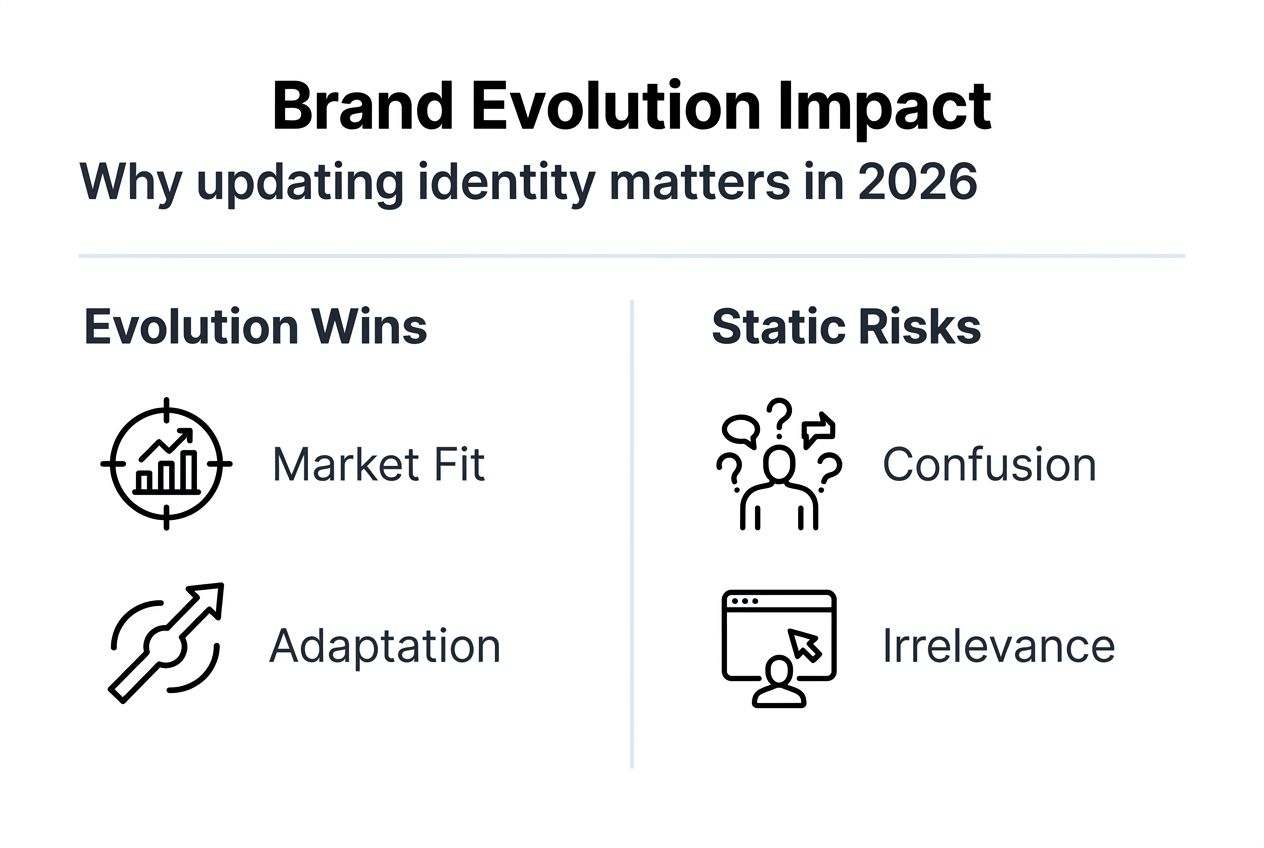
Consider the competitive landscape in 2026. More coaches, consultants, and founders enter the market every year. Standing out requires a brand that feels current, professional, and precisely targeted to your ideal client. Evolution keeps you competitive and positions you as a leader rather than a follower.
Successful brand evolution requires a delicate balance. Change too much and you alienate existing clients. Change too little and you stay stuck in the past. The key is understanding what to preserve and what to update.
Brand evolution differs fundamentally from full rebranding. Evolution involves strategic, incremental updates that maintain core identity while refreshing key elements. Rebranding typically means starting over with new positioning, visuals, and messaging. One preserves equity, the other rebuilds it.
| Aspect | Full Rebranding | Brand Evolution |
|---|---|---|
| Cost | High, often $50K+ | Moderate, $5K to $25K |
| Risk | High client confusion risk | Lower, maintains continuity |
| Client Impact | Requires re-education | Feels like natural growth |
| Timeline | 6 to 12 months | 2 to 4 months |
| Core Identity | Often completely new | Preserved and refined |
Evolving brands intentionally without full rebranding preserves core values while updating relevance, helping retain existing clients while attracting new audiences. This approach protects your investment in brand equity while allowing necessary growth.
Elements to preserve during evolution:
Elements typically safe to update:
The improve brand perception guide offers additional strategies for updating perception while maintaining recognition. Focus on enhancing what works rather than replacing everything.
Pro Tip: Test visual updates with a small subset of your audience before rolling out completely. Share updated brand elements with loyal clients and gather feedback. This reduces risk and often surfaces valuable insights you might have missed.
Transparent communication throughout evolution is essential. When clients understand why you are updating your brand and how it benefits them, they become advocates rather than resisters. Frame evolution as your commitment to serving them better, not as abandonment of what made you trustworthy in the first place.
Approaching brand evolution strategically ensures you make meaningful improvements without creating confusion. Follow this framework to guide your process from assessment through implementation.
Conduct a thorough brand audit. Review every touchpoint where your brand appears. Assess your website, social profiles, marketing materials, client communications, and service descriptions. Identify inconsistencies, outdated elements, and areas where messaging no longer matches your current offerings.
Develop strategic evolution goals. Define what you want your updated brand to accomplish. Are you repositioning for a different audience? Reflecting expanded expertise? Modernizing outdated visuals? Clear goals guide every decision and prevent scope creep.
Engage key stakeholders early. If you have a team, involve them in planning. If you work solo, share ideas with trusted colleagues or mentors. Client feedback is especially valuable. Ask current clients how they perceive your brand and what they value most.
Create a detailed communication plan. Decide how and when you will announce updates. Plan messaging for email, social media, website updates, and direct client outreach. Explain the why behind changes and emphasize what stays the same.
Roll out updates incrementally. Avoid changing everything overnight. Start with your website or primary social platform. Give audiences time to adjust before updating additional channels. This approach lets you test response and make adjustments as needed.
Measure impact systematically. Track key metrics before and after implementation. Monitor website traffic, engagement rates, client inquiries, and conversion rates. Set a 90 day measurement window to assess true impact.
The develop brand identity guide provides additional depth on building strong foundations. For more extensive changes, the rebrand for market alignment resource offers comprehensive strategies.
Best practices for communicating brand updates:
Consider the rebranding strategies article for additional tactical approaches. The most successful evolutions feel like natural progressions rather than abrupt shifts.
Pro Tip: Phase your rollout by audience segment. Update materials for new prospects first, then existing clients, then broader channels. This lets you refine messaging based on initial feedback before reaching your entire audience. It also reduces the risk of overwhelming current clients with too much change at once.
Document your brand evolution process. Create style guides, messaging frameworks, and visual standards. This documentation ensures consistency as you implement updates and provides a reference for future team members or contractors.
Evolution efforts require validation through data. Without measurement, you cannot confirm impact or identify areas needing adjustment. Establish clear metrics before implementing changes so you have baseline comparisons.
Key metrics to measure brand evolution success include client retention rates, engagement growth, brand recognition surveys, and revenue impact over 6 to 12 months. These indicators reveal whether your evolution strengthens or weakens market position.
Track these performance indicators:
| Metric | Baseline Target | Growth Benchmark |
|---|---|---|
| Client retention rate | Current rate | Maintain or improve by 5% |
| Social engagement rate | Current average | Increase 10 to 20% |
| Website conversion rate | Current rate | Improve 5 to 15% |
| Email open rates | Current average | Lift 8 to 12% |
| Revenue growth | Previous quarter | Increase 5 to 15% |
| Brand recognition score | Survey baseline | Improve 10 to 25% |
Establish regular feedback loops to ensure ongoing brand relevance. Survey clients quarterly about brand perception and service alignment. Monitor social media comments and direct messages for sentiment shifts. Track which content resonates most and why.
Tips for interpreting evolution data:
If certain updates underperform, adjust quickly. Brand evolution should be iterative, not set in stone. Use data to refine messaging, tweak visuals, or shift positioning. The most successful brands treat evolution as ongoing rather than a one time project.
Schedule quarterly brand reviews to assess alignment between identity and business reality. As your offerings evolve, your expertise deepens, and market conditions shift, your brand should adapt accordingly. Regular reviews prevent the misalignment that necessitates major overhauls.
Evolving your brand identity while running your business creates competing demands on your time and expertise. Working with a strategic partner who understands founder challenges can accelerate your progress while reducing stress.

We specialize in helping founders, coaches, and consultants clarify their brand identity and build marketing systems that drive sustainable growth. Our approach focuses on strategic evolution that preserves what makes your brand valuable while updating elements that no longer serve your current goals.
The Marketing Jump Start service provides a focused brand audit, messaging review, and quick win recommendations to kickstart your evolution process. We assess your current brand presence, identify misalignment areas, and create a clear action plan for strategic updates.
Our work is built on The Aligned Impact Model, combining brand clarity with practical execution. We help you move from scattered marketing to a cohesive system that attracts ideal clients and supports predictable revenue growth. Reasonate Studio offers both done for you services and strategic consulting to match your specific needs and timeline.
Brand identity evolution involves strategic, incremental updates that keep your brand relevant while preserving core elements like values, voice, and key visuals. Rebranding is a more radical overhaul that typically changes positioning, messaging, and visual identity completely. Evolution maintains continuity and protects existing brand equity, while rebranding starts fresh.
Watch for client feedback signaling confusion about your offerings or messaging. Notice when your brand no longer reflects your current expertise or service mix. Monitor competitor positioning and audience expectation shifts. If your visual identity feels dated or your messaging does not match who you serve now, evolution is likely overdue.
Strategic brand evolution maintains core values and messaging consistency, which helps retain client trust and loyalty. Transparent communication about why you are updating and what benefits clients can expect reduces confusion significantly. Incremental changes feel like natural growth rather than abandonment, especially when you emphasize continuity alongside improvement.
Most focused brand evolution projects take 2 to 4 months from audit through implementation. The timeline depends on scope, with visual updates typically faster than messaging overhauls. Plan for 60 to 90 days of measurement after implementation to assess impact. Rushed evolution often creates more problems than it solves, so allow adequate time for strategic planning and stakeholder input.
Brand evolution typically costs between $5,000 and $25,000 depending on scope and whether you hire an agency or work with freelancers. DIY approaches reduce costs but require significant time investment. Focus spending on strategy first, then design and implementation. Many founders benefit from professional guidance on positioning and messaging while handling some execution internally.