
August 4, 2026
Marketing Plan Template Google Sheets for Small Business Owners

Comprehensive guide to service brand development—core definition, brand attributes, step-by-step process, client trust, and common pitfalls to avoid.

Over 60 percent of American clients say they are more likely to stick with service brands they trust. Building a strong service brand is now essential, especially as competition climbs in every industry. For service providers, mastering service brand development goes beyond designing a memorable logo. It means creating genuine connections, delivering consistent expertise, and showing clear value where it matters most to American clients.
Service brand development is a strategic process of creating a distinctive, compelling identity for service-based businesses that transcends traditional product marketing. Unlike tangible product branding, service brand development focuses on communicating intangible value, building trust, and establishing meaningful connections with potential clients. In this approach, the brand becomes more than a logo or visual identity—it represents the entire experience and promise of service delivery.
At its core, service brand development embraces the principles of service-dominant logic, which views service as the fundamental basis of economic exchange. This perspective shifts the focus from transactional interactions to collaborative value creation between service providers and consumers. Brands that successfully implement this approach recognize that their brand’s strength lies not just in what they sell, but in the relationships and interactions they cultivate. Strategic brand identity frameworks become critical in translating these intangible experiences into compelling narratives.
The development of a service brand involves several key elements that differentiate it from product-based branding:
Successful service brand development also integrates insights from the service-profit chain theory, which demonstrates how employee satisfaction directly influences customer experiences. This means that internal brand alignment—ensuring team members embody the brand’s values and mission—becomes just as crucial as external marketing efforts. Businesses that invest in creating a cohesive internal culture can significantly enhance their service brand’s perceived quality and customer loyalty.
A standout service brand distinguishes itself through strategic differentiation that goes beyond traditional marketing approaches. Unlike product-based brands, service brands must create compelling narratives that communicate expertise, reliability, and unique value propositions. The most successful service brands understand that their primary asset is the experience they deliver, which requires a multifaceted approach to brand development that resonates deeply with target audiences.

Trust emerges as a fundamental cornerstone in building a remarkable service brand. Research consistently demonstrates that affective and cognitive trust play crucial roles in mediating relationships between corporate brands and consumers. Essential brand identity strategies help service providers transform intangible offerings into credible, trustworthy experiences that clients can confidently rely on. This means developing a brand persona that communicates competence, transparency, and genuine commitment to solving client challenges.
Key elements that characterize a standout service brand include:
Additionally, modern service brands must recognize the critical role of digital reputation and online engagement. Contemporary research highlights the significant impact of electronic word-of-mouth (eWoM) in shaping brand perceptions. Service providers must proactively manage their online presence, encouraging positive client testimonials, engaging meaningfully on digital platforms, and demonstrating responsiveness to feedback. By integrating these strategic elements, service brands can create distinctive identities that not only attract clients but also foster long-term loyalty and advocacy.
Building a service brand requires a systematic and intentional approach that transforms abstract capabilities into a compelling narrative of value and expertise. Unlike product-based branding, service brand development demands a deep understanding of how professional capabilities translate into meaningful client experiences. Successful service brands do not simply sell services—they craft holistic experiences that address client needs beyond surface-level transactions.
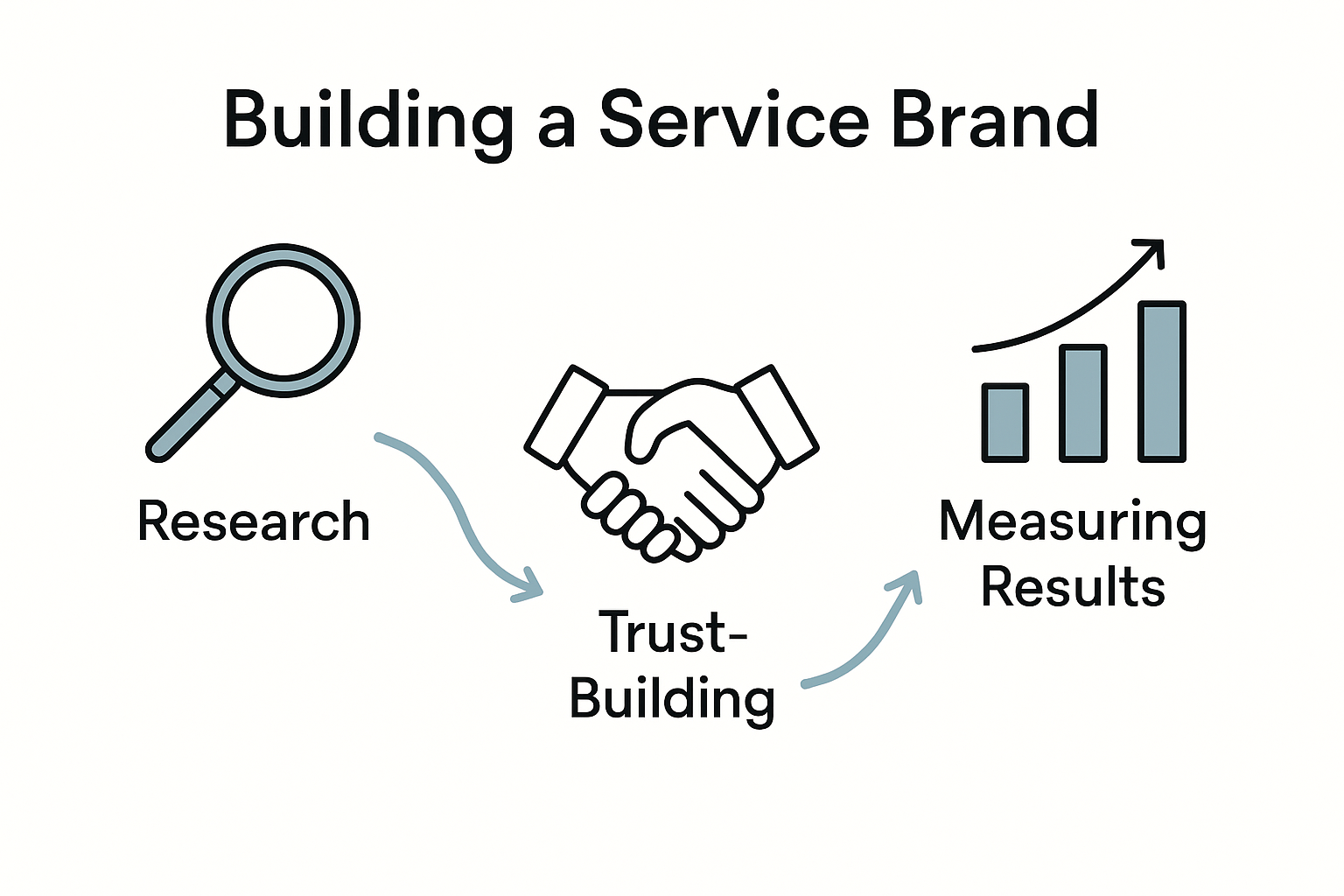
Strategic brand development approaches recognize that the process begins with comprehensive internal assessment and external market understanding. This means thoroughly examining your unique professional capabilities, understanding client pain points, and identifying the distinctive value you bring to the marketplace. Market positioning becomes critical, requiring service providers to articulate their specialized expertise in ways that resonate with target audiences and differentiate them from competitors.
The comprehensive service brand building process typically involves several strategic stages:
Advanced service brand building also incorporates sophisticated measurement techniques like the Social Promoter Score, which helps evaluate customer loyalty and predict potential financial outcomes. This approach transforms brand development from a subjective exercise into a data-driven strategic initiative. By systematically addressing each stage with intention and precision, service professionals can create brands that not only attract clients but build lasting, trust-based relationships that drive sustainable business growth.
Trust represents the foundational currency of service brands, transforming transactional interactions into meaningful, long-term relationships. Service providers must recognize that client loyalty emerges not from isolated transactions, but from consistent demonstration of reliability, expertise, and genuine commitment to client success. Every interaction becomes an opportunity to reinforce or potentially erode the delicate trust ecosystem.
Brand consistency strategies play a critical role in establishing predictable credibility. Research consistently demonstrates that trust is built through repeated, reliable experiences that align with client expectations. This means developing communication protocols, service delivery standards, and engagement approaches that create a sense of dependability. Clients want to know that their experience will be consistently high-quality, regardless of which team member or touchpoint they interact with.
Key strategies for building client trust and loyalty include:
Transparent Communication
Be direct about capabilities and limitations
Provide clear expectations upfront
Communicate proactively during service delivery
Demonstrable Expertise
Share case studies and proven results
Provide educational content
Showcase professional credentials
Responsive Problem Resolution
Acknowledge issues quickly
Take ownership of challenges
Develop clear recovery protocols
Personalized Client Experiences
Understand individual client needs
Customize service approaches
Create memorable interactions
Advanced trust-building goes beyond surface-level interactions. Contemporary research highlights the profound impact of peer influence and consistent brand experiences in fostering client loyalty. Service brands that systematically prioritize trust as a strategic imperative can transform casual clients into passionate advocates. By creating a holistic approach that combines emotional intelligence with professional reliability, service providers can build resilient relationships that withstand competitive pressures and economic fluctuations.
Service brand development is fraught with potential pitfalls that can undermine even the most well-intentioned professional efforts. Many service providers inadvertently sabotage their brand by failing to understand the nuanced differences between product and service marketing. The intangible nature of services requires a more sophisticated approach that goes beyond traditional branding techniques, demanding heightened emotional intelligence and strategic communication.
Branding strategies for small businesses reveal that online reputation management is no longer optional but absolutely critical. Contemporary research underscores the significant impact of electronic word-of-mouth on brand perceptions, highlighting how quickly reputation can be built or destroyed in the digital landscape. Service providers who neglect their online presence risk becoming invisible or, worse, being defined by unmanaged digital narratives.
Critical mistakes that can derail service brand development include:
Successful service brands understand that development is an ongoing process of refinement and adaptation. By proactively addressing potential brand development mistakes, service providers can create resilient, dynamic brands that not only attract clients but build lasting, trust-based relationships. The key lies in maintaining authenticity, demonstrating consistent expertise, and remaining adaptable in a rapidly changing professional landscape.
Building a standout service brand means mastering trust, consistent messaging, and authentic storytelling as highlighted in the expert guide. You may be facing challenges turning your unique expertise and client-focused experiences into a clear, compelling brand that builds loyalty and captures attention. The solution lies in aligning your brand foundations with intentional design and strategic execution to create meaningful client connections that drive sustainable growth.
At Reasonate Studio, we understand the emotional and tactical demands of service brand development. Our proprietary Aligned Impact Model™ simplifies the complex process by uncovering your core values, positioning, and messaging to build a cohesive brand identity. We combine creativity with operational discipline to help entrepreneurs and small businesses avoid common pitfalls like inconsistent messaging and neglecting digital engagement while cultivating trust and authenticity.
Are you ready to transform your side hustle or existing business into a trusted service brand that resonates deeply with your audience?
Discover how strategic brand development can take your service offerings from invisible to invaluable. Visit Reasonate Studio now and explore our tailored solutions to build a service brand anchored in clarity, confidence, and long-term success.
Service brand development is a strategic process focused on creating a unique identity for service-based businesses, emphasizing the emotional and intangible value of the service rather than just the physical product.
Effective service brands are characterized by consistent messaging, demonstrable expertise, authentic storytelling, and client-centric design, all aimed at creating reliable client experiences.
Building trust involves transparent communication, demonstrating expertise through results, responding promptly to issues, and personalizing client experiences to foster long-term relationships.
Common mistakes include inconsistent brand messaging, neglecting digital engagement, overpromising and underdelivering, and ignoring client feedback, all of which can undermine brand credibility.