September 1, 2026
Understanding B2C Business to Consumer Dynamics


Role of design in marketing explained—discover its impact on branding, messaging clarity, customer trust, and business growth with actionable strategies.

Over 90 percent of American consumers admit that they judge a brand within seconds based on its visual presentation. In a world flooded with choices, design is the first thing that shapes trust and connects brands to their audience. Understanding how thoughtful design drives perception and business growth can give entrepreneurs a real advantage in a competitive market.
Design is far more than visual decoration in marketing—it’s a strategic communication tool that transforms how brands connect with their audience. When executed thoughtfully, design becomes the silent ambassador of your brand’s core message, values, and promise.
At its core, marketing design involves creating visual assets that do more than look attractive. The goal is crafting a visual language that speaks directly to your target audience’s emotions, needs, and aspirations. Research from leading marketing studies indicates that well-executed design can significantly influence consumer perception and purchasing decisions. Understanding what is brand marketing requires recognizing design as a critical strategic element, not just an aesthetic afterthought.

Effective marketing design operates on multiple strategic levels. First, it establishes visual consistency across all brand touchpoints—website, social media, print materials, and digital advertisements. This consistency builds brand recognition and trust. Second, design translates complex brand narratives into immediate, visceral experiences that resonate emotionally. A single color palette, typography choice, or graphic element can communicate professionalism, creativity, reliability, or innovation without using a single word.
For entrepreneurs and small business owners, investing in purposeful design isn’t a luxury—it’s a fundamental business strategy. Design bridges the gap between your brand’s internal vision and external perception, transforming abstract concepts into tangible visual experiences that potential customers can instantly understand and connect with. By treating design as a strategic tool rather than mere decoration, businesses can create powerful visual narratives that differentiate them in increasingly competitive markets.
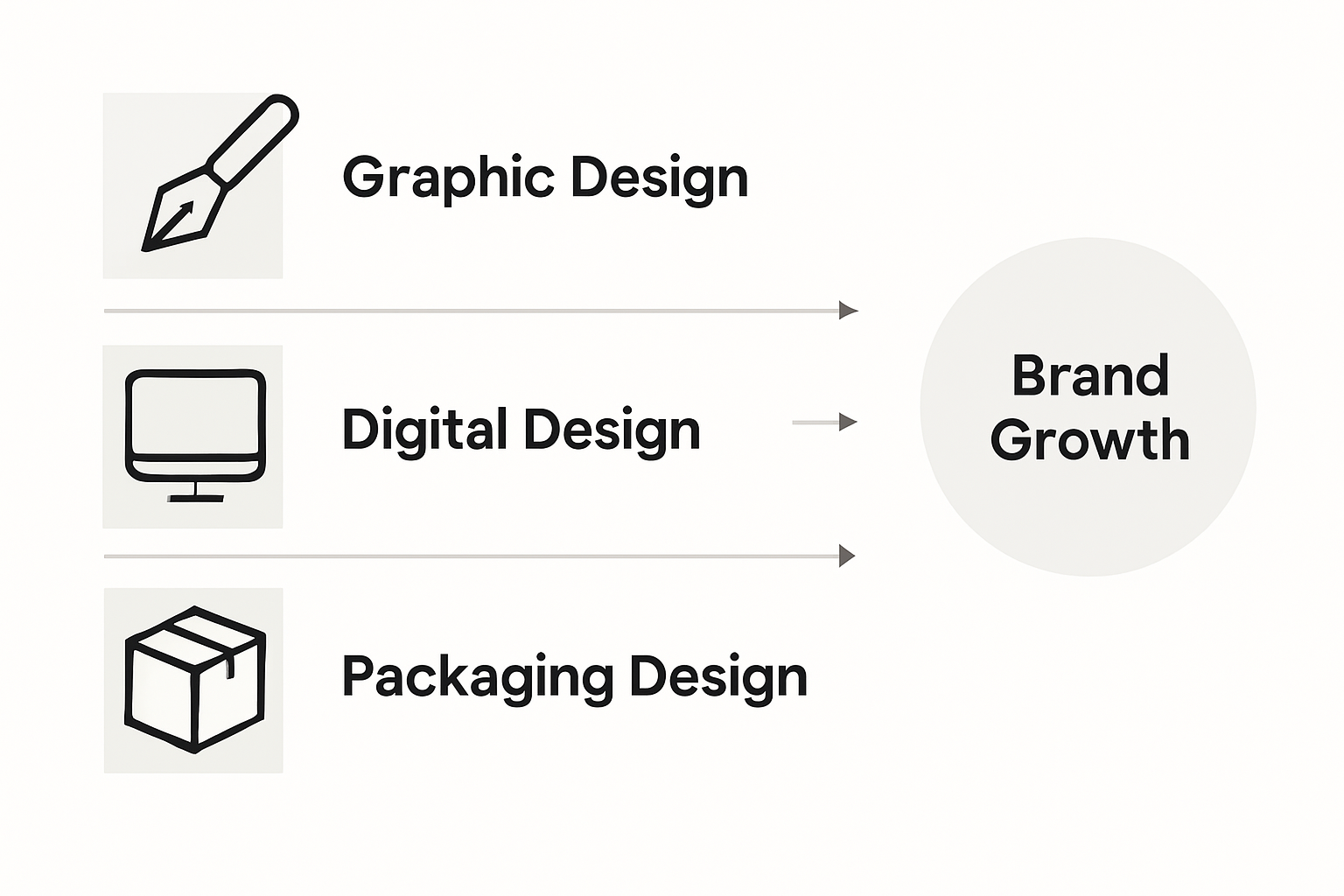
Marketing design encompasses a diverse array of visual strategies that go far beyond simple graphics. Graphic design, the foundational pillar of marketing visuals, includes everything from logos and brand identity materials to social media graphics and print advertisements. Each design type serves a unique purpose in communicating a brand’s narrative and connecting with target audiences.
Digital marketing has expanded the design landscape significantly. Understanding digital marketing best practices reveals how specialized design types like web design, user interface (UI), and user experience (UX) design play critical roles in engaging potential customers. Web design determines how users interact with online platforms, while UI and UX design ensure those interactions are intuitive, pleasant, and aligned with brand objectives. Infographic designs, including static, animated, and interactive formats, have emerged as powerful tools for transforming complex information into digestible visual narratives.
Beyond digital platforms, physical design elements remain crucial in marketing strategy. Packaging design serves as a critical touchpoint, communicating brand personality directly to consumers through color, texture, and structural choices. Motion graphics and video design have also become increasingly important, allowing brands to tell dynamic stories that capture attention in seconds. Specialized design types like app design and motion infographics demonstrate the evolving complexity of marketing visual communication, offering brands innovative ways to stand out in crowded marketplaces.
For entrepreneurs and small business owners, understanding these design types isn’t just about aesthetics—it’s about strategic communication. Each design format offers a unique channel to convey brand values, engage target audiences, and differentiate from competitors. By thoughtfully selecting and implementing the right design approaches, businesses can transform visual elements from mere decorative components into powerful marketing tools that drive meaningful connections and business growth.
Brand perception is a delicate psychological landscape where visual elements play a profound role in shaping consumer understanding and emotional connection. Design acts as a powerful translator, transforming abstract brand values into tangible visual experiences that communicate meaning faster than words ever could. Every design choice—from color palette to typography—sends subtle signals about a brand’s personality, professionalism, and promise.
Research demonstrates that visual design elements significantly influence consumer psychology. How to Improve Brand Perception for Sustainable Growth reveals that structured, intentional design can enhance consumer beliefs about a brand’s reliability and performance. Consumers subconsciously interpret design elements as indicators of brand quality. For instance, curvy digital designs are perceived as friendlier and more approachable, while angular designs might communicate precision and professionalism.
The most impactful design elements go beyond aesthetic appeal—they create emotional resonance. Logos, color schemes, and visual narratives work together to build brand trust and establish immediate recognition. A well-crafted design can communicate a brand’s core values, mission, and unique personality in milliseconds. This instant communication is crucial in a marketplace where consumers make split-second decisions about which brands to engage with or ignore.
For entrepreneurs and small business owners, understanding design’s psychological impact is more than a marketing strategy—it’s a critical business tool. By carefully crafting visual experiences that align with their brand’s core message, businesses can create powerful first impressions, build credibility, and differentiate themselves in crowded markets. Design becomes a strategic language that speaks directly to potential customers, bridging the gap between business intention and audience perception.
Design systems represent the strategic blueprint that transforms scattered visual elements into a cohesive brand language. These comprehensive frameworks define how every visual component—from color palettes and typography to icons and imagery—should be consistently applied across all marketing channels. By establishing clear guidelines, design systems ensure that a brand communicates with a unified voice, regardless of where or how consumers encounter its messaging.
What Is Consistency in Branding? Complete Guide reveals that successful design systems go beyond aesthetic uniformity. They create a powerful psychological touchpoint that builds brand recognition and consumer trust. Research demonstrates that Visual Identity (VI) design systems directly enhance customer loyalty and increase brand value. When consumers encounter consistent design elements across different platforms, they subconsciously perceive the brand as more professional, reliable, and credible.
The key components of an effective design system include comprehensive style guides, reusable design components, and clear usage rules. These systems enable marketing teams and designers to collaborate seamlessly, ensuring that every piece of content—from social media graphics to website interfaces—feels like an authentic extension of the brand. By establishing standardized visual rules, businesses can streamline their creative processes, reduce design inconsistencies, and create a more memorable brand experience.
For entrepreneurs and small business owners, investing time in developing a robust design system is not just a creative exercise—it’s a strategic business decision. A well-crafted design system eliminates guesswork, provides clear creative direction, and allows teams to scale their marketing efforts efficiently. It transforms design from a series of disconnected visual choices into a powerful, strategic tool that communicates brand values, builds consumer confidence, and differentiates the business in competitive markets.
Design errors can silently sabotage a brand’s potential, transforming what should be a powerful marketing tool into a barrier that repels potential customers. Many entrepreneurs unknowingly make critical design mistakes that undermine their brand’s credibility, perception, and growth potential. These missteps often stem from a lack of strategic understanding about how visual elements communicate beyond their aesthetic surface.
7 Branding Mistakes to Avoid for Small Business Success highlights the importance of understanding target audience psychology in design. One of the most significant design mistakes is creating generic, one-size-fits-all visual identities that fail to resonate with specific audience segments. Businesses often make the error of prioritizing personal preferences over strategic audience alignment. This disconnect can lead to designs that look attractive to the business owner but fail to engage the intended customer base, resulting in reduced marketing effectiveness and missed growth opportunities.
Technical design mistakes can also dramatically impact brand perception. Inconsistent branding, poor color choices, illegible typography, and low-quality imagery communicate unprofessionalism and lack of attention to detail. These visual inconsistencies send subconscious signals about a brand’s reliability and competence. When design elements appear disjointed or amateur, potential customers may question the quality of the products or services being offered. Successful brands understand that every visual touchpoint—from social media graphics to website layouts—must communicate a cohesive, intentional narrative.
For entrepreneurs and small business owners, recognizing and avoiding these design pitfalls is crucial. Design is not merely decorative but a strategic communication tool that can either attract or repel potential customers. By investing time in understanding design principles, audience psychology, and maintaining visual consistency, businesses can transform their marketing materials from potential growth barriers into powerful engagement tools. The most successful brands view design as a critical business strategy, using visual elements to build trust, communicate value, and differentiate themselves in competitive markets.
If you are struggling with inconsistent branding or design that fails to connect with your audience, you are not alone. This article highlights how crucial a thoughtful design system and strong brand perception are to transforming your visuals into trust-building tools that drive real business growth. At Reasonate Studio, we specialize in helping entrepreneurs and small business owners overcome these challenges by creating intentional, aligned marketing strategies that fuse brand identity, messaging, and design into one cohesive story.
Take the next step toward a brand that truly resonates with your ideal customers. Visit Reasonate Studio to explore how our proven Aligned Impact Model™ guides you through uncovering your brand foundations and executing measurable, confident marketing strategies. Don’t let common design mistakes or fragmented systems hold your business back any longer. Work with a partner who understands that design is not just decoration but a strategic asset that builds lasting trust and accelerates growth. Start building your brand with clarity and confidence today.
Design serves as a strategic communication tool that helps brands connect with their audience, conveying their core message, values, and promise visually.
Design shapes consumer perceptions by communicating brand personality and professionalism through visual elements like color, typography, and imagery, which can impact customer trust and recognition.
Effective marketing design includes graphic design, web design, UI/UX design, packaging design, and motion graphics, each serving unique purposes in engaging and converting target audiences.
Common design mistakes include using generic visuals, inconsistent branding, poor color choices, and low-quality imagery which can undermine a brand’s credibility and hinder growth.