September 1, 2026
Understanding B2C Business to Consumer Dynamics


Learn how to rebrand without losing customer trust, from clarifying your strategy and positioning to launching a stronger market presence.

You built a business that matters, but somewhere along the way, your brand stopped reflecting where you are now. Your website feels dated. Your messaging no longer connects. Competitors are capturing attention you used to own. Rebranding is not about chasing trends or slapping on a new logo. It is about realigning your brand with the audience you serve and the value you deliver. This guide walks you through a strategic, emotionally intelligent approach to rebranding that strengthens market presence, preserves customer trust, and positions your business for sustainable growth in 2026.
| Point | Details |
|---|---|
| Strategy beats aesthetics | Prioritize emotional intelligence and customer insight over visual changes alone for lasting impact. |
| Target the right audience | Successful rebrands focus on connecting with a clearly defined audience, not just moving away from old identity. |
| Involve stakeholders early | Early engagement with team members and customers builds buy-in and surfaces valuable perspectives before launch. |
| Learn from real examples | Studying successful brand transformations and failures reveals critical do’s and don’ts. |
| Measure and iterate | Set clear KPIs and remain flexible to refine your brand based on post-launch feedback and data. |
Rebranding is not a cosmetic update. It is a strategic decision that requires clear reasoning and careful timing. Many founders consider rebranding when their business has outgrown its original identity, but knowing when to act makes the difference between momentum and confusion.
Common reasons to rebrand include an outdated visual identity that no longer reflects your expertise, significant market shifts that change customer expectations, the need to reach a new audience segment, or reputation challenges that require repositioning. You might also rebrand after a merger, expansion into new services, or when competitors have eroded your market position.
Recognizing the signs early helps you act strategically. Look for stagnant growth despite quality work, declining engagement on social platforms, feedback that your brand feels disconnected from your actual services, or pressure from competitors who seem more modern and relevant. These indicators suggest your brand may no longer serve your business goals.
The importance of emotional intelligence in understanding customer perception cannot be overstated. Before changing anything, you need to understand how customers currently feel about your brand, what they value most, and what changes might alienate them. This emotional research forms the foundation of trust-preserving rebrands.
Timing matters as much as reasoning. Avoid rebranding during peak sales seasons, major product launches, or periods of internal instability. Choose a moment when you have the resources, team bandwidth, and market conditions to support a thoughtful transition.
Pro Tip: Conduct emotional research through one-on-one customer interviews asking what they associate with your brand, what they would miss if it changed, and what improvements they wish existed. These insights reveal which elements to preserve and which to transform.
Successful rebranding starts long before design work begins. The planning phase determines whether your rebrand strengthens or weakens your market position. This is where strategy, research, and stakeholder alignment create the foundation for everything that follows.

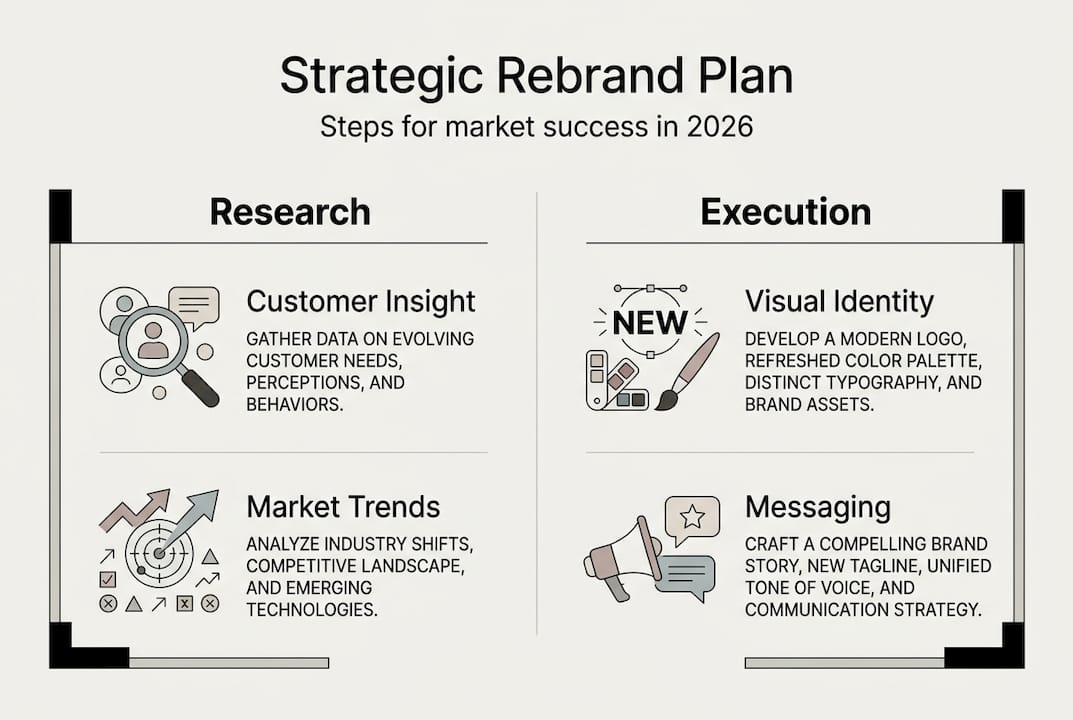
Begin with thorough customer and market research that goes beyond demographics. Understand the emotional drivers behind purchase decisions, the language your ideal clients use to describe their challenges, and the values that matter most to them. This research should include competitor analysis, industry trend evaluation, and deep audience profiling that captures both rational and emotional factors.
Involving stakeholders early creates buy-in and surfaces diverse perspectives that strengthen your strategy. Stakeholders include team members, loyal customers, strategic partners, and even critics who can offer honest feedback. Their input helps you avoid blind spots and build a rebrand that resonates across multiple touchpoints.
AI-powered tools can accelerate discovery by analyzing customer sentiment, identifying content gaps, and surfacing market opportunities faster than manual research. However, these tools work best when grounded in human empathy. Use technology to scale your research, but validate findings through qualitative conversations that capture nuance and context.
Defining a clear target audience is non-negotiable. Successful rebrands connect with specific people facing specific challenges. Vague targeting leads to generic messaging that fails to resonate. Know exactly who you serve, what keeps them up at night, and how your brand uniquely solves their problems.
Plan holistically across messaging, visual identity, and customer experience. Your rebrand should feel cohesive whether someone encounters you on social media, your website, email, or in person. This requires documenting brand voice guidelines, visual standards, and experience principles that guide every touchpoint.
| Planning Element | Key Tools | Expected Insights |
|---|---|---|
| Customer Research | Interviews, surveys, social listening | Emotional drivers, language patterns, pain points |
| Market Analysis | Competitor audits, trend reports | Positioning gaps, opportunity areas |
| Stakeholder Input | Workshops, feedback sessions | Internal alignment, blind spot identification |
| Audience Definition | Persona development, journey mapping | Behavioral patterns, decision factors |
Pro Tip: Create a stakeholder matrix that lists every person or group affected by your rebrand, their level of influence, their concerns, and how you will engage them throughout the process. This prevents surprises and builds support.
Execution is where strategy becomes visible. This phase transforms research and planning into tangible brand elements that your audience experiences. Done well, execution feels seamless and intentional. Done poorly, it confuses customers and damages trust.
Update your visual identity consistently across every touchpoint. This includes your logo, color palette, typography, imagery style, website design, social media templates, email signatures, and any physical materials. Inconsistency during a rebrand signals lack of professionalism and undermines confidence in your business.
Craft messaging that resonates emotionally while clearly reflecting your new brand promise. Your messaging should address customer pain points directly, communicate your unique value, and use language that feels authentic to your brand voice. Avoid jargon or overly clever copy that obscures meaning.
Plan your launch strategically. You can choose a phased approach that gradually introduces changes, giving customers time to adjust, or an impactful all-at-once reveal that creates momentum and excitement. The right choice depends on your audience, the scale of change, and your business model. Service-based businesses often benefit from phased launches, while product brands may prefer bold reveals.
Avoid common mistakes that derail rebrands. Unclear audience targeting leads to messaging that connects with no one. Abrupt changes without explanation cause customer confusion and potential loss. Neglecting internal training means your team cannot represent the brand confidently. Focusing solely on aesthetics without strategic foundation creates a pretty brand that fails to drive business results.
Successful rebrands like Old Spice demonstrate the power of rebranding TO a clearly defined audience. Old Spice shifted from older men to younger consumers with humor and cultural relevance, resulting in 107% sales growth. Apple’s turnaround under Steve Jobs focused on simplicity and innovation, targeting creative professionals and early adopters. These brands succeeded because they knew exactly who they wanted to reach.
Failures often stem from losing sight of core audience needs. When brands rebrand away from their identity without a clear destination, they alienate existing customers without gaining new ones. Gap’s 2010 logo change lasted six days because it ignored customer attachment to the original. Tropicana’s 2009 packaging redesign caused a 20% sales drop in two months because loyal customers could not recognize their product.
Launch Considerations:
| Rebrand Example | Target Shift | Result | Key Lesson |
|---|---|---|---|
| Old Spice | Older men to younger consumers | 107% sales increase | Clear audience targeting drives growth |
| Apple | Mass market to creative professionals | Market leadership | Simplicity and innovation resonate when authentic |
| Gap | Existing customers to undefined new audience | Failed in 6 days | Do not abandon loyal customers without clear direction |
| Tropicana | Existing customers to modernized look | 20% sales drop | Preserve recognition for established brands |
Launching your rebrand is not the finish line. Measuring impact and making data-informed adjustments determines whether your rebrand delivers lasting business results. This phase separates rebrands that transform businesses from those that simply look different.
Set clear KPIs related to brand awareness, customer sentiment, and sales performance. Brand awareness metrics include website traffic, social media reach, search volume for your brand name, and media mentions. Customer sentiment shows up in survey responses, review ratings, social comments, and direct feedback. Sales metrics include conversion rates, average order value, customer acquisition cost, and revenue growth.
Collect qualitative feedback from customers and stakeholders after launch. Send surveys asking how they perceive the rebrand, what resonates most, and what feels unclear. Monitor social media conversations and review sites for unsolicited opinions. Schedule follow-up interviews with key clients to understand their experience of the transition.
Use data-driven insights to refine branding elements and messaging. If certain visual elements generate confusion, adjust them. If messaging does not resonate as expected, test alternative approaches. If specific customer segments respond differently than anticipated, tailor your communication accordingly. The goal is continuous improvement based on real-world response.
Remain flexible and open to making adjustments. Prioritizing strategy over aesthetics means being willing to evolve based on what works, not stubbornly defending initial decisions. The best rebrands iterate intelligently, using feedback to strengthen brand-market fit over time.
Common Post-Rebrand Pitfalls to Avoid:
| KPI Category | Specific Metrics | Measurement Timeline | Action Triggers |
|---|---|---|---|
| Brand Awareness | Website traffic, social reach, search volume | Weekly for first month, then monthly | 20% decrease signals messaging issues |
| Customer Sentiment | Survey scores, review ratings, social sentiment | Bi-weekly for first quarter | Negative trend requires messaging adjustment |
| Sales Performance | Conversion rate, AOV, revenue growth | Monthly | Declining conversions indicate positioning problems |
| Engagement | Email open rates, social engagement, content performance | Weekly | Low engagement suggests relevance gaps |
Pro Tip: Create a 90-day post-rebrand dashboard tracking your top five KPIs with color-coded indicators for performance. Review it weekly with your team, noting patterns and discussing adjustments. This keeps everyone aligned on what success looks like and enables quick responses to emerging issues.
Rebranding requires strategic thinking, emotional intelligence, and consistent execution across every touchpoint. If you are a founder, coach, or consultant ready to transform your brand but need expert support, we can help.

At Reasonate Studio, we specialize in helping businesses like yours move from scattered marketing to strategic, revenue-generating brands. Our Aligned Impact Model™ combines brand clarity, audience insight, and messaging strategy to create rebrands that strengthen market presence and drive sustainable growth. Whether you need full rebrand support or focused guidance on specific elements, our Marketing Jump Start program provides the strategic foundation and hands-on execution to bring your vision to life. We work directly with you to ensure your rebrand reflects who you truly are while connecting with the clients you want to serve.
Look for clear indicators like declining engagement, feedback that your brand feels outdated, or pressure from more modern competitors. Consider whether your current brand accurately reflects your expertise and connects with your ideal clients. If your business has evolved significantly but your brand has not, or if you are struggling to differentiate in your market, these are strong signals. Assess your team’s readiness and available resources before committing, as successful rebranding requires dedicated time and strategic focus.
Emotional intelligence helps you understand how customers currently feel about your brand and what changes might strengthen or damage that connection. It guides decisions about which elements to preserve for continuity and which to transform for growth. Brands that research customer emotions before rebranding build trust by honoring existing relationships while evolving strategically. This approach prevents the common mistake of changing everything without understanding what customers valued in the first place.
Involve key customers early by seeking their input during planning and explaining your reasoning for changes. Keep some recognizable brand elements to maintain continuity, especially if you have strong existing recognition. Communicate transparently about what is changing, why it matters, and what stays the same. Launch gradually if your audience is risk-averse, giving them time to adjust. Most importantly, ensure your rebrand strengthens the value you deliver rather than just changing how it looks.
A strategic rebrand typically takes three to six months from initial research through launch, depending on complexity and scope. Simple rebrands focusing on visual identity and messaging may complete in two to three months. Comprehensive rebrands involving market repositioning, new service offerings, and extensive touchpoint updates often require four to six months. Rush jobs sacrifice strategic depth and increase risk of misalignment. Plan for adequate time to research, develop, test, and launch thoughtfully.
The most common failure is rebranding away from an old identity without a clear target audience or strategic direction. Brands that focus solely on looking different without understanding who they want to attract or what value they uniquely provide end up with pretty designs that do not drive business results. Successful rebrands start with strategy, define a specific audience, and ensure every change supports clearer positioning and stronger market fit.