September 1, 2026
Understanding B2C Business to Consumer Dynamics


Create a focused marketing strategy with clear goals, priorities, channels, and measures that keep execution tied to sustainable growth.

Most founders, coaches, and consultants know their expertise inside and out, but when it comes to marketing, they feel stuck. You might be posting sporadically, tweaking your messaging constantly, or wondering why your efforts aren’t translating into real growth. The truth is, without a clear, documented marketing strategy, you’re building on shaky ground. This guide walks you through exactly how to create a marketing strategy that’s focused, actionable, and designed to drive sustainable growth in 2026.
| Point | Details |
|---|---|
| Clear strategy reduces overwhelm | A documented plan gives you confidence and direction in every marketing decision you make. |
| Prioritization drives results | Focusing on 2 to 3 key priorities at once prevents scattered efforts and accelerates progress. |
| Targeted messaging converts | Speaking your audience’s language through value-led content significantly improves lead generation and ROI. |
| Regular review keeps you relevant | Quarterly strategy adjustments based on data ensure your marketing stays effective and aligned with goals. |
| Right platforms maximize impact | Choosing channels that deliver the highest ROI, like Meta platforms, helps you scale efficiently. |
You’re not alone if your marketing feels like a guessing game. 67% of small and mid-sized businesses operate without a documented marketing plan, which explains why so many struggle to see consistent results. Without a clear roadmap, you end up reacting instead of leading, jumping from tactic to tactic without understanding what actually moves the needle.
The consequences show up fast. 73% of small businesses report low confidence in their marketing effectiveness, and it’s easy to see why. When you lack a strategic foundation, every decision feels uncertain. You post on social media because you think you should, not because it fits into a larger plan. You create content without knowing if it speaks to the right people or moves them closer to buying.
Here’s what typically goes wrong when strategies fail:
“One of the top reasons small businesses fail is lack of clear planning and execution.”
The good news? Once you understand these pitfalls, you can avoid them entirely by building a strategy that’s clear, focused, and designed for your specific business. The key is starting with the right foundation and knowing exactly what to prioritize before you dive into execution. Creating marketing strategies that actually work begins with understanding what makes them fail in the first place.
Before you start building your marketing strategy, you need clarity on three things: who you are as a brand, what you’re trying to achieve, and what truly matters most right now. Too many founders skip this preparation phase and jump straight into tactics, which is exactly why their marketing feels scattered and ineffective.

Start by clarifying your brand foundation. What makes you different? What transformation do you create for clients? What do you stand for? These aren’t fluffy questions. They’re the backbone of every marketing decision you’ll make. When your foundation is solid, your messaging becomes sharper, your content resonates deeper, and your audience understands exactly why they should choose you.
Next, get ruthlessly focused on priorities. Strategic planning helps solopreneurs create simple plans that give clarity, reduce overwhelm, and position their business for sustainable success. The secret? Focus on no more than 2 to 3 priorities at once. This isn’t about doing less, it’s about doing what matters most with full attention and energy.
Here’s how to prepare effectively:
Pro Tip: Create a one-page strategic plan that includes your vision, top priorities, key metrics, and quarterly milestones. Keep it visible on your desk or as your desktop background so you’re constantly reminded of what matters most.
You also need to prepare the right tools and resources. This doesn’t mean investing in expensive software right away. Start with what you need to execute your top priorities. If social media is a priority, choose one or two platforms where your audience actually spends time. If email marketing matters, pick a simple email tool and commit to building your list consistently. A marketing strategy template can help you organize these elements into a cohesive plan.
Here’s a simple preparation checklist:
| Preparation Element | Action Required |
|---|---|
| Brand Foundation | Clarify your unique value, transformation, and brand voice |
| Priority Setting | Choose 2 to 3 focus areas for the next 90 days |
| Goal Alignment | Set measurable targets tied to revenue or leads |
| Tool Selection | Identify platforms and software needed for execution |
| Documentation | Create a one-page plan you can review weekly |
With these preparation steps complete, you’re ready to execute a structured marketing strategy step by step.
Execution is where strategy becomes real. You’ve done the preparation work, now it’s time to build a marketing engine that attracts the right people, nurtures them effectively, and converts them into paying clients. Here’s exactly how to do it.
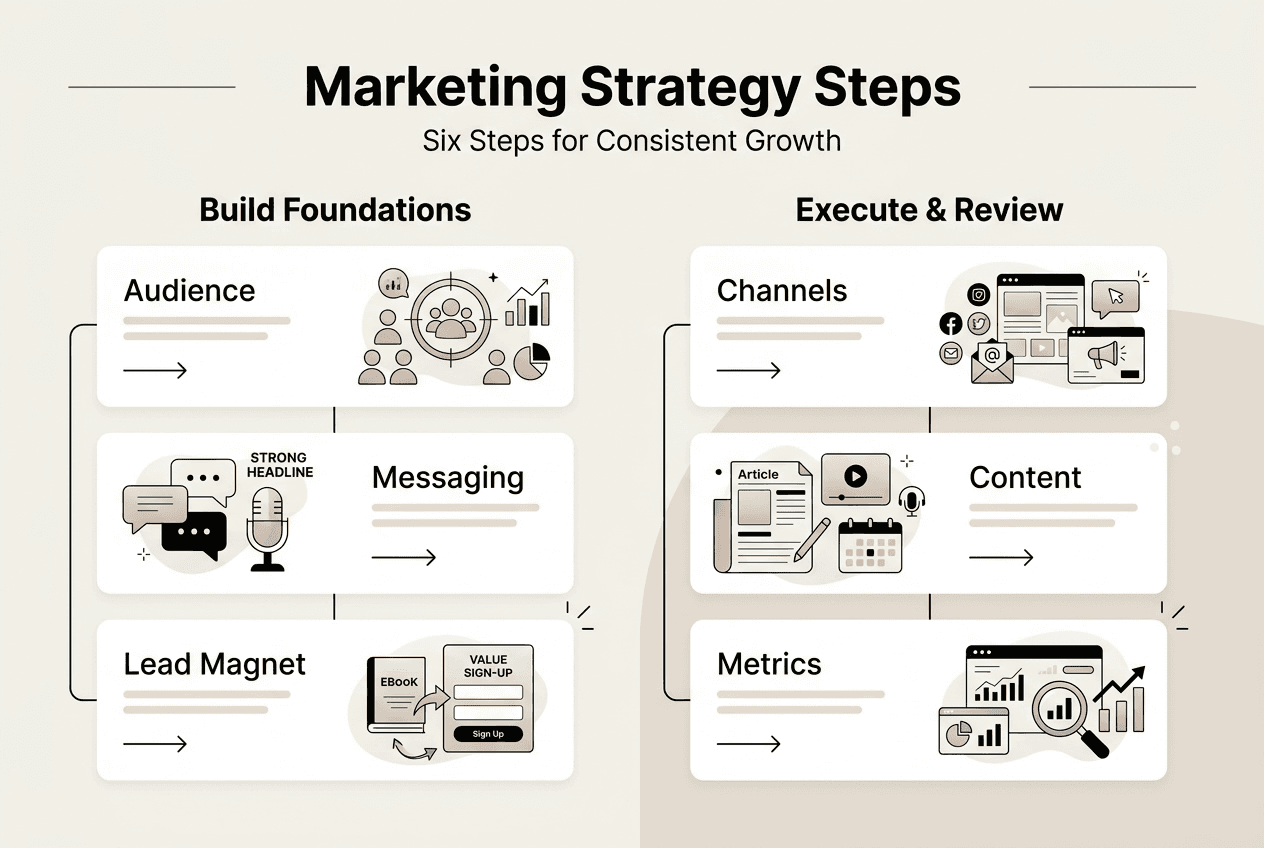
Step 1: Define your target audience with precision. Go beyond basic demographics. Understand their specific challenges, the language they use to describe problems, where they spend time online, and what type of content they trust. Create a detailed persona that guides every piece of content you create.
Step 2: Develop messaging that speaks their language. Targeted messaging significantly improves ad performance because it resonates with what your audience actually cares about. Use the exact words and phrases they use. Address their real fears and desires, not what you think they should want.
Step 3: Create value-led lead magnets. Value-led lead magnets are highly effective for attracting attention and generating leads. Think free webinars, strategy guides, templates, or assessments that solve a specific problem. The key is making them genuinely valuable, not just a thinly veiled sales pitch.
Step 4: Choose your marketing channels strategically. Don’t try to be everywhere. Meta platforms delivered the highest ROI in paid advertising campaigns for many businesses. Focus on platforms where your ideal clients are active and where you can show up consistently. For most coaches and consultants, this means prioritizing one or two channels and doing them exceptionally well.
Step 5: Build a content repurposing system. Create one piece of cornerstone content weekly, then repurpose it across multiple formats and platforms. A single blog post can become social media posts, email newsletter content, short video clips, and quote graphics. This maximizes your effort and keeps your message consistent.
Step 6: Implement a clear conversion pathway. Map out how someone goes from discovering you to becoming a client. This might look like: social media post leads to lead magnet, lead magnet leads to email sequence, email sequence leads to discovery call, discovery call leads to sale. Every piece of content should move people to the next step.
Pro Tip: Create a simple content calendar that maps your core topics to specific conversion goals. Every piece of content should either attract new people, nurture existing leads, or convert warm prospects.
Here’s how different marketing channels compare for coaches and consultants:
| Channel | Best For | Time Investment | ROI Potential |
|---|---|---|---|
| Meta (Facebook/Instagram) | Paid ads, community building, visibility | Medium | High |
| B2B networking, thought leadership, referrals | Medium | Medium to High | |
| Email Marketing | Nurturing leads, building relationships, conversions | Low to Medium | Very High |
| SEO/Blog Content | Long-term organic traffic, authority building | High | High (long-term) |
| YouTube | Video content, tutorials, brand building | High | Medium to High |
Building effective marketing strategies means connecting these execution steps into a cohesive system. You’re not just posting content randomly. You’re creating a strategic pathway that guides your ideal clients from awareness to purchase. Strong brand building strategies support this execution by ensuring everything you create reinforces your unique position in the market.
After executing your strategy, you need to verify its effectiveness and make adjustments to sustain growth.
Your marketing strategy isn’t a set-it-and-forget-it document. It’s a living system that needs regular attention, measurement, and refinement to stay effective. The difference between founders who see consistent growth and those who plateau often comes down to how well they track performance and adjust based on real data.
Start by setting clear KPIs aligned with your business goals. If you’re focused on revenue growth, track metrics like lead conversion rate, average deal size, and customer acquisition cost. If you’re building awareness, monitor reach, engagement rate, and new follower growth. Choose 3 to 5 metrics that directly connect to your top priorities and review them weekly.
Measure progress and adjust quarterly. Every 90 days, conduct a thorough review of what’s working and what’s not. Look at your KPIs, analyze which content performed best, identify which channels drove the most qualified leads, and assess whether your messaging is resonating. Use this data to refine your strategy for the next quarter.
Here’s what to review in your quarterly assessment:
Pro Tip: Create a simple quarterly review template that asks the same questions every time. This consistency makes it easier to spot trends and patterns over multiple quarters.
Scaling comes from doing more of what works, not adding more tactics. When you identify a channel or content type that’s driving results, invest more resources there before expanding elsewhere. A well-defined marketing strategy can increase lead generation by up to 165% in 6 months for B2B companies when executed with focus and consistency.
Here’s a simple KPI tracking framework:
| Metric Category | Example KPIs | Review Frequency |
|---|---|---|
| Awareness | Reach, impressions, new followers, website traffic | Weekly |
| Engagement | Likes, comments, shares, email open rates | Weekly |
| Lead Generation | Lead magnet downloads, email signups, discovery calls booked | Weekly |
| Conversion | Sales closed, revenue generated, conversion rate | Weekly |
| Retention | Client lifetime value, repeat purchase rate, referral rate | Monthly |
Balance growth activities with sustainable practices. Scaling doesn’t mean working more hours. It means building systems that create leverage. This might include repurposing content more efficiently, automating email sequences, or bringing in strategic support for execution-heavy tasks. A marketing strategy scaling framework helps you identify where to invest for maximum impact without burning out.
Remember, the goal isn’t perfection. It’s progress. Small, consistent improvements compound over time. A 10% improvement in conversion rate might not feel dramatic in one month, but over a year, it transforms your business. Stay focused on your core priorities, measure what matters, and adjust based on evidence rather than assumptions.
With ongoing measurement and refinement, your marketing strategy evolves to deliver sustained growth and brand strength.
You now have the framework to build a marketing strategy that drives real growth, but having a plan and executing it consistently are two different challenges. That’s where expert support makes all the difference.
At Reasonate Studio, we specialize in helping founders, coaches, and consultants move from scattered marketing to strategic systems that generate consistent leads and revenue. Our Marketing Jump Start service is designed to quickly clarify your brand foundation, sharpen your messaging, and build a 90-day execution plan tailored to your specific business goals. You’ll work directly with experienced strategists who understand both the emotional and practical sides of marketing.
Whether you need full done-for-you support or strategic guidance to execute your own plan, we combine education with hands-on implementation so you can see results fast. Ready to turn your marketing from overwhelming to effective? Explore our marketing strategy development guide or reach out to discuss how we can support your growth in 2026.
The first step is identifying your target audience with precision and clarifying your core business goals. Before you create any tactics or content, you need to understand who you’re trying to reach, what transformation you provide, and what success looks like for your business. This foundation ensures every marketing decision you make is strategic and aligned with real outcomes.
Quarterly reviews are ideal to keep your strategy relevant and effective. Every 90 days, assess your KPIs, analyze what’s working, and adjust your priorities based on real performance data. Weekly tracking of key metrics helps you spot trends early, but major strategic adjustments should happen quarterly to maintain focus without constant pivoting.
Meta platforms like Facebook and Instagram typically deliver the highest ROI for paid advertising campaigns. Combining paid ads with value-led lead magnets like webinars or free strategy sessions enhances results significantly. LinkedIn also performs well for B2B coaches building authority and generating referrals. The key is choosing one or two channels where your ideal clients are active and committing to consistent, strategic presence rather than spreading yourself thin across every platform.
Use targeted messaging that speaks your audience’s exact language and addresses their specific challenges. Leverage value-led lead magnets to attract qualified prospects who are genuinely interested in what you offer. A well-defined marketing strategy can increase lead generation by up to 165% in 6 months when you focus on the right channels, create genuinely valuable content, and maintain consistent execution. Regularly refresh your content and test different messaging angles to keep attracting new leads while nurturing existing ones through strategic email sequences.