September 1, 2026
Understanding B2C Business to Consumer Dynamics


Build a focused social media strategy with clear goals, audience insight, useful content, disciplined execution, and meaningful performance measures.

Most American businesses face a common challenge. Nearly 68 percent admit their social media strategies lack clear direction or measurable impact. Without a solid foundation, even creative campaigns fail to capture lasting attention. Understanding how to position your brand, define your ideal audience, and create authentic content can make the difference between getting ignored and building real connections that drive results.
Building a successful social media strategy starts with crystal clear brand positioning and strategic goals. Your social media efforts will only deliver meaningful impact when they stem from a deep understanding of your unique brand identity and precise business objectives.
To develop an effective positioning strategy, start by conducting a comprehensive internal analysis. This means diving deep into your business core what makes you different from competitors, your unique value proposition, and the specific problems you solve for your audience. Brand positioning insights reveal that entrepreneurs who can articulate their distinctive market stance tend to attract more engaged followers and potential clients.
Your positioning must connect your brand personality with specific audience needs. Consider mapping out your ideal customer profile identifying their pain points, aspirations, and communication preferences. This approach allows you to craft social media content that speaks directly to their challenges and demonstrates how your brand provides tangible solutions. Research indicates that brands which align their social media messaging with clear organizational objectives see significantly higher engagement and conversion rates.
One critical warning: avoid generic positioning that could apply to anyone in your industry. Your social media strategy should reflect your brand’s authentic voice and unique perspective. Generic content gets lost in the noise and fails to create meaningful connections with your target audience.
As you move forward, remember that your brand positioning is not just a statement its a strategic framework that will guide every piece of content you create and share on social platforms.
Building an effective social media strategy requires a precise understanding of your target audience and the platforms where they are most actively engaged. Your goal in this step is to create a detailed audience profile that will guide your content and platform selection strategy.
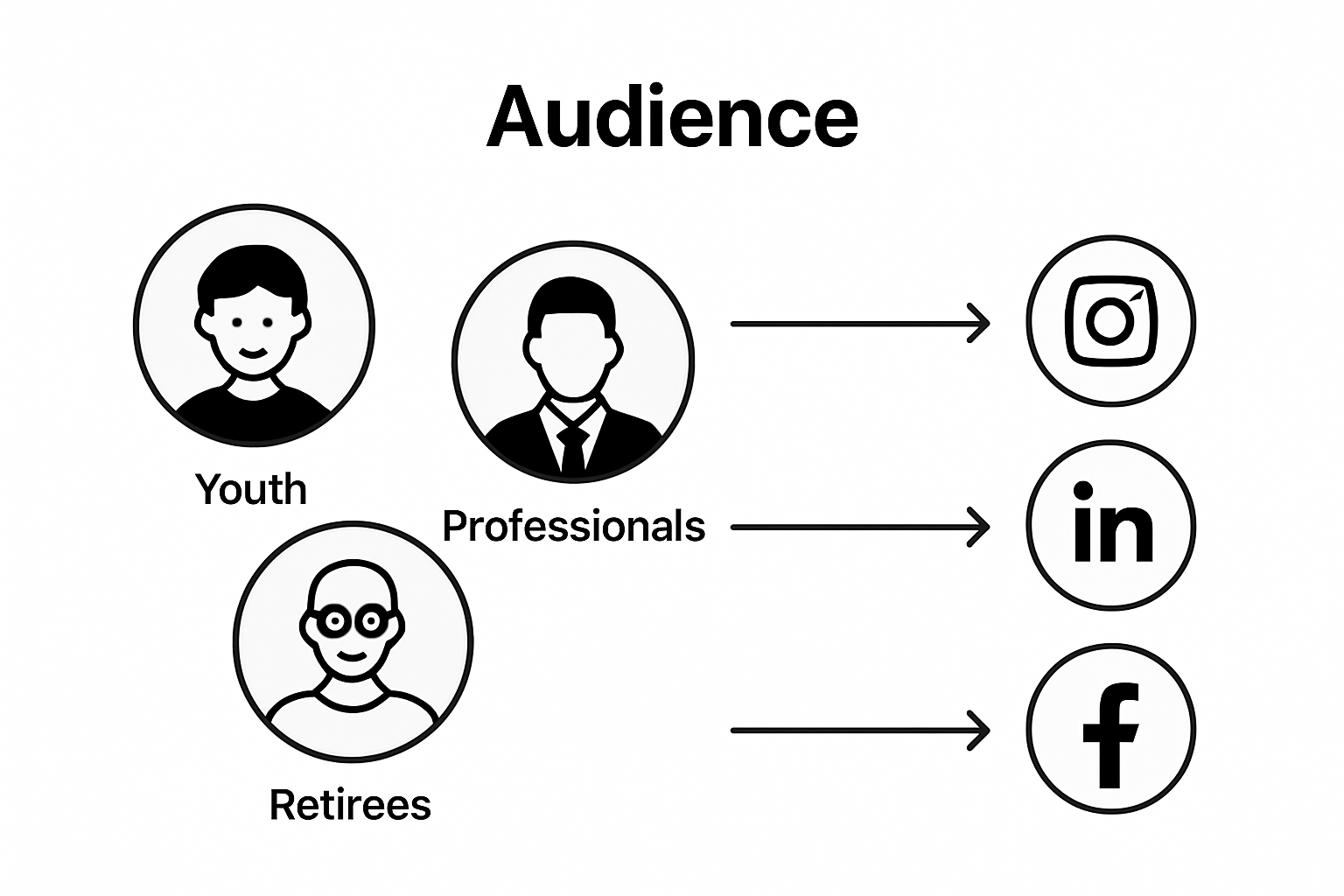
To start defining your audience, break down your potential customers into specific segments based on demographics, psychographics, and behavioral characteristics. Social media marketing strategies demonstrate that audience segmentation goes beyond basic age and location data. Consider factors like professional interests, pain points, communication preferences, and online behavior patterns. Audience research reveals that modern consumers expect highly personalized and targeted content that speaks directly to their unique needs and challenges.
Next, map your audience segments to the most appropriate social media platforms. Each platform has distinct user demographics and engagement styles. For instance, professionals might be more active on LinkedIn, while creative entrepreneurs might find more traction on Instagram or Pinterest. Your platform selection should align with where your ideal customers spend their time and consume content. Pay close attention to platform usage trends and be willing to adapt your strategy as user behaviors evolve.
One critical warning is to avoid spreading yourself too thin across multiple platforms. It is far more effective to excel on two or three platforms that truly match your audience than to create mediocre content across many channels. Quality and consistency matter more than quantity.
As you move forward, remember that audience definition is not a one time task. Regularly review and update your audience personas to ensure your social media strategy remains relevant and impactful.
Developing a powerful social media messaging strategy requires more than generic content. Your goal is to create a distinctive communication approach that resonates deeply with your target audience while authentically representing your brand’s unique voice and values.

Start by developing a comprehensive messaging framework that defines your core communication principles. Brand messaging strategies highlight the importance of creating a consistent narrative that connects emotionally with your audience. This means crafting messages that go beyond surface level descriptions and tap into the deeper motivations and aspirations of your potential customers. Research reveals that brands who communicate with genuine empathy and clear purpose generate significantly higher engagement and trust.
When constructing your content strategy, focus on creating narratives that provide genuine value. Your messaging should balance informative insights with storytelling techniques that make your brand feel human and relatable. Consider developing content pillars that reflect your brand’s expertise and audience interests. This might include educational posts, behind the scenes glimpses, client success stories, and thought leadership content that demonstrates your unique perspective.
One critical warning is to avoid overly directive or manipulative language. Recent studies show that consumers are increasingly sensitive to communication that feels inauthentic or pressuring. Your content should invite and inspire rather than demand or manipulate.
As you progress, remember that your messaging framework is a living document. Stay flexible and be prepared to refine your approach based on audience feedback and evolving market dynamics.
Creating a successful social media strategy requires more than sporadic content publishing. Your objective is to develop a structured approach that ensures consistent engagement, predictable content delivery, and meaningful interactions with your audience.
Social media tactics demonstrate the importance of implementing a robust content calendar and engagement workflow. Start by designing a systematic publishing schedule that aligns with your audience’s online behavior and peak activity times. This means mapping out content themes, determining optimal posting frequencies, and creating a repeatable process for content creation, approval, and distribution. Your workflow should include clear guidelines for content types, messaging tone, and response protocols.
Engagement goes beyond simply pushing out content. Develop a comprehensive community management strategy that prioritizes genuine interaction. This involves setting aside dedicated time for responding to comments, monitoring brand mentions, and proactively participating in relevant conversations. Implement a tracking system that allows you to measure engagement metrics like response times, sentiment analysis, and conversation quality. Your goal is to transform passive followers into active community members who feel genuinely connected to your brand.
One critical warning is to avoid automated responses that feel impersonal. While scheduling tools are helpful, authentic human interaction remains the cornerstone of meaningful social media engagement. Each interaction should feel personalized and thoughtful.
As you move forward, remember that your publishing and engagement system is not static. Continuously analyze your performance metrics, gather audience feedback, and be prepared to adapt your approach for maximum impact.
Successful social media strategies are built on data-driven insights and continuous improvement. Your ultimate goal is to transform raw metrics into actionable intelligence that drives meaningful business growth.
Start by establishing clear key performance indicators that align directly with your business objectives. Marketing strategy optimization requires a comprehensive approach to tracking performance beyond surface level vanity metrics. Focus on measuring metrics that demonstrate genuine engagement and business impact such as audience growth rate, engagement rate, conversion rate, and customer acquisition cost. Create a dashboard that allows you to monitor these metrics consistently and understand the story behind the numbers.
Implement a systematic approach to performance analysis by conducting monthly or quarterly reviews of your social media strategy. During these reviews, compare your current performance against initial benchmarks and identify specific areas for improvement. Look for patterns in content that resonates with your audience and those that underperform. Pay close attention to audience feedback, sentiment analysis, and emerging trends that could inform your future content and engagement strategies.
One critical warning is to avoid becoming overly fixated on numbers. While metrics are important, they should serve as guidance rather than absolute truth. Qualitative insights from audience interactions and feedback are equally valuable in understanding your social media strategy effectiveness.
As you progress, remember that optimization is an ongoing process. Stay curious, remain adaptable, and be willing to experiment with new approaches based on your insights.
Building a successful social media strategy requires more than just posting content. The article highlights challenges such as unclear brand positioning, scattered audience targeting, and inconsistent engagement that many entrepreneurs face. These hurdles often lead to wasted effort and missed growth opportunities. At Reasonate Studio, we understand how crucial it is to develop a strategy that aligns deeply with your brand identity and speaks directly to your audience with purpose and clarity.
Our proprietary Aligned Impact Model™ addresses these exact pain points by helping entrepreneurs and small business owners systematize their marketing efforts with strategic clarity and intentional design. Whether you struggle with defining your brand voice, selecting the right platforms, or consistently engaging your community, we provide the tools and guidance to sharpen your focus and amplify your impact.
Ready to transform your social media presence into a powerful engine for growth?
Discover how partnering with Reasonate Studio can simplify your path to meaningful engagement and measurable results. Visit Reasonate Studio to start aligning your social media with your business goals today. Explore actionable insights on how to create compelling brand messaging and learn the best social media marketing strategies that fuel authentic growth. Take the first step now toward a strategic, sustainable social media approach that drives real impact.
To clarify your brand positioning for social media, conduct an internal analysis to identify what makes your brand unique and the specific problems you solve for your audience. Take time to define your brand personality, values, and unique value proposition, then create messaging that resonates with your target customer within your content.
When defining your target audience, consider breaking them down into segments based on demographics, psychographics, and online behavior. Create detailed profiles that include their pain points and communication preferences to tailor your social media content effectively.
Creating compelling content starts with developing a messaging framework that reflects your brand’s voice and values. Focus on creating narratives that provide value, such as educational posts or client success stories, and ensure your messaging is relatable and authentic to your audience’s needs.
To systematize your social media publishing, develop a content calendar that outlines your posting schedule, themes, and types of content. Establish a clear workflow for content creation and approval to maintain consistency and ensure timely delivery to your audience.
You can measure the success of your social media strategy by establishing key performance indicators that align with your business objectives, such as engagement rates and customer acquisition costs. Regularly review your performance metrics, ideally on a monthly or quarterly basis, and adjust your strategy based on insights and audience feedback to improve overall impact.
Common mistakes to avoid include generic positioning that lacks authenticity and spreading your content too thin across multiple platforms. Focus on creating quality content for a few key platforms instead, and ensure your messaging feels personal rather than automated to foster genuine connections with your audience.