September 22, 2026
Why Update Brand Messaging: Essential Guide for Growth


Digital content strategy demystified—learn definitions, types, key frameworks, and how small businesses can avoid costly mistakes in content marketing.

Launching a service business can feel overwhelming when every decision counts and resources are tight. Coaches and consultants aiming for growth need more than scattered social media updates—they require a focused approach that highlights their expertise and connects with the right clients. A well-defined digital content strategy offers a structured path to build a purposeful online presence, turning limited effort into meaningful impact and helping early-stage brands stand out in crowded global markets.
A digital content strategy transforms how small brands communicate, compete, and connect with their target audience in an increasingly digital marketplace. Unlike traditional marketing approaches, it represents a systematic approach to creating, distributing, and managing online content that attracts, engages, and converts potential customers.
At its core, a digital content strategy goes beyond simply posting random social media updates or blog articles. It involves a deliberate, structured approach that aligns content creation with specific business objectives. For small brands with limited resources, this means being strategic about every piece of content produced - ensuring maximum impact with minimal investment.
Small brands can develop an effective digital content strategy by focusing on several key components:
Research confirms the strategic importance of digital content for small brands. Content marketing approaches enable businesses to establish credibility, build trust, and create meaningful connections with potential customers without requiring massive marketing budgets.
Digital content strategy is not about volume, but about creating meaningful connections that drive business results.
Successful digital content strategies prioritize quality over quantity. Small brands must focus on producing targeted, valuable content that addresses specific customer pain points and demonstrates genuine expertise.
Pro tip: Develop a content calendar that maps out topics, platforms, and publication dates to maintain consistent and strategic content production.
Digital content represents the lifeblood of modern marketing for small brands, offering diverse ways to connect with potential customers across multiple platforms. Understanding the various types of digital content and channels is crucial for creating a comprehensive strategy that maximizes audience engagement and business growth.

Small brands have access to a wide range of digital content types that can effectively communicate their unique value proposition. Online marketing strategies help entrepreneurs leverage different content formats to reach and influence their target audience.
The most effective digital content types for small brands include:
Digital channels play a critical role in content distribution, each offering unique advantages for small brands:
Here’s how core digital content types serve small brands differently:
| Content Type | Audience Engagement | Brand Authority | Ease of Production |
|---|---|---|---|
| Blog posts | Builds trust via insights | Demonstrates expertise | Moderate—requires writing |
| Video content | Creates emotional connection | Humanizes brand image | Higher—editing needed |
| Infographics | Simplifies complex topics | Positions brand as helpful | Moderate—design skills needed |
| Podcasts | Deepens relationships | Promotes thought leadership | Lower—basic recording setup |
| Social media posts | Drives instant interaction | Strengthens visibility | Low—quick to produce |
| Email newsletters | Fosters ongoing relationships | Shows commitment | Moderate—requires planning |
Successful digital content is not about being everywhere, but about being strategic and authentic where your audience actually exists.
The key to effective digital content is understanding your specific audience’s preferences and behaviors. Small brands must focus on creating high-quality, targeted content that resonates with their ideal customers rather than attempting to be present on every possible platform.
Pro tip: Conduct quarterly content audits to assess which content types and channels are delivering the most engagement and adjust your strategy accordingly.
Brand positioning is the strategic process of defining how a small business distinguishes itself in the marketplace, creating a unique and compelling narrative that sets it apart from competitors. In the digital era, this positioning goes far beyond traditional marketing approaches, requiring businesses to craft a nuanced, adaptive strategy that resonates with their target audience.

Brand strategy considerations help entrepreneurs understand that positioning is not just about visual aesthetics or catchy slogans, but about creating a comprehensive framework that communicates a brand’s core values, mission, and unique value proposition.
Effective brand positioning strategies for small businesses typically involve several critical components:
Small brands must approach positioning as a dynamic, ongoing process that adapts to changing market conditions and customer expectations. This requires continuous refinement and a willingness to evolve while maintaining core brand integrity.
Successful brand positioning transforms a business from a commodity into a distinctive, memorable experience.
The digital landscape demands that small brands be both strategic and authentic. This means developing a positioning approach that is data-driven yet emotionally resonant, balancing analytical insights with genuine human connection.
Pro tip: Conduct a comprehensive brand audit every six months to ensure your positioning remains relevant and aligned with your evolving business goals and market dynamics.
Navigating digital content strategy requires small brands to recognize and proactively address potential strategic missteps that can derail their marketing efforts. Understanding these common pitfalls is crucial for preventing wasted resources and maintaining a competitive edge in an increasingly complex digital landscape.
Online marketing strategies reveal that many small brands unknowingly sabotage their digital content efforts by falling into predictable traps that compromise their market positioning and audience engagement.
The most critical mistakes small brands typically make include:
Small brands often struggle with resource limitations, which can lead to rushed or unfocused digital content strategies. This scarcity mindset frequently results in reactive rather than proactive marketing approaches that fail to deliver meaningful results.
Digital marketing success is not about doing everything, but about doing the right things consistently and strategically.
The most damaging mistakes are often subtle and cumulative. Small brands must develop a disciplined approach that balances creativity with strategic thinking, ensuring each content piece serves a specific purpose and aligns with broader business objectives.
Compare common mistakes and their impact on small brand growth:
| Strategic Mistake | Short-Term Effect | Long-Term Consequence |
|---|---|---|
| Inconsistent messaging | Confuses audiences | Reduces brand loyalty |
| Neglecting research | Missed targeting | Wasted investments |
| Sporadic publishing | Loss of momentum | Decreased market presence |
| Ignoring analytics | Uninformed actions | Poor business decisions |
| Copying competitors | Lacks uniqueness | Weak differentiation |
| Overcomplicated content | Alienates customers | Shrinking engagement rate |
Pro tip: Create a quarterly content review process that critically evaluates your digital strategy’s performance, identifying areas for improvement and realignment.
The Aligned Impact Model™ represents a strategic framework designed to transform how small brands approach digital content creation, ensuring every piece of content serves a precise purpose and drives meaningful business outcomes. This model goes beyond traditional content strategies by integrating brand foundations, audience psychology, and measurable performance metrics into a holistic approach.
Developing a content strategy requires understanding how each content element connects to broader business objectives, a principle at the heart of the Aligned Impact Model™. The model breaks down content alignment into systematic, actionable stages that help small brands maximize their digital marketing efforts.
Key components of aligning content with the Aligned Impact Model™ include:
The model emphasizes a systematic approach that transforms content from a random marketing activity into a strategic business tool. Small brands can leverage this framework to create more intentional, high-impact digital content that drives genuine business growth.
Alignment is not about perfection, but about creating a purposeful connection between your brand’s message and your audience’s needs.
Successful implementation requires small brands to view content not as an isolated marketing function, but as an integrated system that connects brand identity, audience engagement, and business performance. This holistic perspective enables more meaningful and effective digital communication.
Pro tip: Conduct a monthly content audit using the Aligned Impact Model™ framework to ensure your digital content remains strategically focused and aligned with your business objectives.
Struggling to convert your digital content efforts into real growth? This article highlights how small brands often face challenges like inconsistent messaging, scattered content strategies, and disconnected audience engagement. If you found the concepts of The Aligned Impact Model™ and brand positioning insightful, imagine having a trusted partner to navigate these complexities with you. Reasonate Studio specializes in turning fragmented marketing activities into focused, purposeful strategies that truly resonate and scale your business.
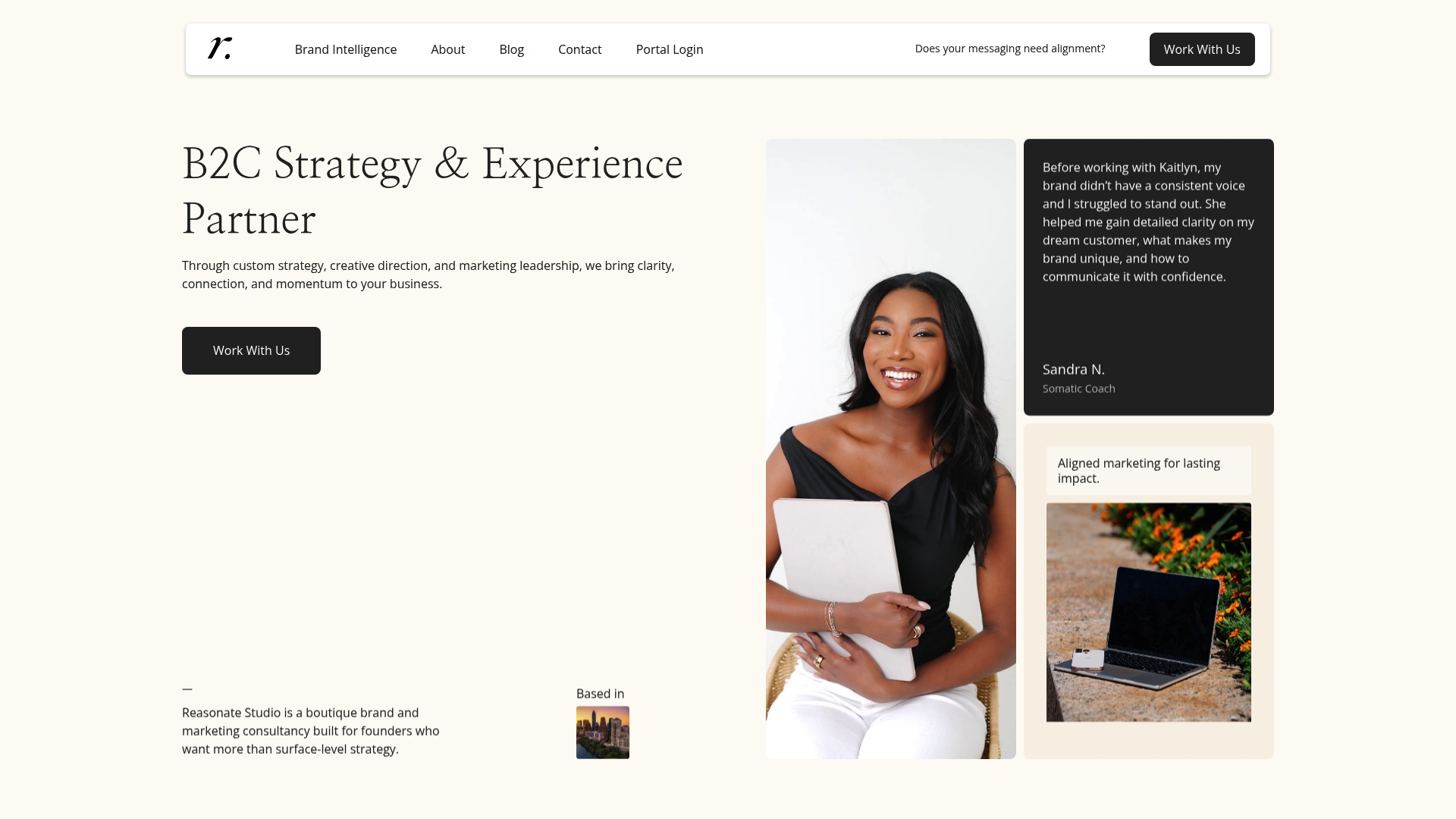
Take control of your brand’s future today by partnering with Reasonate Studio. Explore how our proven frameworks transform digital content strategies into measurable outcomes while staying authentically you. Don’t just create content; build a meaningful brand experience that your audience remembers. Learn more about how we help entrepreneurs and small businesses achieve strategic clarity and sustainable growth by visiting our main website and discover why The Aligned Impact Model™ is the game-changer your brand needs.
A digital content strategy is a systematic approach that small brands use to create, distribute, and manage online content aligned with specific business objectives, enhancing communication and engagement with their target audience.
Small brands should focus on understanding their audience through demographic and psychographic research, identifying their needs, preferences, and behaviors to create relevant content.
Small brands should prioritize blog posts, video content, social media updates, infographics, podcasts, and email newsletters to effectively communicate their value proposition and engage with their audience.
Success can be measured through analytics by tracking engagement metrics such as website traffic, social media interactions, email open rates, and conversion rates, allowing brands to refine their content and strategy accordingly.