September 1, 2026
Understanding B2C Business to Consumer Dynamics


Learn how to create a data-backed brand visibility action plan that balances long-term brand building with short-term revenue activation for sustainable growth.

Founders, coaches, and consultants face a frustrating reality: you deliver exceptional results for clients, yet potential customers never discover your expertise. Nearly 42% of solopreneurs struggle with client acquisition in their first year, often because their brand remains invisible in crowded digital spaces. The solution is not more random content or scattered marketing tactics. You need a strategic, data-backed brand visibility action plan that balances long-term brand building with short-term revenue activation. This guide walks you through creating that plan, incorporating proven strategies including AI-driven discoverability, platform focus, and measurement frameworks that connect visibility directly to sustainable growth.
| Point | Details |
|---|---|
| Consistent content unified presence | Brand visibility grows when you maintain steady content and a cohesive brand across channels. |
| Budget split sixty forty | Allocate sixty percent to long term brand building and forty percent to activation for quicker wins. |
| LinkedIn and SEO focus | Target platforms with long tail keywords to reach ideal clients and improve discoverability. |
| AI discoverability signals | AI driven discoverability improves when authoritative PR and user generated content signals are strong. |
| Share of Search | Track Share of Search and other brand metrics to connect visibility efforts to revenue outcomes. |
Before building your action plan, you must clarify what brand visibility means for your specific business. Visibility is not a vanity metric. It is the foundation for client acquisition, revenue growth, and market positioning. Your visibility goals should align directly with business outcomes: awareness that leads to engagement, engagement that generates leads, and leads that convert to paying clients.
Start by assessing your current marketing foundation. Audit your website, social media profiles, content library, and any existing PR or media mentions. 71% of solopreneurs handle marketing in-house, which means most founders begin with limited resources and fragmented efforts. Understanding your starting point helps you set realistic milestones and avoid overwhelming yourself with unsustainable commitments.

Next, define your target audience with precision. Generic audience descriptions like “small business owners” or “busy professionals” will not guide effective visibility strategies. You need to understand their specific challenges, where they spend time online, what content formats they prefer, and what triggers their buying decisions. This clarity determines which platforms deserve your focus and what messaging will resonate.
Budget allocation is critical for sustainable visibility. The proven framework allocates 60% of your marketing budget to long-term brand building activities like content creation, SEO, and thought leadership, while 40% goes to short-term activation tactics like paid ads, promotions, and direct outreach. This balance prevents the common mistake of chasing immediate results while neglecting the foundational work that compounds over time.
Pro Tip: Start with one achievable visibility goal tied to a specific metric. For example, increase LinkedIn profile views by 50% in 90 days through consistent posting and engagement. Small wins build momentum and prove your strategy works before you scale efforts.
Finally, identify your client acquisition challenges. Are people unaware you exist? Do they see your content but not engage? Do they engage but not convert? Each challenge requires different visibility tactics. Understanding where your funnel breaks down helps you prioritize the right strategies in your action plan. Building a sustainable marketing plan starts with this honest assessment of where you are and where you need to go.
Your brand visibility action plan needs concrete steps, not vague intentions. Here is the proven framework that transforms scattered marketing into strategic visibility:
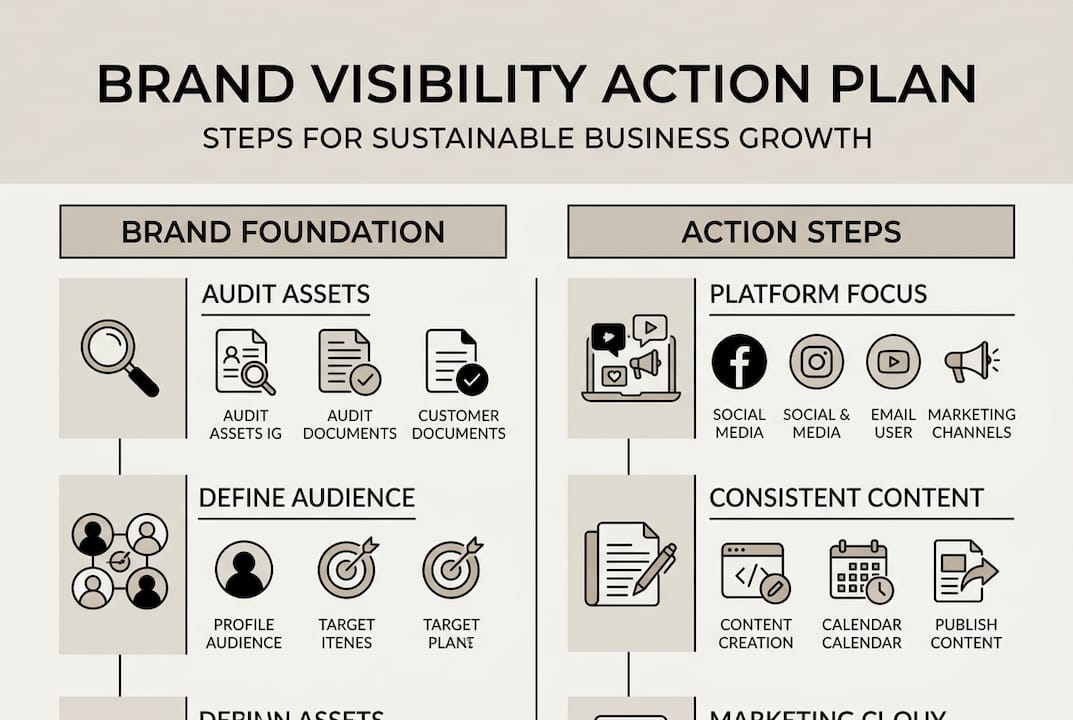
Step 1: Conduct keyword research focused on long-tail opportunities. Long-tail keywords are specific phrases your ideal clients actually search for, like “marketing strategy for health coaches” instead of just “marketing.” These keywords have lower competition and higher conversion potential because they capture specific intent. Use tools like Google Keyword Planner, AnswerThePublic, or SEMrush to identify 10 to 15 long-tail keywords relevant to your expertise. Build your content strategy around answering the questions these keywords represent.
Step 2: Choose 1 to 2 primary platforms and commit to consistent content creation. Spreading yourself across every platform dilutes your impact and burns you out. LinkedIn dominates for B2B coaches and consultants, while Instagram or YouTube may work better for visual or lifestyle-focused brands. Post valuable content at least three times per week on your primary platform. Consistency matters more than perfection. Your goal is to become a recognizable, reliable presence in your niche.
Step 3: Secure media placements and authoritative citations to boost discoverability. SEO with long-tail keywords, regular valuable content, and unified brand presence are proven to increase online visibility. PR and media mentions signal authority to both human audiences and AI algorithms. Pitch guest articles to industry publications, seek podcast interview opportunities, and earn backlinks from reputable websites. These placements improve your search rankings and position you as a credible expert.
Step 4: Maintain unified brand presence across all channels. Your website bio, LinkedIn headline, social media profiles, and email signature should tell a consistent story about who you serve and what results you deliver. Visual consistency matters too: use the same profile photo, color palette, and brand voice across platforms. Unified branding makes you memorable and reinforces recognition every time someone encounters your content.
Step 5: Allocate budget following the 60:40 rule and track Share of Search. Invest 60% in brand-building activities that compound over time: SEO content, thought leadership, relationship building, and educational resources. Allocate 40% to activation tactics that generate immediate leads: paid ads, promotional campaigns, and direct outreach. Track Share of Search, which measures how often people search for your brand name compared to competitors. This metric correlates directly with market share and future revenue.
Pro Tip: LinkedIn and email marketing consistently deliver the highest ROI for coaches and consultants. Prioritize these channels before expanding to other platforms. Master one or two channels deeply before spreading your efforts thin.
Here is how different visibility tactics compare in terms of timeline and resource investment:
| Tactic | Timeline to Results | Resource Investment | Best For |
|---|---|---|---|
| SEO content | 3 to 6 months | Medium | Long-term organic growth |
| LinkedIn posting | 1 to 3 months | Low to medium | B2B relationship building |
| Guest articles/PR | 2 to 4 months | Medium | Authority and backlinks |
| Paid ads | Immediate | High | Short-term lead generation |
| Email marketing | 1 to 2 months | Low | Nurturing existing audience |
Your action plan should integrate multiple tactics across both brand building and activation categories. This creates a visibility engine that generates both immediate leads and long-term market positioning. Building effective marketing campaign plans and increasing social media visibility become easier when you follow this strategic framework rather than reacting to every new platform or trend.
Creating your action plan is only the beginning. Measuring progress and adjusting based on data separates effective visibility strategies from wasted effort. You need to track both brand awareness metrics and direct response indicators to understand the full impact of your visibility work.
Start with these essential metrics:
Understanding the difference between brand awareness and lead generation tactics helps you interpret your metrics correctly. Brand awareness activities like thought leadership content, podcast interviews, and educational resources build recognition and trust over months. Lead generation tactics like webinars, lead magnets, and promotional campaigns drive immediate action. You need both working together.
Here is how these approaches compare:
| Aspect | Brand Awareness | Lead Generation |
|---|---|---|
| Primary goal | Recognition and trust | Immediate conversions |
| Timeline | 3 to 12 months | Days to weeks |
| Cost structure | Lower ongoing cost | Higher per-lead cost |
| Measurement | Share of Search, reach | Leads, conversion rate |
| Sustainability | Compounds over time | Requires continuous investment |
Common challenges emerge as you execute your visibility plan. Inconsistent content creation is the most frequent problem. Life gets busy, client work takes priority, and your posting schedule falls apart. The solution is batching content creation and using scheduling tools to maintain consistency even during busy periods. Create a month of content in one focused session, then schedule it to publish automatically.
Lack of unified brand messaging confuses your audience and weakens recognition. If your LinkedIn profile emphasizes one expertise while your website highlights something different, potential clients cannot quickly understand what you do or who you serve. Audit all your public-facing content quarterly to ensure message alignment.
Difficulty with client acquisition often stems from visibility in the wrong places or to the wrong audience. You might have thousands of social media followers who never become clients because they are not your ideal buyers. Refine your targeting by focusing on platforms and content topics that attract decision-makers with budget and buying intent.
Pro Tip: If organic visibility feels slow, combine it with strategic paid promotion to accelerate results. Boost your best-performing organic content to reach a larger targeted audience. This hybrid approach delivers faster wins while your organic strategy builds momentum.
Troubleshooting requires honest assessment and willingness to adjust. If a platform is not generating engagement or leads after 90 days of consistent effort, shift resources to channels showing better results. If certain content topics drive significantly more engagement, create more content in that area. Let data guide your decisions rather than assumptions about what should work. Implementing proven strategies for brand recognition becomes easier when you measure what matters and adjust based on real performance data.
Building and executing a comprehensive brand visibility action plan requires strategy, consistency, and expertise across multiple marketing disciplines. If you are ready to accelerate your visibility and revenue growth with professional support, we can help.
Our marketing jump start program provides the strategic foundation and execution support founders, coaches, and consultants need to transform scattered marketing into a cohesive visibility engine. We handle brand strategy, content creation, SEO optimization, social media management, and campaign execution so you can focus on serving clients while we build the marketing system that brings them to you.
At Reasonate Studio, we have helped over 100 small businesses clarify their message, strengthen their market presence, and generate more reliable revenue through emotionally intelligent, strategy-first marketing. Our boutique approach means you work directly with experienced strategists who understand your business, not junior account managers following templates. We combine the brand clarity work that creates differentiation with the tactical execution that drives visibility and growth.
Whether you need full-service marketing support or strategic guidance to optimize your own efforts, we offer personalized solutions designed for sustainable growth. Let us help you turn your expertise into the visibility and income your business deserves.
The 60:40 rule is a budget allocation framework that balances long-term brand building with short-term sales activation. 60% of marketing budget should go to long-term brand building, while 40% funds short-term activation tactics. Brand building includes content creation, SEO, thought leadership, and relationship development that compound over time. Activation covers paid ads, promotions, and direct outreach that generate immediate leads. This balance prevents the common mistake of chasing only short-term results while neglecting the foundational work that creates sustainable market presence and reduces customer acquisition costs over time.
Track both brand awareness metrics and direct response indicators to understand your visibility impact fully. Share of Search correlates strongly with market share and brand success, making it a leading indicator of future revenue. Monitor organic traffic growth, social media engagement rate, lead generation volume, and conversion rate to see how visibility translates to business results. Use Google Analytics for website traffic, social platform analytics for engagement data, and CRM tools to track leads and conversions. Review these metrics monthly and compare against your baseline to identify trends and adjust your strategy based on what drives the best results.
LinkedIn dominates as the top platform for B2B professionals to build authority, demonstrate expertise, and connect with potential clients. 81% of freelance marketers find LinkedIn their #1 source for client leads, a 20% increase since 2023. The platform’s professional context means your audience is in a business mindset, actively seeking solutions and evaluating potential partners. LinkedIn’s algorithm rewards consistent, valuable content with significant organic reach, allowing you to build visibility without paid promotion. The platform’s features like articles, newsletters, and profile optimization tools provide multiple ways to showcase your expertise and stay top of mind with your target market.
Timelines vary based on your starting point, chosen tactics, and consistency of execution. Short-term activation tactics like paid ads and promotional campaigns can generate leads within days to weeks. Brand building strategies like SEO content and thought leadership typically show meaningful results within 3 to 6 months as your content gains search rankings and your name becomes recognized in your niche. Most founders see initial traction within 60 to 90 days of consistent execution, with compounding results over 6 to 12 months. The key is maintaining consistency rather than expecting overnight transformation. Small, steady improvements in visibility metrics lead to significant business impact over time.