September 1, 2026
Understanding B2C Business to Consumer Dynamics


Explore key branding trends shaping 2025, from human-centered strategy and technology to visual direction and future-ready brand systems.

Over 65 percent of american businesses say their branding efforts must evolve to keep up with changing technology and customer values. In a world where artificial intelligence and purpose-driven storytelling are redefining expectations, staying relevant has become more challenging than ever. This guide breaks down the most important branding trends for 2025 so founders can make informed choices and connect with audiences in more authentic, innovative ways.
The branding landscape is undergoing a radical transformation, driven by technological innovation and shifting consumer expectations. Founders who want to stay ahead must understand the emerging trends that will define brand strategies in 2025. Two major forces are reshaping how businesses connect with audiences: artificial intelligence and purpose-driven communication.
Generative AI is emerging as a powerful tool for creating hyper-personalized brand experiences. Companies will leverage machine learning algorithms to craft targeted content, design adaptive visual identities, and create individualized customer interactions. Artificial intelligence strategies are no longer optional but essential for businesses seeking competitive differentiation. Brands will use AI to understand customer preferences with unprecedented depth, generating content and experiences that feel uniquely crafted for each individual.
Beyond technology, consumers are demanding more authentic and socially responsible brand narratives. Purpose is becoming as important as product. Businesses will need to demonstrate genuine commitment to environmental sustainability, social justice, and community building. Brands that can articulate a clear mission beyond profit and back it up with tangible actions will build deeper customer loyalty. This means moving beyond superficial marketing claims to creating meaningful engagement and transparent communication about social and environmental impact.
The future of branding is about creating human connections through technology while maintaining genuine authenticity. Successful founders will blend cutting-edge tools with sincere storytelling, using strategic brand development to create experiences that feel both innovative and deeply personal. Adaptability, empathy, and technological fluency will be the hallmarks of breakthrough brands in 2025.
As technology continues to evolve, brands are shifting from traditional marketing approaches toward more empathetic, user-centered strategies that prioritize genuine human connection. Human-centric branding represents a fundamental reimagining of how businesses interact with their audiences, moving beyond transactional relationships to create meaningful, trust-based experiences.
The core of human-centric branding lies in understanding and amplifying human capabilities through intelligent design. Recent research highlights the critical importance of developing branding strategies that enhance user safety, perception, and emotional engagement. Brands are now investing in advanced foundation models that can generate more nuanced, adaptive interactions that feel authentically personalized. This means creating digital experiences that not only meet functional needs but also resonate on an emotional and psychological level.
Trust has become the most valuable currency in modern branding. Consumers are increasingly sophisticated, demanding transparency, ethical practices, and genuine commitment to social responsibility. Successful brands will need to demonstrate their human values through consistent actions, showing that they understand and care about their customers beyond simple market transactions. This involves developing communication strategies that are vulnerable, authentic, and deeply responsive to user needs and societal contexts.
Ultimately, human-centric branding is about creating ecosystems of trust and mutual understanding. By leveraging technology not as a replacement for human interaction, but as a tool to enhance genuine connection, brands can build deeper, more meaningful relationships with their audiences. The most successful companies in 2025 will be those that can balance technological innovation with profound human empathy, creating experiences that feel both cutting-edge and intimately personal.
Branding is entering a transformative era where artificial intelligence becomes a powerful strategic tool, not just a technological novelty. Generative AI is revolutionizing how brands create, personalize, and deliver experiences, moving far beyond traditional marketing approaches. Founders who understand and effectively leverage these technologies will gain unprecedented competitive advantages in creating more dynamic, responsive brand interactions.
Multimodal AI interfaces are emerging as game changers in brand communication. Recent research demonstrates how brand marketing strategies can be enhanced through structured prompting and intelligent design that reduces cognitive burden for users. Brands can now generate highly personalized content, visual identities, and interactive experiences that adapt in real time to individual user preferences. This means creating digital ecosystems that feel simultaneously intelligent and intimately human, breaking down the traditional barriers between technological efficiency and emotional connection.
The integration of AI into branding goes beyond simple personalization. It represents a fundamental shift in how brands understand and interact with their audiences. Companies are developing sophisticated AI models that can analyze complex emotional and contextual signals, enabling them to craft communications that are not just targeted, but genuinely empathetic. This approach transforms AI from a mere technological tool into a nuanced platform for building deeper, more meaningful brand relationships.
Successful brands in 2025 will view AI not as a replacement for human creativity, but as a collaborative partner that amplifies human insight. The most innovative companies will create symbiotic relationships between human intuition and machine intelligence, using AI to uncover hidden patterns, generate creative concepts, and deliver experiences that feel both cutting-edge and profoundly personal. The future of branding is not about technology overwhelming human connection, but about using intelligent systems to make that connection more genuine, responsive, and impactful.
Branding in 2025 is moving beyond static visual representations toward dynamic, emotionally intelligent storytelling that adapts and resonates with audiences in real time. Visual identity is no longer just about logos and color palettes, but about creating immersive narratives that reflect a brand’s core values, cultural awareness, and human connection.
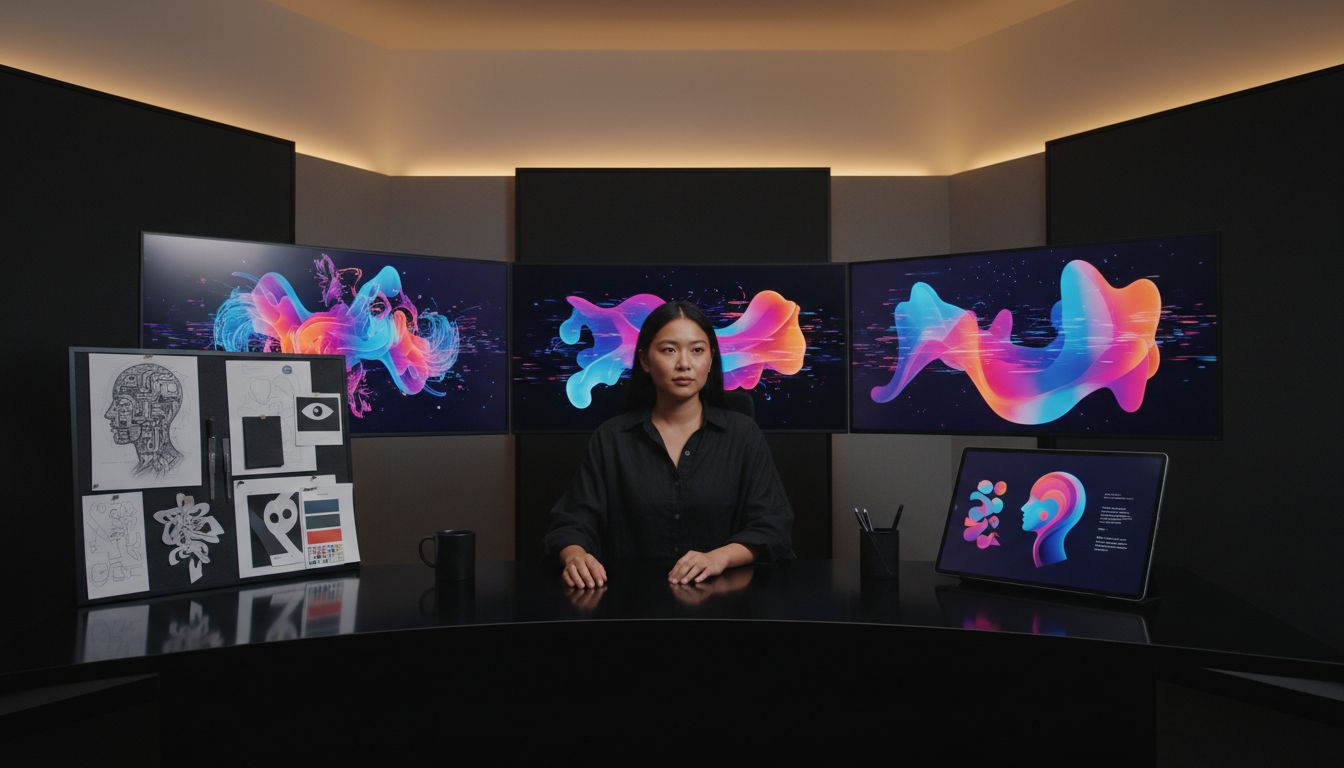
Custom typography and expressive design are becoming critical tools for brands seeking to differentiate themselves. Brand storytelling now requires designers to craft visual languages that communicate complex emotional experiences. Color gradients, for instance, are emerging as powerful communication tools that can instantly convey mood, cultural nuance, and brand personality. Designers are moving away from rigid, prescriptive brand guidelines toward more fluid, responsive visual systems that can breathe and evolve with changing audience expectations.
The future of brand storytelling lies in creating multi-dimensional narratives that transcend traditional marketing channels. Brands are developing visual identities that can seamlessly transition between digital and physical spaces, using sophisticated design systems that maintain consistency while allowing for creative interpretation. This approach requires brands to think of their visual identity not as a fixed asset, but as a living ecosystem that grows, adapts, and responds to cultural shifts and audience interactions.
Successful founders in 2025 will understand that visual storytelling is about creating emotional resonance, not just aesthetic appeal. The most compelling brand identities will be those that can communicate complex narratives through subtle visual cues, leveraging design as a form of strategic communication. This means developing visual languages that are at once memorable, meaningful, and capable of sparking genuine human connection across diverse audiences and platforms.
In 2025, brand authenticity is no longer an optional strategy but a fundamental requirement for business survival. Sustainable branding has evolved from a niche marketing approach to a core expectation among consumers who demand genuine commitment to social and environmental responsibility. Founders must recognize that modern audiences are sophisticated, discerning, and deeply interested in the values and actions behind the brands they support.
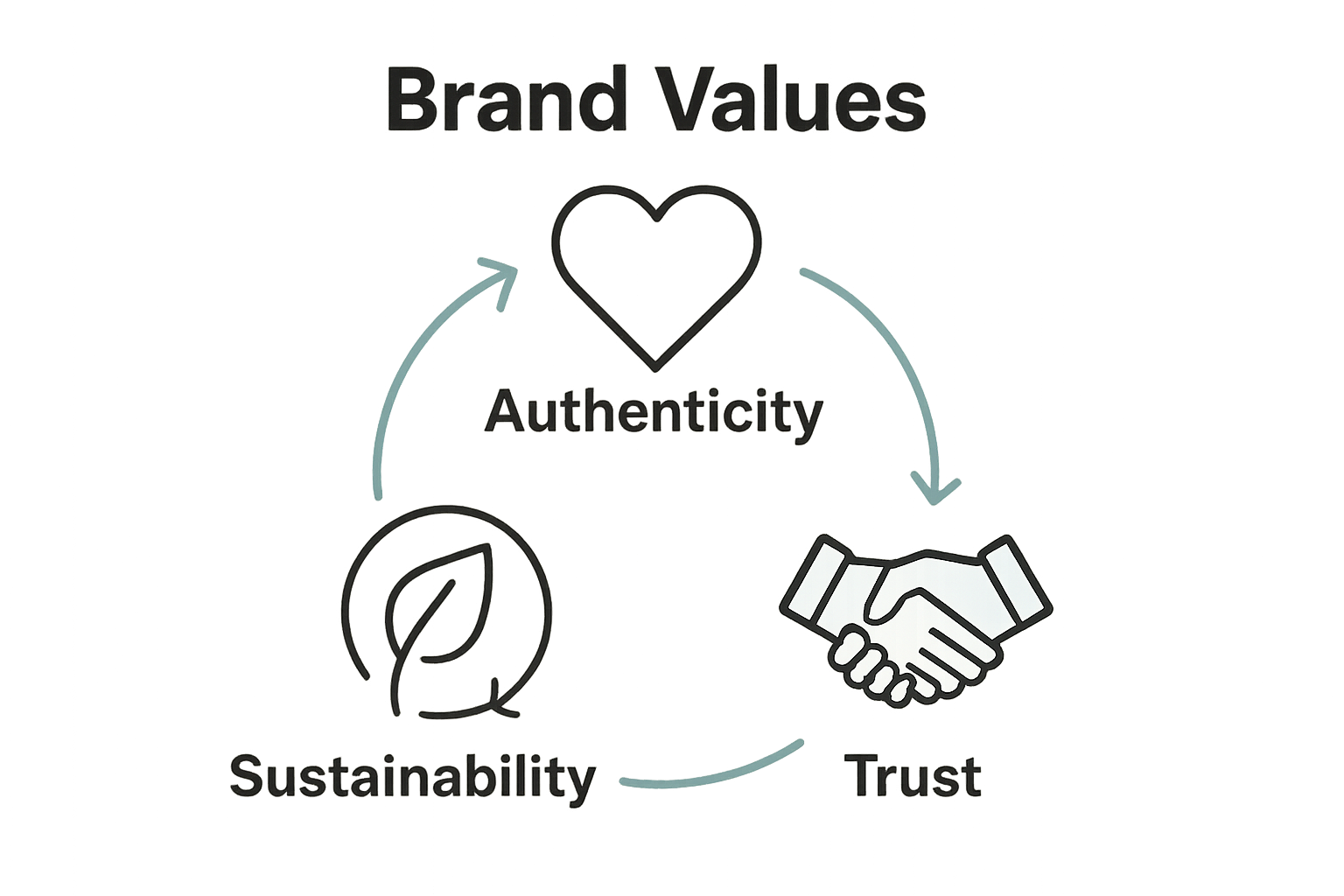
Consumers are increasingly making purchasing decisions based on a brand’s demonstrated ethical practices and transparency. Strategic branding now requires businesses to go beyond surface-level marketing claims and develop comprehensive approaches that integrate genuine social impact into their core business models. This means creating tangible, measurable commitments to environmental sustainability, social justice, and community development that are woven into every aspect of the company’s operations.
Authenticity in branding requires a holistic approach that connects a company’s internal culture with its external communication. Successful brands will create ecosystems where their stated values are reflected in employee treatment, supply chain practices, product development, and customer interactions. This demands a level of organizational integrity that goes far beyond traditional corporate social responsibility models. Companies must be prepared to demonstrate their commitment through concrete actions, transparent reporting, and a willingness to be held accountable for their social and environmental impact.
The most compelling brands in 2025 will be those that transform sustainability from a marketing strategy into a fundamental business philosophy. This means reimagining business success not just through financial metrics, but through the positive impact a company can create in the world. Founders who can authentically align their business practices with meaningful social and environmental goals will not only attract more conscious consumers but also build more resilient, purpose-driven organizations that can thrive in an increasingly complex global marketplace.
Modern branding requires founders to navigate an increasingly complex landscape of technological innovation, consumer expectations, and ethical considerations. Brand strategy has become a minefield where well-intentioned efforts can quickly derail without careful navigation. Understanding potential pitfalls is crucial for creating a resilient, authentic brand that resonates with audiences and stands out in a crowded marketplace.
Data privacy and transparency have emerged as critical battlegrounds for brand trust. Branding mistakes often stem from mishandling user data or failing to implement robust privacy protections. Successful brands in 2025 will adopt a ‘privacy by design’ approach, giving consumers more control over their personal information and demonstrating a genuine commitment to ethical data practices. This means moving beyond legal compliance to create transparent, user-centric data policies that build genuine trust.
Another significant pitfall involves maintaining authentic brand consistency across rapidly evolving digital platforms. Brands that fragment their messaging or present inconsistent identities across different channels risk appearing inauthentic and losing consumer confidence. This requires developing flexible yet cohesive brand guidelines that can adapt to new technologies and communication channels without losing the core essence of the brand’s identity. Founders must create strategic frameworks that allow for creative expression while maintaining a clear, recognizable brand voice.
Ultimately, avoiding branding pitfalls requires a holistic approach that balances technological innovation with human-centered design. The most successful brands will be those that can integrate cutting-edge tools and strategies while maintaining a genuine, empathetic connection with their audience. This means continuously learning, adapting, and being willing to challenge existing assumptions about brand communication. Founders who approach branding as an ongoing dialogue rather than a static set of rules will be best positioned to build meaningful, lasting connections in an increasingly complex business landscape.
The journey to mastering the branding trends of 2025 starts with embracing authentic storytelling, purpose-driven communication, and actionable technology integration. This means you need more than just trendy visuals or quick online campaigns. You need a clear strategy that brings your brand’s unique values to life and builds trust with your audience through every interaction. Whether you are struggling to create meaningful engagement or uncertain how to leverage AI responsibly, it is time to consider a proven system that aligns your marketing efforts with what matters most.
Discover how Reasonate Studio’s The Aligned Impact Model™ can guide you from brand foundations to visible growth. Our approach helps small business founders and entrepreneurs build brands with clarity, empathy, and measurable impact. Learn why strategic, empathetic brand development matters by exploring why branding matters and how to bring that strategy to life with effective brand storytelling. Take the next step toward a sustainable and authentic brand today by partnering with experts who understand both your challenges and your vision.
The key branding trends for 2025 include the use of generative AI for hyper-personalized experiences, a focus on purpose-driven communication, and the rise of human-centric branding that emphasizes genuine connection and trust.
Brands can leverage artificial intelligence by using machine learning algorithms to analyze customer preferences, craft personalized content, and create adaptive visual identities that resonate with individual users.
Brand authenticity is crucial in 2025 as consumers demand transparency and genuine commitment to social and environmental responsibility. Brands that align their practices with meaningful values can foster deeper customer loyalty and trust.
Common pitfalls in modern branding include mishandling user data, presenting inconsistent brand identities across platforms, and failing to maintain genuine, empathetic connections with audiences. A transparent and cohesive approach is essential for building trust.