
September 1, 2026
Understanding B2C Business to Consumer Dynamics


Branding strategies for small businesses—core concepts, types, execution frameworks, and the critical factors that drive long-term brand growth.

Most American entrepreneurs are surprised to learn that only about 46 percent of small businesses have a clearly defined brand strategy. In a fast-moving economy where competition keeps rising, establishing a strong brand is what separates thriving companies from those lost in the noise. This guide breaks down branding strategies in simple terms so American business owners can confidently shape their unique market identity and connect with customers more authentically.
A brand strategy is your business’s comprehensive blueprint for creating a unique market identity. Think of it like your company’s personality roadmap—a strategic plan that defines how you’ll communicate your core values, differentiate from competitors, and connect authentically with your target audience.
At its core, brand strategy goes far beyond a simple logo or color palette. Effective brand strategies create a holistic narrative that encompasses your company’s mission, vision, customer experience, and emotional positioning. It answers critical questions like: What do we stand for? Who are we trying to serve? What makes us unique in a crowded marketplace?
Successful brand strategies typically include several key components. These foundational elements help businesses craft a consistent and compelling market presence:
Pro Tip: Strategic Clarity First: Before investing in marketing tactics, spend time thoroughly documenting your brand strategy. A clear, well-defined strategy will save you countless hours and resources by providing a consistent framework for all future business communications and decisions.
Building a powerful brand strategy requires deep self-reflection and strategic thinking. It’s not just about looking good—it’s about creating meaningful connections that transform casual customers into passionate brand advocates.
Every business needs a distinctive approach to brand strategy, and understanding the different types of brand positioning can help entrepreneurs craft a more intentional market presence. These strategies are not one-size-fits-all solutions but rather sophisticated frameworks designed to help businesses communicate their unique value proposition.
The primary types of branding strategies include product, corporate, personal, geographical, and service branding. Product branding focuses on creating a specific identity for individual products, making them memorable and desirable. Corporate branding takes a broader approach, developing an overarching identity that represents the entire organization’s values and reputation. Personal branding has become increasingly important for entrepreneurs and professionals who want to establish themselves as thought leaders in their industry.
Some key considerations when selecting a branding strategy involve understanding your target audience, market positioning, and long-term business goals. Entrepreneurs should carefully analyze their specific market landscape and choose a strategy that aligns with their unique strengths:
Pro Tip: Strategic Selection: Research and experiment with multiple branding approaches before settling on one. Your initial strategy isn’t permanent and can evolve as your business grows and market dynamics change.
Successful branding is about creating an authentic narrative that resonates with your audience. It requires continuous refinement, deep market understanding, and the courage to stand out in a crowded marketplace.
Here’s a comparison of the major types of branding strategies and their typical use cases:
| Branding Type | Typical Application | Key Benefit |
|---|---|---|
| Product Branding | Differentiating specific products | Drives product recognition |
| Corporate Branding | Representing the whole organization | Builds overall trust and image |
| Personal Branding | Promoting individuals or leaders | Establishes authority and trust |
| Geographical Branding | Highlighting location-based offerings | Builds strong local identity |
| Service Branding | Differentiating unique services | Emphasizes service value |
Branding systems are the strategic engines that transform businesses from simple service providers into memorable market leaders. Understanding the advantages of strategic branding reveals how a well-designed system can dramatically accelerate business growth by creating a cohesive narrative that resonates with target audiences and differentiates your business in a crowded marketplace.

Business growth through branding isn’t just about looking good—it’s about creating a systematic approach that builds trust, credibility, and emotional connection with potential customers. A robust branding system acts like an organizational compass, guiding everything from marketing communications to product development, ensuring that every touchpoint reinforces your core business values and unique market position.
The key mechanisms by which branding systems drive growth include:
Pro Tip: Strategic Consistency: Develop a comprehensive brand guideline document that outlines your visual, verbal, and emotional brand standards. Review and update this document annually to ensure your branding remains dynamic and relevant.
Successful businesses understand that branding is not a one-time project but an ongoing strategic investment. By creating a systematic approach to brand development, entrepreneurs can build powerful market presence that attracts ideal customers and drives sustainable growth.
Developing a comprehensive branding framework requires a strategic approach that transforms abstract concepts into actionable steps. How to build a brand strategy for effective growth involves a systematic process that helps entrepreneurs create a cohesive and powerful market presence.
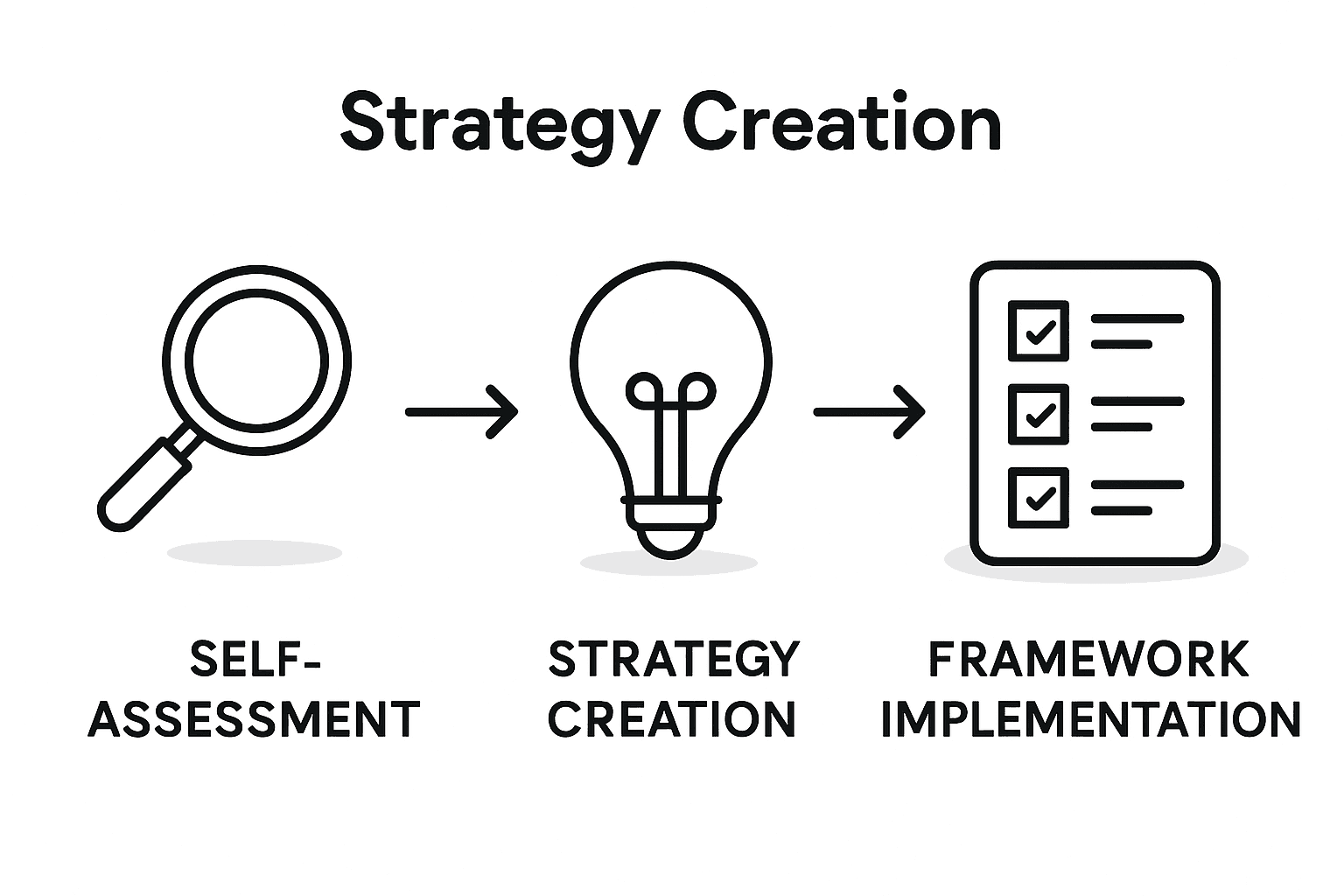
Brand framework implementation is not a linear process but a cyclical journey of discovery, refinement, and adaptation. The most successful approaches break down the complex task of brand development into manageable stages that allow businesses to build a robust identity while maintaining flexibility for future evolution. Understanding each critical stage helps entrepreneurs navigate the intricate landscape of brand development with confidence and clarity.
The step-by-step implementation of a branding framework typically involves these key stages:
Pro Tip: Iterative Branding: Treat your brand framework as a living document. Schedule quarterly reviews to assess alignment with business goals and market dynamics, making incremental adjustments to maintain relevance and impact.
Successful brand implementation is about creating a dynamic system that grows and evolves with your business. It requires patience, strategic thinking, and a commitment to authenticity that resonates with your target audience.
Navigating the complex world of branding requires strategic awareness and proactive planning. Exploring critical branding mistakes to avoid for small business success reveals that many entrepreneurs unknowingly undermine their brand’s potential through common missteps that can significantly impact business growth.
Branding pitfalls often stem from a lack of strategic clarity and consistent execution. Small businesses frequently struggle with creating a cohesive brand identity that resonates authentically with their target audience. The most dangerous mistakes are not dramatic failures but subtle inconsistencies that gradually erode customer trust and market positioning.
Here are the most critical branding pitfalls entrepreneurs must consciously avoid:
Specific pitfall breakdowns include:
Pro Tip: Strategic Self-Assessment: Conduct a quarterly brand audit that critically examines your messaging, visual identity, and market positioning. Treat this review as an opportunity for honest reflection and strategic refinement.
Successful branding is an ongoing journey of alignment, authenticity, and strategic adaptation. By understanding and proactively addressing potential pitfalls, entrepreneurs can build resilient brands that stand out in competitive markets.
To help avoid common mistakes, consider these branding pitfalls and recommended solutions:
| Branding Pitfall | Why It Happens | How to Avoid |
|---|---|---|
| Messaging Inconsistency | Lack of unified brand guidelines | Maintain strict communication standards |
| Audience Misalignment | Poor market research | Regularly update audience profiles |
| Copycat Branding | Imitating competitors | Focus on authentic differentiation |
| Brand Stagnation | Avoiding necessary updates | Schedule routine brand reviews |
| Superficial Identity | Overemphasizing visuals only | Develop holistic brand strategies |
Building a powerful brand strategy requires more than just good design and catchy slogans. As the article “Branding Strategies Building Impactful Small Businesses” highlights, common challenges like inconsistent messaging, unclear target audience, and lack of strategic alignment can quietly hold your brand back. If you are ready to move beyond these pitfalls and create a cohesive branding system that drives real business growth you need a strategic partner who understands these pain points and can guide you with clarity and confidence.
Reasonate Studio specializes in working with entrepreneurs and small businesses to build intentional brand strategies using The Aligned Impact Model™. Our approach uncovers your brand’s core values, sharpens your positioning, and aligns every marketing action with measurable outcomes—eliminating any guesswork or wasted effort. Discover how you can transform scattered ideas into a unified, authentic narrative that truly resonates with your ideal customers. Start your journey toward sustainable growth and confident marketing decisions by visiting Reasonate Studio. Explore more about how to build a brand strategy for effective growth with our expert guidance at How to Build a Brand Strategy and deepen your understanding of The Advantages of Strategic Branding. Take control of your brand today and make the impact you deserve.
A brand strategy is a comprehensive blueprint that defines a business’s unique market identity, including core values, target audience, competitive positioning, and emotional connections with customers.
A clear brand strategy helps small businesses create a strong market presence, build customer trust, and differentiate themselves from competitors, enabling sustained growth and loyalty.
Key components of a successful branding strategy include brand purpose, target audience definition, brand personality, competitive positioning, and a consistent visual and verbal identity.
Small businesses can avoid branding pitfalls by maintaining consistent messaging, clearly defining their target audience, differentiating themselves from competitors, regularly updating their branding to stay relevant, and developing a holistic brand strategy beyond just visual elements.