September 1, 2026
Understanding B2C Business to Consumer Dynamics


Explore brand messaging examples and frameworks that help founders clarify their value, differentiate their business, and support measurable growth.

Crafting brand messaging that actually connects with your audience is one of the hardest parts of building a business. You know what you do and who you help, but translating that into words that resonate, differentiate, and convert feels impossible. Most founders, coaches, and consultants struggle with messaging that either sounds too generic or tries to say everything at once. This article walks you through real examples of effective brand messaging using proven frameworks, so you can see exactly how strategic messaging drives sustainable growth and learn how to apply these principles to your own brand.
| Point | Details |
|---|---|
| Brand messaging must be concise and audience focused | Clear messaging resonates with your target audience and drives action without confusion. |
| The Brand Wheel framework structures effective messaging | This framework uses brand essence, values, and proof points to create coherent positioning. |
| Documentation and training ensure consistency | Clear guidelines and team alignment maintain messaging impact across all channels. |
| Strategic messaging serves as a decision filter | Strong brand messaging guides innovation and prevents scattered focus. |
| Choose messaging approaches based on business goals | Different frameworks suit different audiences, maturity levels, and market conditions. |
Before you can evaluate brand messaging examples or build your own, you need clear criteria for what makes messaging actually work. Effective brand messaging is not about clever taglines or creative wordplay. It is about strategic communication that guides every business decision and customer interaction.
First, your messaging must be clear and concise. If your audience needs to read something twice to understand your value, you have already lost them. Strong messaging communicates your core promise in seconds, not paragraphs. Second, every message should align with your brand essence. This means your positioning, voice, and claims all flow from the same authentic foundation. When messaging drifts from your core identity, customers sense the disconnect immediately.
Third, effective messaging serves as a decision filter for your entire business. It helps you say no to opportunities that scatter your focus and yes to innovations that strengthen your position. CMOs rank branding as their #1 priority for 2026, indicating its critical role in business success. Fourth, consistency matters more than perfection. Your team, partners, and channels must deliver the same core message repeatedly for it to stick. Finally, adaptability keeps your messaging relevant as markets shift and customer needs evolve.
Here are the essential criteria to evaluate any brand messaging example:
Pro Tip: Test your messaging by reading it to someone unfamiliar with your business. If they cannot explain what you do and why it matters in one sentence, your messaging needs work.
The Brand Wheel Framework offers one of the most practical structures for building coherent, compelling brand messaging. This framework uses a core brand essence phrase of three to six words, surrounded by values and proof points to help position and execute brand messaging. Let’s look at how this plays out in real applications.
Consider a plant-based dairy brand with the brand essence “Joy, without trade-offs.” This simple phrase immediately communicates the brand promise: delicious products that do not require sacrificing taste, health, or values. The essence sits at the center of the wheel, guiding everything else.
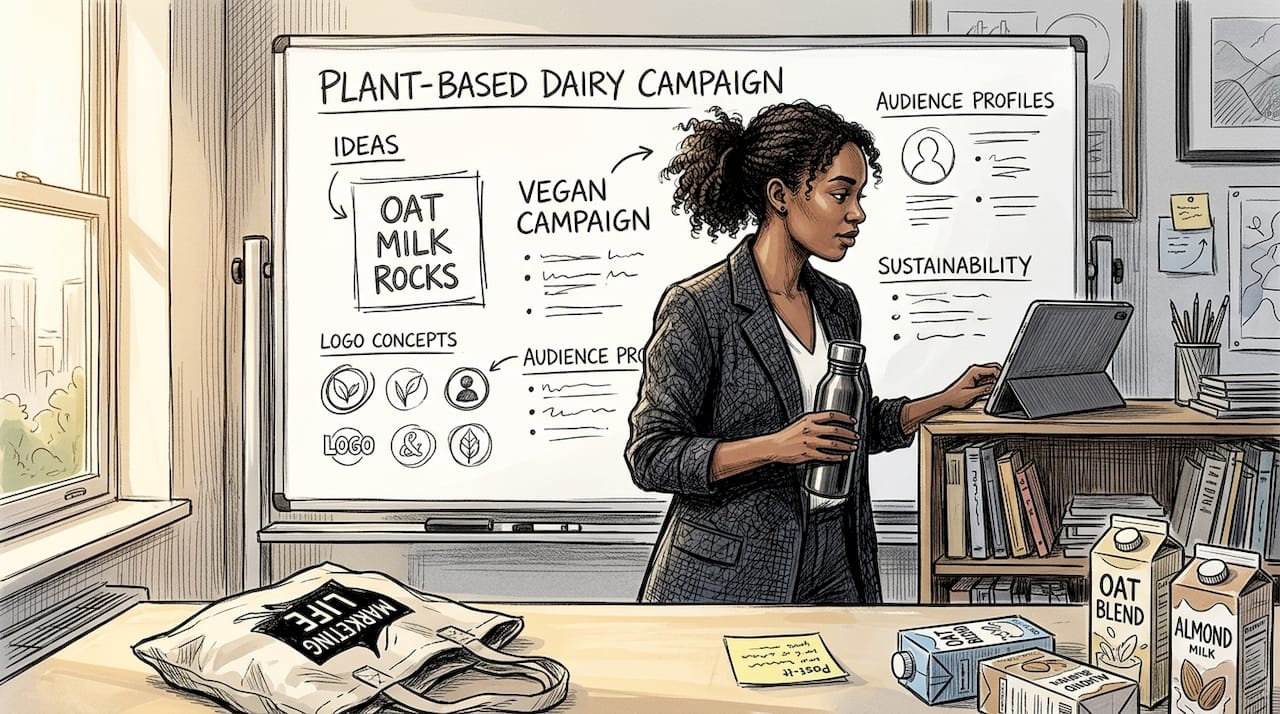
Surrounding the essence, the brand defines its values: sustainability, innovation, inclusivity, and transparency. These values clarify the personality behind the promise. They tell customers what the brand stands for beyond the product itself. Next come emotional benefits, the feelings customers experience when choosing this brand: confidence in their choices, connection to a larger movement, and satisfaction without guilt.
Finally, proof points support the claims with tangible evidence: certified organic ingredients, carbon-neutral production, partnerships with regenerative farms, and third-party taste test victories. These details differentiate the brand from competitors making similar promises.
Here is how to apply the Brand Wheel Framework to your own messaging:
Pro Tip: Your brand essence should be memorable enough that your team can recite it without looking it up, and specific enough that it would not work for your closest competitor.
Different messaging approaches work for different business contexts. Understanding the strengths and limitations of each helps you choose the right framework for your current stage and goals. Let’s compare three common approaches relevant to founders, coaches, and consultants.
The broad availability approach focuses on reaching the widest possible audience with universal messaging. This works well for large established brands with diverse customer segments, but creates risks for smaller businesses. When you try to appeal to everyone, you often end up resonating with no one. The messaging becomes generic, the positioning gets fuzzy, and differentiation disappears. This approach can lead to scatterbranding, where inconsistent messages across channels confuse rather than convert.
In contrast, the transient advantages approach recognizes that strategic brand messaging provides coherence in fast-changing markets by serving as a key decision filter. This framework emphasizes nimble, targeted positioning that can shift as competitive dynamics evolve. Rather than trying to own a permanent position, you focus on the advantage you can deliver right now to a specific audience. This approach requires more strategic discipline but offers clearer differentiation.
The “One Person” messaging approach takes targeting even further by building all messaging around a single, deeply understood ideal customer. Rather than demographic segments, you craft messaging for one specific person whose needs, fears, and desires you know intimately. This creates the most personalized and resonant messaging possible, though it requires confidence to ignore everyone else.
Here is a comparison of these three approaches:
| Approach | Best For | Strengths | Limitations |
|---|---|---|---|
| Broad Availability | Large brands with diverse segments | Maximum reach, universal appeal | Generic positioning, weak differentiation |
| Transient Advantages | Nimble businesses in dynamic markets | Strategic focus, clear decision filter | Requires ongoing market monitoring |
| One Person Messaging | Founders and consultants with niche expertise | Deep resonance, strong conversion | Narrow reach, requires audience clarity |
The right approach depends on your business maturity, market position, and growth goals. Most founders, coaches, and consultants benefit from either the transient advantages or One Person approach because both prioritize strategic focus over broad appeal. Use your branding checklist to evaluate which framework aligns with your current needs.
Even brilliant messaging fails without proper documentation and team training. Consistency across every customer touchpoint matters more than perfection in any single message. Here is how to embed your messaging into your organization so it actually gets used correctly.
First, create a single source of truth for all messaging elements. This brand messaging guide should include your essence, values, proof points, voice guidelines, and example applications. Keep it accessible in a shared document or internal wiki that every team member can reference. Update it regularly as your messaging evolves, but maintain version control so everyone works from the current framework.
Second, conduct training sessions with everyone who communicates on behalf of your brand. This includes internal team members, contractors, partners, and anyone creating content or interacting with customers. Walk through real examples of correct and incorrect messaging applications. Role play common scenarios so people understand how to apply guidelines in practice, not just theory.
Third, build workflows and checklists that reinforce messaging consistency. Before any content goes live, it should pass through a review process that checks alignment with your core messaging framework. This does not mean every piece needs approval, but it does mean clear criteria exist for self-evaluation. Your aligned brand strategy workflow should include messaging checkpoints at key stages.
Fourth, encourage feedback from your team about messaging challenges and opportunities. The people executing your messaging daily will spot inconsistencies, gaps, and improvement opportunities faster than leadership. Create regular opportunities for this input and act on it to refine your approach.
Finally, monitor how messaging performs across channels and use data to guide refinements. Track which messages drive engagement, conversion, and customer feedback. Documentation and training are key for team alignment on messaging, contrasting broad availability with strategic nuance frameworks. When you find messaging that works, document why and train others to replicate it.
Follow this process to maintain messaging consistency:
Pro Tip: Schedule quarterly messaging reviews with your team to ensure everyone stays aligned as your business evolves and new team members join.
You now have concrete examples and frameworks for building brand messaging that drives growth. But moving from examples to execution requires strategic thinking, audience insight, and consistent implementation across every touchpoint. That is exactly where professional support makes the difference between messaging that sounds good and messaging that generates revenue.
Our Marketing Jump Start helps founders, coaches, and consultants clarify their message, connect with their audience, and build marketing systems that create consistent growth. We use The Aligned Impact Model to move you from scattered marketing to strategic positioning that actually converts. Whether you are refining existing messaging or building your brand foundation from scratch, we provide the clarity and execution support you need. Explore our guide on brand messaging explained to understand how strategic messaging powers sustainable growth, or dive into defining your brand clarity to start building a stronger foundation today.
Brand messaging is the core communication that conveys your brand’s value, promise, and personality to your target audience. It includes your positioning statement, value propositions, brand voice, and key messages used across all marketing channels. Effective brand messaging differentiates you from competitors, creates emotional connections with customers, and guides consistent communication that builds recognition and trust. Without clear messaging, your marketing efforts scatter, your audience gets confused, and your growth stalls. Strong messaging serves as the foundation for every piece of content, every campaign, and every customer interaction. Learn more about what brand messaging is and how it shapes business success.
Start by defining a single ideal customer persona with specific needs, fears, and desires rather than trying to appeal to broad demographic segments. Use frameworks like the Brand Wheel to align your brand essence, values, emotional benefits, and proof points into a coherent system. Test your messaging with real potential customers through interviews, surveys, or small campaigns to see what resonates before committing to large-scale execution. Refine continuously based on feedback and performance data, recognizing that effective messaging evolves as you learn more about your audience. Personalized brand messaging built around deep audience understanding always outperforms generic positioning.
The biggest mistake is trying to appeal to everyone at once, which dilutes your impact and confuses potential customers. Scatterbranding confuses customers and dilutes brand impact, so focus on a “One Person” audience to avoid this trap. Another critical error is failing to align all messaging with your core brand essence, creating disconnects that undermine trust and credibility. Inconsistent messaging across channels is equally damaging because it prevents your audience from forming a clear, memorable understanding of what you offer and why it matters. Finally, many founders create messaging in isolation without testing it with real customers, leading to language that makes sense internally but fails to resonate externally. Use a branding checklist for founders to catch these mistakes before they undermine your growth.
Review your brand messaging quarterly to ensure it still aligns with your business direction, market position, and customer needs. However, your core brand essence should remain stable for years, providing continuity and recognition. What changes more frequently are the specific messages, proof points, and applications as your offerings evolve and market conditions shift. Make minor refinements regularly based on performance data and customer feedback, but avoid major overhauls unless your business strategy or target audience changes significantly. Consistency builds recognition, so change thoughtfully rather than chasing every trend or reacting to every competitor move.