September 1, 2026
Understanding B2C Business to Consumer Dynamics


Brand identity visual identity explained—core concepts, key design elements, real-world impact, and pitfalls to avoid for sustainable business growth.

Over 90 percent of American businesses say that strong brand and visual identity are key drivers of customer recognition and trust. In visually crowded markets, the right design choices can make or break a company’s success. This guide unpacks the essential elements and strategies that every American business needs to create a lasting impression and stand out in a world where first impressions truly count.
Brand and visual identity represent the strategic heartbeat of how businesses communicate their unique essence to the world. At its core, brand identity encompasses the comprehensive personality and promise a company makes to its audience, while visual identity translates that promise into tangible, recognizable design elements.
A robust visual identity serves as the critical visual language that communicates a brand’s values, personality, and positioning. This includes key design components like logos, color palettes, typography, imagery style, and consistent graphic elements that work together to create a memorable and distinctive brand presence. Elements of brand identity go far beyond mere aesthetics - they represent a strategic communication tool that helps businesses differentiate themselves in competitive markets.
The fundamental components of visual identity typically include:
Pro Tip - Visual Identity Strategy: Develop a comprehensive brand style guide that details precise usage rules for every visual element, ensuring consistent and professional representation across all marketing materials and platforms.
Here’s a concise comparison of brand identity and visual identity roles:
| Aspect | Brand Identity | Visual Identity |
|---|---|---|
| Core Focus | Defines brand personality and promise | Expresses brand visually through design |
| Impact on Audience | Builds emotional connection and trust | Enhances recognition and consistency |
| Key Components | Mission, vision, values, messaging | Logos, color palettes, fonts, imagery |
| Strategic Importance | Shapes long-term business perception | Drives memorable, differentiated look |
Visual identity systems are complex strategic frameworks that transform abstract brand concepts into tangible visual representations. These systems transcend simple design elements, serving as powerful communication tools that convey a brand’s personality, values, and professional positioning through carefully curated visual components. How to develop brand identity requires understanding the intricate relationship between design elements and brand messaging.
The foundational core elements of visual identity systems typically encompass several critical design components that work synergistically to create a cohesive brand experience. These fundamental elements include:
Successful visual identity systems demand meticulous attention to how these elements interact and complement each other across various brand touchpoints. Each component must be designed with precision, ensuring that when combined, they communicate a unified, memorable brand narrative that resonates with target audiences and distinguishes the brand in competitive markets.

Pro Tip - Design Consistency: Create a comprehensive brand style guide that provides explicit guidelines for implementing visual identity elements, ensuring uniform representation across all marketing channels and communication platforms.
Brand strategy and design decisions are intrinsically linked, forming a critical partnership that determines how a business communicates its core values, personality, and unique market positioning. Successful alignment requires a holistic approach that transforms strategic insights into visual language, ensuring every design element serves the broader narrative of the brand. Aligned brand strategy workflow provides the foundational framework for making intentional design choices that resonate with target audiences.
The alignment process involves several key strategic considerations:
Design decisions must transcend aesthetic preferences, becoming strategic tools that communicate complex brand narratives. Each visual element - from color palette to typography - should work harmoniously to convey the brand’s personality, values, and professional positioning. This requires a deep understanding of how design interacts with psychological perception, transforming abstract brand concepts into tangible, memorable experiences that connect with audiences on both rational and emotional levels.
Pro Tip - Strategic Design Integration: Conduct regular design audits that evaluate how visual elements align with your evolving brand strategy, ensuring your visual identity remains dynamic and authentically representative of your brand’s core essence.
Brand perception directly influences business growth, transforming visual identity from a mere aesthetic exercise into a strategic competitive advantage. The real-world impact of thoughtful brand design extends far beyond surface-level appearances, creating powerful psychological connections that drive customer engagement, loyalty, and market positioning. How to improve brand perception for sustainable growth demonstrates the critical relationship between intentional visual storytelling and business performance.
The tangible business outcomes of strategic brand perception are profound and multifaceted:
Successful brands understand that visual identity is not a static asset but a dynamic communication tool that evolves with market dynamics and audience expectations. Modern businesses must view their visual strategy as an ongoing dialogue, continuously refining design elements to reflect changing organizational goals, technological advancements, and shifting consumer preferences. This adaptive approach ensures that brand perception remains authentic, relevant, and compelling across diverse platforms and engagement touchpoints.
Pro Tip - Perception Audit: Conduct periodic audience perception surveys to evaluate how your visual identity resonates with target demographics, using insights to make data-driven design refinements.
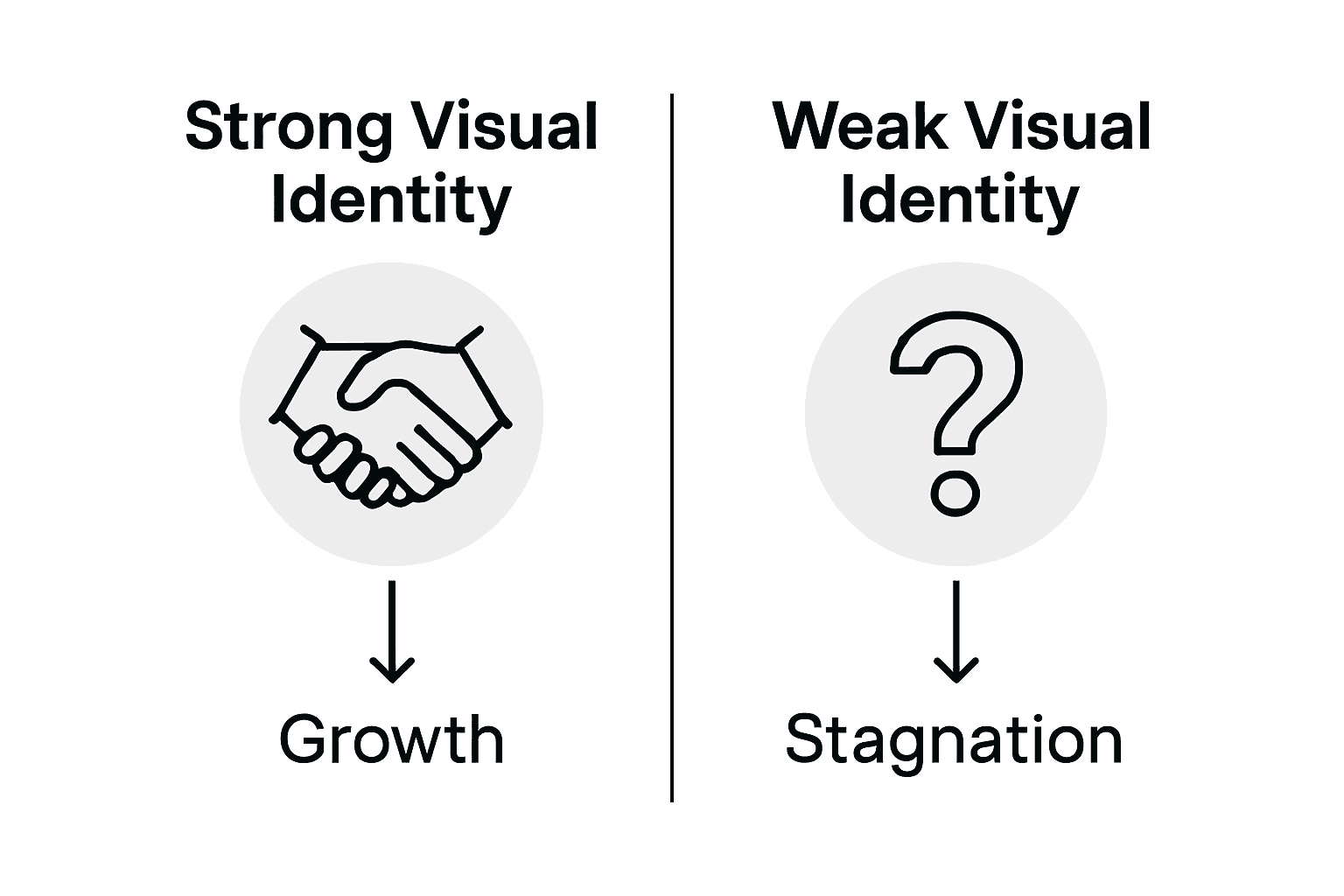
To clarify the consequences of brand perception, here’s a summary table of how visual identity choices affect business outcomes:
| Business Outcome | Result of Strong Visual Identity | Result of Weak Visual Identity |
|---|---|---|
| Customer Trust | Enhances credibility and reliability | Causes uncertainty or skepticism |
| Market Differentiation | Stands out among competitors | Blends in, easily overlooked |
| Emotional Resonance | Evokes positive feelings and loyalty | Fails to connect or inspire |
| Perceived Brand Value | Justifies premium pricing or positioning | Leads to perceived lack of value |
Building a compelling brand identity requires strategic precision, yet many businesses fall into predictable traps that undermine their visual communication and market positioning. 7 Branding Mistakes to Avoid for Small Business Success highlights the critical importance of avoiding common pitfalls that can derail brand development and audience perception.
The most prevalent missteps in brand identity development include:
Successful brand identity requires a holistic approach that balances creative expression with strategic communication. Businesses must view their visual identity as a dynamic system, not a static collection of design elements. This means continuously evaluating how visual components perform, adapting to market shifts, and ensuring that every design choice reinforces the brand’s core narrative and emotional resonance. Authentic brand identity emerges from a deep understanding of organizational values, audience expectations, and the nuanced interplay between visual communication and psychological perception.
Pro Tip - Design Consistency Check: Create a comprehensive brand style guide that provides explicit rules for visual asset usage, ensuring uniform representation across all marketing channels and communication platforms.
Building a strong brand identity is more than choosing a logo or color palette. This article highlights the challenge many entrepreneurs and small businesses face when trying to create a consistent and emotionally resonant visual identity that genuinely reflects their core values and connects with their audience. Issues like inconsistent design, ignoring audience psychology, and lack of alignment between brand strategy and visual elements can hold back your brand perception and growth.
At Reasonate Studio, we understand these struggles deeply. Our approach goes beyond surface-level branding by integrating your unique story with intentional design that builds trust and market differentiation. By leveraging The Aligned Impact Model™, we align your brand foundations with every design choice to create visual identity systems that are scalable, cohesive, and tailored to your audience’s emotional responses. Whether you want to transition from a side hustle to a full-time business or elevate an existing brand, we help you navigate these complexities with clarity and confidence.
Ready to turn your brand identity challenges into growth opportunities With our strategic, no-nonsense guidance and hands-on support at Reasonate Studio, you can create a visual identity that shapes perception and drives measurable success. Discover how to avoid common branding mistakes and build a brand that truly resonates by exploring solutions designed specifically for entrepreneurs and small businesses at Reasonate Studio. Take the next step today and start building a brand with lasting impact by visiting us at https://reasonatestudio.com.
Brand identity encompasses the overall personality and promise a company makes to its audience, while visual identity translates that promise into tangible design elements like logos, colors, and typography.
A consistent visual identity enhances brand recognition and builds customer trust by ensuring that all marketing materials convey a unified message, leading to a stronger connection with the audience.
A visual identity system usually includes components such as logo design, color palette, typography, imagery style, and design guidelines that ensure consistency across various platforms.
Brand perception influences customer trust, market differentiation, emotional resonance, and perceived value, all of which are critical to attracting and retaining customers, ultimately driving business growth.