September 1, 2026
Understanding B2C Business to Consumer Dynamics


Discover the essence of branding with our guide on brand foundation explained. Learn real strategies to build a strong brand that resonates.

TL;DR:
- A brand foundation is the strategic purpose, values, and promise behind a business, not visual assets.
- Early-stage founders should prioritize personal branding to build trust before shifting to company branding.
- Consistent focus on foundational elements leads to better marketing performance and long-term growth.
Most founders spend thousands on logos, color palettes, and website redesigns before they ever define what their brand actually stands for. The result? Beautiful visuals that attract the wrong people, messaging that confuses instead of converts, and a marketing budget that slowly drains with little to show for it. The confusion between brand visuals and brand foundation is one of the most expensive mistakes early-stage founders, coaches, and consultants make. This guide cuts through that noise. You’ll walk away understanding what a real brand foundation includes, which frameworks actually work, how to balance personal and company branding, and exactly what to measure to know it’s working.
| Point | Details |
|---|---|
| Brand foundation basics | Your brand foundation is the underlying strategy and promise that enables all marketing and growth. |
| Aaker Model advantage | Use the Aaker Model’s 5 components and 4 quadrants to build clarity and differentiation. |
| Personal vs company brand | Start with personal branding for quick trust, then roll out company branding for scalable growth. |
| Visual-verbal alignment | Always ensure your visuals and message match your core strategy to avoid confusing your audience. |
| Measure for growth | Track awareness, preference, image, and loyalty so your brand foundation delivers sustainable results. |
Now that you’ve seen why misaligned branding fails, let’s define what a real foundation is and what it’s not.
A brand foundation is not your logo. It’s not your Instagram aesthetic or your brand colors. Those are outputs. A brand foundation is the underlying strategy, purpose, and promise that gives every single marketing decision its direction. Think of it as the operating system running beneath your website, your content, your offers, and your conversations. When that system is solid, everything else performs better. When it’s missing, even the most polished visuals fall flat.
For founders, coaches, and consultants, the distinction matters enormously. You can build a strong brand foundation that outlasts trends, attracts aligned clients, and lets you price with confidence. Or you can keep tweaking your color scheme every six months and wonder why nothing sticks.
Here’s what a real brand foundation actually includes:
The measurable case for investing here is strong. Brand performance dimensions research shows that a strong brand foundation reduces customer acquisition costs, boosts client retention, and creates real pricing power. Success is measured across four key dimensions: awareness, image, preference, and loyalty. Brands that score well across all four grow more predictably and spend less to do it.
“A brand without a foundation is just decoration. Decoration gets ignored. Strategy gets remembered.”
If you’re working from a branding checklist for founders and skipping the foundation items to get to the visual ones, you’re building on sand. The logos can wait. The clarity cannot.
Understanding the need for a foundation, here’s a proven model you can apply right away.
The Aaker Model is one of the most respected frameworks in brand strategy, and for good reason. It gives you a structured way to analyze, build, or audit your brand identity using five core components organized into four practical quadrants. If you’ve been feeling like your brand identity is fuzzy or inconsistent, this model is a useful starting point.

The Aaker Model framework for brand identity breaks brand equity into five measurable components: brand loyalty, brand awareness, perceived quality, brand associations, and proprietary assets. These five elements are then mapped across four quadrants that reflect different dimensions of your brand’s presence in the market.
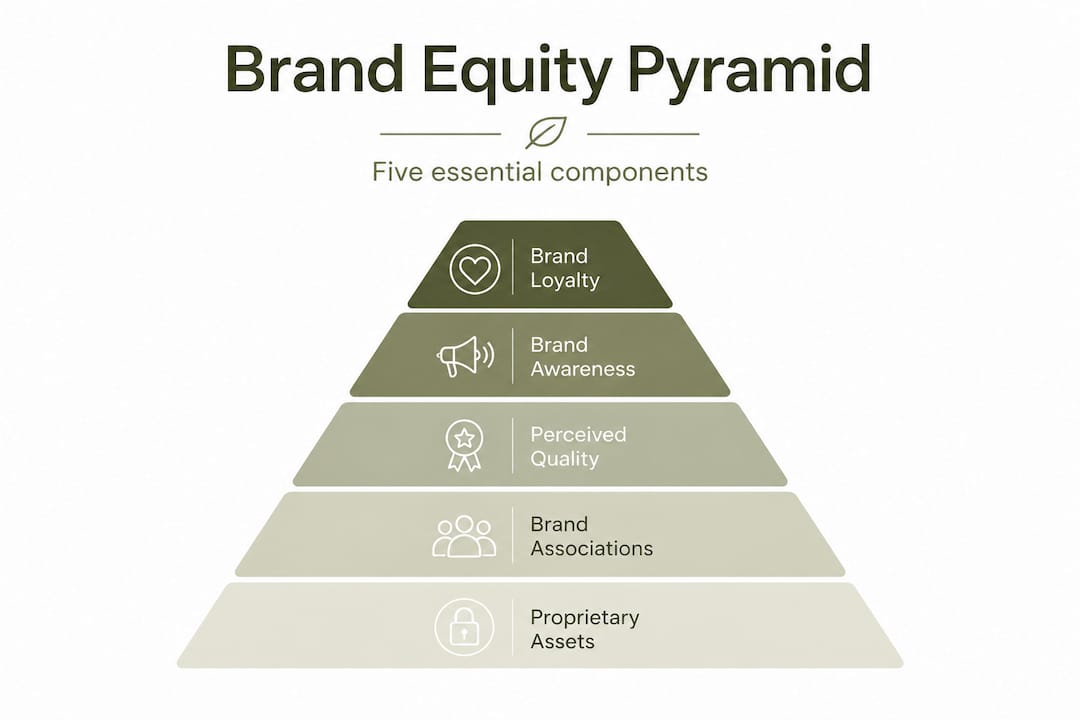
Here’s a quick reference table to make this concrete:
| Aaker Component | Quadrant | What It Means for Founders |
|---|---|---|
| Brand loyalty | Product | Do clients come back and refer others? |
| Brand awareness | Product | Do your ideal clients recognize your name? |
| Perceived quality | Organization | Do people assume you’re worth premium pricing? |
| Brand associations | Person/Symbol | What feelings and ideas do people link to you? |
| Proprietary assets | Symbol | What unique methods, names, or systems do you own? |
To use this model in practice for developing brand identity, follow these steps:
Pro Tip: If you’re early-stage and short on time, focus your energy first on brand associations and proprietary assets. These two components create the fastest differentiation in a crowded market. A coaching practice with a named framework and a clear emotional association stands out immediately, even without a massive following.
The Aaker Model is not just theory. It’s a diagnostic tool. Run through it quarterly and you’ll start catching alignment gaps before they cost you clients.
With your framework chosen, let’s resolve a top founder confusion: Should you lean into yourself or a company identity?
This is one of the most common strategic questions we hear, and the honest answer is: both, but in the right order. For founders, coaches, and consultants who are still building trust in the market, personal brand is almost always the faster path to early traction.
Research on founder brand strategy is clear: founders should prioritize personal brand early because personal visibility builds familiarity faster than a company name alone, especially pre-traction. People buy from people they trust. A face, a voice, a story, a point of view. These create connection in a way that a company logo simply cannot, at least not in the early stages.
Here’s a direct comparison to help you decide where to put your energy right now:
| Factor | Personal brand | Company brand |
|---|---|---|
| Trust-building speed | Fast (face, voice, story) | Slower (requires consistent exposure) |
| Content creation ease | High (you’re the expert) | Medium (requires consistent brand voice) |
| Scalability | Limited without systems | High with the right infrastructure |
| Best for | Coaches, consultants, early-stage founders | Agencies, product businesses, teams |
| Audience conversion | Strong for 1:1 and small group offers | Strong for scalable products and services |
| Long-term risk | Depends on your continued presence | More transferable and sellable |
Knowing when to lean into which approach makes a real strategic difference:
Pro Tip: You don’t have to choose one over the other. The strongest positioning we see for founders combines both. Your personal brand drives top-of-funnel trust and content engagement, while your company brand provides the credibility and structure that converts browsers into buyers. Let your face open the door. Let your brand close the deal.
Mastering both personal and company dimensions matters, but only when your outward expression truly matches your foundation.
This is where a lot of founders think they’ve already done the work. They have a mood board. They chose fonts. They have a style guide. But visual branding that isn’t grounded in strategy creates a specific kind of damage: it sends mixed signals to your audience. And mixed signals create hesitation, which kills conversions.
Brand foundation misalignment is more common than you’d think. Consider a consultant whose brand voice is warm, personal, and community-driven but whose website design is cold, corporate, and minimalist. The visitor experiences cognitive dissonance. Something feels off, even if they can’t articulate why. They leave. The consultant never knows why the traffic didn’t convert.
The fix is to align expression with foundation, not the other way around. Here’s how to do that in sequence:
“Design should be the visual translation of your values. If someone covered your logo, they should still feel exactly who you are.”
Rushing into visuals without a strategy is one of the most expensive branding mistakes a founder can make. Brand books fail without a specific foundation underneath them, including purpose and positioning, and without governance to maintain consistency. A PDF of fonts and colors without strategic direction is just a mood board with extra steps.
Pro Tip: Ask three people who know your brand to describe it in two sentences, then compare their answers to your own. If they don’t match, you have an alignment gap. That gap is what’s diluting your recognition and slowing down your conversions.
Avoiding branding mistakes at this stage means slowing down long enough to make sure your expression and foundation are genuinely pulling in the same direction.
Having explored how visuals and strategy fit together, let’s focus on measurable growth and next steps.
Knowing what a brand foundation is matters. Acting on it is where the real payoff lives. Here’s what a practical first-pass looks like for founders who are ready to get specific:
Tracking these four dimensions consistently is what separates brands that grow strategically from those that grow accidentally. Brand performance research confirms that brands actively monitoring awareness, image, preference, and loyalty dimensions are better positioned to reduce customer acquisition costs and build real pricing power over time.
Simple tools that work well for self-assessment include Google Search Console for awareness metrics, a short monthly client survey (three to five questions) for image and loyalty tracking, and your CRM or booking data for preference and conversion tracking. None of this requires expensive software. It requires consistency.
If you want to take the work further, two guides worth bookmarking are our deep-dive on brand foundation for growth and our practical breakdown of how to align marketing and sales once your foundation is in place. The foundation sets the direction. Alignment is what makes it generate revenue.
With practical steps in hand, it’s worth pausing to consider what most guides don’t tell you about brand foundation.
We’ve worked with enough early-stage founders to notice a consistent pattern. The ones who grow fastest are rarely the ones chasing the latest visual trend, the newest platform, or the marketing tactic that just went viral. They’re the ones who did the unglamorous work first. They wrote out their positioning. They defined who they weren’t for. They chose a clear promise and stuck to it. And then their content, their ads, their referrals, all of it started performing better.
The founders who stay stuck are usually the opposite. They’ve updated their logo three times. They pivoted their niche twice. They hired someone to redo their website before they’d ever clearly defined their audience. Every time things feel stagnant, they assume the problem is the visuals. So they invest in more visuals. And the cycle continues.
Here’s the honest truth: brand foundation work is slow, internal, sometimes uncomfortable, and completely invisible to the outside world until everything suddenly starts clicking. There’s no before-and-after photo for getting crystal clear on your positioning. You can’t post a reel about choosing your brand values. But the founders who do that work first consistently outperform those who don’t.
We’re also skeptical of the trend toward constant brand refreshes. Yes, brands evolve. Yes, your positioning might shift as you learn more about your market. But what we see too often is founders treating their brand like an outfit they change whenever they feel insecure, rather than a system they’re building equity in. Every time you rebrand without a clear strategic reason, you reset the recognition you’ve built. You spend social capital re-introducing yourself instead of deepening the connection you’ve already earned.
The brands that endure, the ones that clients stay with for years and refer consistently, aren’t always the trendiest. They’re the clearest. They know exactly who they are, who they serve, and what they promise. That clarity creates the kind of trust that no color palette can manufacture. Following a solid branding mistakes guide will often tell you what to stop doing. We’d argue the most important thing to stop doing is skipping the foundation in favor of the finish.
The boring work is the real competitive advantage. Do it first. Build on it consistently. Let the trends come and go while your foundation holds.
If you’re ready to implement or refresh your brand foundation, expert support can make all the difference.
Brand foundation work is the kind of thing most founders know they need but keep pushing to “when things slow down,” which, let’s be real, is never. That’s exactly where we come in. At Reasonate Studio, we help founders, coaches, and consultants stop guessing and start building on something real. Whether you need a comprehensive content strategy through our social media management services or want to get found by the right clients through SEO keyword research and on-page SEO optimization, every service we offer is built on the brand foundation work that makes it all actually work.
Start with our free Brand Audit Report, valued at $297, and get a clear picture of where your foundation stands today and exactly what to prioritize next. It includes a strategy workshop, social media audit, message and story review, and your most immediate quick-win recommendations. No obligation, no fluff, just clarity. If you’re ready to stop patching and start building, Reasonate Studio is where that work begins.
It’s the strategy, values, and promise sitting beneath your business name and visuals, shaping every marketing decision you make.
A clear foundation makes your business more memorable, builds audience trust faster, and gives you the positioning power to charge more. Brand performance dimensions research shows it directly reduces customer acquisition costs while boosting retention and pricing power.
Start with your personal brand if you’re early-stage. Founders who build personal visibility first build familiarity and trust faster than a company name alone can, then scale into a stronger company identity as they grow.
The most costly mistake is rushing into visuals before defining purpose, positioning, and audience clarity, which leads to incoherent brand books and marketing that doesn’t convert.